
晨雾初开,一屉饵丝蒸暖老街。Chénwù chū kāi, yī dì ěrsī zhēng nuǎn lǎojiē – Morning mist lifts; one steamer of erkuai silk warms the old street.
蒸饵丝 Zhēng Ěrsī steamed erkuai-silk is the breakfast that runs 曲靖 Qūjìng Qujing, the prefecture city in eastern 云南 Yúnnán Yunnan. The base is 饵丝 ěrsī erkuai-silk – 大米 dàmǐ rice soaked, steamed and pounded into the dense block called 饵块 Ěrkuài rice cake, then cut or pressed into silk-fine threads. The Qujing move is to return those threads to a 甑子 zèngzi wooden steamer until they are hot through, then dress them in the bowl: a spoon of 猪油 zhūyóu lard or 香油 xiāngyóu sesame oil, 酱油 jiàngyóu soy sauce, and the 帽子 màozi “hat” of toppings – 杂酱 zájiàng minced-pork sauce, 焖肉 mènròu cubes of braised pork, sometimes 耙肉 páròu pork stewed to shreds, plus 香菇 xiānggū dried shiitake and 花生 huāshēng peanuts. Alongside comes a bowl of 骨头汤 gǔtou tāng pork-bone broth, and the table condiments are the diner’s own: 酸腌菜 suān yāncài sour pickled greens, 油辣子 yóu làzi chili oil, 花椒面 huājiāo miàn Sichuan-pepper powder, 葱花 cōnghuā scallion and 芫荽 yánsuī cilantro. A bowl runs roughly 6-12 yuan depending on the hat (worth confirming the details), the stalls open before seven and many are sold out by ten, and the honest shape is that this is a working breakfast – rice dressed like noodles, eaten fast, at a stool, with the bone broth sipped between mouthfuls.
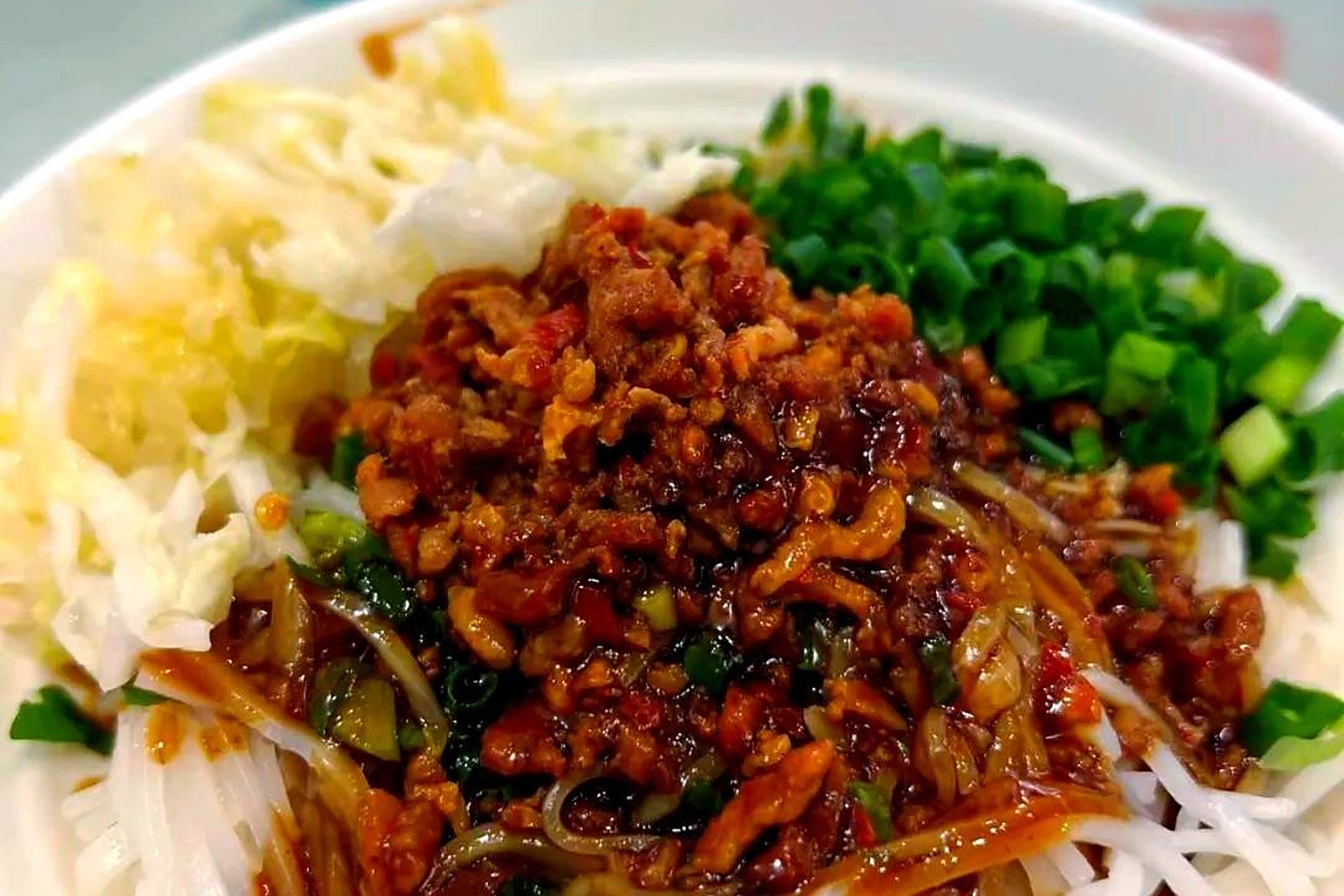
The mechanism is the rice and the steam. Qujing sits on the rice flats of the 南盘江 Nánpán Jiāng Nanpan river, and the 籼米 xiān mǐ long-grain rice grown here is the classic material: soaked overnight, steamed until cooked, then pounded – once in a 石臼 shíjiù stone mortar, these days by machine – into the smooth, rubbery 饵块 ěrkuài that will slice clean. For 饵丝 ěrsī the set block is pushed through a press with fine holes, or shaved by hand into threads the thickness of fine noodles, and the threads are portioned into bowls and returned to the 甑子 zèngzi for the final steam that separates this dish from cold 凉饵丝 liáng ěrsī and from the 烧饵块 shāo ěrkuài grilled cake sold off the same charcoal grill. The 杂酱 zájiàng is built in its own pot: 肉末 ròumò minced pork fried with 豆瓣酱 dòubàn jiàng broad-bean paste until the fat separates and the sauce goes dark and glossy. The 骨头汤 gǔtou tāng is a separate pot – 筒子骨 tǒngzi gǔ shin bones simmered for hours until milky, kept plain so it washes the rice down – and locals drink it before the 油辣子 yóu làzi goes in, because the broth is the reset between bites of dressed noodles.
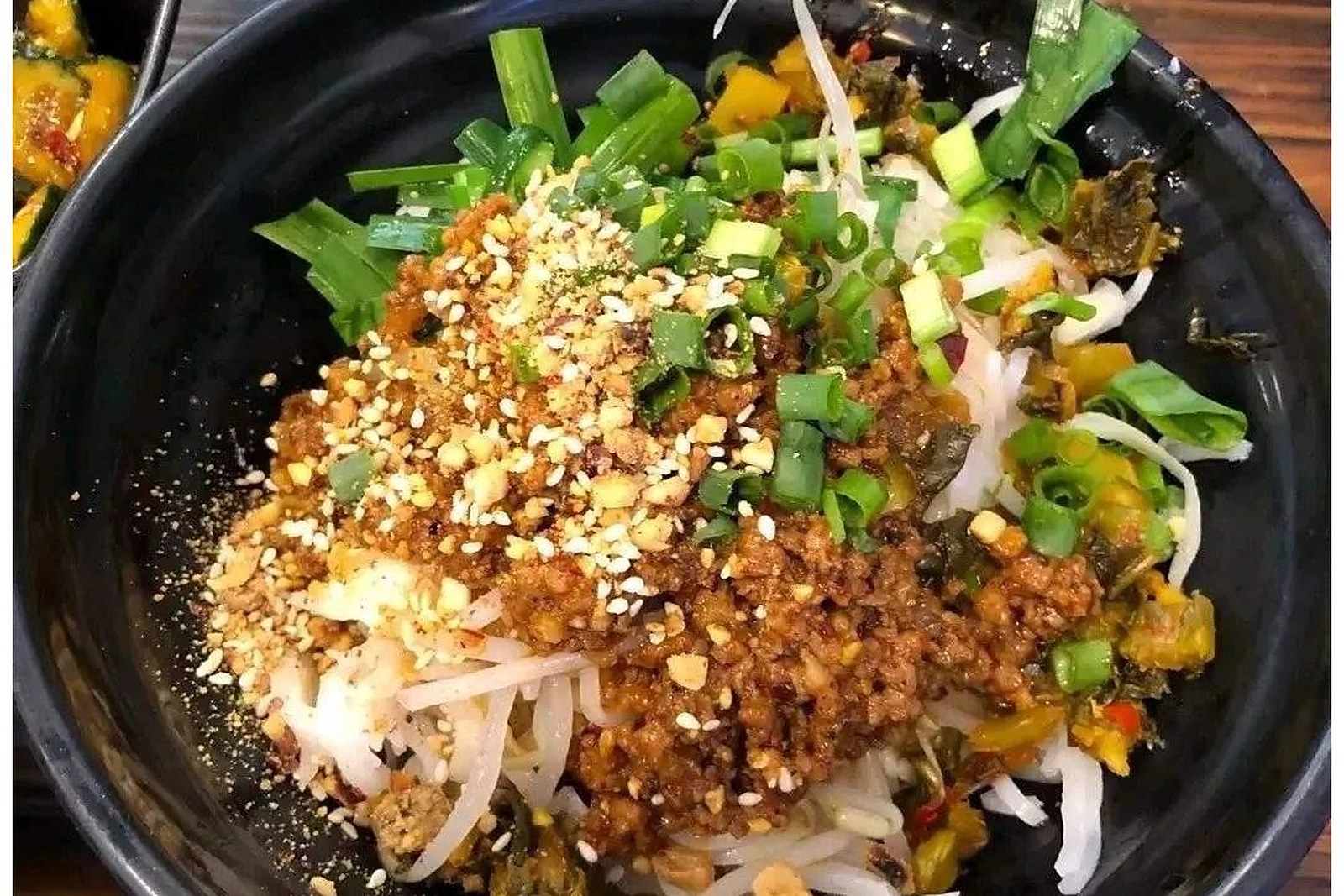
Locals eat it standing up, at a stool in the 麒麟区 Qílín Qū Qilin District breakfast lanes and the market gates (worth confirming current houses, hours and prices). The move is to order a 小碗 xiǎowǎn small bowl with the full 帽子 màozi, ask for the 骨头汤 gǔtou tāng separate, stir the 酸腌菜 suān yāncài and chili through from the bottom so the lard and soy coat every thread, and eat fast – 蒸饵丝 zhēng ěrsī is not a linger-over-coffee breakfast. The honest tests are the silk and the hat: the threads should be 滑 huá smooth and separate rather than clumped into paste, and the 焖肉 mènròu should be seasoned to the centre, not pink and plain. Newcomers are told to go light on the 油辣子 yóu làzi at first, because the chili hides the 米香 mǐxiāng rice fragrance that is the whole point of the bowl, and to treat the 酸腌菜 suān yāncài as the sour brake on the lard rather than an optional extra. The same 饵丝 ěrsī appears at lunch as 煮饵丝 zhǔ ěrsī boiled in broth or 炒饵丝 chǎo ěrsī stir-fried, but the steamed morning bowl is the one Qujing people defend, and it is a breakfast-only food – by mid-morning the 甑子 zèngzi are empty and the stalls have closed.
Words and Names
蒸饵丝 Zhēng Ěrsī steamed erkuai-silk · 曲靖 Qūjìng Qujing · 云南 Yúnnán Yunnan · 饵丝 Ěrsī erkuai-silk · 饵块 Ěrkuài erkuai rice cake · 大米 Dàmǐ rice · 籼米 Xiān Mǐ long-grain rice · 甑子 Zèngzi the wooden steamer · 帽子 Màozi the toppings · 杂酱 Zájiàng minced-pork sauce · 焖肉 Mènròu braised pork · 耙肉 Páròu stewed pork · 骨头汤 Gǔtou Tāng pork-bone broth · 酸腌菜 Suān Yāncài sour pickled greens · 油辣子 Yóu Làzi chili oil · 烧饵块 Shāo Ěrkuài grilled erkuai · 麒麟区 Qílín Qū Qilin District · 南盘江 Nánpán Jiāng the Nanpan river
What the Locals Know
The local knowledge about the bowl is the silk, the hat and the hour. The threads must be steamed through and dressed from the bottom, so the 猪油 zhūyóu and 酱油 jiàngyóu coat every strand and the bowl arrives smooth and 滑 huá separate rather than clumped – a bowl of paste was dressed in a hurry or under-steamed. The second check is the 帽子 màozi: the 焖肉 mènròu cubes should be seasoned to the centre, not pink and plain, and the 杂酱 zájiàng should taste fried until the fat separates, dark and glossy rather than pale and watery. The third is the 骨头汤 gǔtou tāng – it is part of the order, not an extra, it should be plain and milky, and it is drunk before the 油辣子 yóu làzi goes in, because the broth is the reset between bites and the 米香 mǐxiāng rice fragrance is what the chili hides. The fourth is the clock: it is a breakfast food, sold from before seven until the 甑子 zèngzi empty, often by ten (worth confirming current houses, hours and prices).
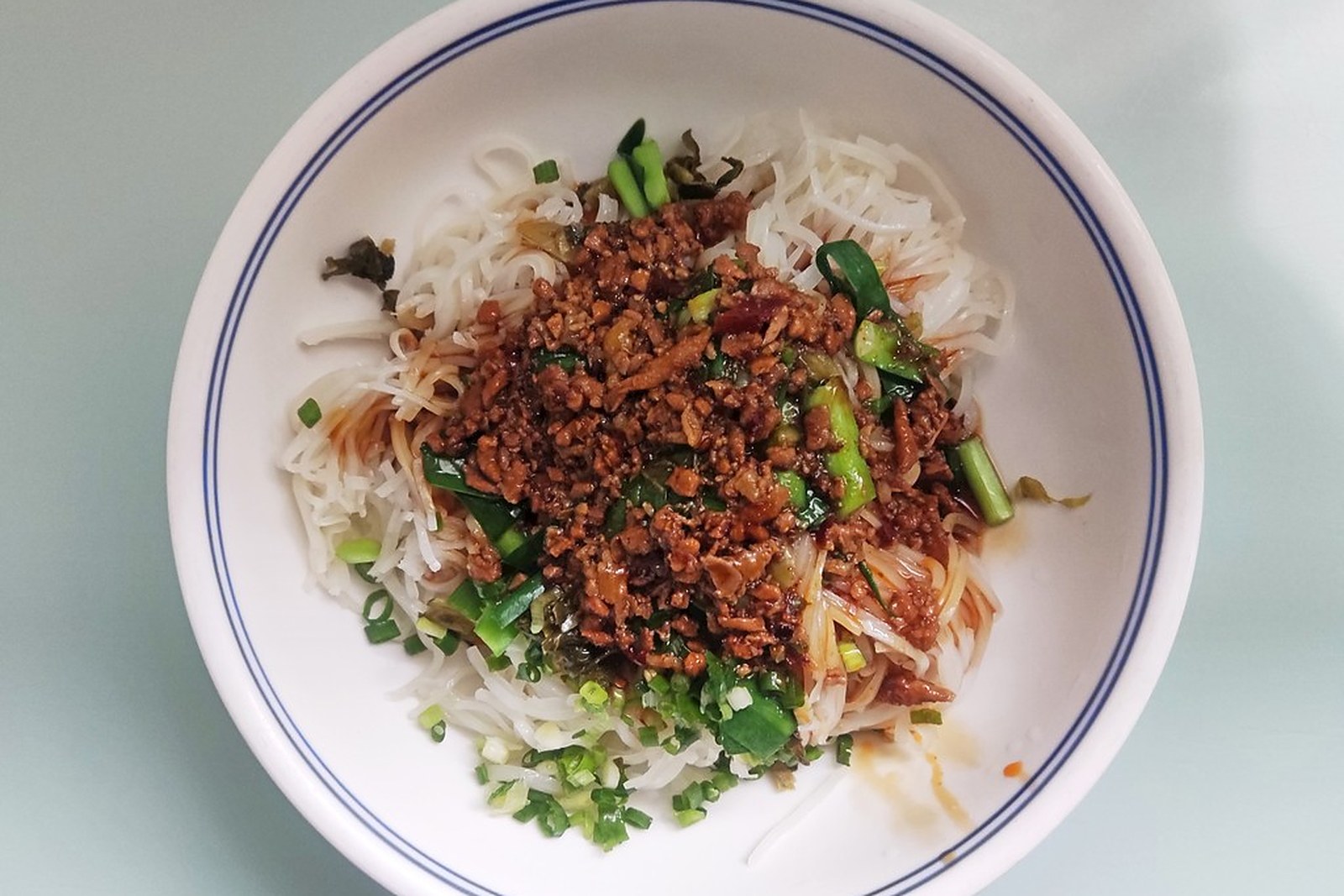
flowcloud would say that steamed erkuai silk is rice dressed like noodles – 籼米 xiān mǐ pounded into 饵块 ěrkuài and cut to 饵丝 ěrsī, steamed in a 甑子 zèngzi and crowned with a 帽子 màozi of 焖肉 mènròu and 杂酱 zájiàng, a bowl of 骨头汤 gǔtou tāng beside it – and that the honest move is a stool in a 麒麟区 Qílín Qū breakfast lane before eight, pickles stirred from the bottom, because the bowl is a working breakfast and the morning does not wait. All checked October 2026.
Where to find it: the breakfast lanes and market gates of 麒麟区 Qílín Qū in 曲靖 Qūjìng Qujing city – a bowl of 蒸饵丝 Zhēng Ěrsī with the full 帽子 màozi runs about 6-12 yuan, and the stalls open before seven, often selling out by ten (worth confirming current houses and prices); order the 骨头汤 gǔtou tāng on the side and the 酸腌菜 suān yāncài and 油辣子 yóu làzi from the condiment tray. The same rice-silk shows up across the prefecture at lunch as 煮饵丝 or 炒饵丝, but the steamed bowl is the Qujing morning. All checked October 2026.