
Raoping Haishan Seaweed Soup, the Island’s Bowl of the Tide
海山 Hǎishān is an island on the coast of 饶平县 Ráopíng xiàn, the county at the far eastern end of 潮州 Cháozhōu, and it is the home of a small, particular food: the 紫菜 zǐ cài, the laver or seaweed, that grows on the rocks of its shore. Harvested at the right season, dried on the beach in the wind, and sold as thin, dark-green sheets, it is the seaweed the county is known for, and the way it is eaten here is 紫菜汤 zǐ cài tāng, a bowl of clear broth in which the dried laver unfurls into deep-green ribbons. It is a dish of the sea that tastes exactly of the place it comes from.
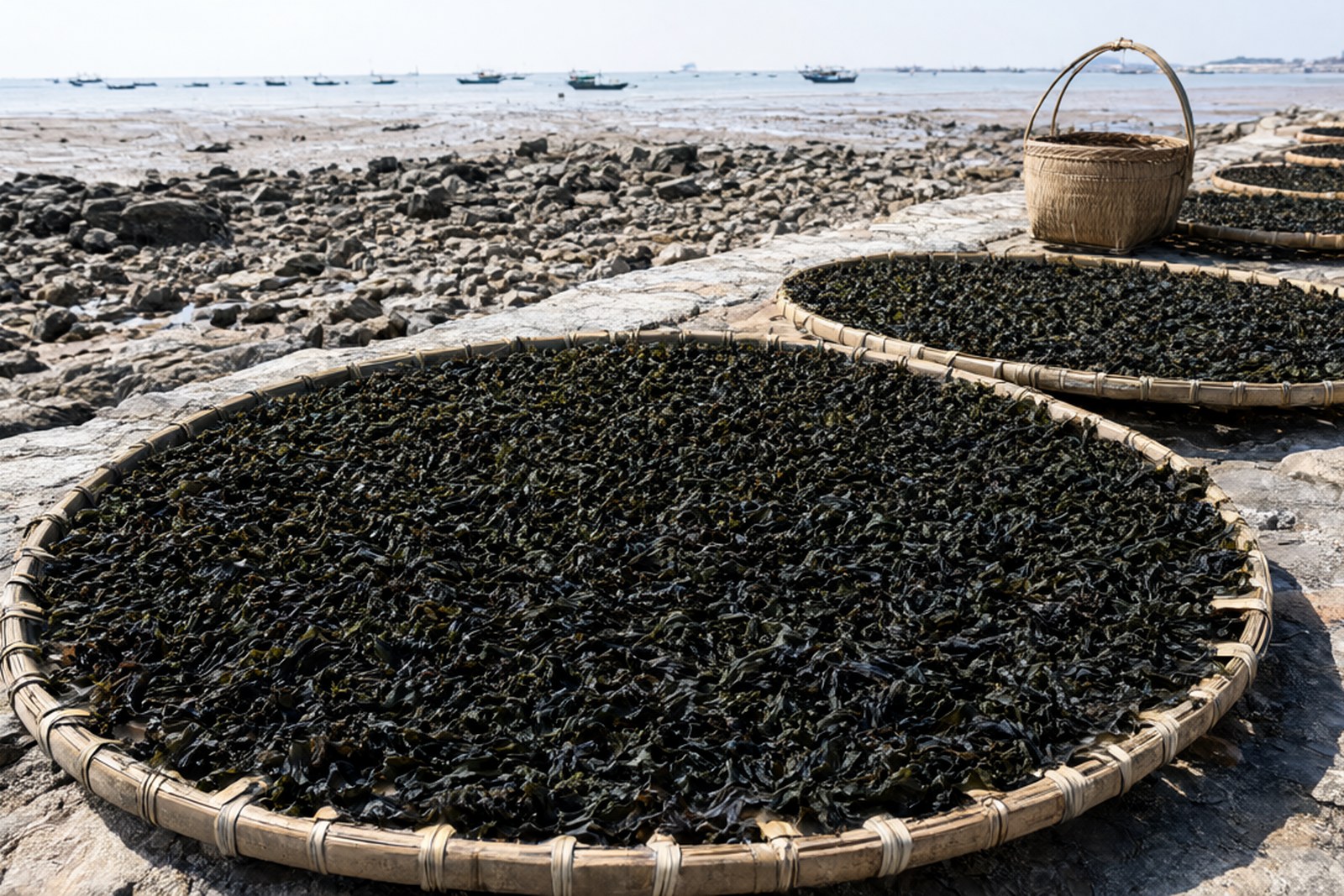
The quality of 饶平 海山’s laver is the point of the dish. Laver is grown and gathered all along the coast, but the seaweed of 海山 is prized for being thin, fine and sweet, with a clean, briny taste and a soft but not mushy texture once it is rehydrated. It is harvested in the cold months, from late autumn through the winter, when the sheets are at their best. The freshly gathered laver is washed in seawater, spread out on the rocks or on bamboo frames, and left in the sun and wind to dry until it becomes the crisp, dark-green sheets you buy in the market. The best is a deep green rather than a dull, muddy brown, and it should smell of the sea.
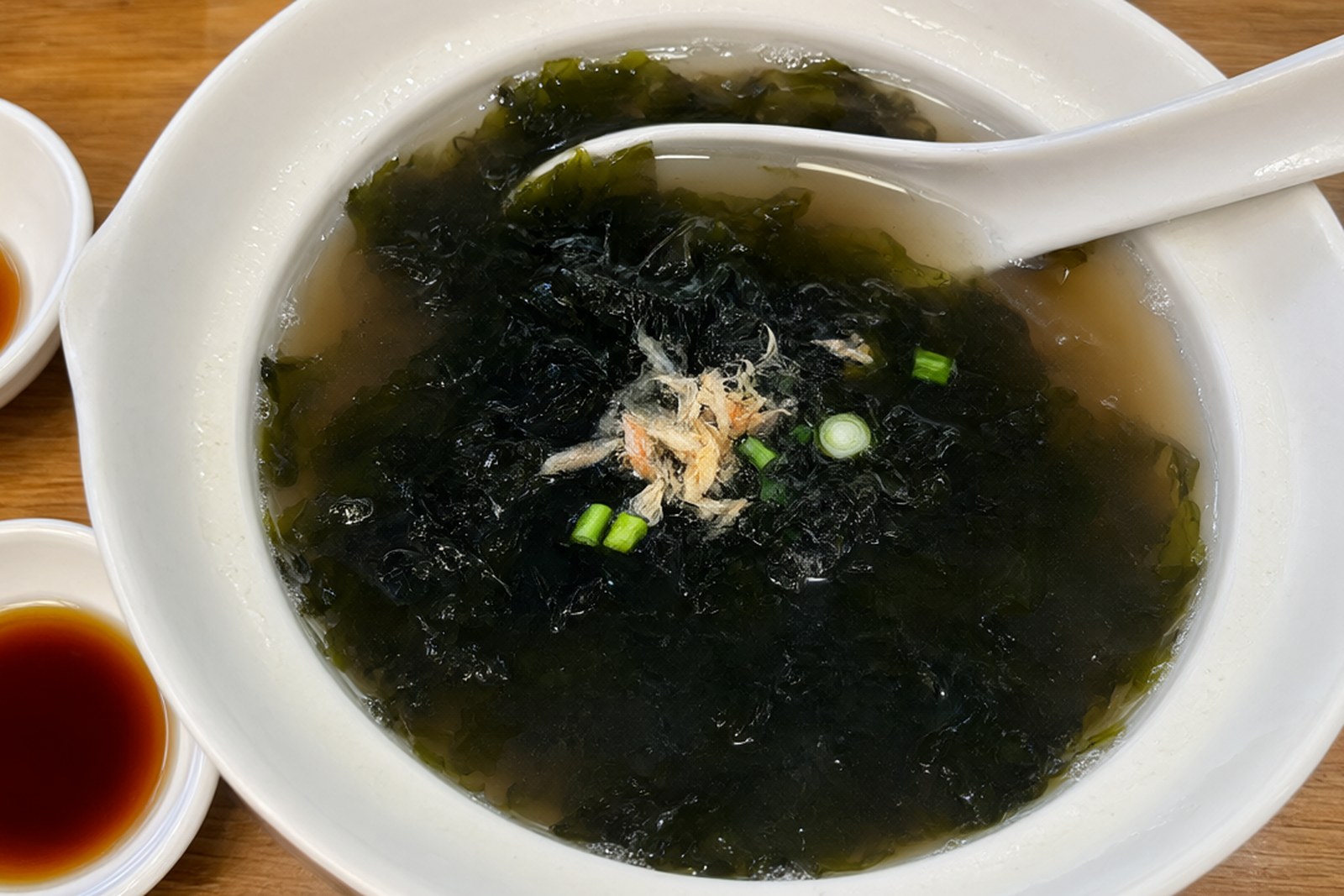
Making the soup is almost no work at all. A pot of water or a light stock – often a chicken or a pork and seafood stock, sometimes just water with a piece of 姜 jiāng, ginger, and a few 虾皮 xiā pí, dried shrimp – is brought to a boil. A handful of the dried laver is torn or snipped in, and it unfurls almost immediately, in a matter of seconds. The soup is seasoned with a little salt, a drop of 鱼露 yú lù, fish sauce, and a pinch of white pepper, and finished with a scatter of 葱花 cōng huā, spring onion, and sometimes a little sesame oil. It is one of the quickest soups there is, and it is served at the end of a meal or as a light broth to start one, and it tastes of the coast in a way no stock cube can match.
Words and Names
紫菜 zǐ cài, literally purple vegetable, is laver or the dark-green edible seaweed used in this soup; 紫菜汤 zǐ cài tāng is the laver soup. 海山 Hǎishān is the island in 饶平县 Ráopíng xiàn that the laver is named for. 虾皮 xiā pí is dried shrimp, 鱼露 yú lù fish sauce, 姜 jiāng ginger and 葱花 cōng huā spring onion. 潮州 Cháozhōu is the wider city and prefecture that 饶平 belongs to.
What the Locals Know
Buy the laver from 饶平, and look for a deep green that is thin and dry rather than a brown, thick or damp sheet, because the thin, sweet 海山 laver is the good one. It keeps well dry, so a packet is a sensible thing to bring home. When you rehydrate it, do not over-boil it: a few seconds in the hot broth is enough, and a long boil turns it to mush. Toast it very briefly in a dry pan first if you want a nuttier flavour. And read the label, because laver is grown along much of the coast and not all of it is 饶平 海山’s, which is the one with the local reputation.
flowcloud would say that a food as humble as a bowl of seaweed soup, built on a single ingredient gathered from the rocks of one small island, and cooked in a few seconds, can carry a sense of place that no elaborate dish can, and that the sea has a taste that is worth looking for.
Where to find it: the market stalls of 饶平 and of 潮州 old town sell the dried 海山 laver, and the soup is a standard at the seafood restaurants of 饶平县 and the 潮州 city eateries. A packet of good laver is ¥20 to ¥50. 饶平 is on the eastern coast of 潮州, reached by road from 潮州 city in about an hour and by the high-speed rail to 饶平站 Ráopíng zhàn on the coastal line.