
Rice Noodle Rolls
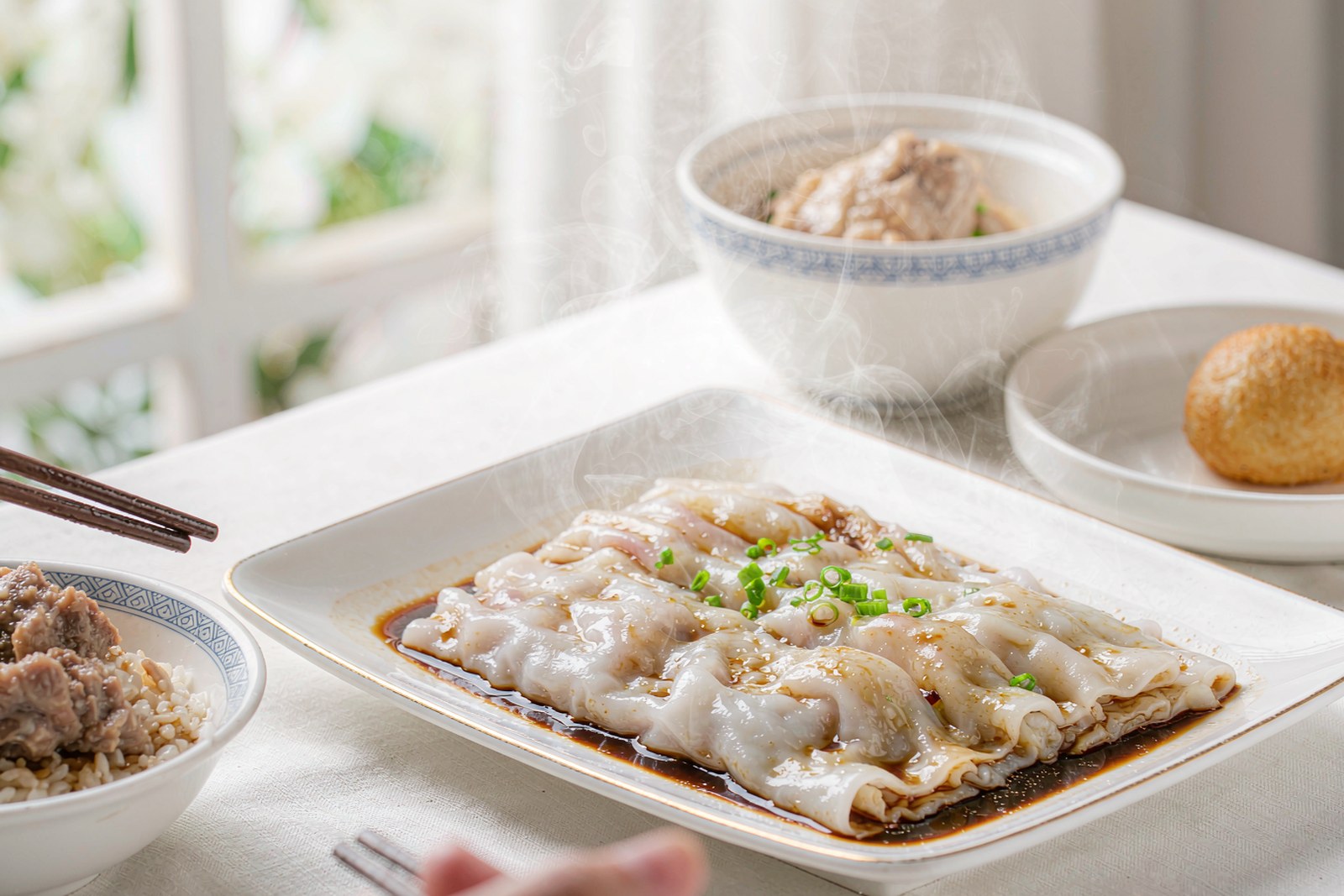
The cart stopped at our table with a small brass drum of steam, and the cook lifted a tray of pale, folded ribbons still quivering from the steamer. He spooned over a dark, sweet soy and a scatter of sesame, and the rolls collapsed into silks on my spoon. I ate one and the whole thing dissolved, savory and barely there, leaving only the scent of rice and scallion. This is 肠粉 chángfěn, the quiet hero of every Cantonese breakfast.
肠粉 chángfěn means “intestine noodles,” a nickname earned by the rolls’ loose, gut-like folds rather than any filling of offal. The dish was born in 广东 Guǎngdōng during the 清末 Qīngmò (late Qing) period, often credited to street vendors in 广州 Guǎngzhōu who poured rice slurry onto cloth sheets over boiling water. It matters in Guangdong because it is the province at its most humble and most precise: a dish of almost nothing that lives or dies on the thinness of the sheet and the sweetness of the sauce. No dim sum table is complete without it.
The Craft
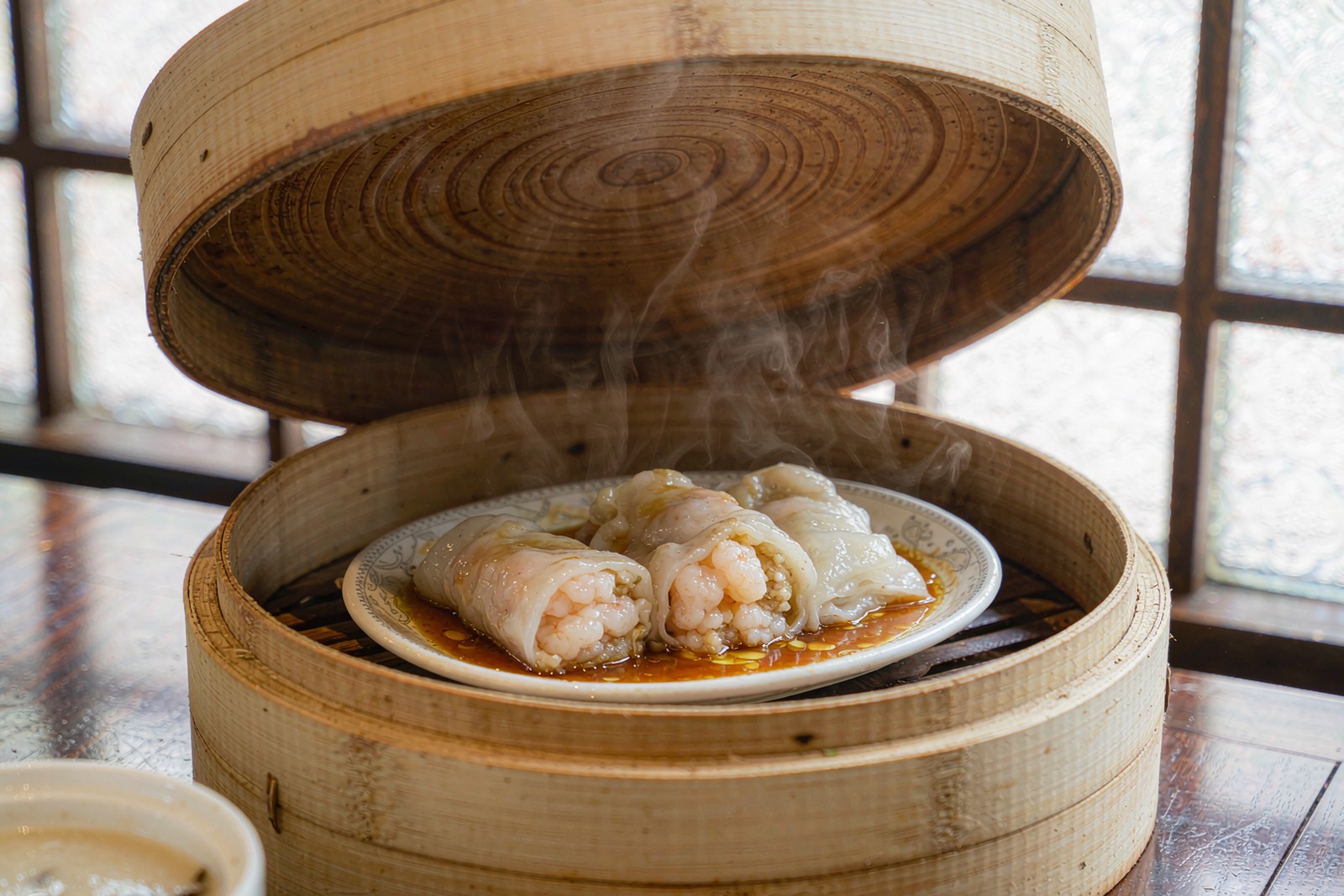
The batter is nothing but 粘米粉 zhān mǐ fěn (rice flour), water, and a little 澄面 chéngmiàn (wheat starch) or cornstarch for elasticity, whisked smooth and rested so no bubbles remain. A thin layer is spread on a perforated tray, topped with shrimp, beef, pork, egg, or simply scallion, then slid into a rolling steamer for barely a minute.
The cook peels the sheet off with a broad blade and folds it into a loose roll, three or four to a plate. The sauce is the soul: a 豉油 chǐyóu soy reduced with sugar, water, and sometimes 蚝油 háoyóu oyster sauce, then finished with sesame oil and a few drops of 麻油 máyóu. A good 肠粉 is translucent enough to read a menu through and tender enough to need no chewing.
Some shops still steam on 布 bù (cloth), which gives a faintly textured, more fragrant sheet; others use stainless trays for a cleaner, slicker roll. Both are correct, and regulars have a side.
How to Eat It
Eat it the moment it lands, while the steam is still rising, because the roll tightens as it cools. Lift with the broad spoon, not chopsticks, which tear it. The classic orders are 鲜虾 xiānxiā (fresh shrimp), 牛肉 niúròu (beef), and 叉烧 chāshāo (BBQ pork), but the purest is 斋肠 zhāicháng, plain with scallion, which tests the cook. In Guangzhou the 银记 Yínjì name is famous, while 潮汕 Cháoshàn shops lean toward a thicker, saucier roll; the 布拉肠 bùlācháng (“cloth-pulled” roll) is the old-school choice.
Words and Names
肠粉 splits into 肠 cháng “intestine” and 粉 fěn “flour or noodle,” so the literal reading is “intestine noodles,” a borrowed shape word rather than an ingredient. In Cantonese it is coeng4 fan2. The same character 粉 fěn appears in 河粉 héfěn (wide rice noodles) and 米粉 mǐfěn (rice vermicelli), all children of the same rice-milling tradition. A 斋 zhāi prefix anywhere on a menu means “plain” or vegetarian, which is why 斋肠 zhāicháng is the naked roll.
What the Locals Know
Eat it hot 肠粉 chángfěn goes rubbery the second it cools, timing is everything.
Order 布拉肠 bùlācháng the cloth-steamed version has a finer, more fragrant sheet.
Try 斋肠 zhāicháng plain rolls are the real test of a dim sum kitchen.
Spoon, not chopsticks the roll tears and you lose the sauce.
Watch the soy a heavy hand buries the rice; the sauce should whisper.
flowcloud would say that the best things are the ones that disappear the moment you taste them.
Where to find it: Rice noodle rolls, 肠粉 chángfěn, are on every dim sum cart across Guangdong, but the sentimental home is Guangzhou, where 银记肠粉 Yínjì chángfěn in 西关 Xīguān is the name locals cite. Order 鲜虾肠 xiānxiā cháng (shrimp), 牛肉肠 niúròu cháng (beef), or plain 斋肠 zhāicháng with 甜酱油 tián jiàngyóu (sweet soy) and 芝麻 zhīma sesame. A plate runs roughly 8 to 18 yuan, eaten standing at a stall or as part of a 早茶 zǎochá morning-tea spread.