
Rice Noodles in Broth
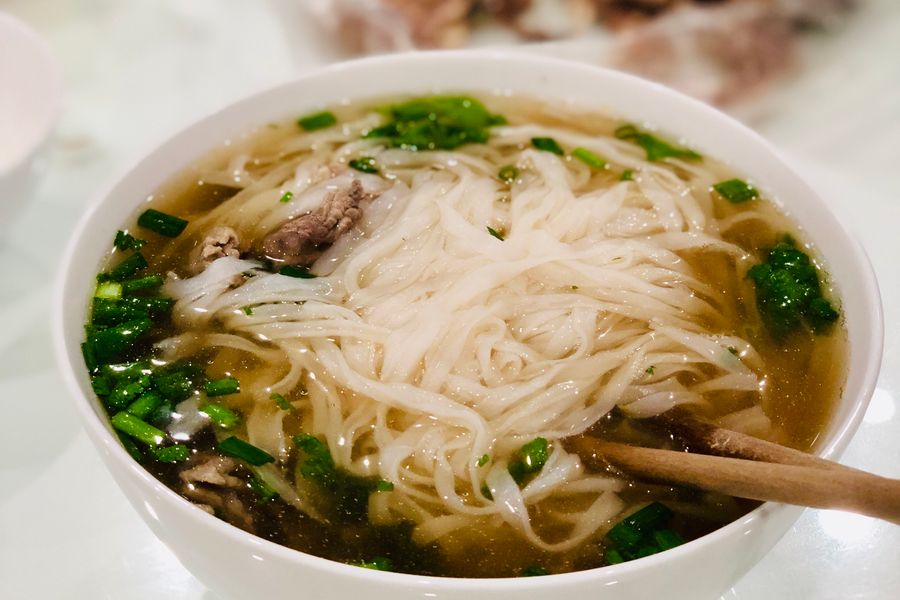
Morning in Changsha does not begin with an alarm. It begins with steam. Before the sun has decided what to do with itself, the noodle shops along 坡子街 (Pozijie) are already exhaling white clouds over the pavement, and the whole city is leaning into them — cyclists, delivery men, grandmothers with shopping bags, everyone bent over the same pale bowl of rice noodles. This is 米粉 (mifen), and for the people of this city it is not food so much as a promise that the day will be survivable, perhaps even good.
A Bowl Older Than the City’s Patience
The story of Changsha’s rice noodles begins not in Hunan but far to the south, in Guangxi, where rice was pounded and pressed into noodles centuries ago. When the technique travelled north into Hunan, the locals did what Hunanese always do: they made it their own. The noodles became narrower, softer, more insistent. The broth became what Hunan is — shallow, apparently simple, hiding all of its violence underneath. Legend has it that the dish was refined during the Qing dynasty in the back alleys of Changsha, when cooks discovered that the humble leftover broth of the day, strained and reheated, could be transformed into something close to poetry.
The craft itself is a small ceremony. Rice is ground into a fine slurry, steamed into a delicate sheet, then cut into ribbons of a width that speaks of patience — too thin and they dissolve, too thick and they become tiresome. In the best shops the noodles are still cut by hand each morning, laid out like pale ribbons on a wooden board, waiting.
The Broth That Pretends Not to Care
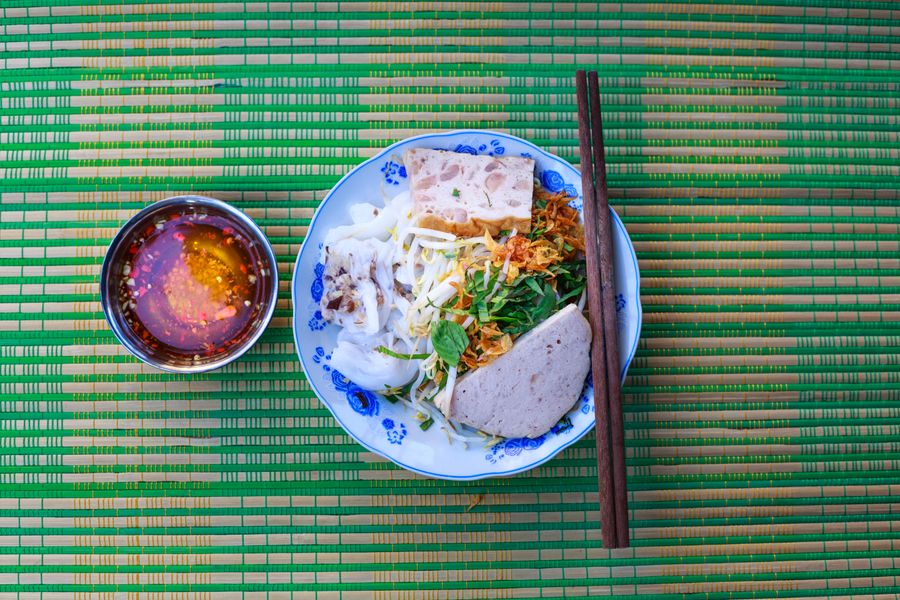
Ask a Changsha man what is in his noodle broth and he will shrug. The truth is more careful than the shrug: chicken, pork bones, sometimes dried shrimp, sometimes a whisper of something smoked — simmered overnight, skimmed at dawn, kept just below a boil so that the fat stays clear. The broth is not meant to overwhelm you. It is meant to hold you.
What arrives in your bowl is restraint itself. Pale noodles, translucent broth, a scatter of chopped green onion, and then the decision — the only real decision of the morning. You choose your topping: minced pork, a square of braised beef, a soft-poached egg that leaks golden yolk into the liquid. And if you are feeling brave, or sad, or both, you add a spoonful of the house chili paste that sits on every table in a small earthen jar, the colour of rust and memory.
The first mouthful is gentle. That is the trick. The second one is not. The chili arrives late, like a thought you should have had yesterday, and by the third you understand why Hunanese people do not trust food that cannot fight back. The warmth does not begin in the bowl; it begins in your chest, and spreads slowly outward, like the first reliable hour of the day.
Eating Them the Changsha Way
There is a word in Changsha: suō (嗦) — to slurp. You do not eat these noodles so much as pull them in. You lift the chopsticks high, let the noodles cool for a moment in the air, and then commit. The noodles are soft enough that they do not need chewing, only companionship. The broth is drunk at the end, straight from the bowl, head tilted, the last pale drops holding the flavour you have been chasing all morning.
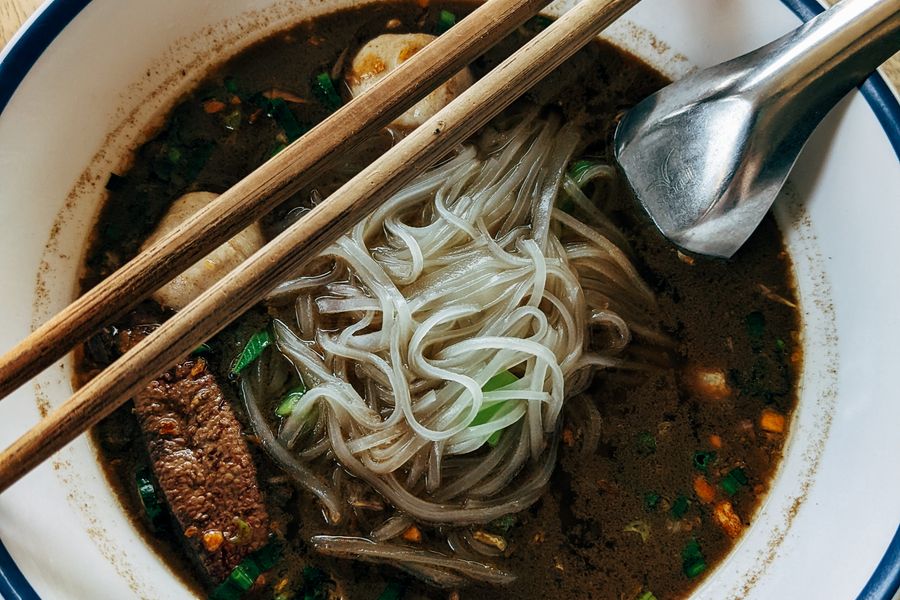
Locals will tell you the best bowl is never the famous one. It is the one on the corner your grandmother pointed out, or the one whose cook knows you by sight, or the one with the plastic stools and the sign too worn to read. In 火宫殿 (Huogongdian) and 南门口 (Nanmenkou) the queues are long and the steam is thicker, and there is a special romance to standing in that steam with your jacket undone, holding a bowl of noodles the way you would hold something you are still deciding about.
A Philosophy of the Small Warm Thing
flowcloud would say that a bowl of rice noodles is a lesson in moderation that this city of chilies and loud opinions almost never learns. The broth is quiet. The noodles are mild. Only the chili is Hunan, and even it waits for you to come to it. There is something lonely and lovely in that — a dish that asks nothing of you except that you be present for a while, that you not be in a hurry, that you finish it while it is still hot and let the morning decide what it wants to be.
Eat them on your first morning in Changsha, when you are still a stranger and everything is possible. Eat them again on your last, when the city has stopped being a photograph and started being a memory. The bowl will be the same. You will not be.
Where to find it: 坡子街, 火宫殿, 南门口 — any shop where the steam begins before the sun does. Order with 肉丝码 (pork topping), add the egg, and trust the jar of chili. It knows.