
The Festival Table: Whole Roast Lamb of the Regiment City
金皮酥脆全场动,一羊当宴待远宾 Jīn pí sūcuì quánchǎng dòng, yī yáng dāng yàn dài yuǎnbīn – The golden crackle stirs the whole hall; one lamb becomes a feast for guests from afar
正文:烤全羊 Kǎo Quán Yáng roast whole lamb is the festival centerpiece of 五家渠市 Wǔjiāqú Shì Wujiaqu City – a whole carcass buttered, egg-washed and seasoned, then slow-roasted in a vertical oven or a trench grill until the skin turns mahogany crisp and the meat swings off the bone. This is the dish of homecomings, weddings and regiment anniversaries: a table with a whole lamb on it is the plain statement that today matters, and in the courtyard restaurants along the city’s southern rim the ovens run all weekend.
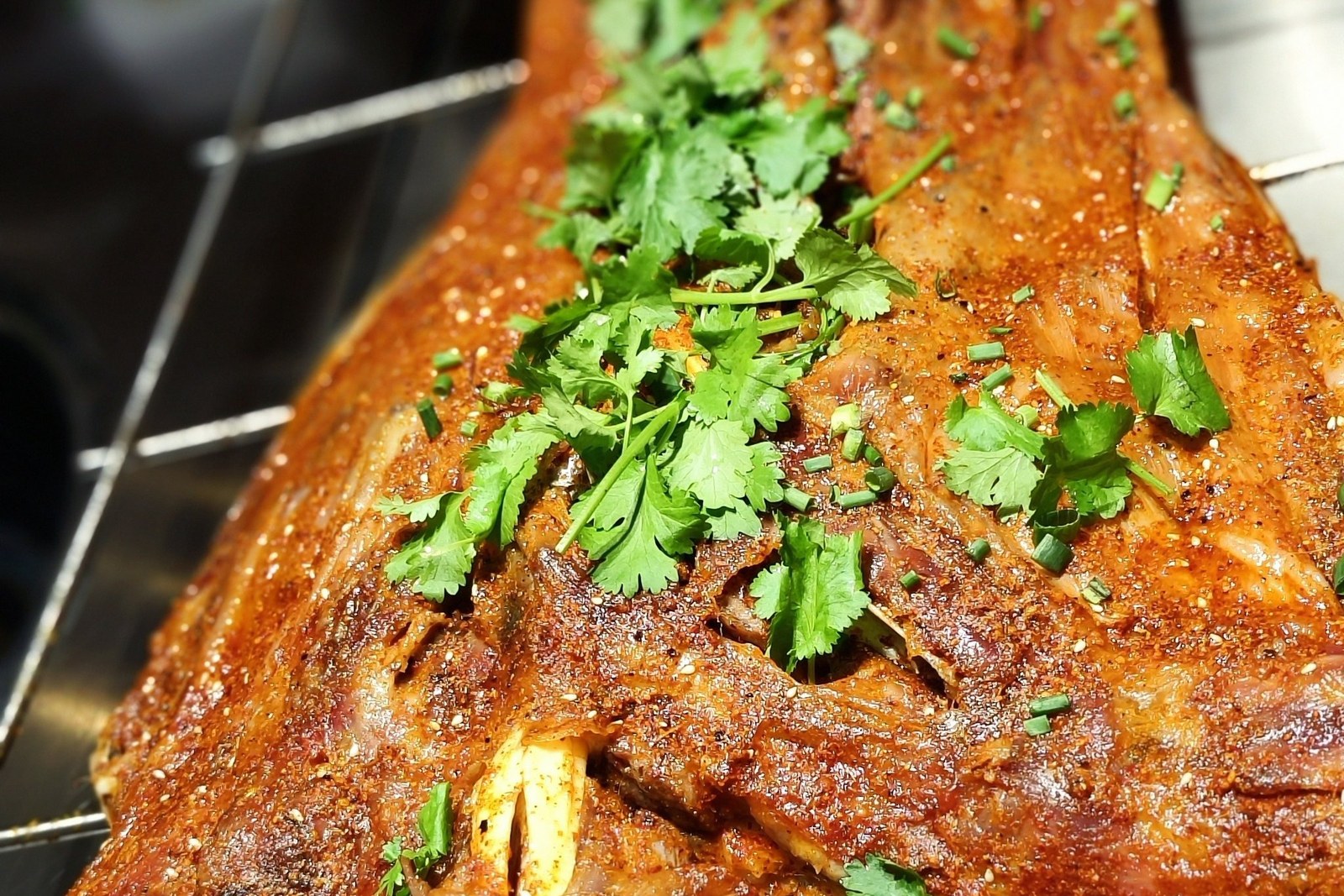
The roasting is a full-day craft. The lamb – always a young gobi-grazed animal – marinates overnight in egg, honey, cumin and pepper pastes, then goes into the sealed oven before dawn with the fire managed by feel; seven hours later the skin cracks like lacquer and the first carve sends the whole room quiet. Restaurants that specialize in the dish carve at the table: skin first, then the shoulder, then the ribs, each cut following the animal’s own seams – the etiquette is as precise as the roasting.
Order it as it is meant to be ordered: one lamb feeds eight to twelve, comes with naan baked under the animal to catch the drippings, and carries side plates of raw onion, vinegar-chili dip and pickled cabbage. Smaller groups order the half lamb or the rack version, which the best houses roast in the same oven and carve with the same ceremony. The crackling skin dipped in dry cumin salt is the bite everyone remembers.
The dish anchors the festival calendar. At the summer fair by Qinggeda Lake, whole-lamb ovens line the food rows and the carving demonstrations draw crowds on their own; regiment family celebrations book courtyard restaurants weeks ahead; and the herder cooperatives south of the city raise the preferred carcasses on the same salt-bush range that flavors everything else in this district. One oven, one animal, one long afternoon – the roast whole lamb is the slow food of a fast-built city.
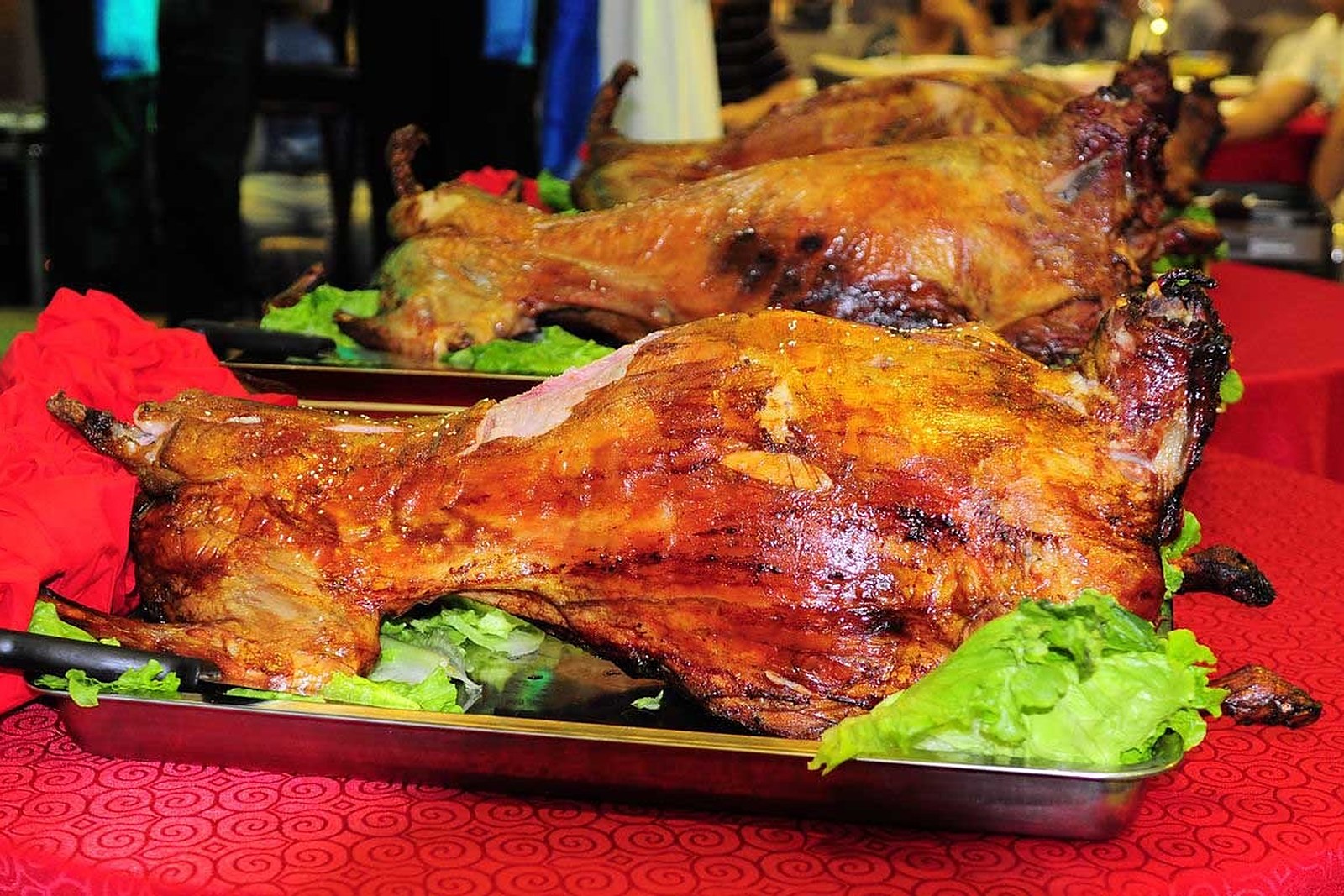
Book ahead and come hungry: the full lamb needs a day’s notice at the serious houses, the weekend ovens sell out by noon, and the price – fair for what it is – rewards a full table. Autumn is the season, when the new lambs come off the gobi range.
Beyond the festival table, the same 五家渠市 Wǔjiāqú Shì Wujiaqu City holds other flavors: 手抓饭 Shǒuzhuāfàn lamb pilaf for the gold rice pot, 烤羊肉串 Kǎo Yángròu Chuàn lamb kebabs for the charcoal smoke, 韭菜盒子 Jiǔcài Hézi leek boxes for the frying-pan counter, and 奶皮子 Nǎipízi milk skin for the herder’s cream – four more doors into the same 五家渠市 Wǔjiāqú Shì Wujiaqu City. With the roast settled, our Wujiaqu travel map fills the day.
Words and Names
What the Locals Know
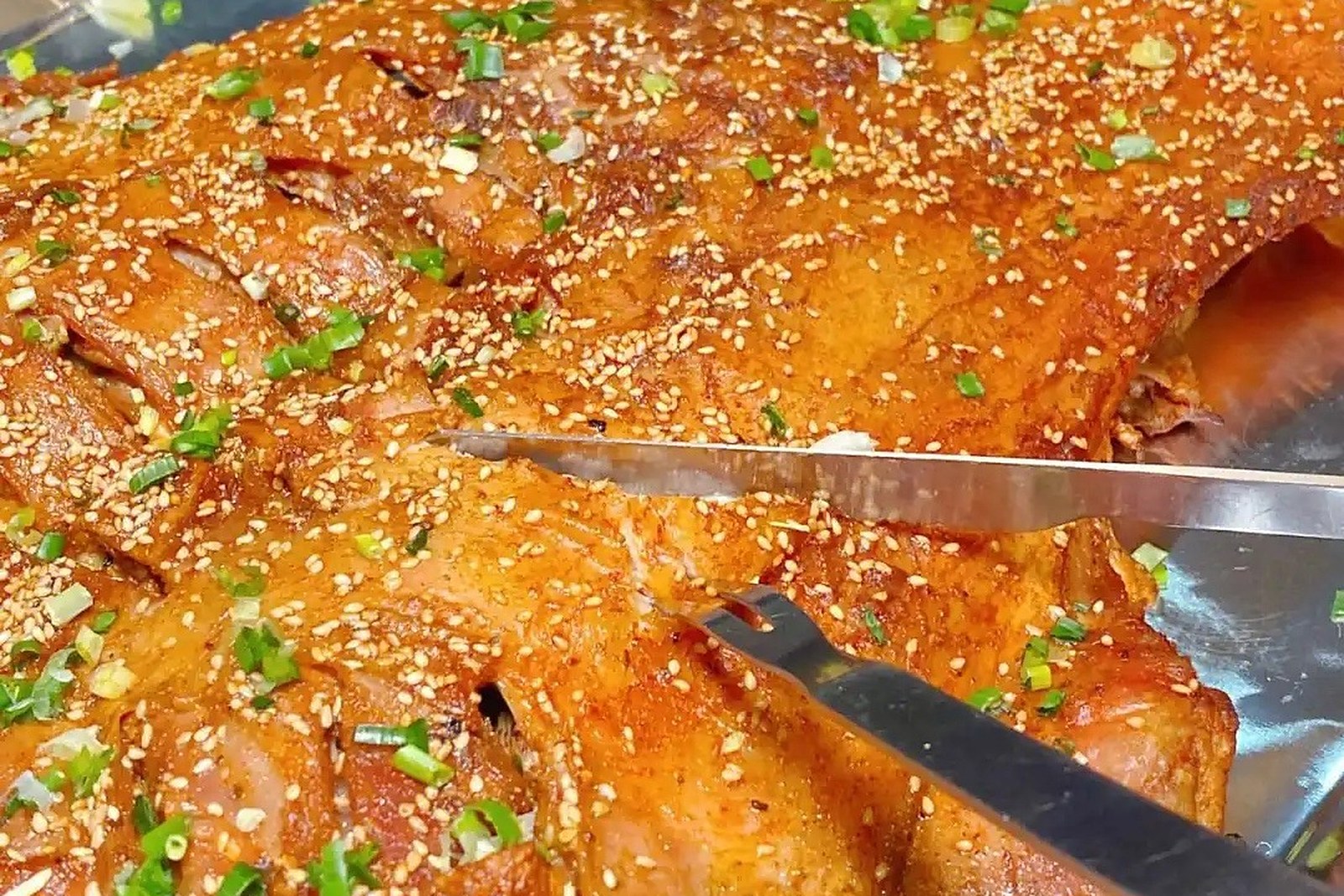
flowcloud would say roast whole lamb is the city’s big occasion made edible: seven hours of fire, a skin like lacquer, and a carving ceremony that turns dinner into a gathering – the plate that marks a day as worth remembering. All checked November 2026.
Where to find it: Whole-lamb houses line the courtyard restaurant rows on Wujiaqu’s southern rim and at the Qinggeda Lake fair food street – book a day ahead for the full lamb, order the crackling skin with cumin salt first. All checked November 2026.