
Breakfast in Rongchang District often begins not with thin noodles but with broad, palm-sized sheets of dough floating in broth — 荣昌铺盖面 Róngchāng Pūgài Miàn, literally “quilt noodles,” named for the way each piece drapes and folds like a coverlet on a bed. It is the district’s most comforting morning bowl, equal parts texture and soup.
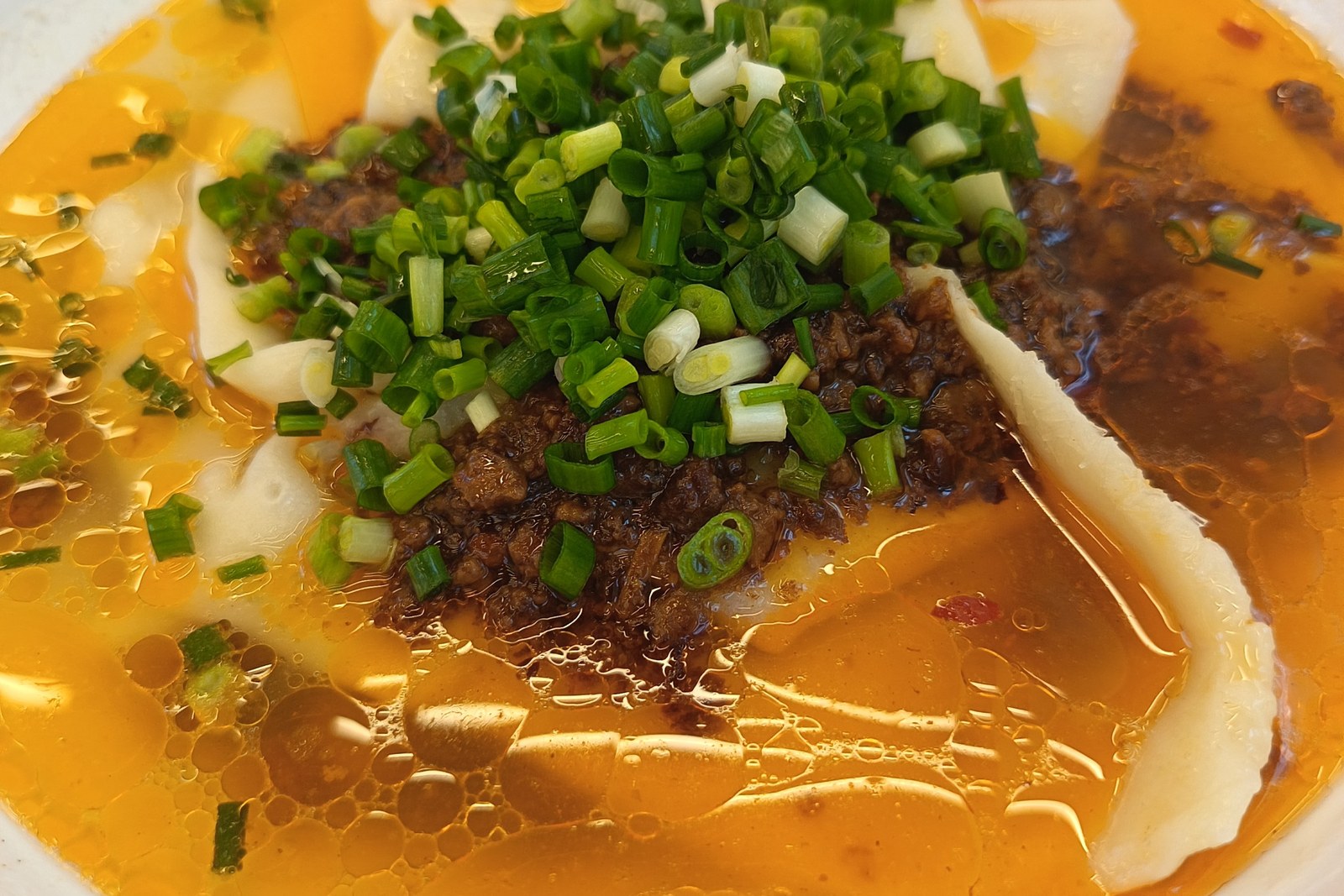
The shape is the whole identity. A soft wheat dough is rested, then the cook pinches off a lump and stretches it between the fingers into a thin, irregular sheet — wider than a hand, thinner than a coin — before dropping it into the pot. Because the sheets are pulled by hand and never cut by machine, every piece is different: some are lacy and translucent at the edges, some fold over themselves into soft pleats. They cook in seconds and stay silky rather than chewy, a texture closer to a fresh dumpling wrapper than to ordinary noodles. The broth underneath is a slow-simmered pork or chicken bone stock, clean and savoury, which the plain dough soaks up greedily.
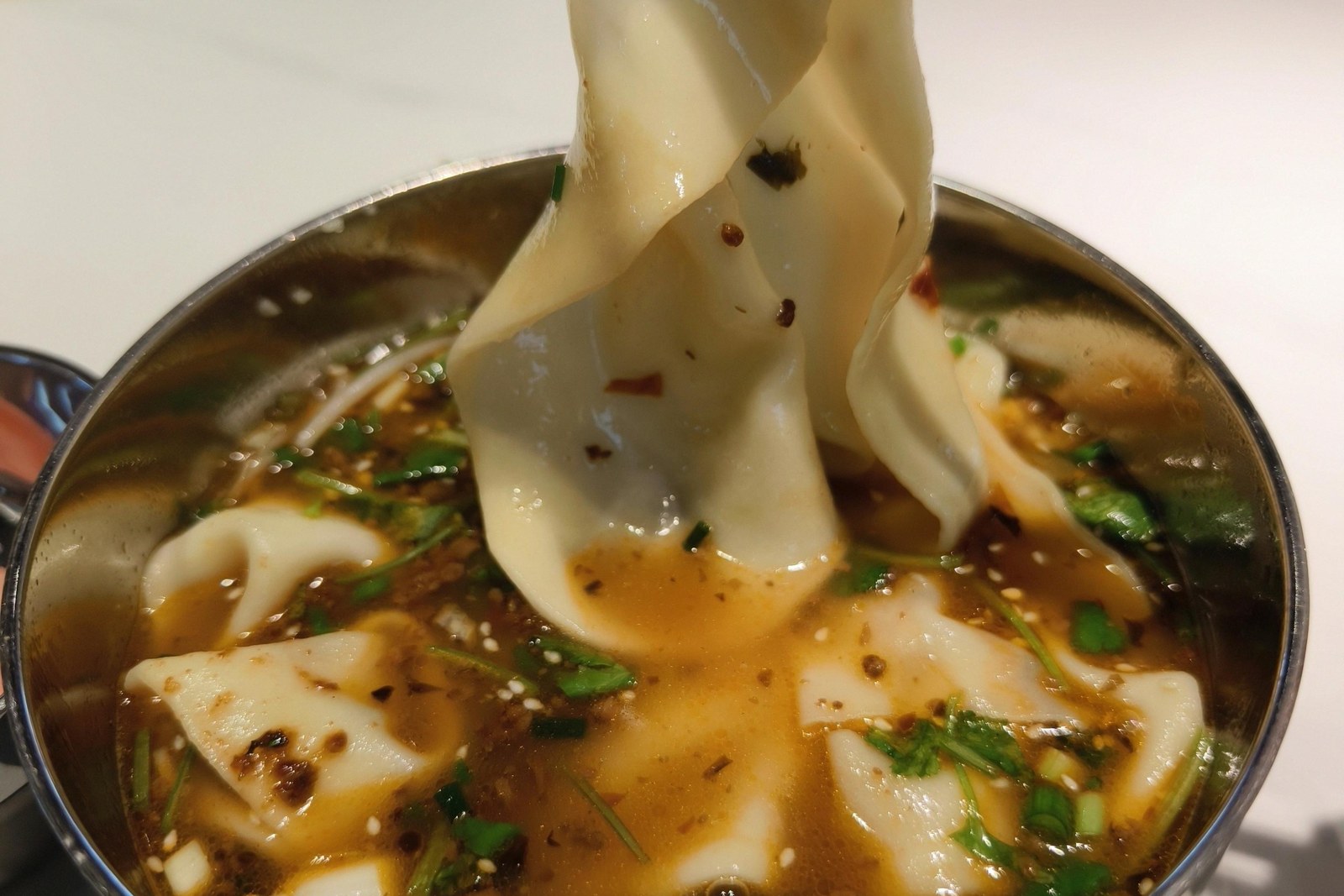
What makes the Rongchang bowl distinctive is the finishing. A spoon of chilli oil is swirled into the pale broth so it blooms red at the rim, then a scatter of raw scallion and sometimes a few pickled greens go on top. The first bite is the sheet itself — soft, yielding, carrying the bone broth and the gentle heat of the oil — followed by the bright bite of scallion. It is hearty without being heavy, and the wide format means you eat it with a lift of the chopsticks rather than a slurp, folding each sheet as you go.
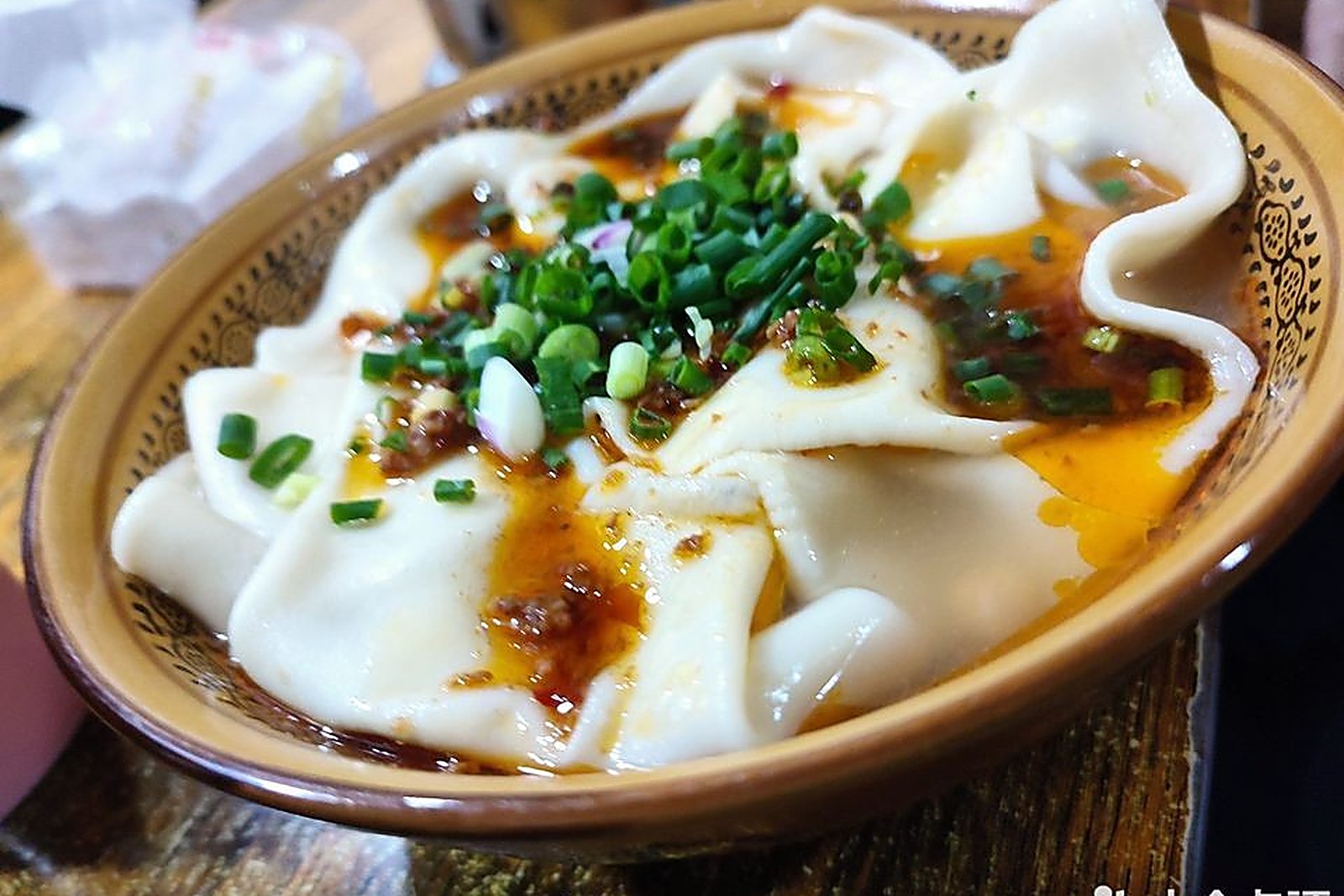
The dish is everyday, not celebratory: a quick stand-up breakfast before work or a late supper, sold by the bowl from neighbourhood noodle shops. Locals judge a shop by the thinness and even cooking of its sheets — a thick, doughy centre is the common failure — and by a broth that tastes of bone rather than powder. Because the pulling is skill, not machinery, the best bowls come from cooks who have done it thousands of times.
Words and Names
荣昌铺盖面 Róngchāng Pūgài Miàn — Rongchang “quilt” sheet noodles 铺盖 pūgài — a coverlet or quilt, for the draped noodle shape 骨头汤 gǔtou tāng — bone broth, the noodle base 辣椒油 làjiāo yóu — chilli oil, swirled into the broth 葱花 cōnghuā — scallion, the bright finishing scatter
What the Locals Know
A good bowl shows sheets pulled thin enough to see light through the edges, cooked through but never doughy, in a broth that is clearly bone-made and not salty powder. The chilli oil should tint the surface without overwhelming the soup, and the scallion should be fresh-cut. In Rongchang District this noodle is typical of the neighbourhood breakfast and supper shops around the county seat, where the hand-pulling happens in plain view of the counter. It is an all-day staple but busiest at dawn and after dark.
flowcloud would say that Rongchang puge mian is bone broth cradling hand-pulled quilt-thin noodle sheets in chilli and scallion. All checked October 2026.
Where to find it: Find it at the neighbourhood noodle shops around the Rongchang county seat, Chongqing, where cooks pull the wide sheets by hand at the counter from breakfast through late supper. All checked October 2026.