
In the slow-food countryside of Rongchang District, on the western edge of Chongqing, the local pig — the famed 荣昌猪 Róngchāng Zhū, a black-and-white breed raised here for centuries — meets the embers of fruit-wood fire. The result is 荣昌烤肉 Róngchāng Kǎoròu, the district’s signature roast, whose crackling skin and sweet, juicy meat have made Rongchang a quiet pilgrimage for carnivores crossing the Sichuan–Chongqing border.
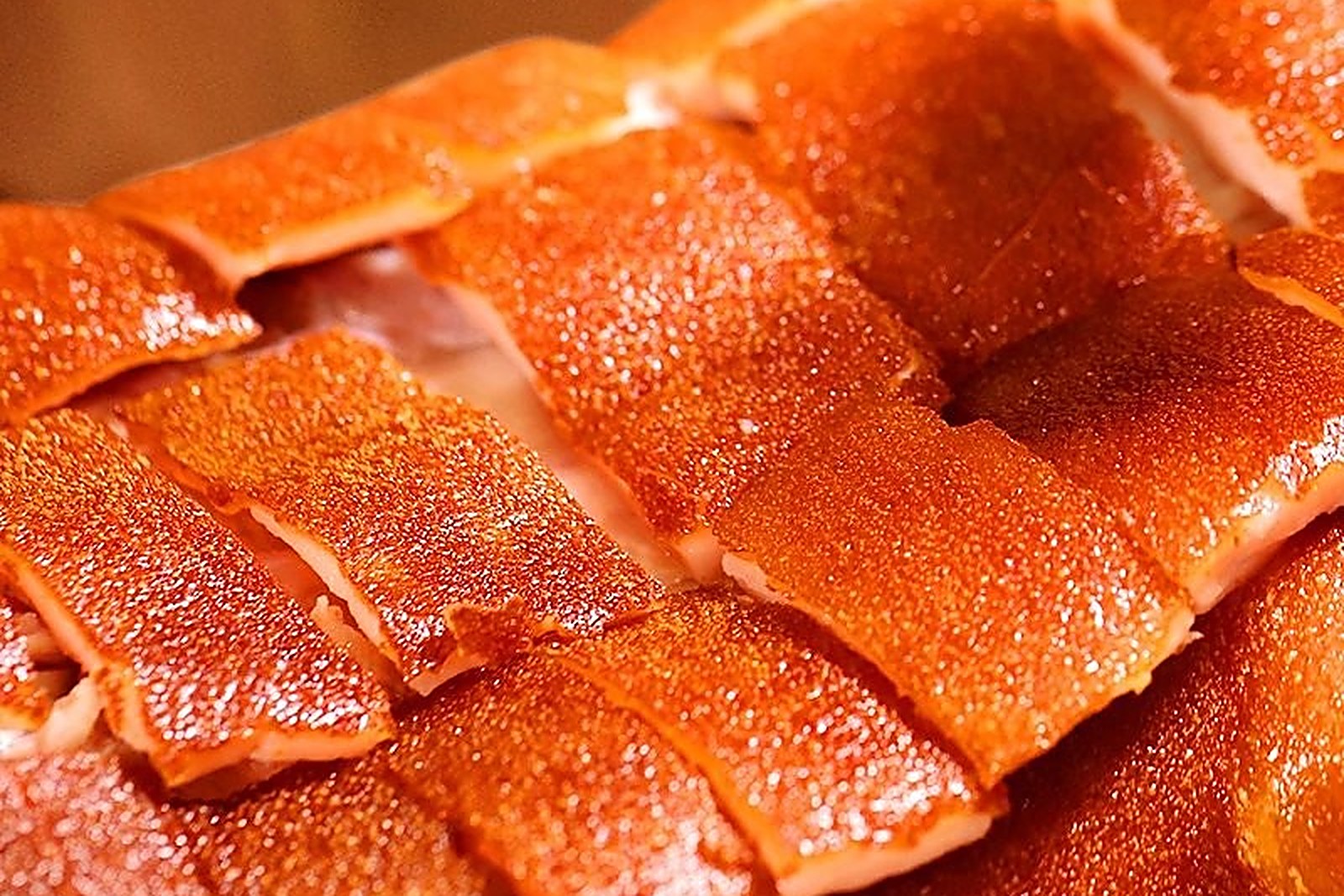
What sets the dish apart begins with the animal itself. The Rongchang pig is a heritage breed known for fine marbling and clean flavour, and local cooks treat that quality with restraint rather than heavy spice. The pig is dressed, seasoned lightly with salt, ginger, and a little huajiao, then suspended over smoking fruit-wood — typically peach or pear branches — so the fat renders slowly while the skin dries to a brittle, glassy shell. The fruit-wood smoke is the quiet hero: it lends a sweet, almost floral note that gas or electric heat cannot imitate. Done right, the skin snaps like thin toffee and the layer beneath stays trembling and translucent.
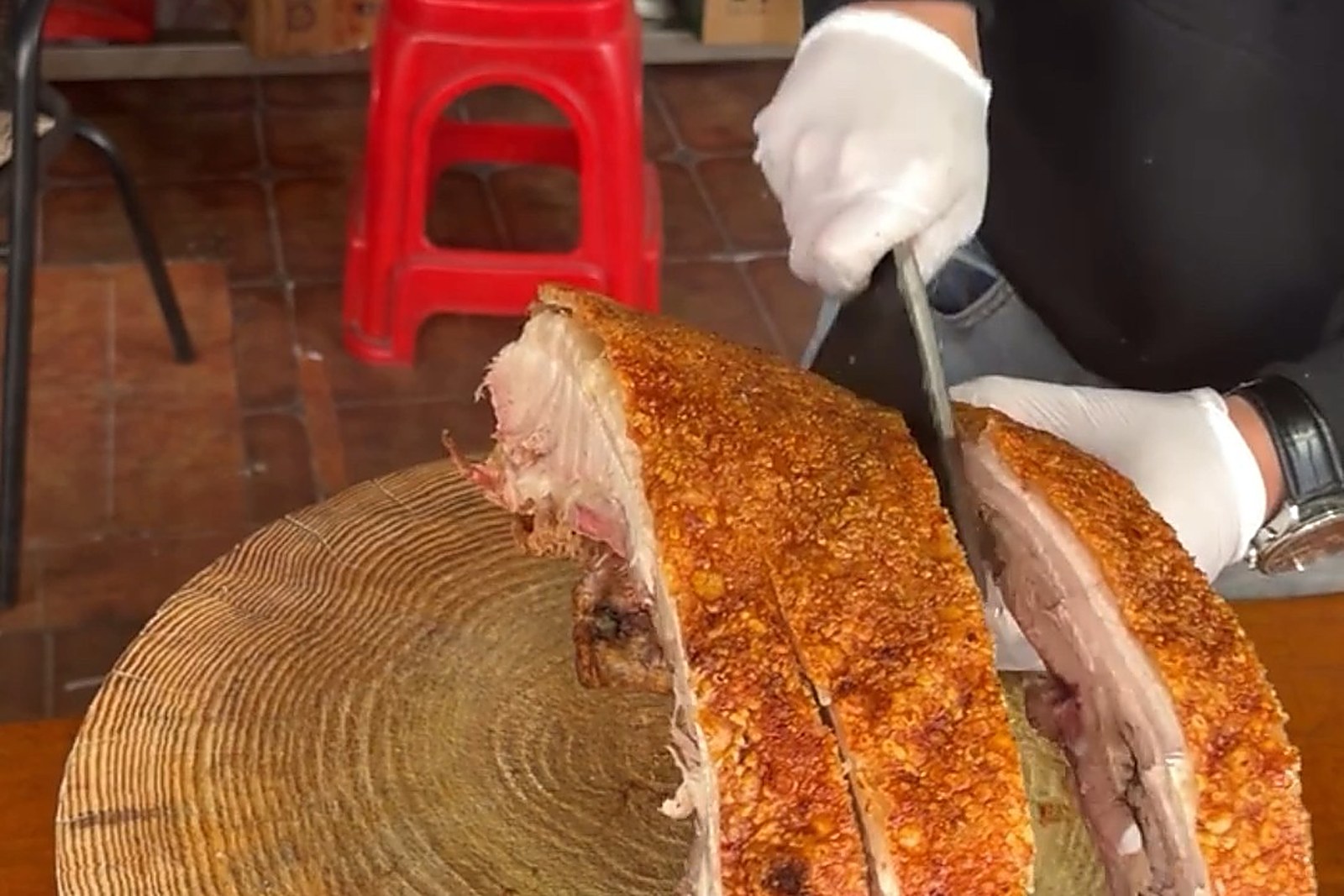
The roast is eaten in pieces, torn rather than neatly carved, often with a dab of chilli powder or a wedge of raw garlic. The contrast is the point: the first bite is all crunch and smoke, the second yields warm, savoury fat, and the lean meat underneath stays surprisingly sweet. On festival tables the whole pig is presented head and all, but in everyday eating it is sold by weight from the joint, the butcher’s cleaver knocking through the crackling in loud, satisfying cracks. Because the breed and the wood both matter, the flavour changes subtly with the season and the orchard trimmings available to the fire.
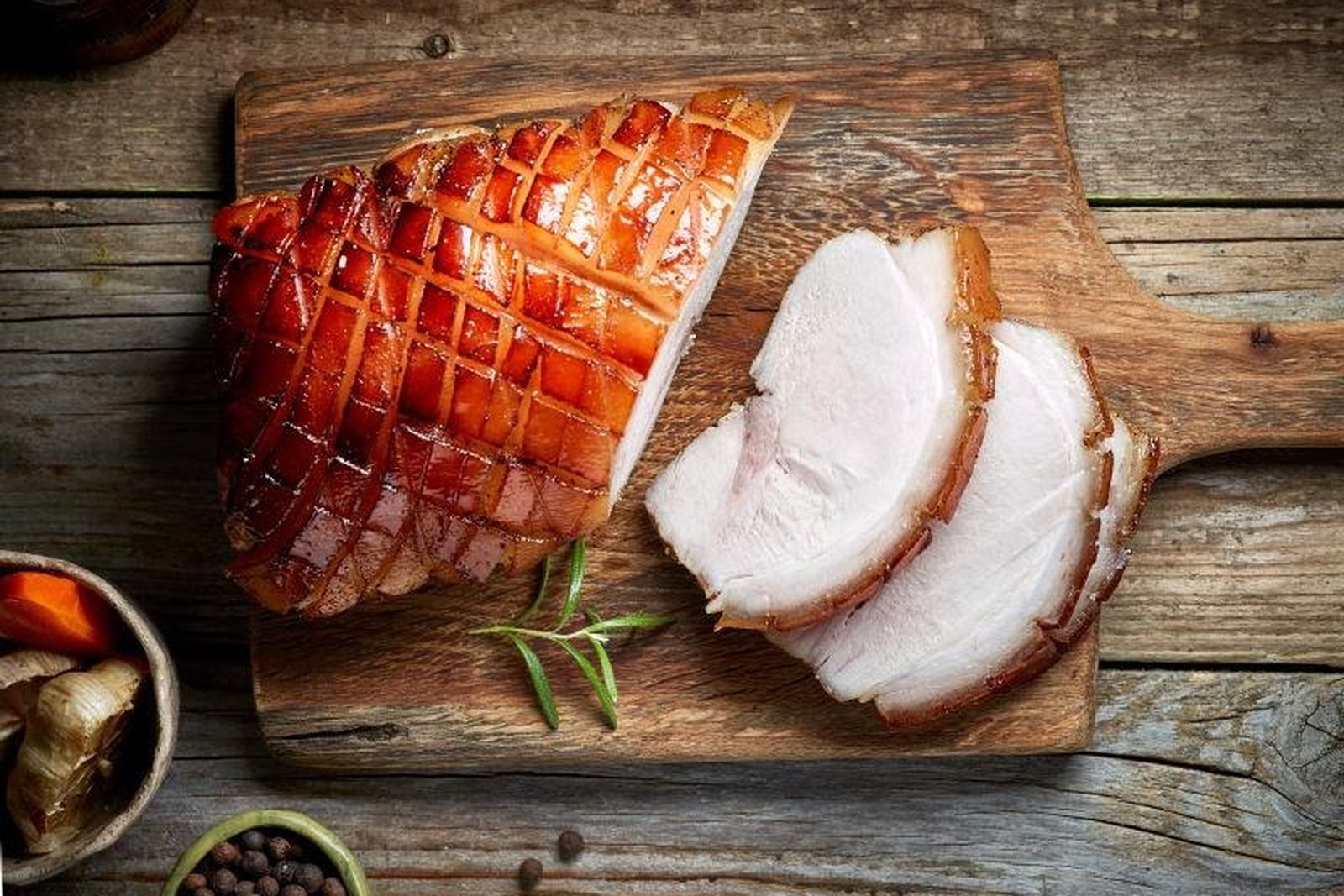
Beyond the pig itself, Rongchang roast pork is a dish of place — it tastes of the orchards and the patient fire as much as of the meat. Visitors who expect heavy Chongqing chilli are often surprised by how clean and pork-forward it is; the smoke does the seasoning. It pairs naturally with plain rice or a cold local beer, and the leftovers, if any survive, are reborn the next morning in a quick stir-fry with green chilli.
Words and Names
荣昌猪 Róngchāng Zhū — the indigenous Rongchang pig breed of Chongqing 荣昌烤肉 Róngchāng Kǎoròu — Rongchang roast pork 花椒 huājiāo — Sichuan peppercorn, numbing and aromatic 果木 guǒmù — fruit-wood used for smoking and roasting 脆皮 cuìpí — the crisp, crackling skin of the roast
What the Locals Know
The best roast is judged by the skin: it should shatter cleanly and not be greasy or leathery, and the fat beneath should be near-liquid rather than rubbery. Fruit-wood smoke is the marker of an authentic pit; a pale, dry skin usually means a fast, hot roast that skipped the slow render. In Rongchang District the dish is typical of the rural towns and roadside roast houses around the county seat and along the routes toward the Sichuan border, where pigs are still raised close to home. It is an all-year food but best in cooler months when the fat sets firm and the roasting fires feel welcome.
flowcloud would say that Rongchang roast pork is fruit-wood smoke and crackling skin wrapped around the sweetest local pig. All checked October 2026.
Where to find it: Look in the roast houses and rural towns around the Rongchang county seat and along the western routes toward Sichuan, where the heritage pig is raised and slow-roasted over fruit-wood. All checked October 2026.