
On a hot Rongchang afternoon, locals queue at the cold-snack stalls for a bowl of 荣昌黄凉粉 Róngchāng Huáng Liángfěn, the district’s pale-gold jelly that cools the tongue while the chilli wakes it back up. Unlike the grey mung-bean jelly found elsewhere in Sichuan, Rongchang’s version is made from yellow peas and rice, giving it a soft, egg-yolk colour and a tender, almost creamy bite.
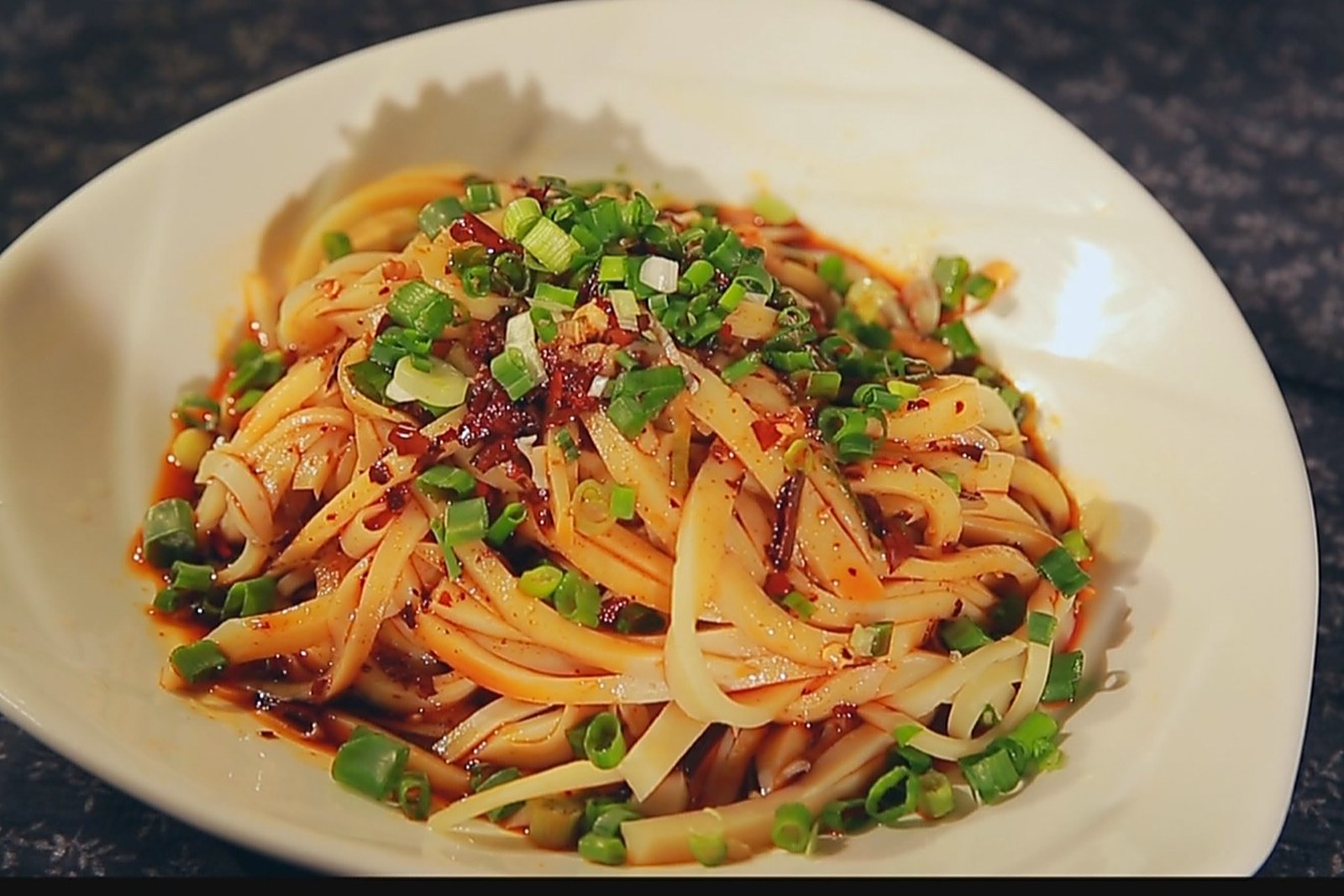
The colour is the first clue to the method. Dried yellow peas are soaked, ground, and cooked down with a little rice slurry until the starch sets into a gentle, jiggly block; once cooled it is cut with a wave of the blade into thick, hand-torn-looking ribbons rather than neat cubes. That irregular cut is deliberate — the ragged edges hold more of the dressing. The jelly itself is mild and faintly sweet, so it plays straight man to a loud, oily garnish of crushed dried chilli, garlic water, a little black vinegar, and a shower of ground peanut that adds both crunch and a nutty finish.
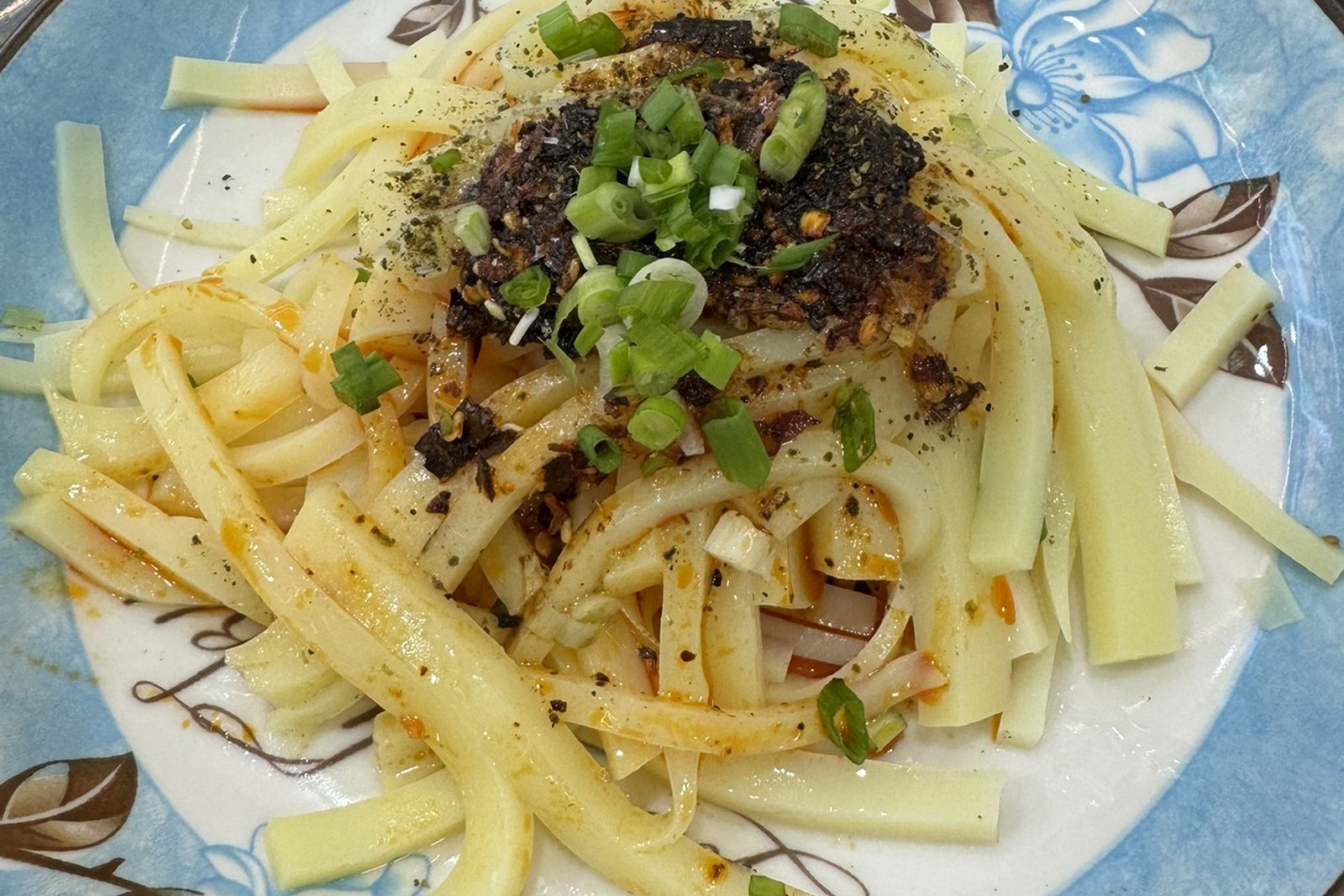
What makes Rongchang yellow liangfen distinctive is the balance between the soft, almost custard-like jelly and the aggressive seasoning. The pea-and-rice base is more delicate than mung-bean versions, so it absorbs the chilli oil without falling apart, and the garlic comes forward sharply before the peanut rounds it off. It is eaten cold, with a flat spoon, as a midday cooler or a late snack, and never as part of a formal meal — it belongs to the street, the stool, and the paper bowl. Vendors keep the blocks buried in ice-water through the summer so each serving stays firm and cold to the touch.
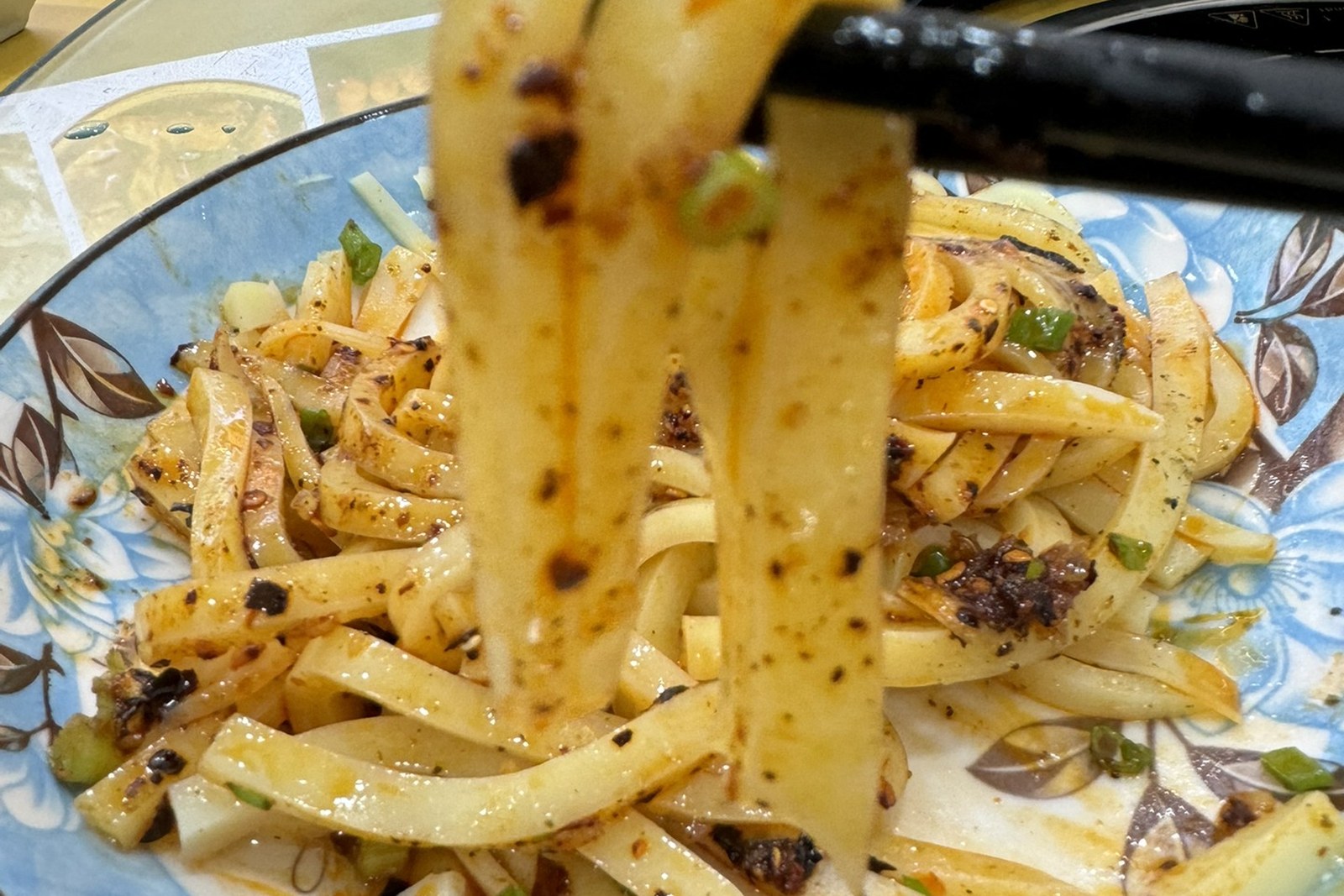
Because the dish is cheap, fast, and forgiving, it is the everyday face of Rongchang snacking — the thing you grab between the roast-pork lunch and the evening noodle. Locals argue, good-naturedly, about whether more vinegar or more garlic makes the definitive bowl, but everyone agrees the jelly must be fresh that day; yesterday’s block turns sour and slack.
Words and Names
荣昌黄凉粉 Róngchāng Huáng Liángfěn — Rongchang yellow pea-and-rice cold jelly 凉粉 liángfěn — cold starch jelly, a Sichuan street snack 黄豌豆 huáng wāndòu — yellow pea, the base starch 辣椒油 làjiāo yóu — chilli oil, the red dressing 花生 huāshēng — peanut, crushed as garnish
What the Locals Know
A good bowl is judged by freshness: the jelly should be firm, cold, and clean-tasting, never sour or weeping water, and the ribbons should keep their shape under the oil. The chilli should glow rather than scorch, and a generous pinch of crushed peanut is the sign of a careful vendor. In Rongchang District this snack is typical of the morning and afternoon street stalls around the county-seat markets and bus stations, where it is sold by the bowl through the warm months. It is a fair-weather food first, though some stalls keep it iced year-round.
flowcloud would say that Rongchang yellow liangfen is cool golden jelly dressed loud in chilli, garlic, and peanut. All checked October 2026.
Where to find it: Hunt the cold-snack stalls around the county-seat markets and transport hubs of Rongchang District, Chongqing, where the yellow pea-and-rice jelly is cut fresh each day. All checked October 2026.