
The Desert’s Candy Jar on the Tree: Ruoqiang Dates, Hang-Dried Until the Skin Wrinkles
大漠日头足,枣甜核也小 Dàmò rìtou zú, zǎo tián hé yě xiǎo – The desert sun does its work; the date turns sweet and its pit stays small
The Ruoqiang grey jujube Ruòqiāng Huīzǎo grows in Ruoqiang County at 巴州’s southeast, an oasis pinched between the Taklamakan and the Altun Shan, with more than three thousand hours of sun a year and a day-night swing that locks sugar into the flesh. The date is not large – thin skin, small pit, disproportionately thick flesh, and a sweetness that arrives with real date aroma behind it. Ruoqiang therefore sits firm in the 「hometown of Chinese red dates」 seat, and every October the whole county bends to this one fruit.
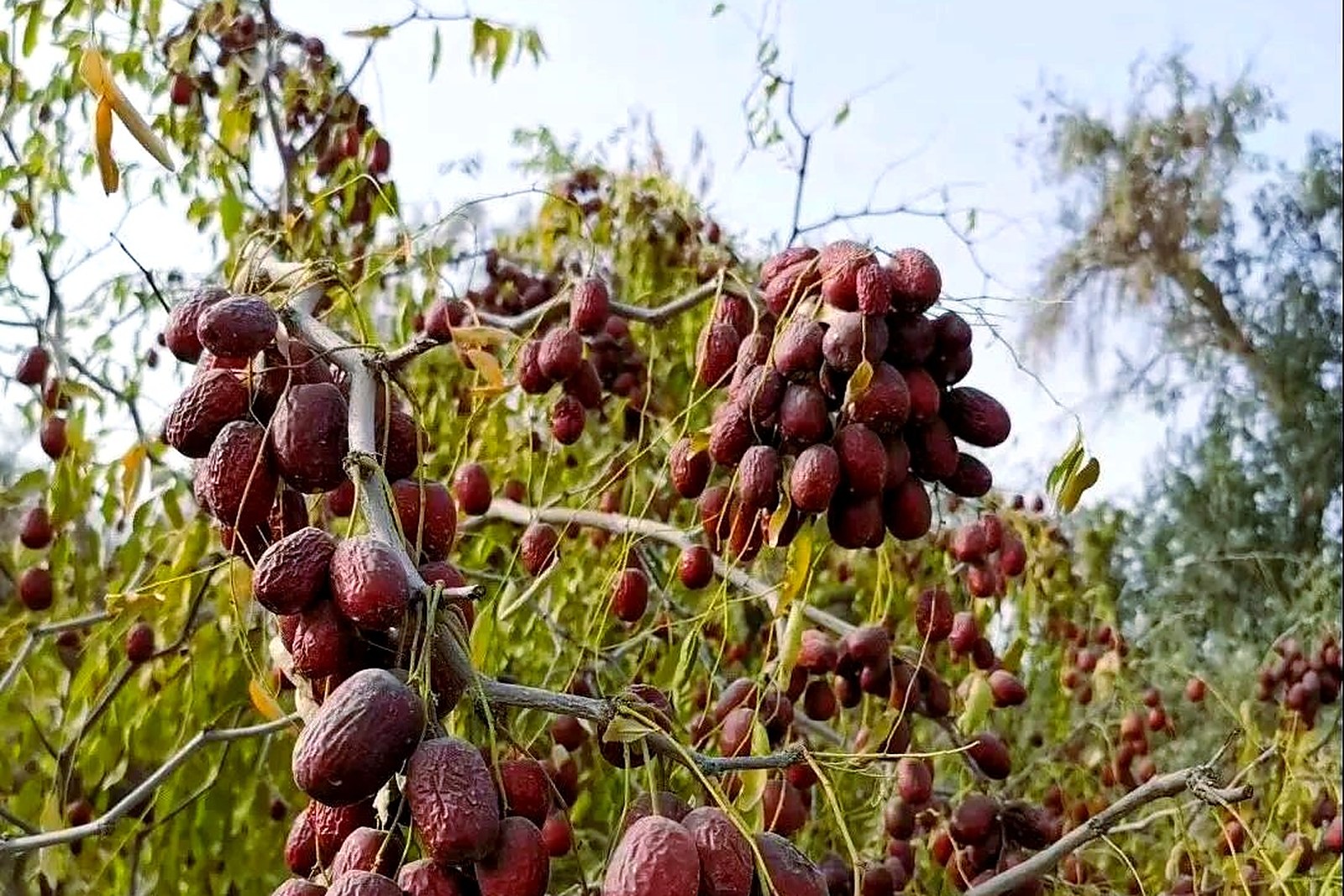
The date’s signature craft is 「hang-drying」: fully ripe fruit is left on the branch, letting the desert wind keep blowing until moisture leaves the fruit on the tree itself and sugar concentrates in reverse – only when the skin wrinkles is it ready. Drying on the tree, finished by nature, adds a layer of fruit aroma that oven-drying never reaches. Date farmers read the fruit, not the calendar: pinch one, taste one, and only when the skin wrinkles and the sugar lands does the whole village take up the poles.
Beating the dates is worth watching: tarps spread under the trees, one swing of the long pole and the fruit falls like rain, a rolling drumbeat of bounce and patter. Children gather, adults sift out leaves, and by evening the courtyard holds a small dark-red hill. Ruoqiang people say you can hear the harvest in the drumming – the denser the sound, the sweeter the year.
Eating them stays plain: a handful as a snack is the everyday form, and the date enters steeped water, congee, and steamed rolls alike. The local favorite is date-stuffed walnut – the grey jujube’s sticky sweetness around a walnut’s oil fragrance, an energy bomb and standard rations for long desert drives. The red-date congee on hotel breakfast lines, brewed from local fruit, holds a spoon upright.
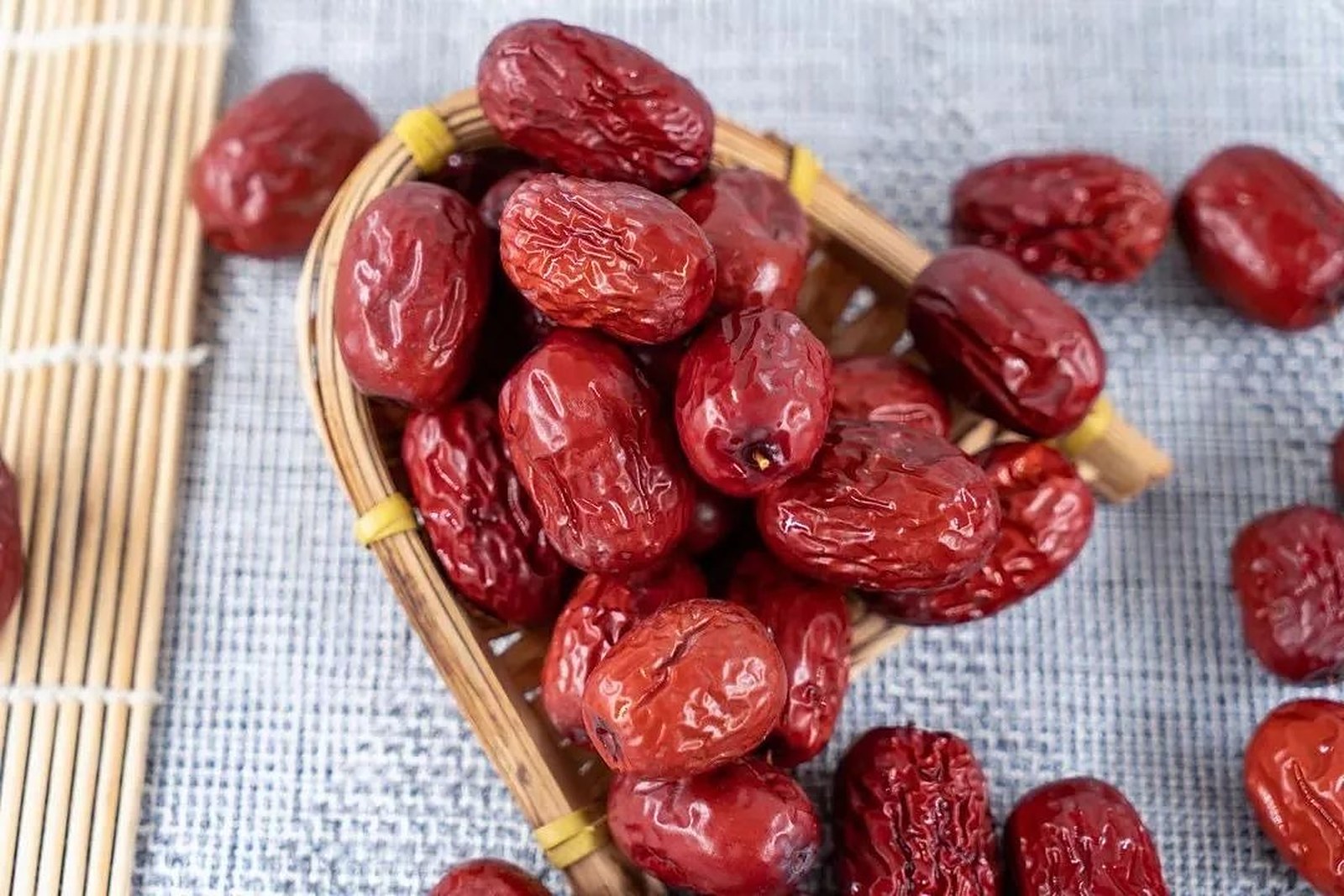
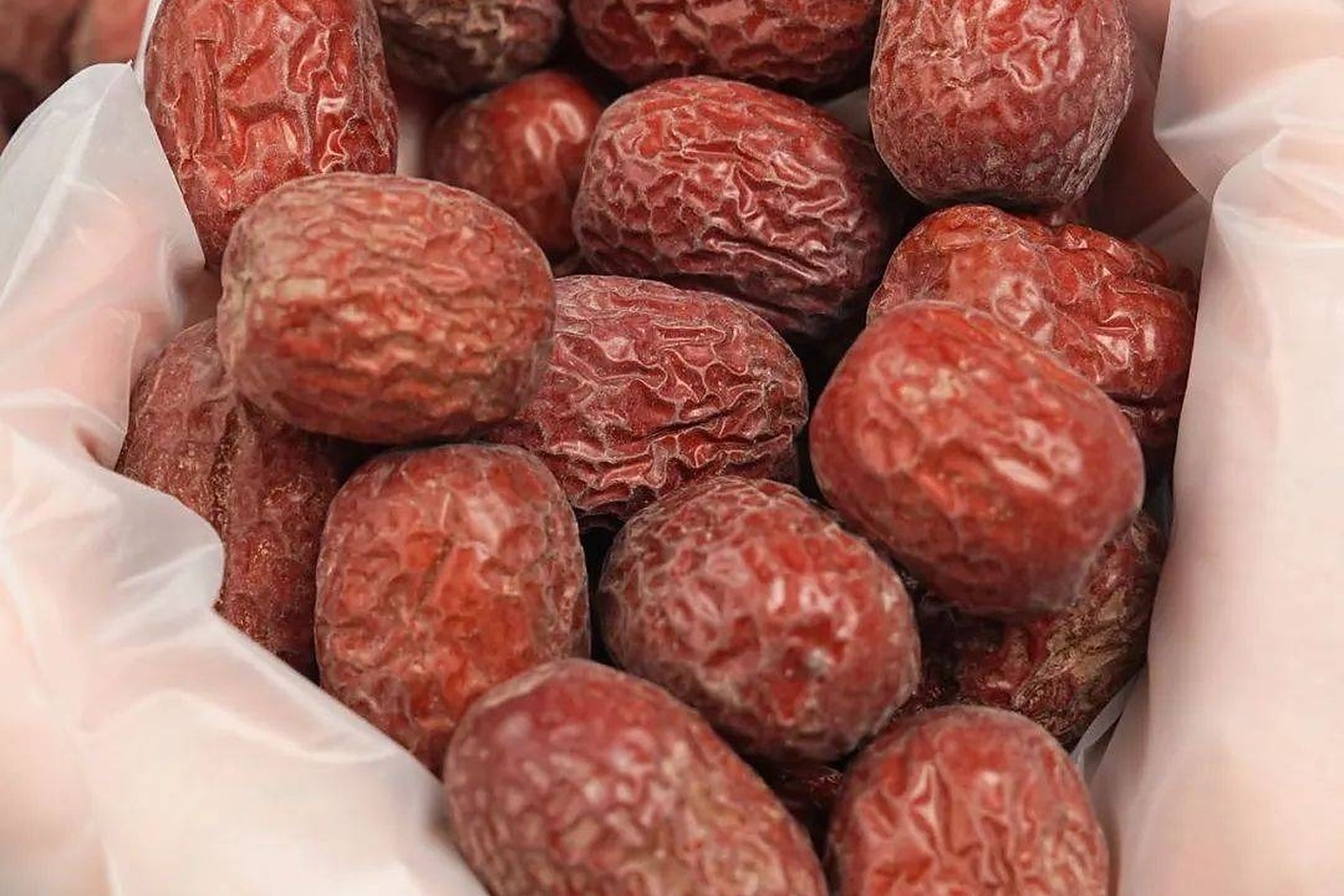
Buying well is about grading: fruit is sorted by size and plumpness, and top-grade flesh stretches into threads when torn apart. Read the wrinkles first – fine, shallow lines mark a properly hang-dried date, while deep chaotic creases suggest drying pushed too fast; then squeeze, and only springy flesh is truly firm. The date shops in Ruoqiang town let you taste before you buy – taste three shops and your tongue votes on its own.
Beyond dry dates, the same 巴音郭楞蒙古自治州 Bāyīnguōléng Měnggǔ Zìzhìzhōu Bayingolin Mongol Autonomous Prefecture holds other flavors: 库尔勒香梨 Kù’ěrlè Xiānglí Korla fragrant pear, 博斯腾湖鱼 Bósīténg Hú Yú Bosten Lake fish, 罗布羊烤肉 Luóbù Yáng kǎoròu Lop sheep roast, and 胡杨菇炖鸡 Húyáng Gū dùnjī poplar mushroom chicken – four more doors into the same 巴音郭楞蒙古自治州 Bāyīnguōléng Měnggǔ Zìzhìzhōu Bayingolin Mongol Autonomous Prefecture. With the sweet dates bagged, our Bazhou travel map fills the day.
The date carries a Loulan pedigree: this oasis sits along the ancient Loulan route of the Silk Road, and the orchards by the ruins grow on the same water and soil where caravans rested two thousand years ago. See the Loulan Museum in town, then eat a grey date, and the sweetness gains an aftertaste of history – the sweetness of this road was tasted by camel caravans long before us.
Courier service is the date industry’s second Silk Road: in season the trucks line up at the village edge, and fruit picked, packed, and shipped in a morning reaches inland cities in three or four days. Growers now livestream the sale – a bag of dates in one hand, a scale in the other, Mandarin with a Xinjiang accent – more persuasive than any advertisement.
The orchard’s ecology is fragile at the edge: the desert starts where the grove ends, so farmers plant windbreak belts between shelterbelt and orchard – one belt guarding one field. Walk into a Ruoqiang orchard and you meet ranks of poplars first, date trees only inside; behind every sweet date stands a formation negotiating with the sand.
Jujube-blossom honey is Ruoqiang’s hidden specialty: in June the flowers open, beekeepers move boxes into the groves, and the honey comes out dark amber, thick enough to hang on the spoon, with the blossom in its scent. Take a bottle home with the dates – steeped together in water, it is the local winter pairing.
Deep processing widens each year: stuffed dates, date chips, and date vinegar wall the county supermarket shelves. The vinegar, sour-sweet, is drunk with water as a digestif locally, but the gift choice remains the graded whole-fruit gift box – clear sorting, traceable origin, presentable in every sense.
Ruoqiang has turned the date into a festival: at the annual red-date festival, the champion-fruit contest is the main event – a single date goes on the scale and the refractometer, and the winning grower’s name goes up the county honor board. Festival sales floors can move half a season’s output in a day, a heat out-of-towners rarely predict.
Storage rules are worth memorizing: the dried date fears moisture, not dryness – sealed at room temperature it keeps half a year, and a summer refrigerator keeps insects away. A damp date turns sugary-sticky and loses sweetness, so open one bag at a time at home; freshness is the whole texture story.
Words and Names
What the Locals Know
flowcloud would say the Ruoqiang date is the desert’s own candy: sun-dried on the branch, packed with patience, and sweet enough to make the long road to Loulan feel shorter. All checked November 2026.
Where to find it: The dried-fruit wholesale street and grower cooperatives in Ruoqiang town are the first picks – taste first, read the wrinkles, squeeze the flesh, then commit. For the October beating, arrange with a cooperative in advance; freshly beaten fruit is bagged on the spot. All checked November 2026.