
Three things go into the water and three things come out, and the name is a joke about examinations. 三及第汤 sān jí dì tāng is the pork soup that stands beside every bowl of noodles in 梅州 Méizhōu, and it is named for the three highest ranks of the old imperial examination: 状元 zhuàngyuán, 榜眼 bǎngyǎn and 探花 tànhuā, the first, second and third place in the palace test. The three ingredients are 猪瘦肉 zhū shòuròu, lean pork; 猪肝 zhūgān, liver; and 粉肠 fěncháng, the small intestine, and the whole dish is a claim that a bowl of soup can carry the same luck as a lifetime of study. It is eaten at breakfast, in the same twenty minutes as the noodles, and it is the reason a Meizhou breakfast is a two-bowl meal.
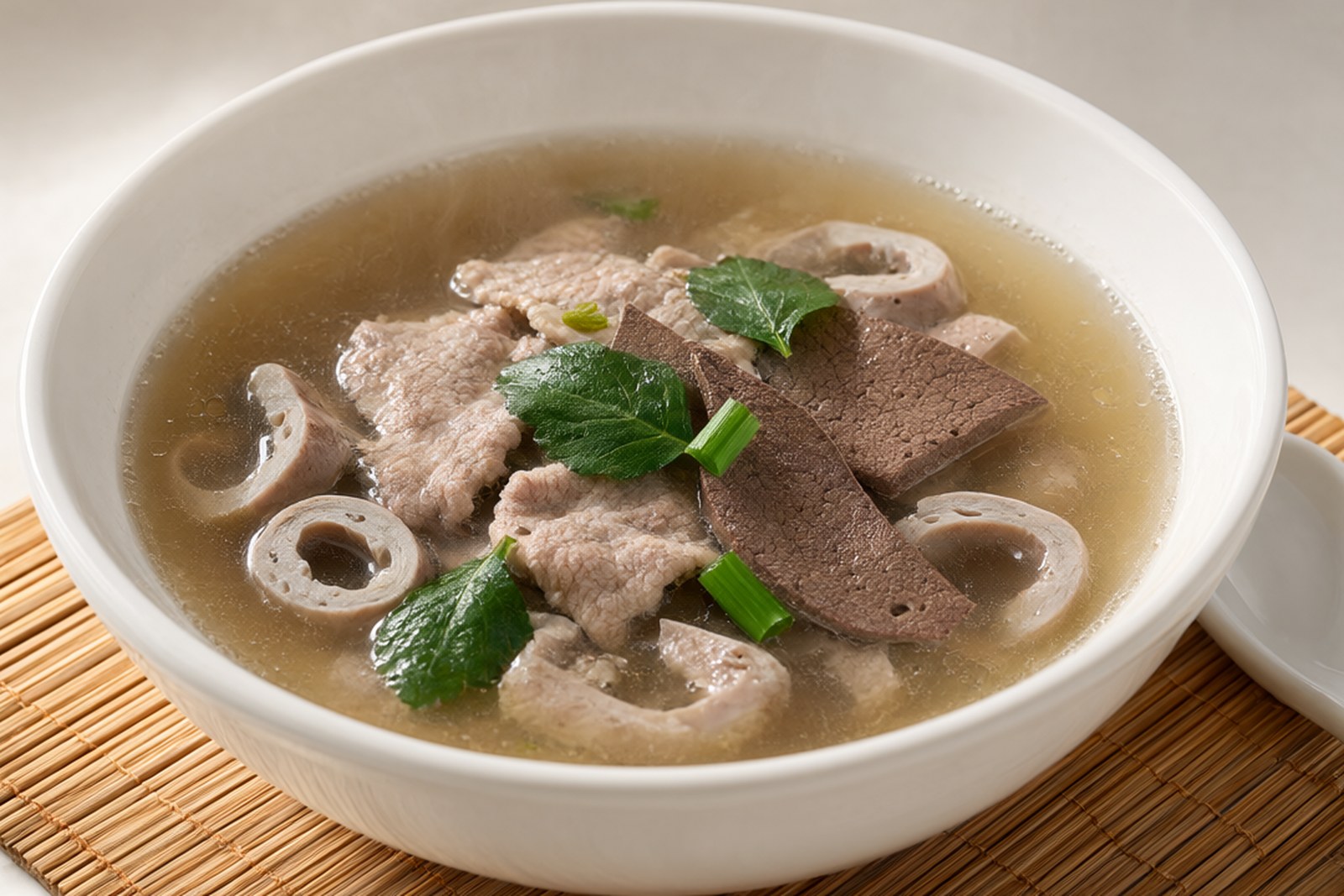
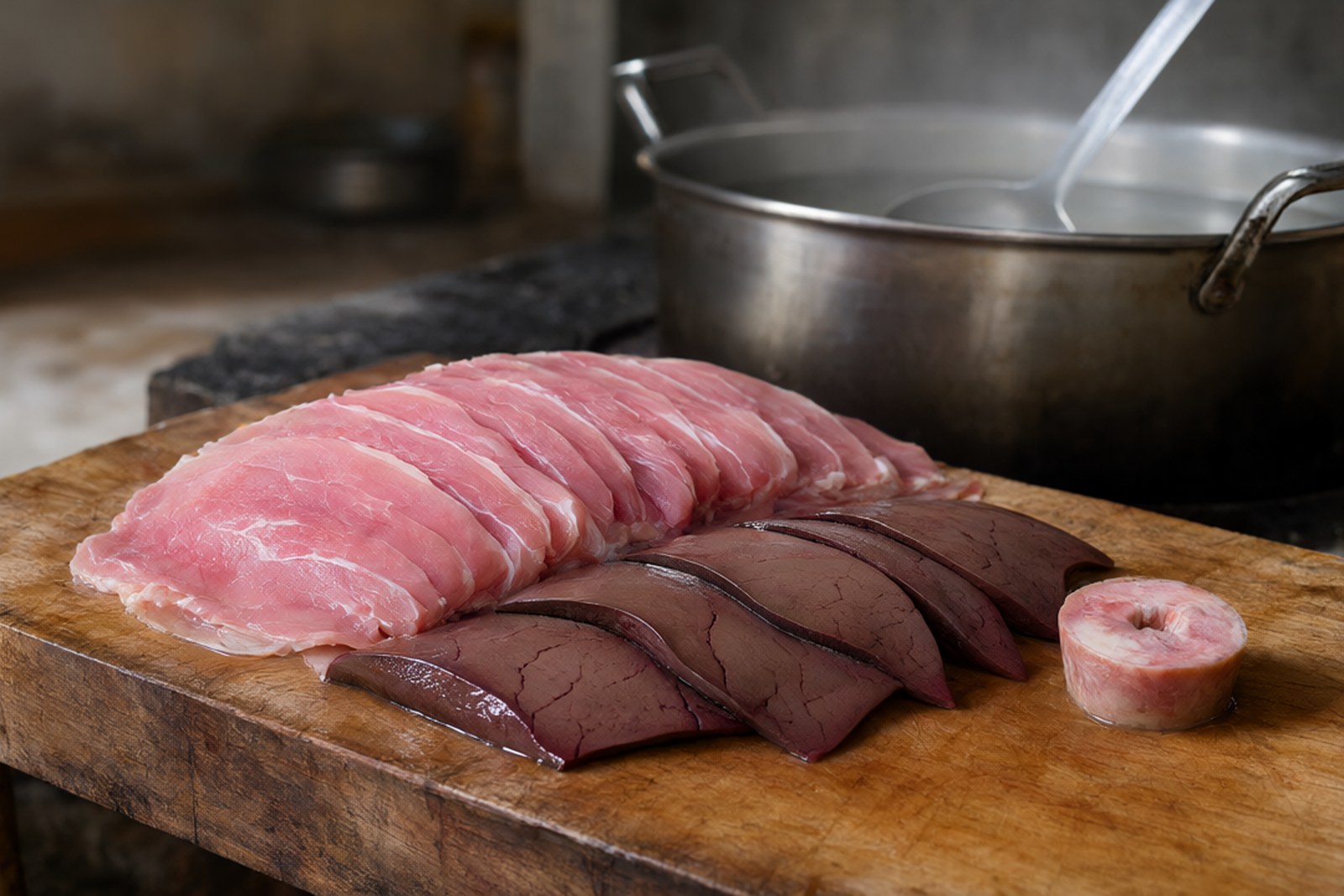
The cooking is a matter of seconds, and getting it wrong is the standard failure. The broth is light, usually pork bone or a simple stock, sometimes with 咸菜 xiáncài, the pickled mustard green, added for salt and sourness. The three meats are sliced thin enough to read through, and they go into the boiling broth one at a time, the lean meat first and the liver last, because liver goes from tender to chalky in well under a minute. 粉肠 is the tricky one: it needs longer than the liver and shorter than the lean meat, and a cook who dumps all three in together will produce a bowl where one ingredient is right and two are ruined. The bowl comes out with 枸杞叶 gǒuqǐ yè, goji leaves, or a handful of chopped spring onion, and a few grains of white pepper.
The liver is the point of the dish and also the reason some visitors do not like it. It should be just opaque at the centre, still soft, with a faint sweetness that disappears entirely if it is overcooked; a properly poached slice tastes nothing like the dry, mineral liver that most people have met. The lean pork is there for body and the intestine for a slight chew and a savoury note, and the three are meant to be distinguishable in the mouth rather than blended. The soup is drunk, not just used to cook the meat, and it is served hot enough that you wait a moment before the first spoonful.
The Three Graduates
The name is the funniest thing about the dish and the most useful thing to understand. In the imperial system the top three candidates in the final palace examination were given titles in descending order, and a scholar who reached that level had, in the idiom, 及第 jí dì: he had passed. A bowl containing three cuts of pork, two of them offal, was named after the three highest ranks in the empire, and the joke is the gap between the grandeur of the name and the ordinariness of the contents. Locals will tell you the dish is 蕉岭’s, and 蕉岭县 Jiāolíng Xiàn in the north of the municipality does claim it, which is why this batch puts the article on that county rather than on the city. Whether the claim is historically airtight is less important than that the disagreement is real and goes back a long way.
There is a further layer for anyone eating it in the run-up to an exam. Because the name promises academic success, the soup is eaten by students before tests in a way that is only half serious, and parents will order it for a child with a forthcoming examination the way other families might cook a particular fish. 状元及第 zhuàngyuán jí dì is the four-character version wishing somebody first place, and it appears on the walls of shops as often as it appears on menus.
Words and Names
三及第汤 sān jí dì tāng is the dish: 三 sān three, 及第 jí dì to pass the examination, 汤 tāng soup. 猪瘦肉 zhū shòuròu is lean pork, 猪肝 zhūgān liver and 粉肠 fěncháng the small intestine prepared for soup. 枸杞叶 gǒuqǐ yè is the leaf of the goji plant, used as a green; 咸菜 xiáncài is pickled mustard green; 葱花 cōnghuā is chopped spring onion. 状元 zhuàngyuán, 榜眼 bǎngyǎn and 探花 tànhuā are the three top ranks, and 蕉岭 Jiāolíng is the county that claims the recipe.
What the Locals Know
Judge the stall by the liver, since a bowl with grey, firm slices means the broth was not hot enough or the meat went in too early. Ask for 少肝 shǎo gān, less liver, if you want more of the other two, and for 多汤 duō tāng, more broth, if you are sharing. The soup is normally unsalted at the table; 咸菜 supplies most of the salt, so taste before adding soy. Vegetarians should note that there is no version without offal, because the three ingredients are the dish. A bowl is six to twelve yuan, and the stalls that do it best are the ones where the meat is sliced to order rather than kept pre-cut on a tray.
flowcloud would say that 三及第汤 is a rare case of a dish whose name is a promise the food has no intention of keeping, and that the people who named it knew exactly how funny that was.
Where to find it: the breakfast stalls and small 汤店 tāngdiàn of 蕉岭县 Jiāolíng Xiàn and across 梅州市, usually the same counter as the 腌面 yān miàn pot. Ask for it by name, watch the cook drop the three meats in one after another rather than together, and drink the broth as well as eating the meat, since the broth is where the flavour of all three has gone.