
Sanlin Benbang Eats: The Root-Kitchen of Shanghai’s Own Cooking, the Old Eight Dishes of Sanlintang Old Street and the Rich-Oil Dark-Soy Belt of Pudong New Area, Shanghai
三林塘畔老八样,浓油赤酱味根长。Sānlín táng pàn lǎo bā yàng, nóngyóu chìjiàng wèi gēn cháng – By the Sanlin pond the old eight dishes keep their place; in rich oil and dark soy the root of the flavour runs long.
三林本帮菜 Sānlín běnbāng cài Sanlin benbang cooking is the root-kitchen trade of 三林塘老街 Sānlín Táng Lǎojiē Sanlintang Old Street in 三林镇 Sānlín Zhèn Sanlin town, 浦东新区 Pǔdōng Xīn Qū Pudong New Area, Shanghai – the old riverside town on the city’s southern edge where the cooking style the city calls its own was fed before it had a name, and where the 本帮菜 běnbāng cài benbang register – 浓油赤酱 nóngyóu chìjiàng rich oil, dark soy, sweet-reduced braises – still cooks at the source. The menu is the town’s own canon: the 老八样 lǎo bā yàng old eight dishes that anchor every proper table – 走油肉 zǒuyóu ròu the twice-fried walking-oil pork that collapses between chopsticks, 三鲜汤 sānxiān tāng the three-delights soup built on 三林肉皮 Sānlín ròupí Sanlin’s own fried pork skin, puffed golden and ready to drink up the broth, and 扣鸡 kòu jī the pressed chicken bowl unmoulded at the table – the banquet grammar of the old 江南 Jiāngnán countryside, kept whole in one town’s kitchens (worth confirming the details – which restaurant holds which street frontage turns over as old towns do, and the specific doors are best confirmed on the street rather than recited). The clientele is the town’s own plus the city’s day-trippers: old Sanlin families who book the eight dishes for weddings and birthdays, and weekend visitors coming to eat the food they thought they already knew. The blunt definition: the town where Shanghai’s own cooking keeps its roots – the taste of Pudong eaten where the pork skin is puffed by hand.
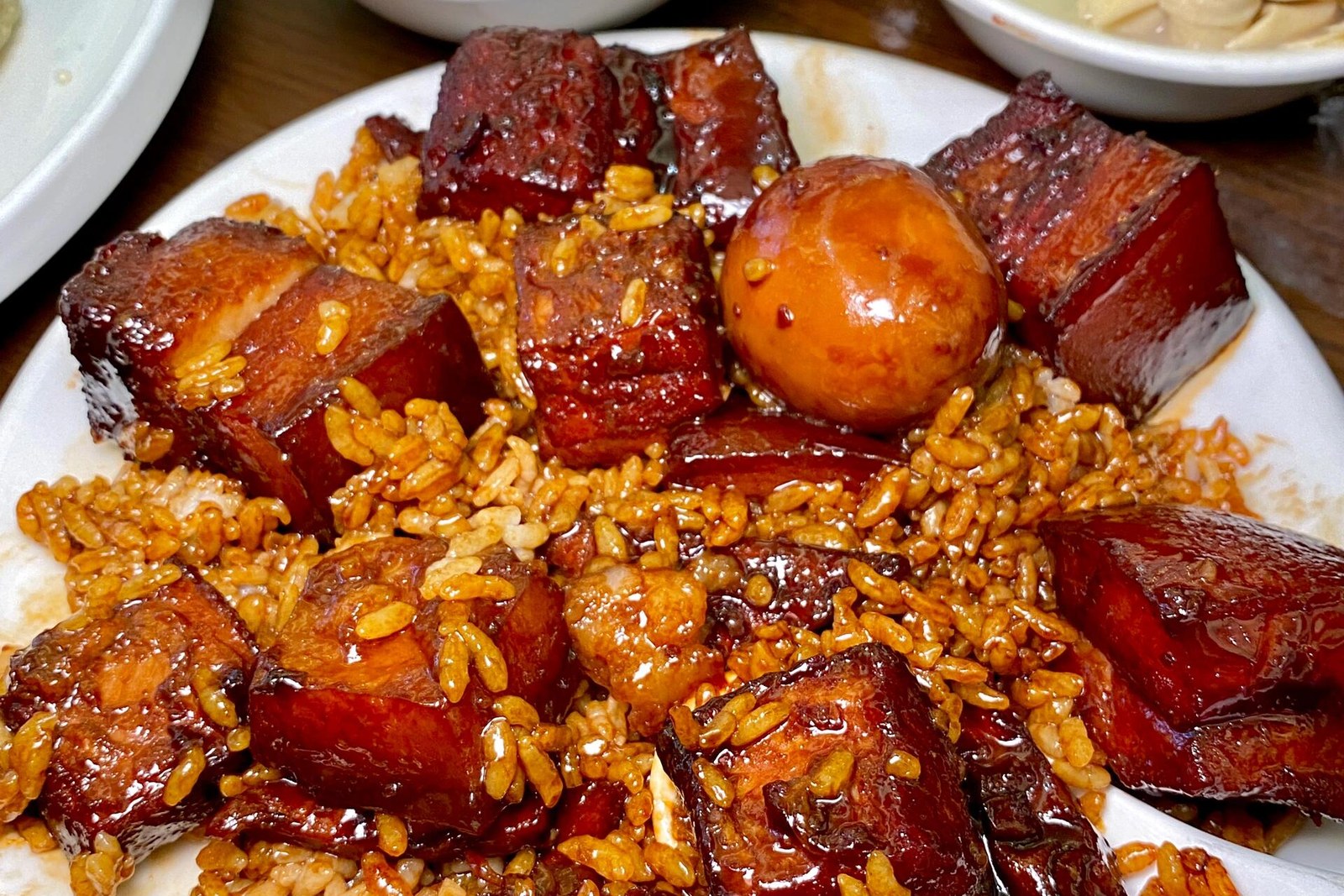
Call it honestly: root-kitchen money on a day-trip clock. Getting there is one door: 地铁11号线 dìtiě shíyī hào xiàn Metro Line 11 to 三林站 Sānlín zhàn Sanlin station puts the town within a short ride or walk of the 三林塘 Sānlín Táng old-street reach, and the eating belt sits along the creek line – the old bazaar streets at one end, the newer restaurant rows at the other (worth confirming the details for the station-to-street connection, the approach shifting with the old town’s renewal works). A plate of walking-oil pork or a bowl of three-delights soup prices at casual-neighbourhood money, a full 老八样 table for a group at occasion-within-reason money – though exact figures are worth confirming the details on rather than quoting, the doors being family-run and repriced by the season’s banquet calendar. The crowds run to the family calendar: weekend middays fill the old street with the day-trip tide and the banquet bookings stack the big tables, warm-weather weekdays thin the trade to the residents and the tea crowd, and a weekday mid-morning, when the kitchens fry the day’s pork skin for the morning regulars and the creek runs quiet under the stone bridges, is the eater’s own hour (worth confirming the details for individual shops’ hours, which follow the town’s own trade more than any posted sign).
The honest star is the root register itself, graded dish by dish. What gets oversold is the “cradle-of-Shanghai-cuisine” framing: guides sell a shrine where every table is a museum piece, and a first-timer may meet an ordinary suburban old street of restaurant fronts, tea windows and renovation hoardings – which is not the disappointment but the point. What repays the effort is grading the canon the way the town does: a 走油肉 judged by whether the fat dissolves to the chopstick’s lift rather than fighting back, a 三鲜汤 judged by whether the 三林肉皮 drinks the broth and keeps its bite, a 扣鸡 judged by whether the mould holds its shape and its own steam. The test costs nothing: order the pork skin’s soup first at a plain streetfront room before you book the banquet table, watch whether the kitchen puffs the skin in-house, and eat where the old families book their birthdays rather than where the flags fly – a town that has cooked the same eight dishes for generations grades its kitchens daily, and the family banquet queue is the certificate (worth confirming the details – the doors migrate with the leases, and today’s plainest frontage may be next season’s remembered one).
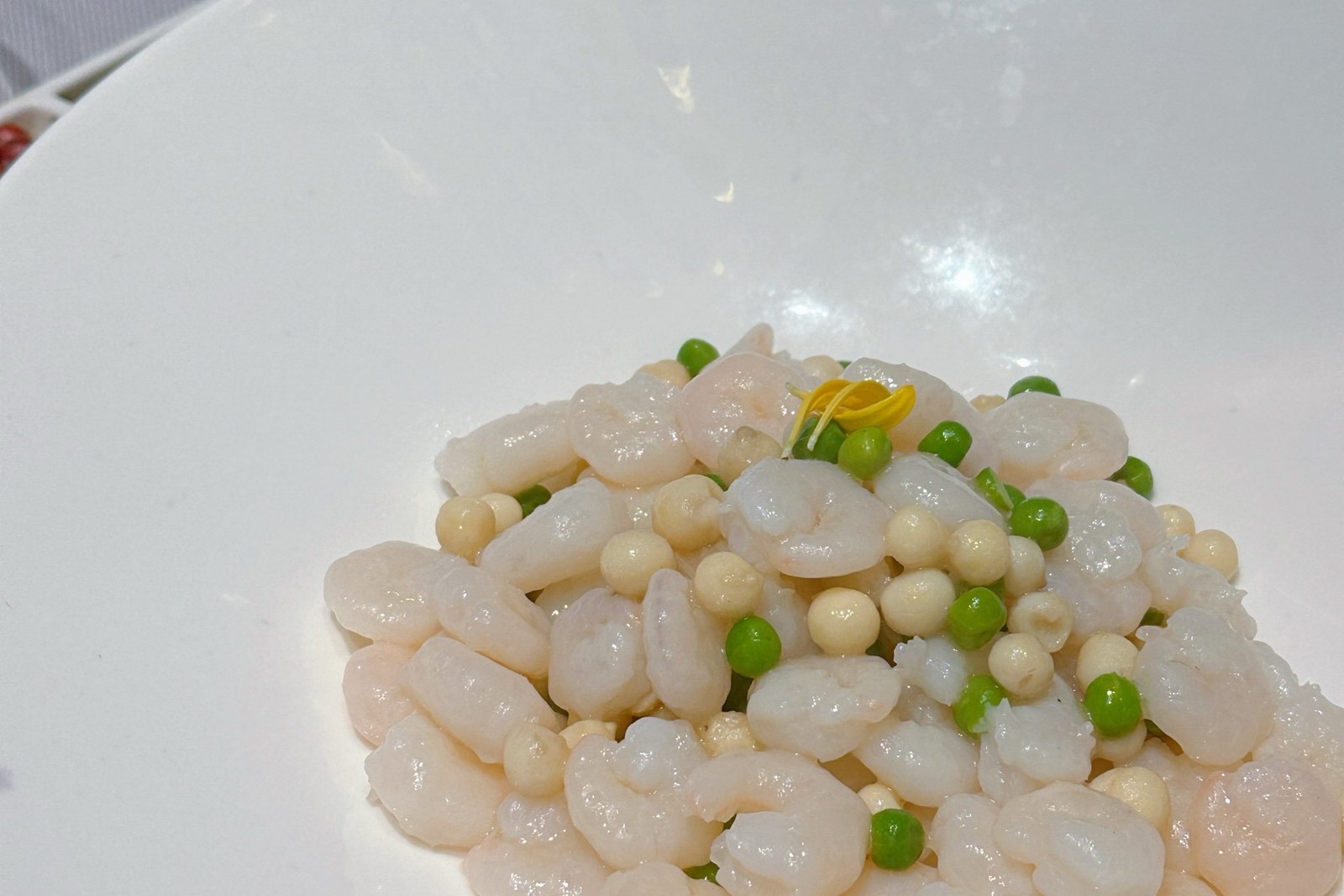
The town’s deepest habit is the banquet set itself: a whole 老八样 lǎo bā yàng old-eight-dishes table carried out in courses, the cold plates first, the braises and the pressed bowls after, the soup in the middle where the pork skin holds court – a format built for family anniversaries and kept because the pot prefers it. Time it right – a weekday Line 11 ride out, the kitchen frying for its own street – and the table arrives as the root meant it: skin puffed that morning, braise reduced to its gloss, the recipe’s own arithmetic (worth confirming the details – which kitchens still run the full eight-dish set on weekdays today, the format thickening on weekends and thinning to single plates on weekdays).
The rest of this Pudong list keeps other tables: the century-old flaky pastry of 高桥松饼 Gāoqiáo sōngbǐng Gaoqiao songbing bakes a metro ride north at the river mouth, the water-town snack stalls of 新场古镇小吃 Xīnchǎng gǔzhèn xiǎochī Xinchang Old Town snacks steam down the Line 16 reach, the tower-dining registers of 陆家嘴商圈餐饮 Lújiāzuǐ shāngquān cānyǐn Lujiazui mall and river-view dining stack the skyline to the north, and the international street tables of 碧云路国际餐饮街 Bìyún Lù guójì cānyǐn jiē Biyun Road international eating street cook in five tongues at Jinqiao – one district, four more tables, all inside 浦东新区 Pǔdōng Xīn Qū Pudong New Area; and when the root-kitchen afternoon needs a bed nearby or a broader route, the stay-and-street notes for the district pick up where the pork skin leaves off.
Words and Names
What the Locals Know
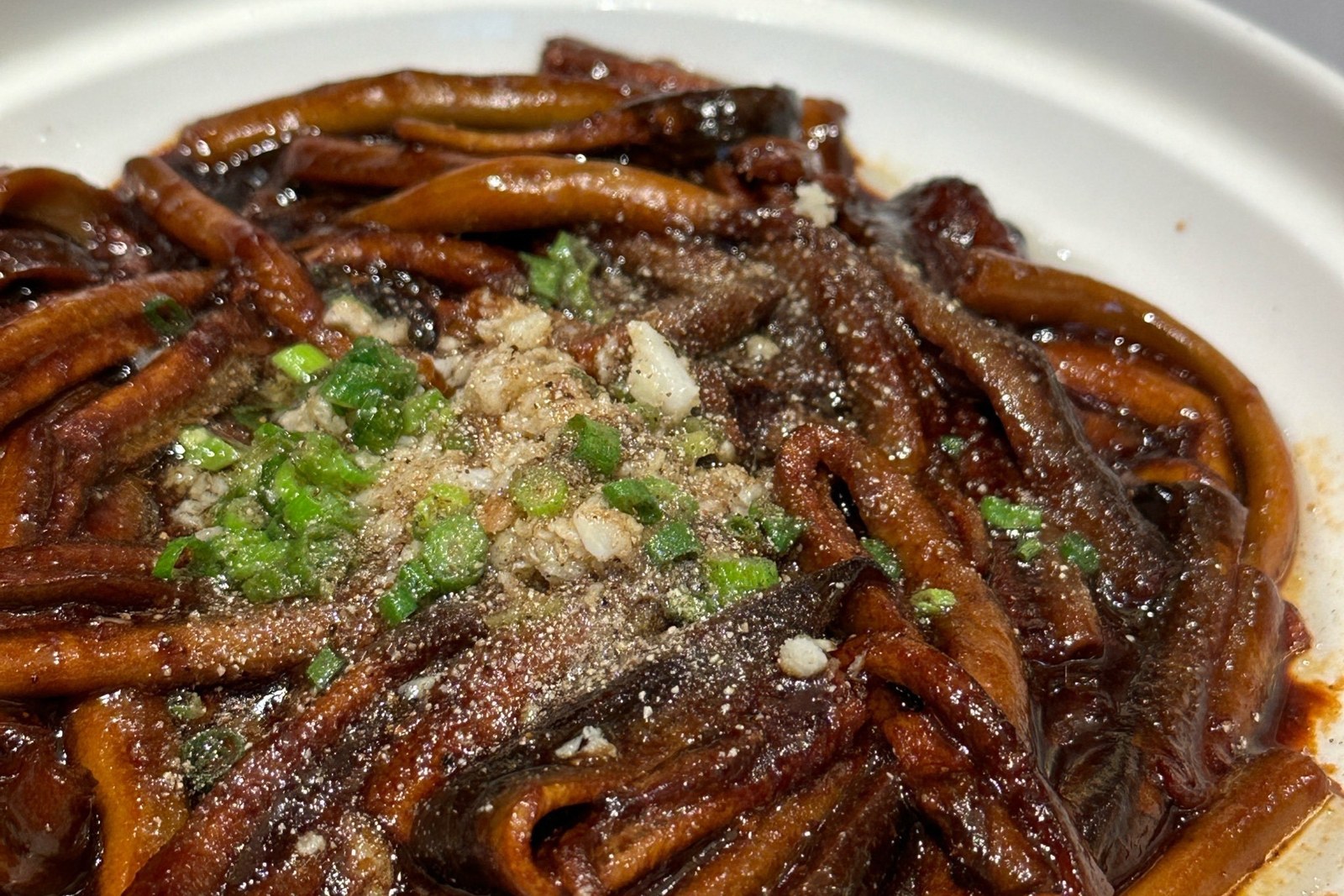
flowcloud would say that the 三林本帮菜 Sānlín běnbāng cài is the root-kitchen of Shanghai’s own cooking and the old-street banquet belt of Pudong New Area, Shanghai – a 浓油赤酱 nóngyóu chìjiàng discipline where the 老八样 lǎo bā yàng banquet canon answers the hand-puffed 三林肉皮 Sānlín ròupí pork skin and the walking-oil pork’s slow gloss – and that the honest move is to order the three-delights soup first, test the pork skin against the broth before you book the banquet, and let the family-anniversary tables cast the vote, because the city gave the style its name and the town kept its roots. All checked October 2026.
Where to find it: 浦东新区 Pǔdōng Xīn Qū Pudong New Area, Shanghai – the root-kitchen belt of 三林塘老街 Sānlín Táng Lǎojiē Sanlintang Old Street through 三林镇 Sānlín Zhèn Sanlin town, strung along the old creek line where the 老八样 lǎo bā yàng banquet canon – 走油肉 zǒuyóu ròu walking-oil pork, 三鲜汤 sānxiān tāng three-delights soup, 扣鸡 kòu jī pressed chicken – keeps the 本帮菜 běnbāng cài register at its source, reached from 三林站 Sānlín zhàn on Metro Line 11, where the town keeps the family calendar – weekend middays the day-trip tide through the restaurant fronts, warm-weather weekdays the thinned resident trade, weekday mid-morning the eater’s own (worth confirming the details – which kitchen holds which frontage today, old-street doors turning over as old towns do); casual-neighbourhood to occasion-within-reason money, so call it worth confirming the details rather than a fixed number, and let the family-banquet queue cast the vote. Sanlin benbang eats is the root-kitchen of Shanghai’s own cooking, the old eight dishes and the rich-oil dark-soy belt of Pudong New Area, Shanghai – the taste of 浦东新区 Pǔdōng Xīn Qū Pudong New Area eaten where the pork skin is puffed by hand and the soy runs dark. All checked October 2026.