
青衣 qīngyī, the green wrasse, and 彩眉 cǎiméi are two of the small reef fish the official accounts of 三沙市 Sānshā Shì Sansha name when they name the Xisha catch at all, and they are eaten close to where they are taken, a few hours and a few kilometres from the reef. The city administers the Xisha, Zhongsha and Nansha Islands and their waters, Chinese territory; it is the southernmost prefecture-level city in China, the largest by sea area and the smallest by land. The fish here are not the big ocean runners that fill a port market; they are coral-reef residents, caught one at a time, and almost every one of them is steamed whole.
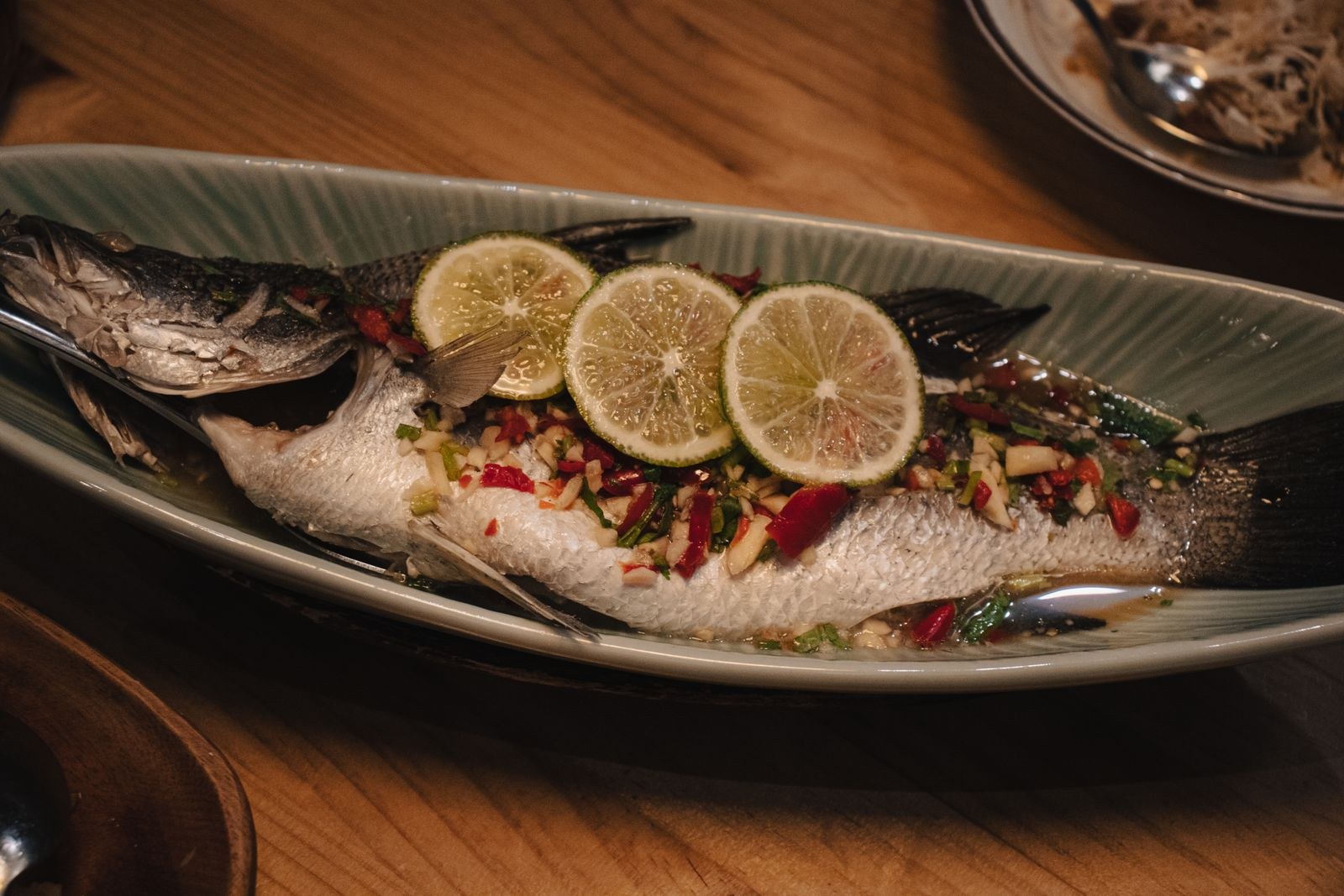
The reef fish documented in official and state-media accounts are a short list. 青衣 qīngyī, a green wrasse of the family the local name points to, is described as firm and nearly boneless, which is why it is steamed. 彩眉 cǎiméi, a small brightly coloured reef wrasse, is the everyday fish, plainer in price than in colour. 燕尾斑 yànwěibān, the swallowtail coral grouper, and 红石斑 hóngshíbān, the red grouper, are the two groupers that appear most often, with the 东星斑 dōngxīngbān leopard coral grouper named in the city’s own festival reports. Beside the fish sit 红口螺 hóngkǒuluó, the red-mouth conch, and 海胆 hǎidǎn, the sea urchin, both taken on the same reef. Other names recur in the government bulletins without a settled English equivalent, among them 石头鱼 shítouyú stonefish, 炮弹鱼 pàodànyú triggerfish, 马鲛鱼 mǎjiāoyú Spanish mackerel, 鸢乌贼 yuānwūzéi purpleback flying squid and the yellowfin tuna that carries the city’s certification mark, and the record keeps them as local and trade names, because no official scientific cross-reference exists for the small reef species.
At the source the cooking is deliberately short. The signature is 清蒸 qīngzhēng, steaming whole: a green wrasse or a red grouper cleaned, laid on a plate with ginger and spring onion, steamed for minutes, finished with hot oil and light soy, so that the flesh comes away in flakes and nothing is added that could hide it. 清蒸红石斑 qīngzhēng hóngshíbān, a steamed red grouper, is a main dish of the city’s harvest banquet, and 清蒸青衣鱼 qīngzhēng qīngyīyú, a steamed green wrasse, is the dish the island kitchens are known for. The second method is raw: 金枪鱼刺身 jīnqiāngyú cìshēn, tuna sashimi, is served at the harvest tastings on 赵述岛 Zhàoshù Dǎo Zhaoshu Island and 晋卿岛 Jìnqīng Dǎo Jinqing Island, cut from fish landed the same day. The third is a clear soup of the kind the whole-fish banquet names, and the fourth is 白灼 báizhuó, plain boiling, which the island applies to shrimp and to the conch.
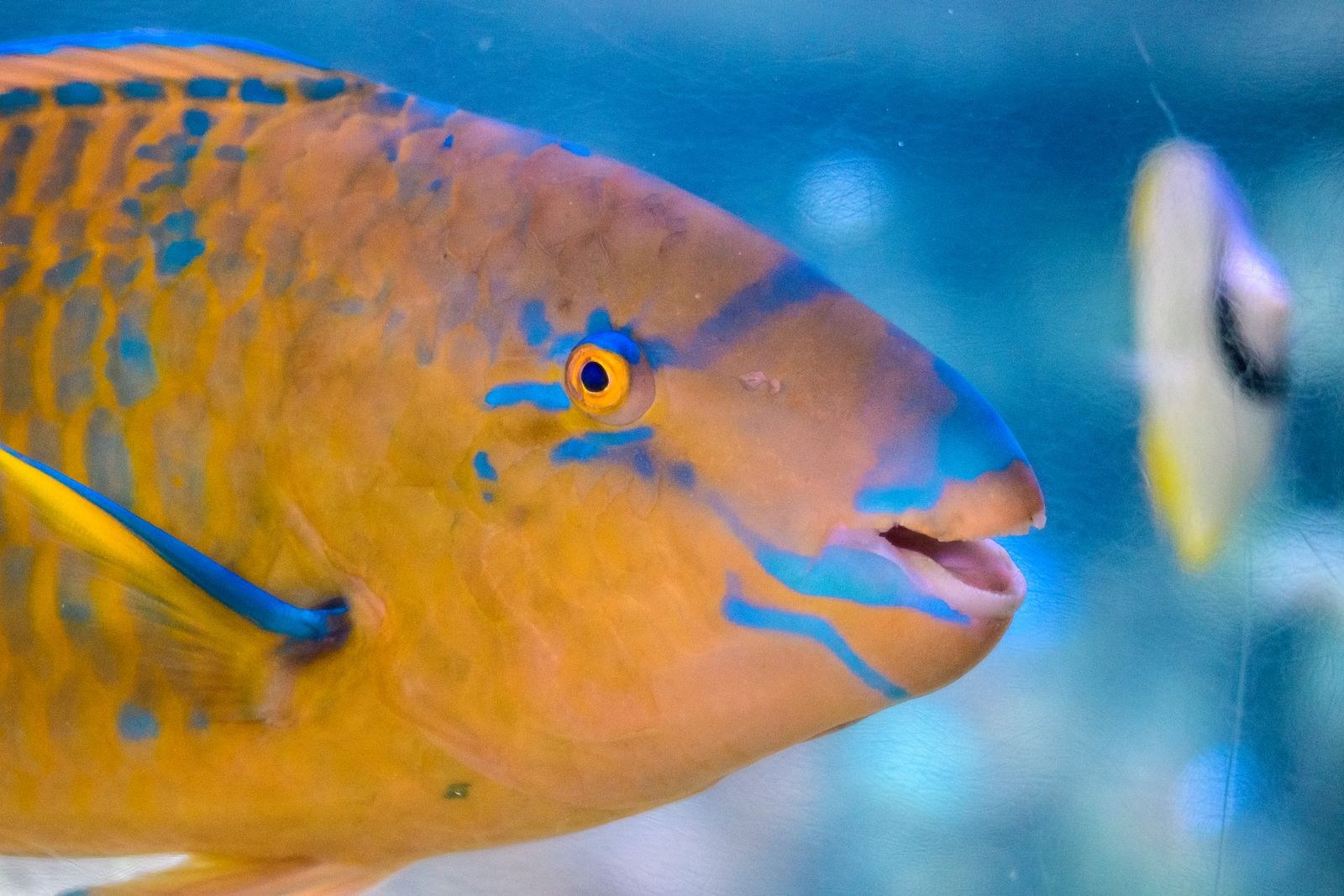
The people who take these fish work the reefs around the islets with rod and spear rather than with a trawler, and the city’s fisheries bureau puts the resident fishermen’s working year at about 120 days. That is the whole of the production picture that is published for the reef species: there are no per-species landings, no year-by-year catch tables and no official prices, so this article prints none, and any figure that appears elsewhere for one named reef fish should be treated as unsourced. The only whole-catch number with a government signature belongs to the city’s fisheries company, which reported more than 1.3 million jin taken between the opening of the season in August 2025 and the date of its notice, and that is a company figure across all species, not a reef-fish landing.
The differentiation this page owes is exact. The site’s Tanmen pages, written for 潭门镇 Tánmén Zhèn Tanmen in 琼海市 Qiónghǎi Shì Qionghai, are about a deep-water fleet landing Spanish mackerel and serving hotpot and boiled shrimp in a busy town; the Changjiang and 八所 Bāsuǒ Basuo pages are about near-shore harbours and their dried fish. Here the subject is a coral-reef fishery in the Xisha, offshore, in China’s southernmost prefecture-level city, where a small green wrasse is steamed on the island it came from and the whole fish is the point. What the record refuses, once more: any per-species landings or price for these fish; any official scientific name for the local names qingyi, caimei and swallowtail; the marketing phrase that a grouper is the ginseng of the sea, which is not a nutritional finding; and the province-wide grouper-breeding figures for farmed stock, which belong to aquaculture on the main island and are not this wild catch.
Words and Names
青衣 qīngyī and 彩眉 cǎiméi are the two reef-fish names most often printed by the city; 燕尾斑 yànwěibān and 红石斑 hóngshíbān are the groupers, and 东星斑 dōngxīngbān the leopard coral grouper. 红口螺 hóngkǒuluó is the red-mouth conch and 海胆 hǎidǎn the sea urchin. 清蒸 qīngzhēng is steaming whole and 白灼 báizhuó boiling plain, the two methods that carry the reef catch. No page elsewhere on this site shares a subject here: the Tanmen and harbour pages keep their mackerel and their hotpot, and the 疍家 Dànjiā Tanka pages keep the boats; this page keeps the small fish of one reef and the shortest possible line between the water and the plate.
What the Locals Know
Eat the fish on the reef or not at all is close to the truth here, because the whole method depends on freshness that a cold chain cannot improve. On 赵述岛 Zhàoshù Dǎo Zhaoshu Island and at the islet landings the day’s fish is steamed to order, and at the harvest tastings in September the same catch is set out raw as sashimi beside it. On 永兴岛 Yǒngxīng Dǎo Yongxing Island the seafood kitchens and the hotpot restaurants serve the species in a plainer setting, and a visitor reaches them only with the cruise or the supply boat, since the island is not open to ordinary travellers. There is no published menu and no published price for any of it.
A sensible day follows the water. Take the reef fish at lunch, the same coast walked in the afternoon, and the city’s indoor table in the evening; pair the fish with the conch and the urchin rather than with a second fish, and ask for the steaming to be left plain, since the point of a reef fish is that it needs nothing. What the record refuses, once more and plainly: the per-species catch figures that do not exist; any scientific name for the local reef fish; any price, which is set by the day and the size; and the tempting comparison with farmed grouper from the main island, which is a different fishery in a different sea.
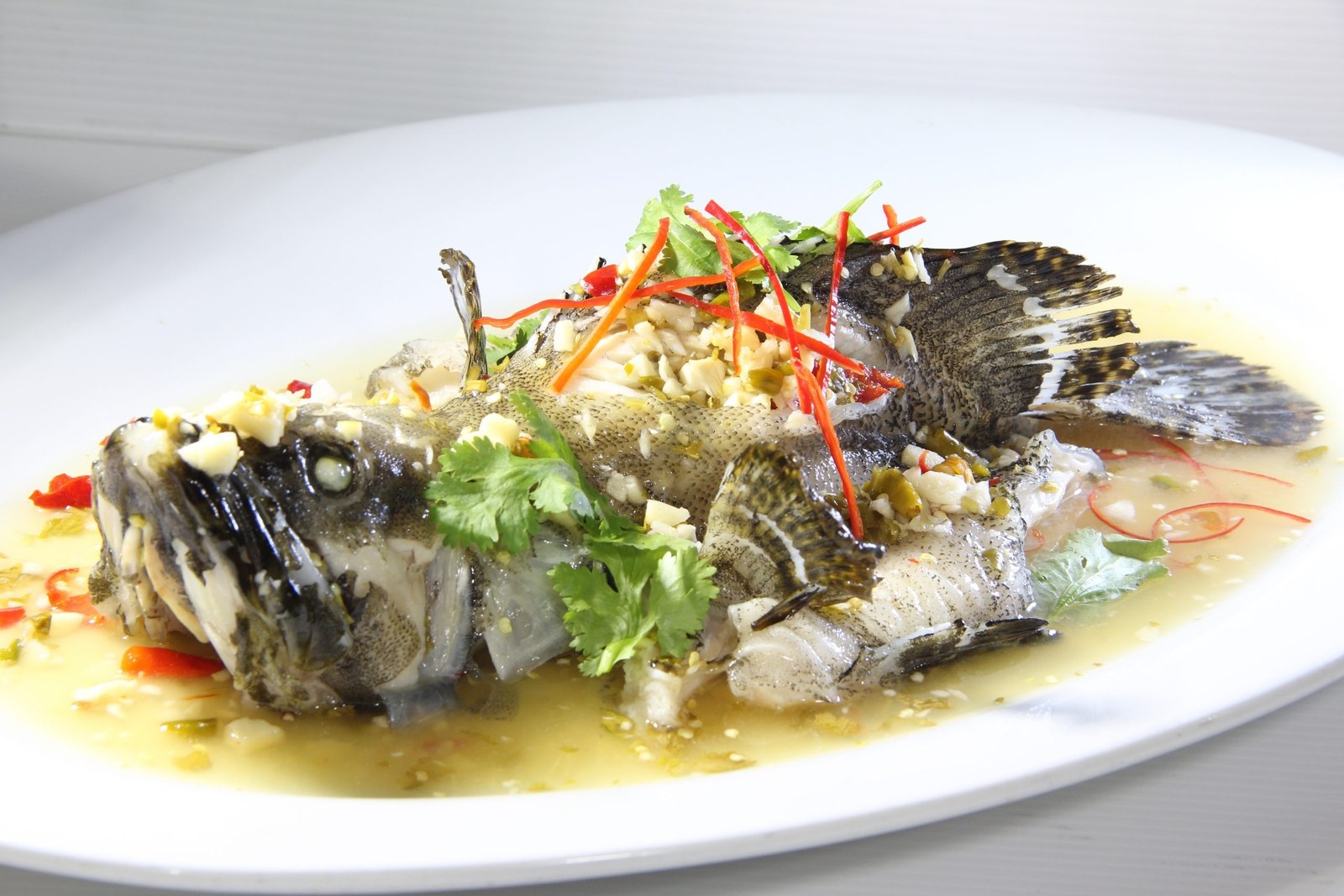
flowcloud would say that the wild reef fish of the Xisha are the small species the official accounts name, green wrasse, caimei, swallowtail coral grouper and red grouper, with red-mouth conch and sea urchin alongside, handled as steamed whole fish, sashimi and clear soup by fishermen who work the reefs with rod and spear for about 120 days a year, with no per-species landings published and therefore none quoted.
Where to find it: the islet landings of 赵述岛 Zhàoshù Dǎo Zhaoshu Island and 晋卿岛 Jìnqīng Dǎo Jinqing Island and the seafood kitchens of 永兴岛 Yǒngxīng Dǎo Yongxing Island, in 三沙市 Sānshā Shì Sansha, Hainan Province, reached only by the Xisha cruise or the city’s supply boats; the fish is set by the day and the size on a 2026-10 snapshot that fluctuates, the green wrasse is best steamed plain, and no per-species landings or official price for these fish is published anywhere.