
The Spiciest Table in Zhejiang: San Tou Yi Zhang
兔头鸭掌红汤滚,辣出衢州一座城 Tùtóu yāzhǎng hóngtāng gǔn, là chū Qúzhōu yī zuò chéng – Rabbit heads and duck paws roll in red broth; one dish boils out the whole city’s spice
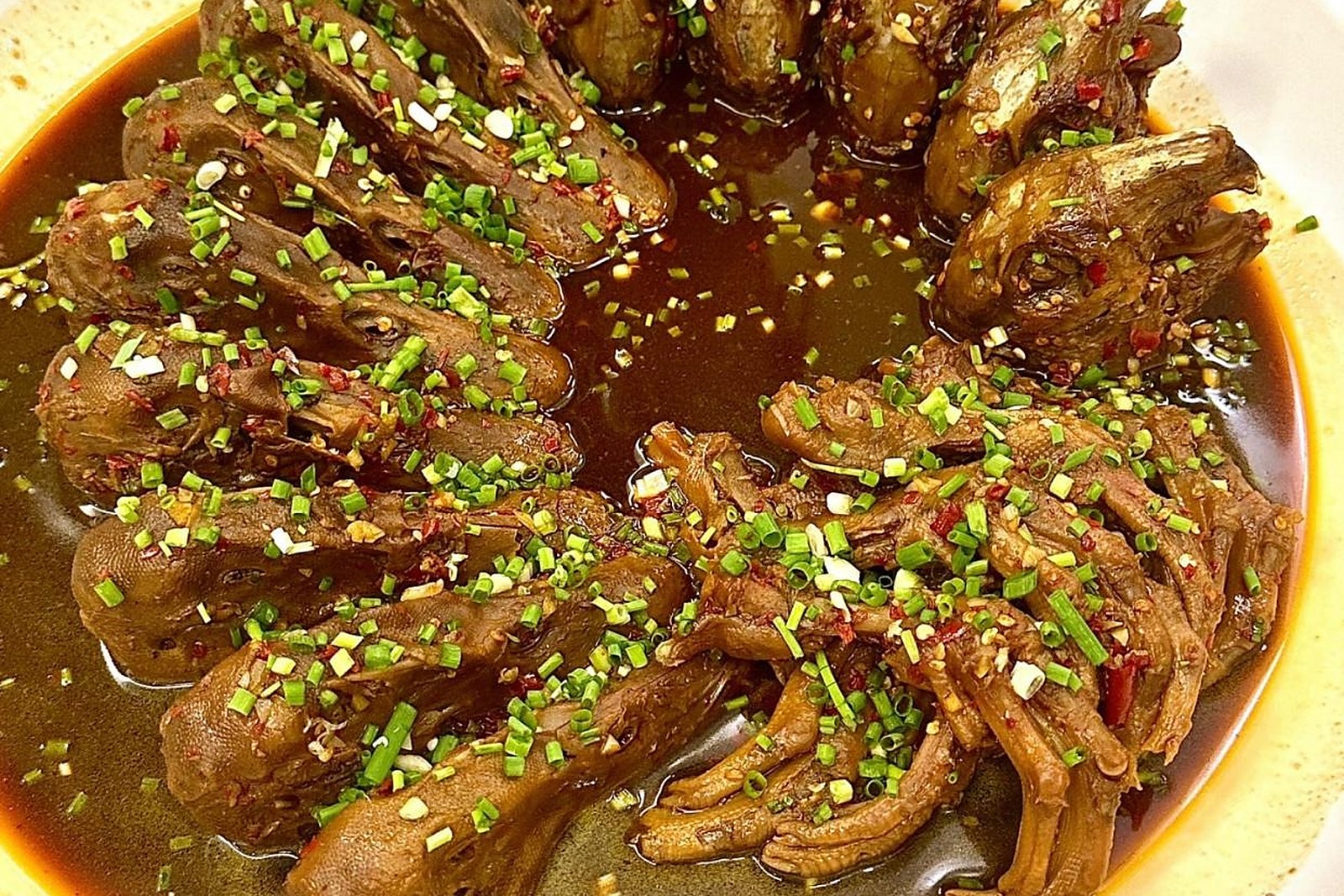
三头一掌 sān tóu yī zhǎng “three heads and one paw” is 衢州市 Qúzhōu Shì Quzhou City’s spice manifesto: 兔头 tùtóu rabbit head, 鸭头 yātóu duck head, 鱼头 yútóu fish head and 鸭掌 yāzhǎng duck feet, all braised dark in a master stock of dried chili, star anise and aged spice until the meat gives up its bones and the broth stains the tablecloth orange. Zhejiang is famously a sweet-tooth province – Quzhou is the exception that proves it, and this platter is the reason locals call their city the spiciest corner of Jiangnan.
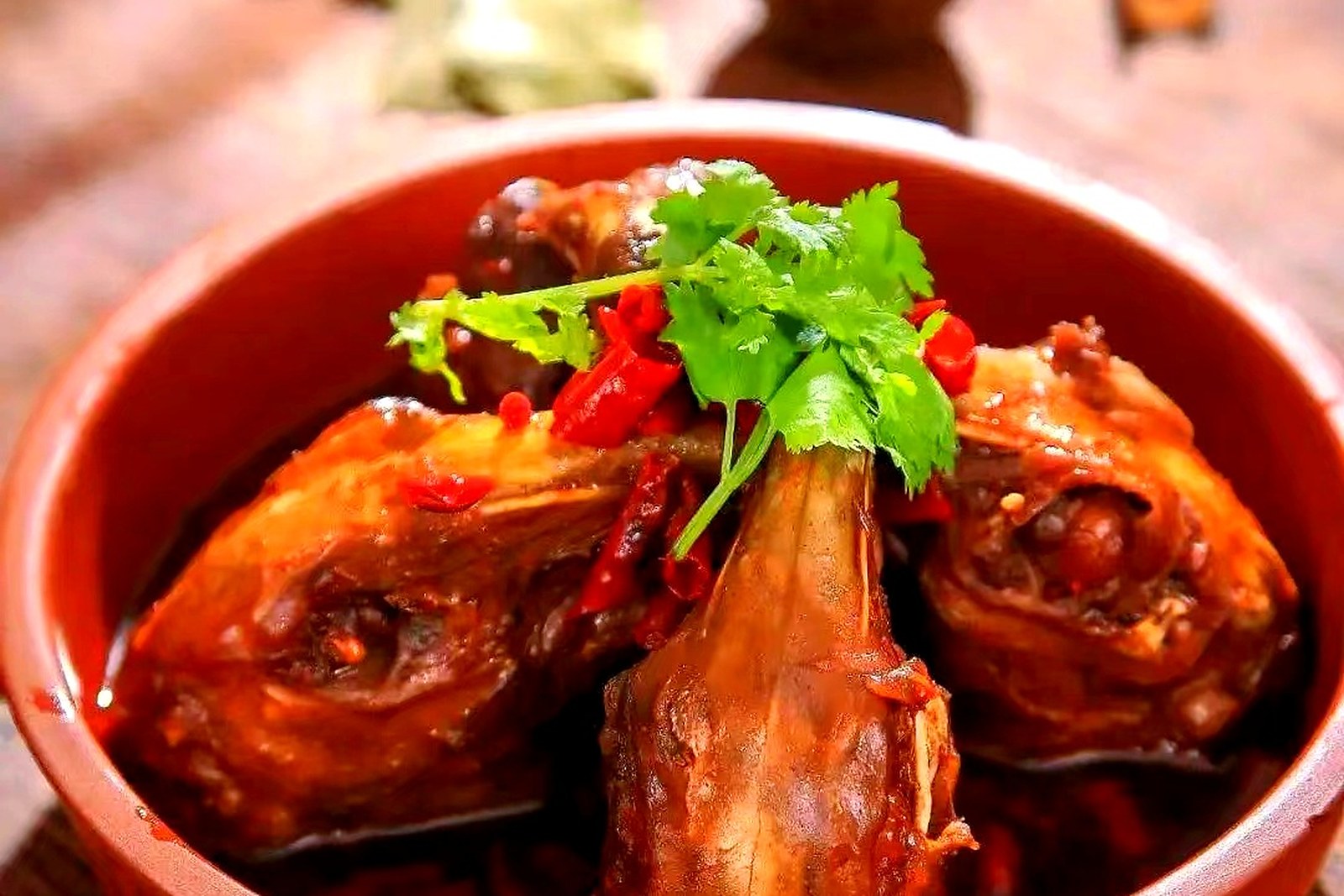
The braise is the craft: shops keep 老卤 lǎolǔ master stocks that have never fully emptied, some claimed decades old, topped daily with dried 辣椒 làjiāo chilies from the surrounding hills, Sichuan pepper, ginger and rock sugar to round the fire. The heads go in raw, simmer low, then rest overnight in the spiced dark – the meat that comes off the bone next day carries heat in layers, perfume first, burn after.
Eating it is a two-hand sport: gloves or not, you rotate the rabbit head, crack the jaw, and work the cheek meat out of every crevice – veterans say the small muscles around the jaw are the best bites on the animal. Duck feet come next, skin gelatinous and chili-glossed, then the fish head for broth-steamed relief. The correct companion is a paper bag of shaobing and a cold drink nobody admits to needing.
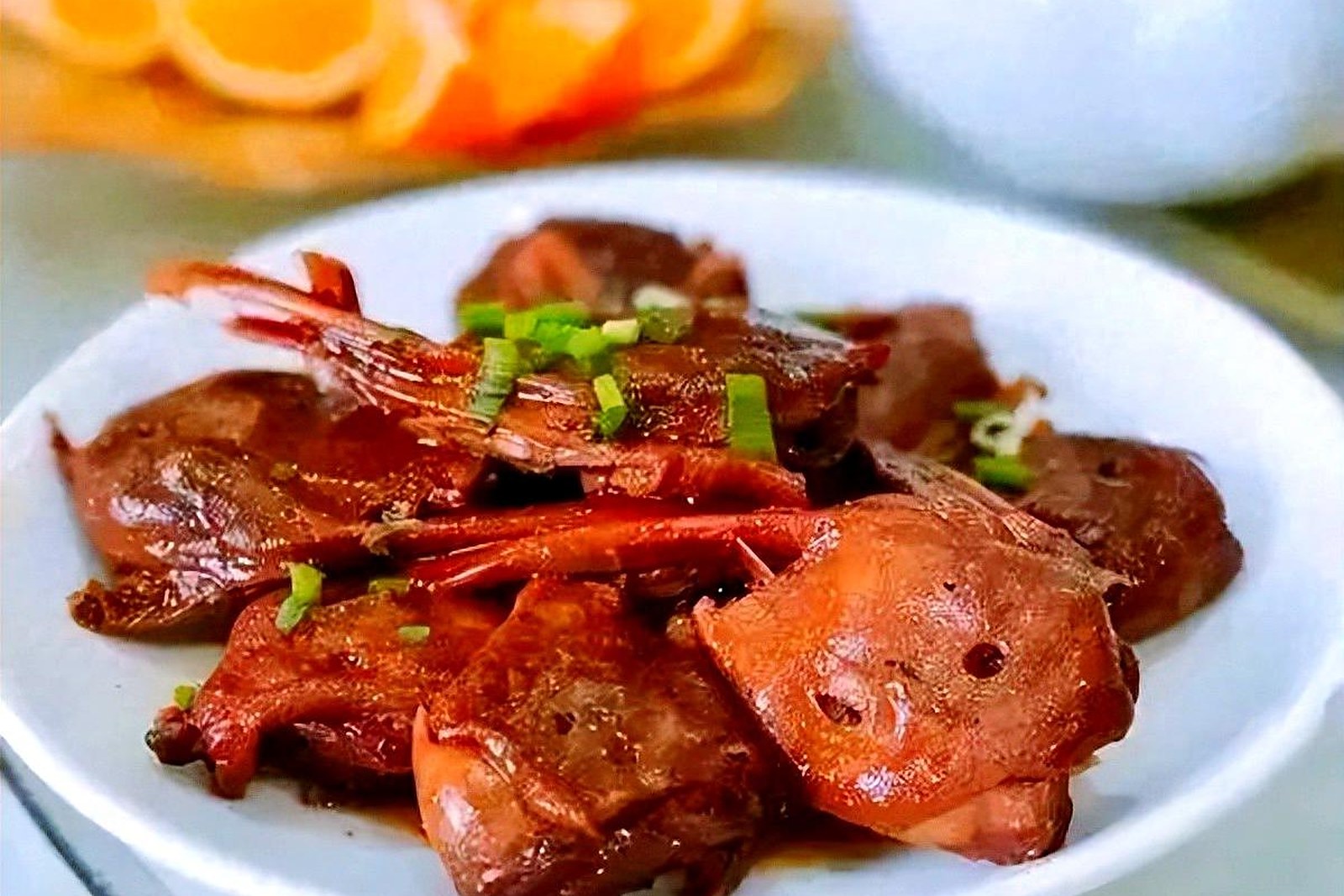
The scene is unapologetically nocturnal: 坊门街 Fāngmén Jiē the old snack street and the night markets stack the braising pots by seven, eaters perch on plastic stools with wet wipes and an ashtray, and the shops that started as 1980s street stalls now ship vacuum-packed heads nationwide. What began as cheap offal for railway workers became the city’s edible business card.
The same city holds more flavors worth chasing: 龙游发糕 Lóngyóu fāgāo the steamed risen cake, 开化清水鱼 Kāihuà qīngshuǐ yú the spring-water fish, 常山贡面 Chángshān gòngmiàn the tribute noodles, or 衢州烤饼 Qúzhōu shāobǐng the charcoal-drum flatbread – four more doors into the same 衢州市 Qúzhōu Shì Quzhou City table.
Words and Names
三头一掌 sān tóu yī zhǎng three heads, one paw – rabbit, duck, fish head plus duck feet; 老卤 lǎolǔ the never-emptied master stock; 兔头 tùtóu rabbit head, the cult cut; 坊门街 Fāngmén Jiē the old snack street where the pots line up; 衢州辣 Qúzhōu là Quzhou spice, the local exception to sweet Zhejiang.
What the Locals Know
The rabbit head is eaten clockwise from the ears – cheek first, then brain, then the jaw muscles – and a shop’s grade shows in whether the meat slides off clean or needs teeth. Ask for 微辣 wēi là mild if it is your first time; the default pot assumes you trained here. And never judge by the color: the darkest heads are the oldest stock, which is exactly the point.
flowcloud would say a Quzhou night with san tou yi zhang is arithmetic: one glove, one head, one pile of bones – the pot keeps the ledger, the chili keeps the time, and the city eats its spice like a birthright. All checked November 2026.
Where to find it: The braising pots line 坊门街 Fāngmén Jiē and every night market in 衢州市 Qúzhōu Shì Quzhou City – pick the counter whose stock pot is oldest and darkest, order by the head with gloves and wet wipes, ten to twenty yuan a piece, hottest after 8 pm when the night crowd keeps the braise moving. All checked November 2026.