
Evening at 三峡广场 Sānxiá Guǎngchǎng Sanxia Square: the water stair is lit, students cut across with milk tea, and a traveller between trains reads the station signs that sink beneath the shopping streets. Chongqing is a municipality of southwest China, and 沙坪坝区 Shāpíngbà Qū Shapingba keeps its civic crossroads here – the district centre where the shopping streets meet the rail platforms below them. This page eats at the commute evening, and the premise is the timeline: this square’s dinner table is more than eighty years deep, and the layers are the menu. The mountain-road chicken courtyards and the campus quarter keep their own pages.
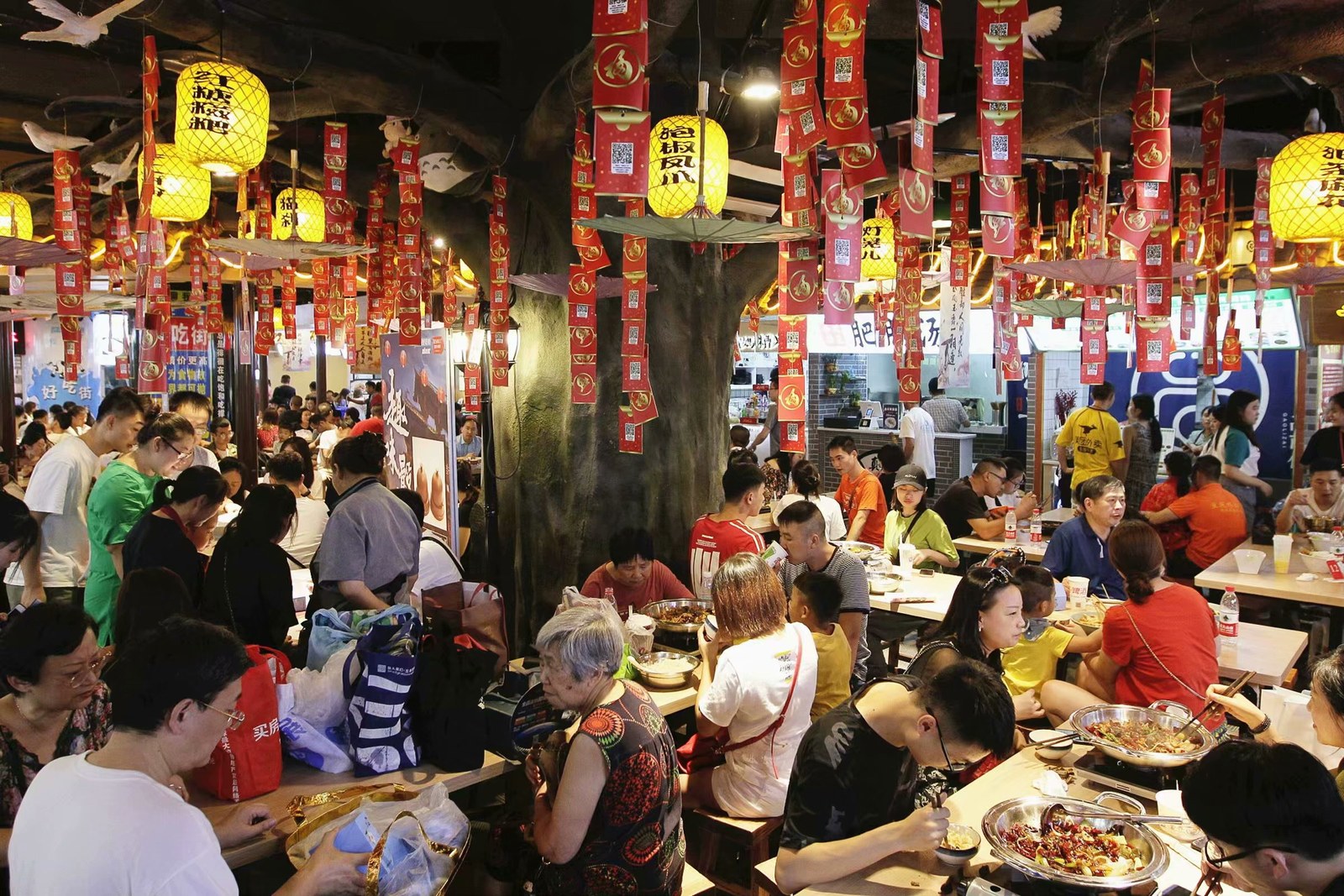
The first layer is wartime. In February 1938 – 6 February, by the city archives’ account – the 沙磁文化区 Shācí wénhuàqū Sha-Ci Cultural Zone was declared, the wartime concentration of schools that gathered, by the same account, one-eighth of the country’s university teachers and students onto this bank, the zone’s students counted at twenty thousand and more. The market answered the hunger: the zone’s own monthly, 《沙磁文化》 the Sha-Ci Culture monthly, recorded in January 1941 that nearly half a kilometre of Shapingba Main Street carried more than a hundred shops, dining houses, bookshops and teahouses the most numerous – the record’s own arithmetic, printed as record. The famous tables of the day included houses opened by the “downstream people” from the lower Yangtze and by northern arrivals – 三六九 Sānliùjiǔ Sanjiu and 松鹤楼 Sōnghè Lóu Songhelou among the names the monthly recalls – while the district’s own wharf eats held their ground: Ciqikou’s salt-and-pepper peanuts and the blood-curd pot, both with pages here.
The second layer is the recovery. After 1978 the trade rebuilt itself, and the statistics the city press summed up in its 2019 retrospective speak plainly: in 1980 the district’s state catering companies turned 7.484 million yuan; by 1985 the district counted 1,329 eating houses employing 3,006 people, 1,160 of them private – the private counters overtaking the state kitchens in one decade. The square belongs to the municipality’s own era: ground was broken in 1997, the year Chongqing became a directly administered municipality, and by 2002, per the district’s introductions, 双巷子 Shuāngxiàngzi Shuangxiangzi and 小龙坎 Xiǎolóngkǎn Xiaolongkan had been joined into one shopping district – some 80,000 square metres of surface plaza with water running through it, by the same account the city’s only shopping district built around a large water feature. Beneath it lies the under-layer: Shuangxiangzi, “the twin lanes”, laid out in the 1880s, where the city’s first workers’ club, mat-shed cinema and fruit market opened, by the local chronicles’ account.
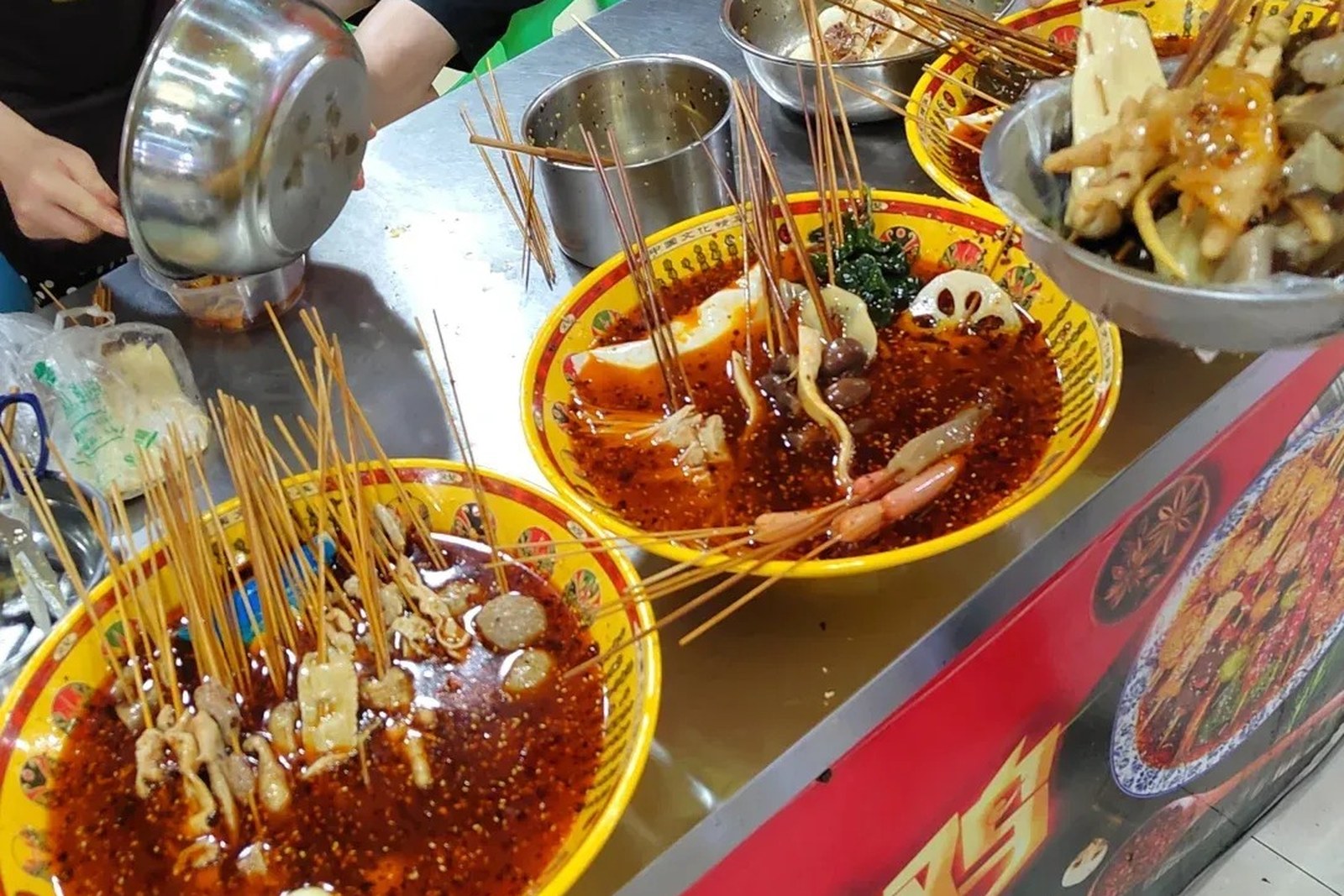
The third layer is the present stack. The sediment is the veteran counters the district press keeps profiling – a sweet-potato-noodle counter holding a Chongqing time-honoured-brand title, the Lei family’s old-farmer stall in its one allotted sentence, since the dish’s main story belongs to the old city’s pages; a trotter-soup kitchen, a round-the-clock bun counter – named as tenancy, never as ranking. Above them, the mall layer: the old state-era department store gave way to mall dining floors and cinema foyers, one tower down by controlled demolition in 2015. And the platform layer beneath everything: in early 2018 the high-speed railway reached the district, sunk under its own shopping streets, and by the end of 2020 the station-over-mall complex above the platforms stood complete – the country’s first station-under-shopping-district build, by the project’s own account – so the national timetable now runs directly beneath the dinner tables. The newest rite is the transfer-window meal: an hour between trains, one hot bowl below the square, the suitcase against the table leg – the district’s oldest habit, rebuilt on its newest infrastructure.
Words and Names
三峡广场 Sānxiá Guǎngchǎng is Sanxia Square, the district-centre crossroads named for the Three Gorges era of the late 1990s; 双巷子 Shuāngxiàngzi Shuangxiangzi, “the twin lanes”, the 1880s street grid beneath it; 小龙坎 Xiǎolóngkǎn Xiaolongkan, the neighbourhood joined to it in 2002. 沙磁文化区 Shācí wénhuàqū the Sha-Ci Cultural Zone, declared in February 1938; 沙坪坝正街 Shapingba Main Street, the wartime quarter’s half-kilometre shop row; 下江人 xiàjiāng rén “people from downstream”, the wartime migrants who opened its restaurants. 金沙天街 Jīnshā Tiānjiē the Golden Sand Paradock above the high-speed platforms, complete at the end of 2020 by the project’s account.
What the Locals Know
Old Shapingba residents periodise the square in one breath: first the state shop, then the water features, last the trains – three floors of memory. The plaza keeps an invisible boundary: the school side runs on milk tea and fast counters, the Xiaolongkan side on soup kitchens and claypot casseroles – one eats fast, the other steady, and everyone crosses by the hour. The suitcase diners are the newest tribe – an hour between trains is enough for a proper bowl. And for the taste of the district’s own 1990s, the old hands point not into the malls but at the low-rise lanes off the square’s edges, where a few fronts have never changed – named to no one, remembered by everyone.
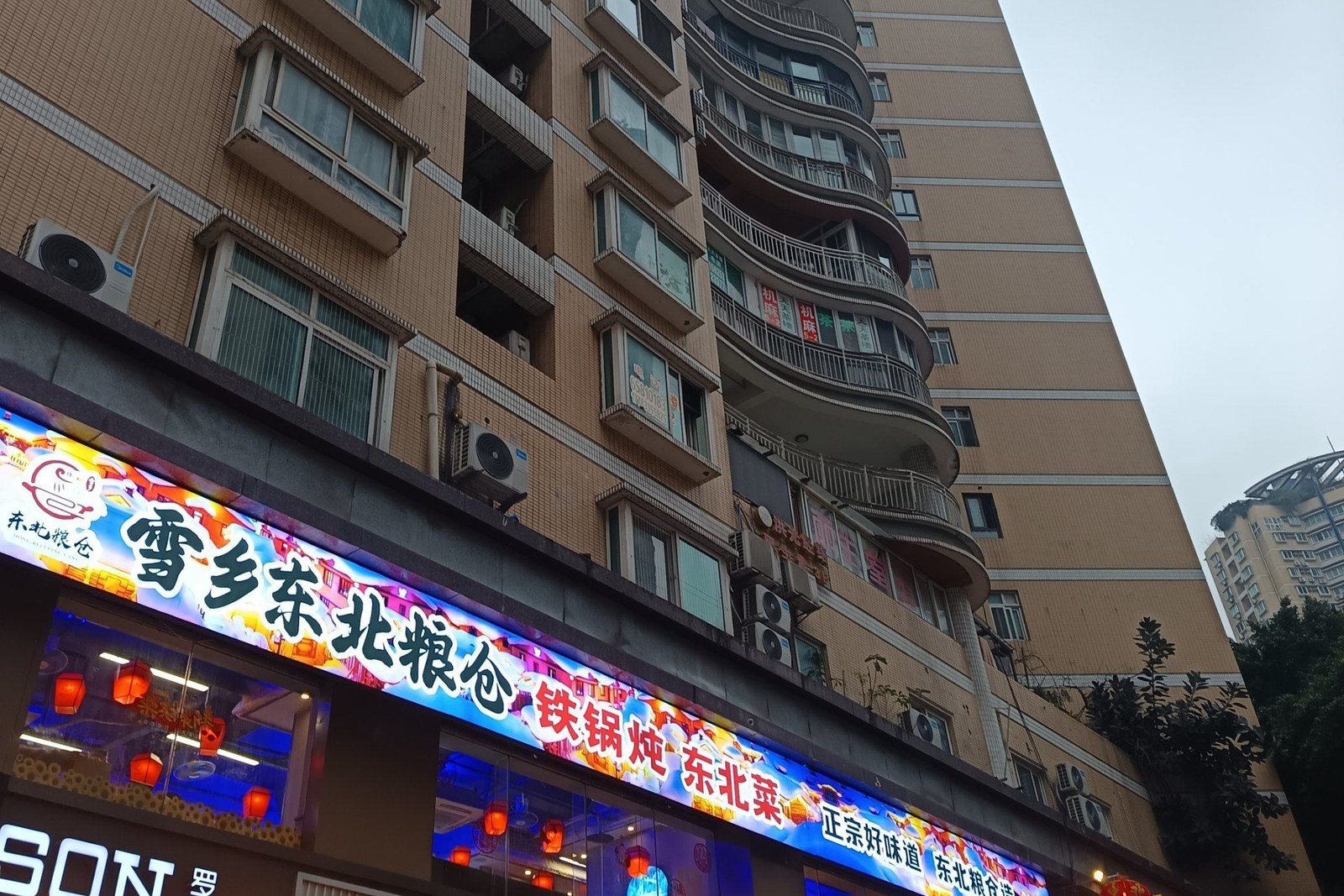
flowcloud would say that Sanxia Square is dinner on an eighty-year stack – the wartime Sha-Ci cultural zone whose 1941 monthly counted dining houses, bookshops and teahouses along the main street, the reform-era counters that went private in their thousands, the square laid out from 1997 around its water features, and the high-speed platforms sunk beneath since 2018 – a dining room built on top of its own history, kept late by the timetables below.
Where to find it: 三峡广场 Sānxiá Guǎngchǎng Sanxia Square, the Xiaolongkan-Shuangxiangzi blocks, 沙坪坝区 Shāpíngbà Qū Shapingba District, Chongqing Municipality – metro line 1 to Shapingba station, the high-speed Shapingba station directly beneath the shopping district. The named counters above are tenancy examples from the district press’s profiles, not recommendations, and the noodle stall’s story is kept to its single sentence by design. No prices are quoted – the register runs from student-cheap to mall mid-range and drifts with the semesters. The 1938, 1941, 1980, 1985, 1997, 2002, 2018 and 2020 dates above come from the city archives’ accounts, the 1941 monthly as reproduced by the city press in 2019, district introductions and project accounts, checked October 2026; the mall layer moves often, and current tenants belong to the malls’ own notices.