
Amber and Acid: Sea-Buckthorn Juice, the Frontier’s Vitamin Cup
酸香一盏沙棘黄,胜似琼浆沁齿凉 Suān xiāng yī zhǎn shājí huáng, shèng sì qióngjiāng qìn chǐ liáng — A cupful of amber sea-buckthorn, sour and fragrant; better than nectar, cooling to the teeth
正文:沙棘汁 Shājí Zhī sea-buckthorn juice is the frontier’s sharp little miracle – berries the color of egg yolk, grown in wind-bent thickets on the worst soil the basin offers, pressed into a juice so sour-bright it makes your jaw hum. Around 北屯市 Běitún Shì Beitun City the sea-buckthorn belts run along the river terraces and the 185th Regiment’s shelter lines, planted decades ago to hold the sand, and the berries that come off them every autumn have become the town’s signature cup: cold in summer, warmed with honey in winter, and always the color of a small sunrise.
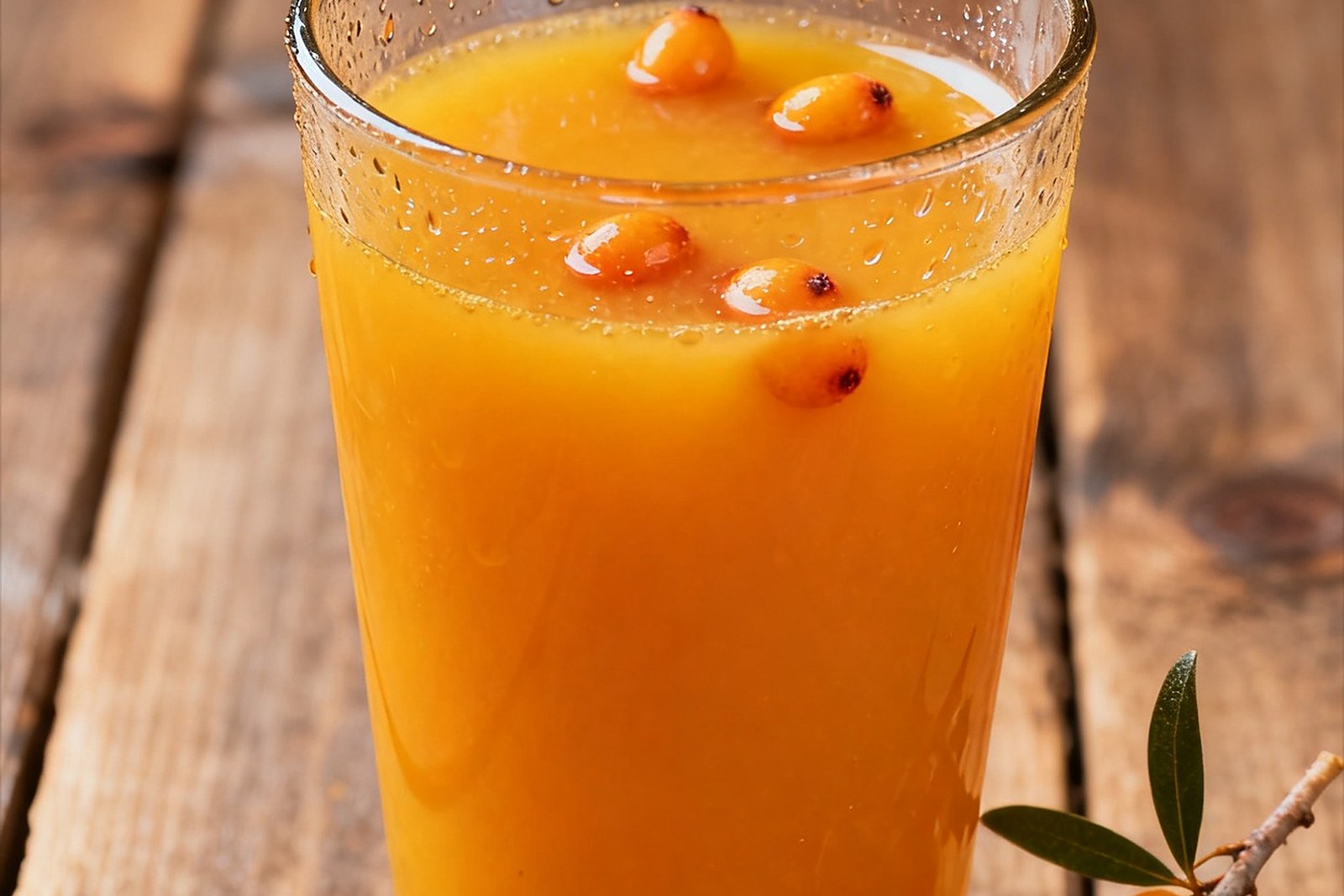
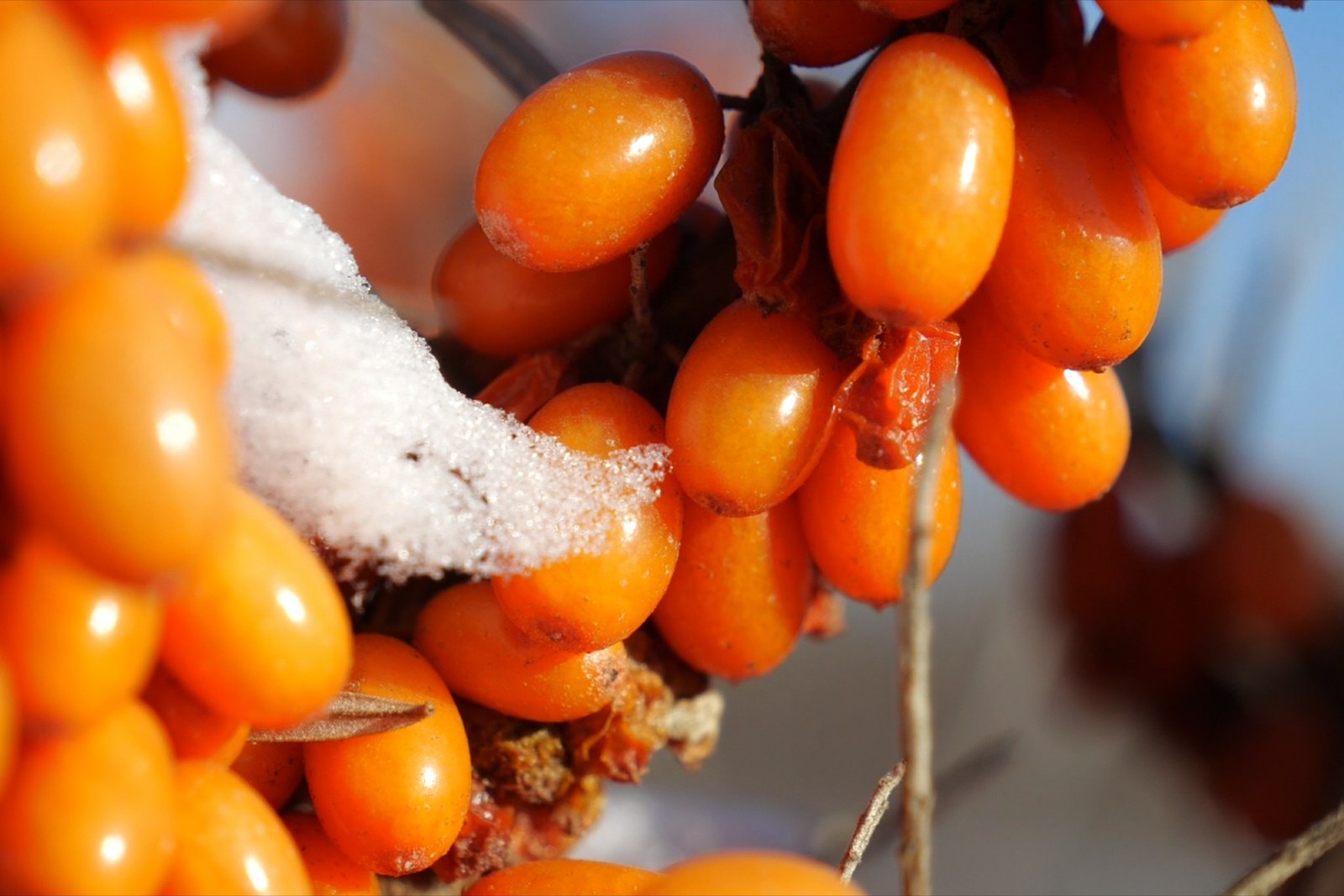
The berry explains the obsession. Sea-buckthorn carries more vitamin C than citrus by a multiple that nutritionists enjoy quoting, oils in both juice and seed, and a flavor built entirely of acid and perfume – nothing else tastes like it. The thorny shrubs hold their fruit hard until frost softens them, so the harvest runs late into autumn, branches cut whole and frozen, berries shaken off in the cold in orange cascades that stain everything they touch.
Pressing is the town craft. Juice houses press and bottle through the winter – clear amber for the purists, thick and cloudy for the pulp party – and the market stalls pour it by the glass from steel urns, sweetened or not as you dare. The classic Beitun service is cold and unsweetened in small glasses, taken with a breath before the first sip; the winter service warms it with honey and serves it as the evening’s last word against the cold.
Drink it through the seasons. Summer takes it iced after the river walk – the sourness resets a hot afternoon like a switch; winter takes it warm with honey as the frontier’s answer to lemon tea; and the feast tables of town pour it between courses as the palate-cleaning cup. Locals argue the pulp question – thick juice against clear – with the same warmth they argue dough shapes, and the honest answer is to drink both and keep the argument alive.
Beyond the juice, the same 北屯市 Běitún Shì Beitun City holds other flavors: 额河鱼宴 É Hé Yúyàn the Irtysh fish feast, 风干狗鱼 Fēnggān Gǒuyú air-dried pike, 驼奶 Tuónǎi camel milk warm from the urn, and 胡尔达克 Hú’ěrdákè the Kazakh meat-and-dough skillet – four more doors into the same 北屯市 Běitún Shì Beitun City. With the juice settled, our Beitun travel map fills the day.
The tradition deserves its due. Sea-buckthorn was planted as engineering – shelter belts against wind and sand – and paid its way as medicine and flavor; the regiments’ windbreak lines became the juice industry’s orchards. Drinking it in Beitun is tasting that exchange: soil held, berries pressed, and a sour-gold cup that the frontier earns every autumn with thorns and patience.
Practicalities first. Market stalls and juice houses pour by the glass all year; bottles of the pressed juice travel well and make the cheapest good gift the region sells. First-timers take the small glass unsweetened – the acid is the point – and the warmed honey version in winter converts the rest.
Words and Names
What the Locals Know
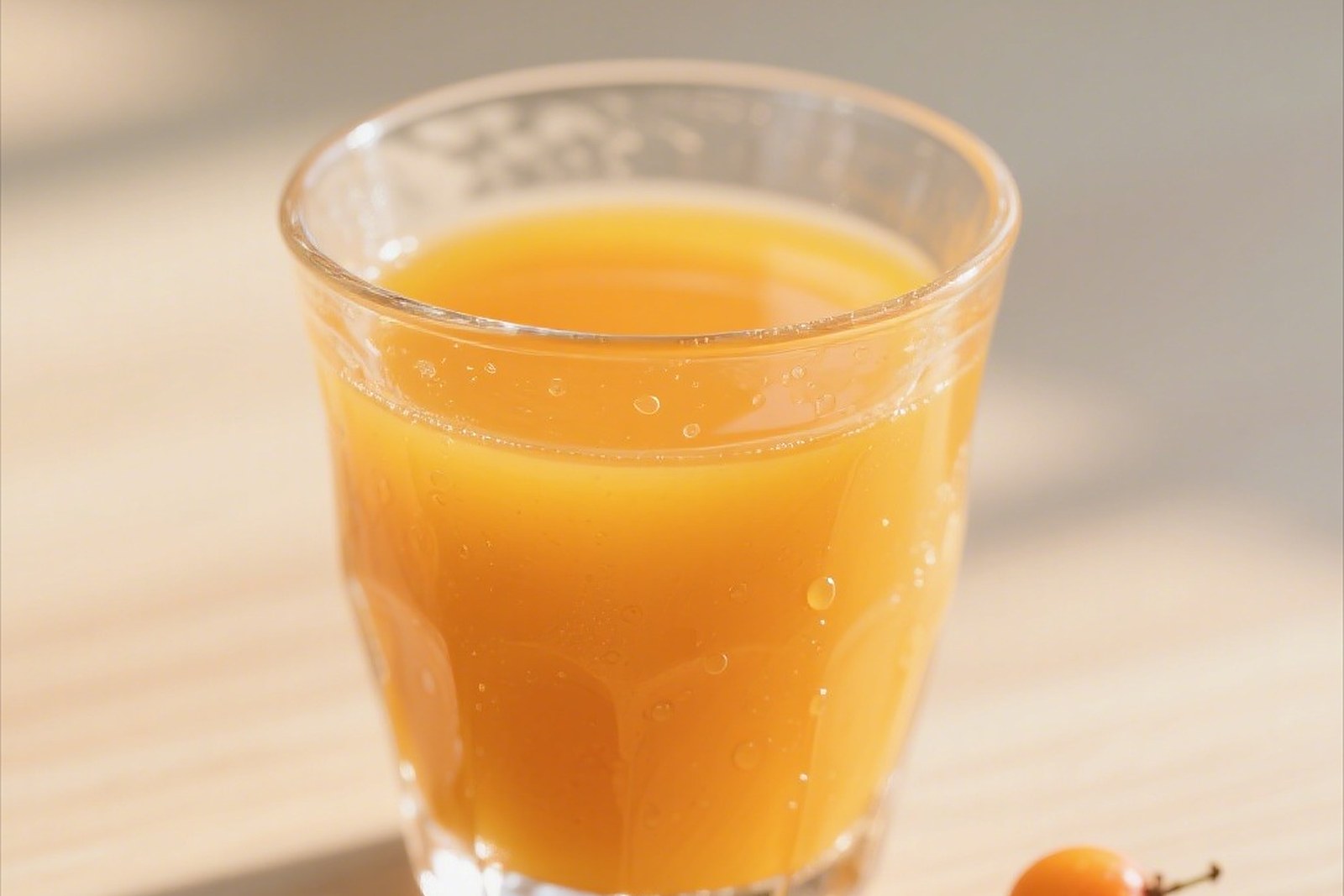
flowcloud would say sea-buckthorn juice is the frontier’s own cordial: berries grown as engineering, pressed into an acid-gold cup that resets the palate and the afternoon – windbreak sweetness with a thorn in its tail. All checked November 2026.
Where to find it: Market juice stalls across 北屯市 Běitún Shì Beitun City pour sea-buckthorn cold in summer and warmed with honey in winter; take the small unsweetened glass first, then the bottle for the road. All checked November 2026.