
沙井 Shājǐng sits at the top of the Pearl River estuary, where the fresh water coming down the river finally meets the tide, and that brackish band of shallow mud is the reason the town exists. An oyster put in that water grows slowly and stays sweet; an oyster put in the open sea grows fast and tastes of nothing much. The beds here have been worked since the Song, and by the Qing the village was shipping dried oysters, oyster sauce and lime made from burnt shells up the coast to Guangzhou and across to Southeast Asia. The trade made 沙井 one of the wealthiest villages in the 宝安 Bǎo’ān district, and it left a material trace: walking the older lanes you can still find stretches of wall built out of oyster shell, the shells laid flat and mortared with mud so that the wall reads as a band of pale horizontal stripes. There are two or three of those walls left. They are the best free monument in Shenzhen.
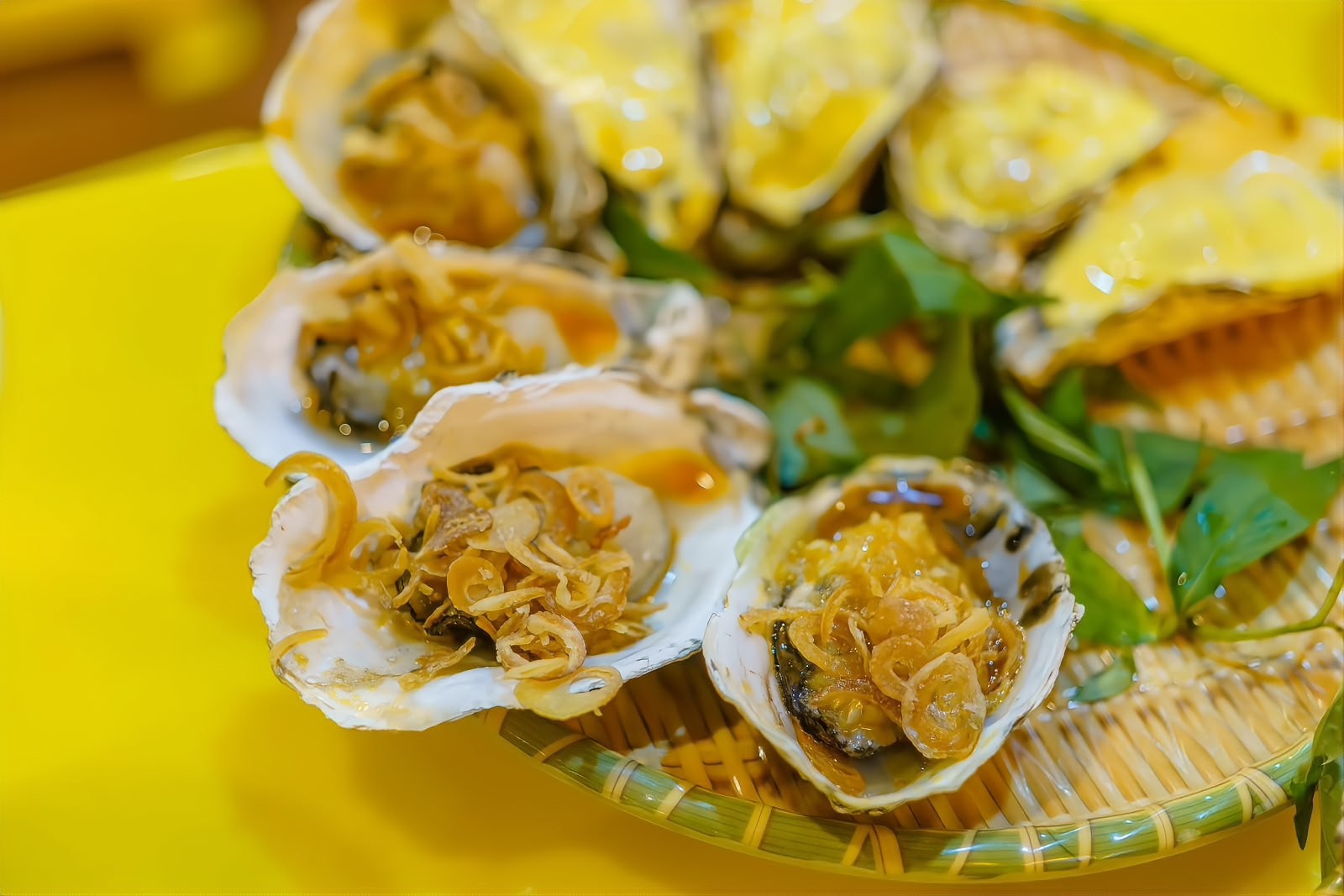
The oyster itself is eaten in about six ways and the order of importance is roughly this. 炭烧生蚝 tàn shāo shēng háo is the one that made the town famous again in the 1990s: the top shell is knocked off, the oyster is set on a charcoal grate and cooked until the liquor inside it just begins to bubble, then it is dressed with a spoonful of 蒜蓉 suàn róng, chopped garlic that has been fried in oil until it is barely golden, and a scatter of spring onion. 蒜蓉粉丝蒸 suàn róng fěn sī zhēng is the same idea done in a steamer, with a knot of glass noodles under the garlic to catch the juice. Both are street food and both cost between eight and twenty-five yuan depending on the size of the shell, which is the honest way the price is set here. The plainest and best way, if you are not squeamish, is raw: shucked, still in its liquor, with a squeeze of lemon or a dip of soy and 芥末 jiè mò, eaten within seconds of opening. Beyond those there is 蚝仔粥 háo zǎi zhōu, a rice congee with small oysters stirred in at the very end so they poach in the residual heat, and two things that are not the fresh oyster at all: 蚝豉 háo chǐ, the dried oyster that gives a slow braise its depth and turns up in every 盆菜 and every 发菜蚝豉 stew, and 蚝油 háo yóu, the sauce made by boiling down the liquor, which was invented in 李锦记 in 1888 and which the town still thinks of as its own.
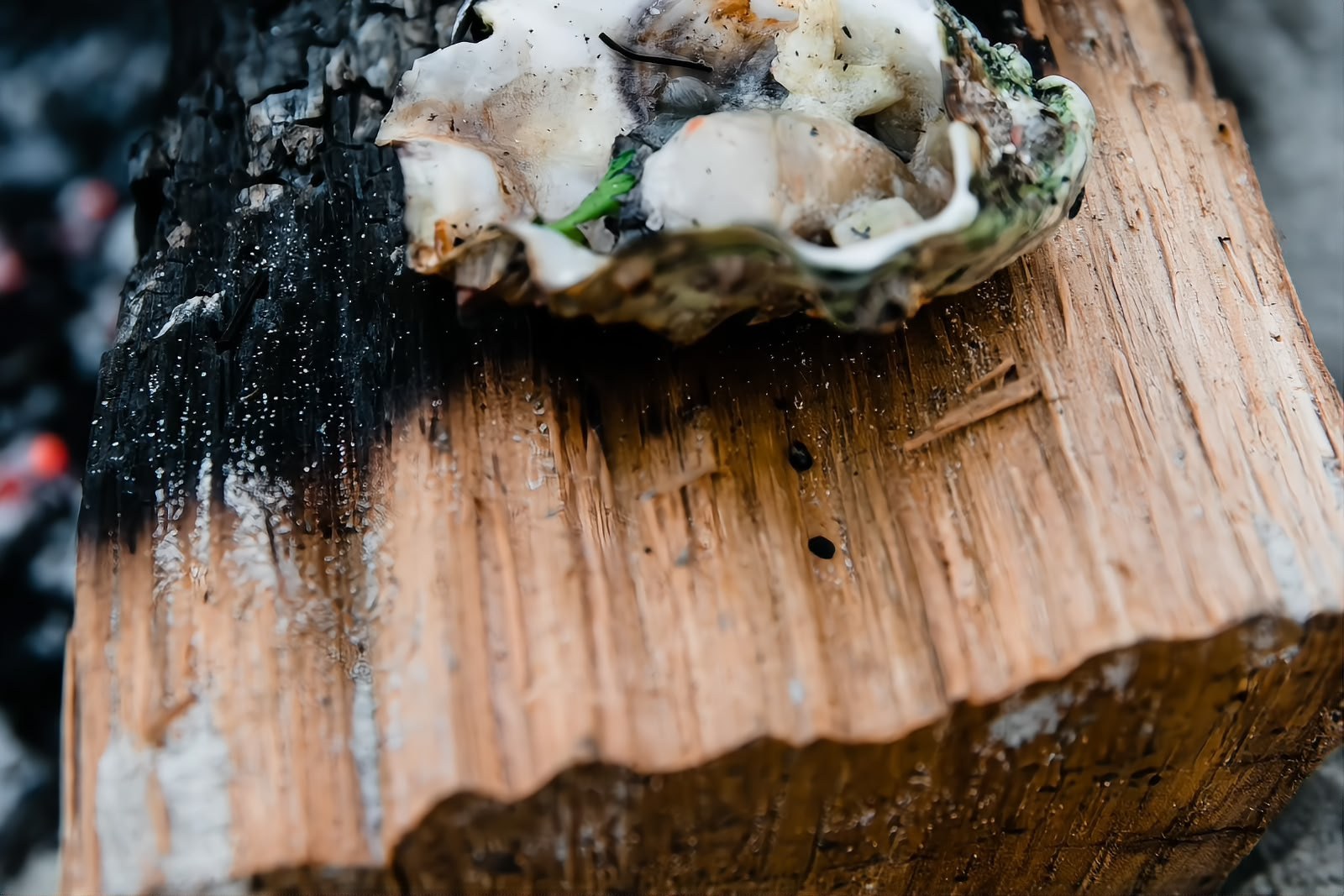
The season runs from late September to March, and the old rule is to eat oysters in the months with an R in them, which is not superstition but reproductive biology: the 蚝 spawn in the warm months and go thin, and they fatten again as the water cools. Wait until December and a 沙井 oyster is thick enough that the meat stands up in the shell. The trade around it has filled out into a festival, the 沙井金蚝美食节, held each December on 蚝乡路, where the stalls are largely the same stalls as always and the queue is much longer. If you go, go on a weekday evening when the families have gone home and the grill is still hot.
Words and Names
生蚝 shēng háo is the live oyster on the shell and 蚝 is the character for it; 炭烧 tàn shāo means grilled over charcoal and 蒜蓉 suàn róng is minced garlic; 粉丝 fěn sī are the thin glass noodles and 蒸 zhēng means steamed. 蚝豉 háo chǐ is the dried oyster, 蚝油 háo yóu the sauce, and 蚝壳墙 háo ké qiáng the oyster-shell wall. 沙井 Shājǐng is the town and 宝安 Bǎo’ān the district; 珠江口 Zhūjiāng Kǒu is the Pearl River estuary, and 蚝乡 háo xiāng, oyster country, is what 沙井 calls itself.
What the Locals Know
Buy by weight and not by count. Two oysters of the same length can differ by half in meat, and the heft is all in the shell. A shucked oyster should still be sitting in its own liquor and that liquor should be clear; if it is cloudy, the oyster has been out too long. A live one never opens by itself, so if you are buying unshucked, tap it and watch for the shell to shut tighter. On a barbecue stall, ask for the oysters to be put on before the garlic, because the garlic burns and goes bitter in about ninety seconds and the oyster takes three minutes. And ignore the large imported shellfish: the bay ones are smaller and better, and they are the only ones that are actually from here.
flowcloud would say that the oyster is the only food that tastes of the place it grew in so completely that a town can be named after the water rather than the animal, and that a shell wall is a more honest monument than a statue because it was built out of dinner.
Where to find it: the 沙井老街 Shājǐng lǎo jiē lanes and the 蚝乡路 strip off 沙井中心路, a short walk from 沙井地铁站 on Metro Line 11 in the north-west of the city. The 沙井蚝 in any of the older 大排档 there is the real thing; the same name on a restaurant in the city centre usually means the oysters came from somewhere else. Buy a plate of 炭烧生蚝 first and a bowl of 蚝仔粥 second, and finish with the dried oysters from the shop next door, which keep for a year in a cupboard.