
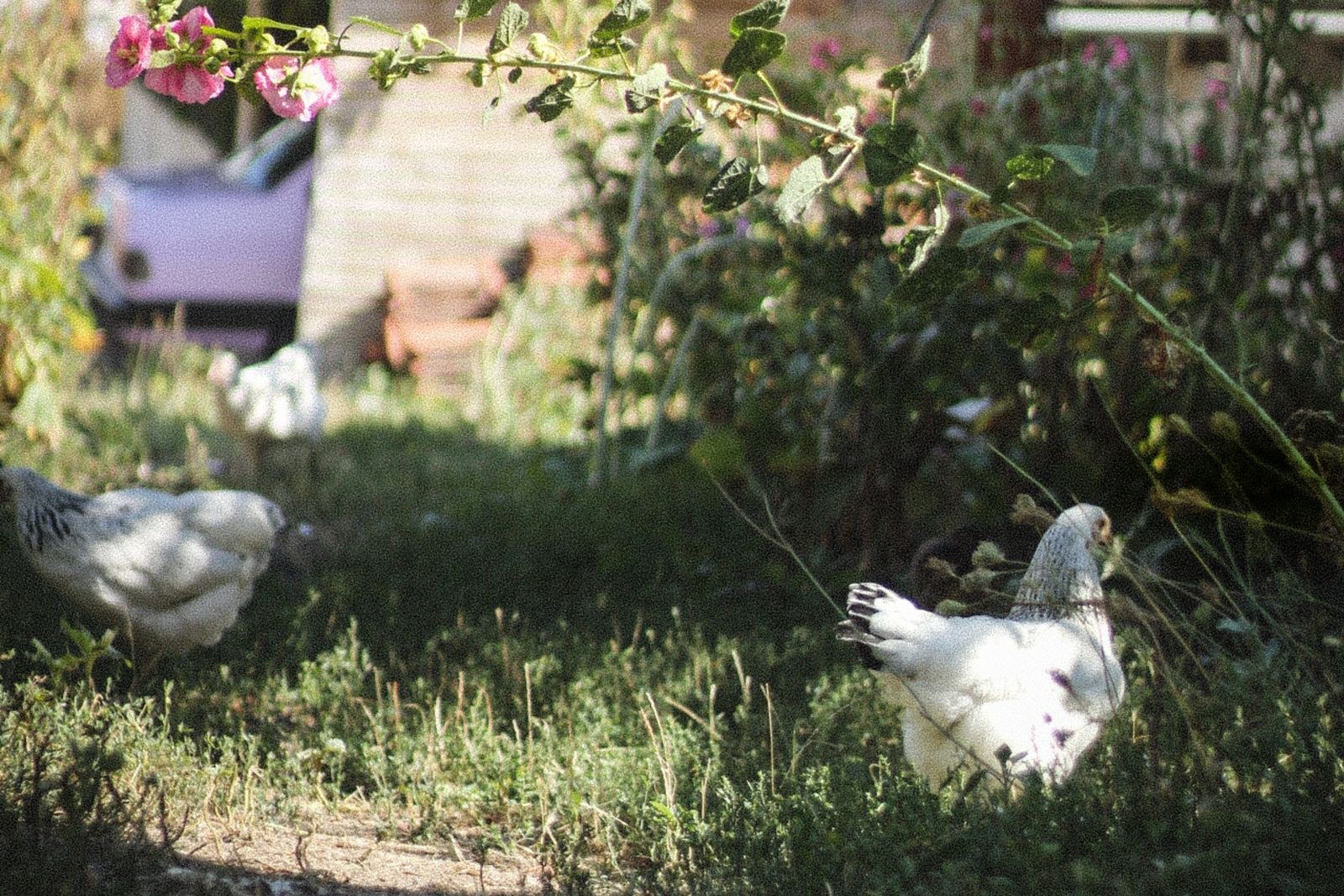
什玲鸡 Shílíng jī, Shaling chicken, also called 什玲土鸡, the Shaling country fowl, is the native village chicken of 什玲镇 Shílíng zhèn Shaling Town in 保亭黎族苗族自治县 Baoting Li and Miao Autonomous County, and it comes with arguably the best nickname in Hainan poultry: 会上树的鸡, the chicken that climbs trees. It is a breed rather than a dish, and it holds a national geographical-indication certification mark approved on 14 November 2016, registered to the county’s animal-husbandry and fisheries bureau. The bird is raised loose under the areca palms and rubber until it roosts in the branches at night, and it reaches the table the simplest way the island knows: white-cut, with a dish of dipping sauce.
The mark is the hardest fact in the file and it is precise: China’s GI trademark register carries 什玲鸡, live poultry, as a certification mark, application number 18247294, approved on 14 November 2016, the registrant the Baoting county animal-husbandry, veterinary and fisheries bureau. Some media accounts describe a 2019 certification round; the register’s date is the one this text follows, and the difference is left standing rather than smoothed. What the register does not grant is a rank. There is no place for Shaling chicken on any official list of Hainan’s famous chickens, and no title of best or first is printed here, because none exists.
The behaviour behind the nickname is the point. Chicks are turned out into the hills and orchards, areca and rubber groves, mango and betel, where they spend the day hunting insects, wild fruit and grass, take grain, corn, sweet potato and elephant grass from the household, and at dusk fly up to sleep in the trees by the house. The old keepers describe the build in a rhyme of three smalls and two shorts and one long: a small head, a small body and small feet; a short body and a short neck; and long wings, with showy plumage, a loud crow, a fast run and that habit of roosting in the branches. The provincial market regulator’s register adds the eating: raised free or semi-free in woodland, feeding on insects, weeds and grain, medium in build, with tender fine meat, crisp skin, a strong chew and good disease resistance. Local people treat it as a rare fowl and a Li and Miao household’s dish for honoured guests.
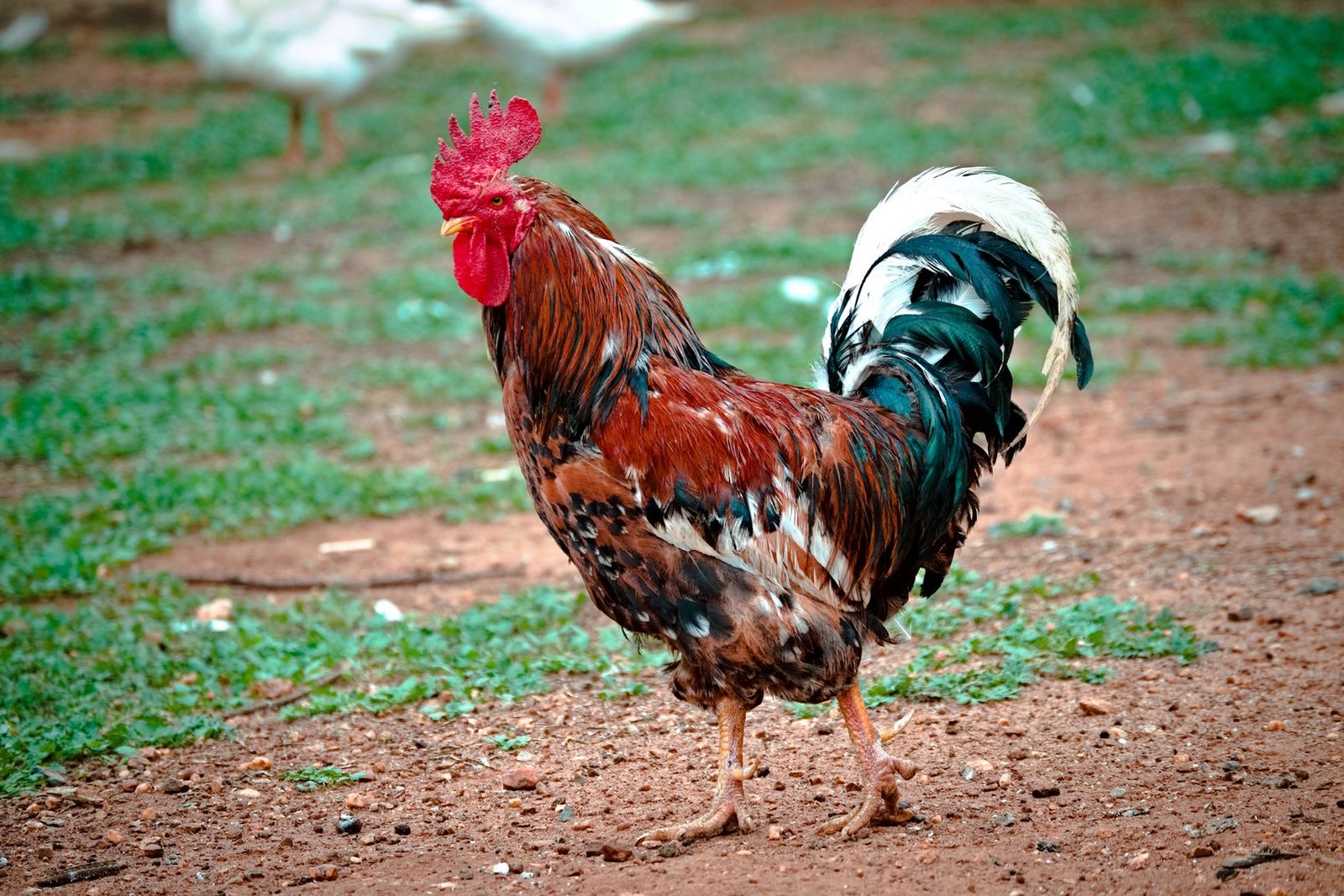
Two things about the bird’s standing are not facts, and the text will not dress them as facts. The first is the local saying that pairs it with the island’s famous fowl: the north has Wenchang chicken, the south has Shaling chicken, a folk pairing with no official ranking behind it, printed here as the local saying it is. The second is the origin story: legend has it that a village hen and a wild pheasant crossed at the foot of the Seven Fairy ridge, and centuries of natural selection fixed the breed, and that is where the tale stays, in legend. The honest version is the register’s plain phrase, a local native breed, named for the town where it is raised.
The industry numbers are media accounts and travel with the media’s name attached. Recent reporting puts the county at four large chicken farms, more than 9,000 farming households and annual sales of roughly 600,000 birds, with the birds sold on to Malaysia, Hong Kong and the cities of Shanghai, Chengdu, Shenzhen, Guangzhou, Zhengzhou and Qingdao, a market list rather than a customs statistic. The industrial push has an older date, 2010, when a Wenchang chicken company invested more than nine million yuan in a standard breeding farm, a company-plus-cooperative-plus-farmer model reached nine townships, 900,000 chicks were handed out and some 1,050 households became specialists, with an annual supply contract of 900,000 birds signed with a Malaysian trading firm that year. Those 2010 figures belong to 2010 and are not to be mixed with the present day. A pair of farm samples rounds it out: a cooperative founded in 2017 in 道果村 Daoguo village with 4,000 laying hens and 8,000 capons, and a Li household that has kept chickens in a seventy-mu areca-and-mango orchard since the 1990s, turning out 30,000 chicks a year for an income above eighty thousand, a 2010 sample. Per-bird profit at that time ran six to twelve yuan, and no current retail price exists in any source, so none is given.
Words and Names
什玲鸡 Shílíng jī is the bird, 什玲土鸡 the same bird called a country fowl. 会上树的鸡 huì shàng shù de jī is the nickname, the chicken that climbs trees. 山捞叶 shān lāo yè, betel leaf, is the herb the county’s signature chicken dish is cooked with. 什玲奇禽 Shílíng qíqín, the rare fowl of Shaling, is the old honorific. And the site’s other chicken pages keep their own birds: the capon houses of Tunchang and the free-range lines elsewhere are different systems; this one is the tree-roosting native breed of a single town.
What the Locals Know
The bird is cooked several ways and the county’s favourite is the least fussy. White-cut, poached whole and cooled and chopped and served with a ginger dip, keeps the meat’s own taste; hung-roast, quick stir-frying and steaming all appear, and the older kitchen notes add soups simmered with lingzhi or coconut. The dish to ask for by name is 捞叶炒什玲鸡, Shaling chicken dry-fried with betel leaf, billed as tender beneath a glossy skin with the marrow still fragrant, and a plate of river shrimp fried with the same leaf often comes with it. At the heritage park 槟榔谷 Binglanggu the bird is one of six Li and Miao signature dishes under the name 包烧烤鸡, the wrapped roast, sold as the chicken that climbed the tree. The meal sits inside a Li hospitality rule worth knowing: a Li host’s welcome is wine, and the best of it is a chicken killed for you, or a jar of fish tea or meat tea opened, each a page of its own on this site, while neighbours carry in their own dishes and the singing runs late.
Where to eat it is best said plainly: there is no official directory of tourist restaurants for the breed. Farmhouse kitchens in 什玲镇 Shaling Town and the county-seat farm-stay eateries serve it, one of the longest-running being 阿清嫂农乐乐 A-Qingsao farm-stay in 排寮村 Pailiao village on the road up to the hot springs, a courtyard that cooks and lodges by turns. A recent travel snapshot describes the county version as a clay-stove soup simmered six hours with banana heart, a snapshot rather than a recipe. What the record refuses: any place on a famous-chicken list, which does not exist; any current price for a live or white-cut bird, which no source prints; and the pairing with Wenchang chicken as anything more than a local saying.
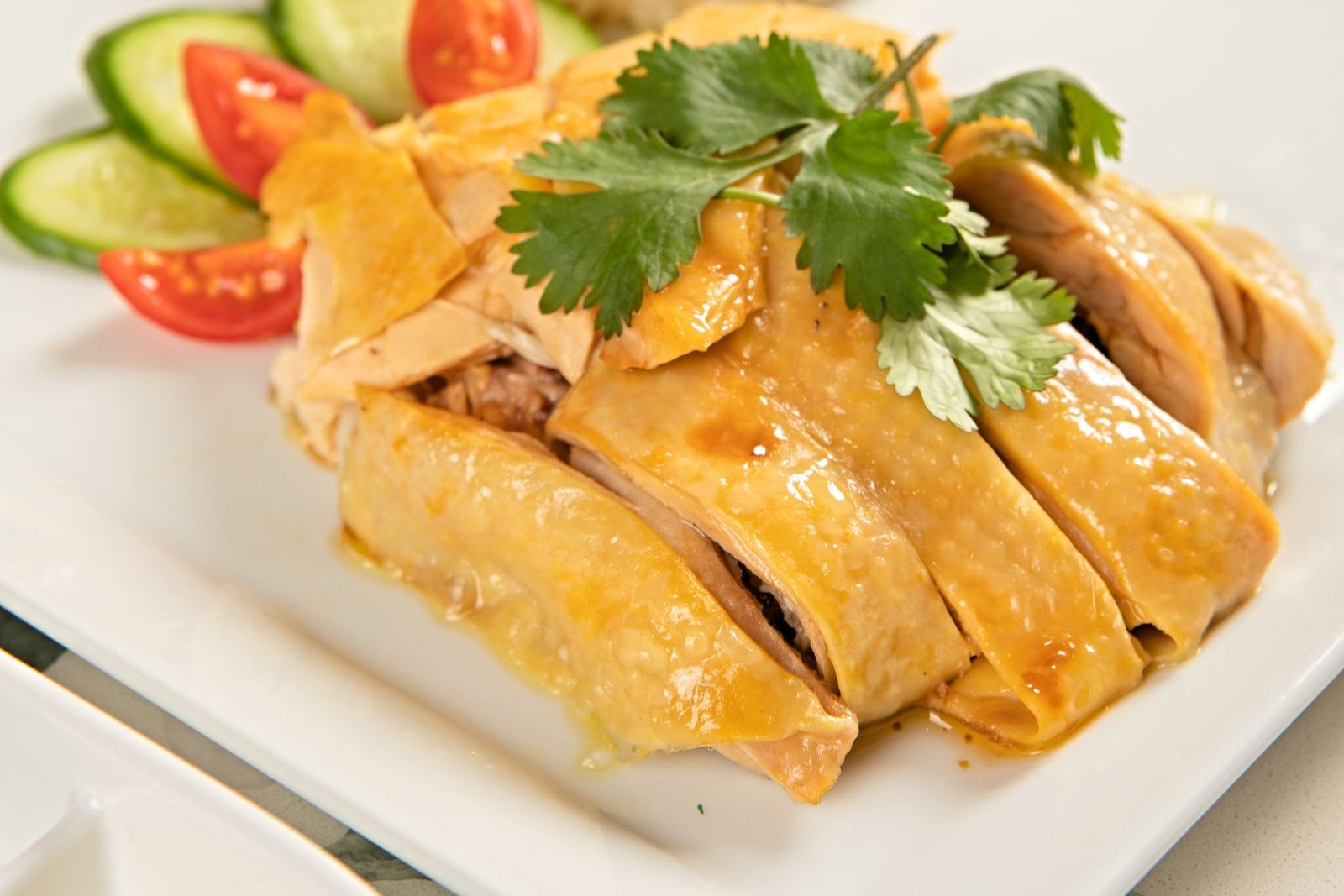
flowcloud would say that the Shaling chicken is a native bird with a trademark and a habit, raised under the areca until it sleeps in the branches, sealed on the register in November 2016, and served white-cut beside a dish of dipping sauce.
Where to find it: 什玲镇 Shílíng zhèn Shaling Town, the breed’s home ground around 道果村 Daoguo village and the Shaling river, and the county farm-stay kitchens, among them 阿清嫂农乐乐 A-Qingsao farm-stay in 排寮村 Pailiao village on the road to the Seven Fairy springs, in 保亭黎族苗族自治县 Baoting Li and Miao Autonomous County, Hainan; 槟榔谷 Binglanggu heritage park serves the wrapped roast version. Ask for the bird stir-fried with betel leaf, confirm the day’s price at the table, and come back for the rambutan in July.