
It comes out of a length of bamboo. A section of green bamboo is cut on a slant at the top, the way a jug is cut, and inside it is a cloudy, faintly pinkish liquid with grains of rice still drifting in it. You drink it in one go, because that is how it is handed to you, and the first thing you notice is cold sweetness, like watered honey with a sour edge behind it. The second thing you notice is that the sweetness is a lie. 山兰酒 shānlán jiǔ goes down like a fruit drink and arrives about twenty minutes later, which is the reason every long-table feast in the 黎族 Lízú villages of 五指山 Wǔzhǐshān ends the way it does, with somebody singing and somebody else asleep against a pillar. It is the drink of the Hainan uplands, made from a rice that grows on dry hillsides, and the traditional technique involves burying it in the ground.
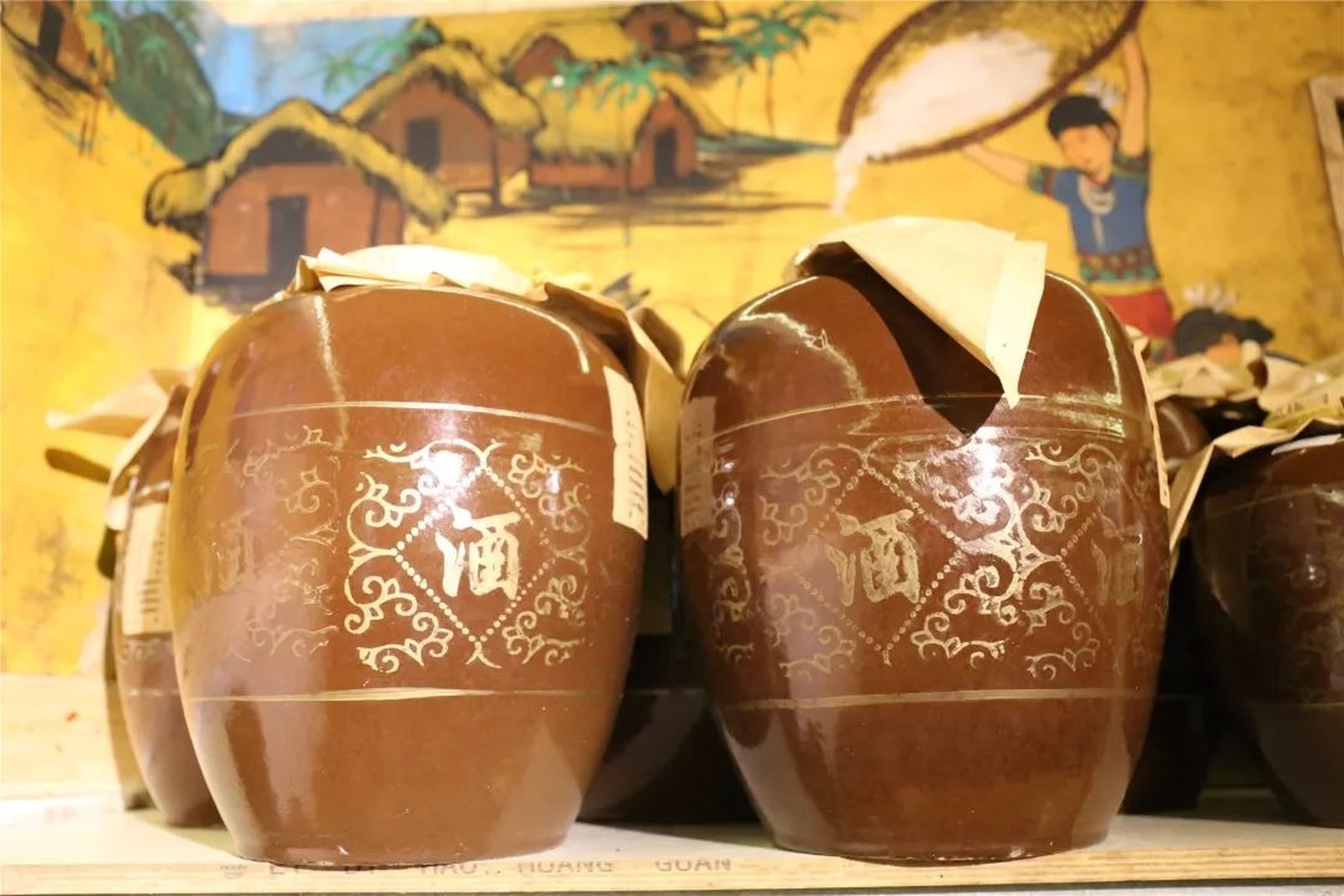
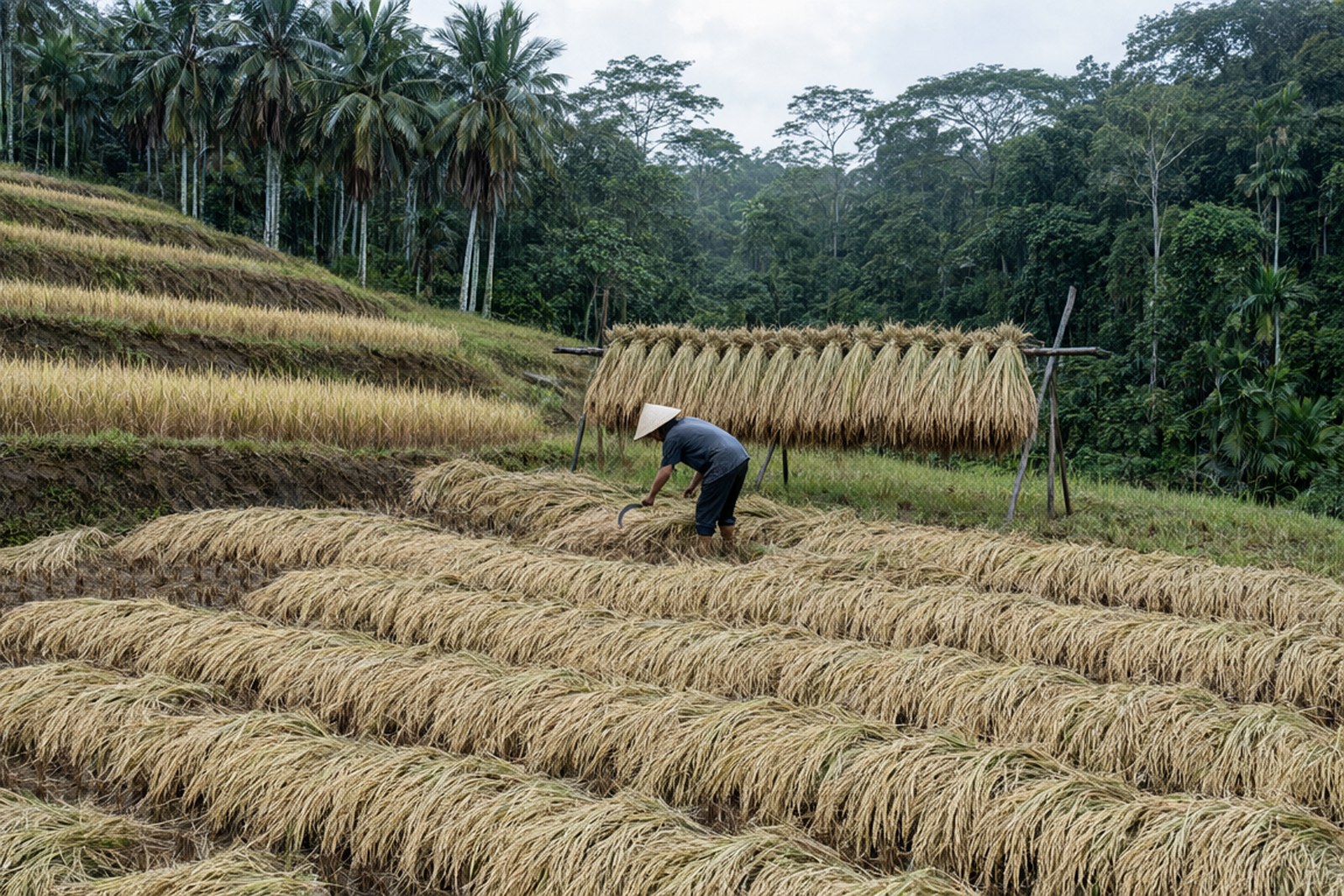
The rice gives the wine its name. 山兰稻 shānlán dào is an upland glutinous rice grown without standing water, planted on hillsides that have been cleared and burned, which is why it is also called 山栏稻 shānlán dào — the character for a fenced plot. It is a small-grained, heavily scented rice that ripens on slopes too steep for paddies, and the Li communities of the central mountains have grown it that way for centuries. The grain is cooked, spread out to cool, and mixed with a leaven made from wild herbs and plants gathered on the mountain; the mixture goes into a woven basket, is covered with 芭蕉叶 bājiāo yè, banana leaves, and is left for a few days until it starts to work. Then it is sealed into a jar and buried, and here the recipe splits by patience. A jar dug up after a month gives you the sweet, still-crumbly 甜糟 tiánzāo, rice mash in liquid, eaten with a spoon as much as drunk. A jar left for three years, or five, is a different substance altogether: the grains have dissolved entirely and what is left is a clear-ish amber wine with a deep sour-sweet finish. The Li word for it is remembered in the villages as something close to biang, and it is pronounced with the mouth already smiling.
What Makes It Work
Three things, and all three are difficult to fake. The rice is the first: upland glutinous rice has a higher aroma and a softer starch than paddy rice, and it ferments into something more perfumed. The leaven is the second, and it is where each family’s version diverges. The 酒饼 jiǔbǐng, the yeast cake, is made from rice flour and a list of wild plants that varies between villages and is not written down; some of them contribute bitterness that keeps a very sweet ferment from turning cloying. The third is temperature. Burying the jar is not folklore, it is climate control: a metre of earth in the Hainan highlands sits at a steady temperature through a hot, wet year, and a jar left above ground in this humidity will turn to vinegar or worse. Every step of the process is a slow one. There is no distillation anywhere in it, which is why the alcohol stays in the low teens and why a wine that tastes like dessert can empty a table.
Words and Names
山兰酒 shānlán jiǔ is the standard name, sometimes written 山栏酒 with the character for a hillside enclosure. 甜糟 tiánzāo, sweet dregs, is the young version, more food than drink. 酒饼 jiǔbǐng, wine cake, is the fermented leaven. 山兰稻 shānlán dào is the rice itself, and 刀耕火种 dāo gēng huǒ zhòng, cut and burn, is the old agricultural method it belongs to, still practised in small plots on the steeper slopes. 长桌宴 chángzhuō yàn, long-table feast, is where the wine is poured; 竹筒 zhú tǒng, bamboo tube, is what it is poured into, and it is worth knowing that the tube is not only decoration. Bamboo is cut the same day it is used, and the green wall of it does something to the aroma that a glass does not.
What the Locals Know
The locals know that you cannot judge 山兰酒 by the first cup. It is served cold, it is sweeter than wine, and the alcohol is almost invisible for the first half hour, which is exactly why the villages serve it with food and never without. They also know that the vintage matters more than the brand: a jar buried for a year and a jar buried for five years are sold as the same product by people who cannot tell you how long theirs slept, so the question to ask is not how much but how old. The giveaway is texture — young wine has sediment and a chalky mouthfeel, old wine has neither. At a long-table feast the etiquette is simple: the cup is refilled as soon as it is empty, and the correct way to stop is to leave it full. It is also, unfashionably, one of the few things in the region that gets cheaper the further you are from the coast, since the whole production chain lives in the mountains and carries no distance advantage at either end.
flowcloud would say that a wine which needs three years of darkness to become itself is a good reminder that not everything worth drinking is in a hurry.
Where to find it: the 黎寨 Lí zhài, the Li villages around 水满乡 Shuǐmǎn Xiāng and the mountain, plus any restaurant in 五指山市 Wǔzhǐshān Shì that advertises 长桌宴. Ask for it by age rather than by brand, drink the first cup slowly and the rest not at all if you have a long drive down the mountain.