
菜茶 càichá, the bowl 海丰县 Hǎifēng xiàn calls a tea, holds no tea at all: it is a heap of separately fried greens, meat and seafood with boiling stock poured over the top. 汕尾市 Shànwěi shì is the prefecture Guangdong knows by its old name 海陆丰 Hǎilùfēng, where the coastal plains speak 福佬话 Fúlǎohuà and the hills of 陆河县 Lùhé xiàn speak Hakka, so that locals insist the result is neither Teochew nor simply Hakka but 海陆丰 of its own. 菜茶 stands on the coastal side of that line.
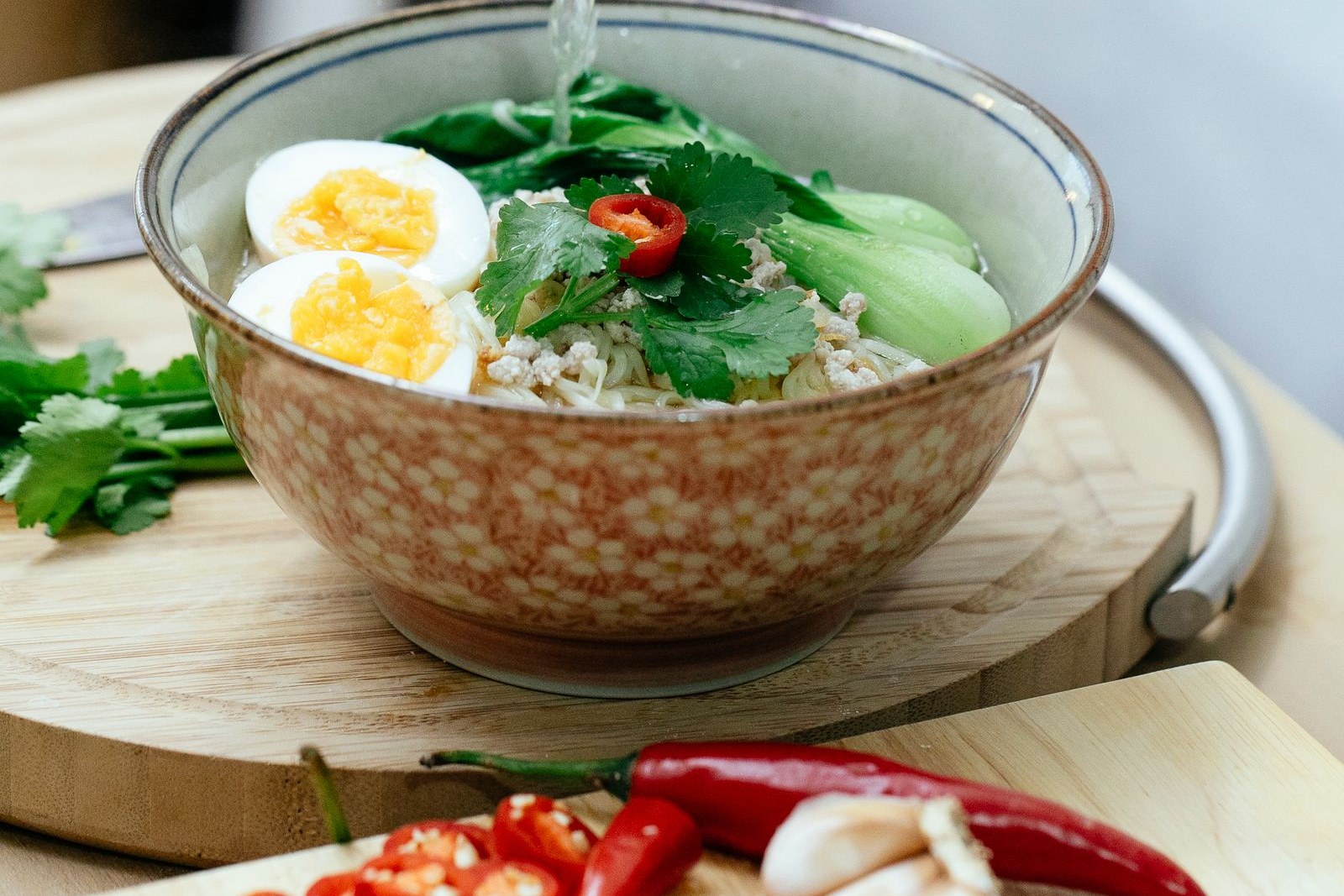
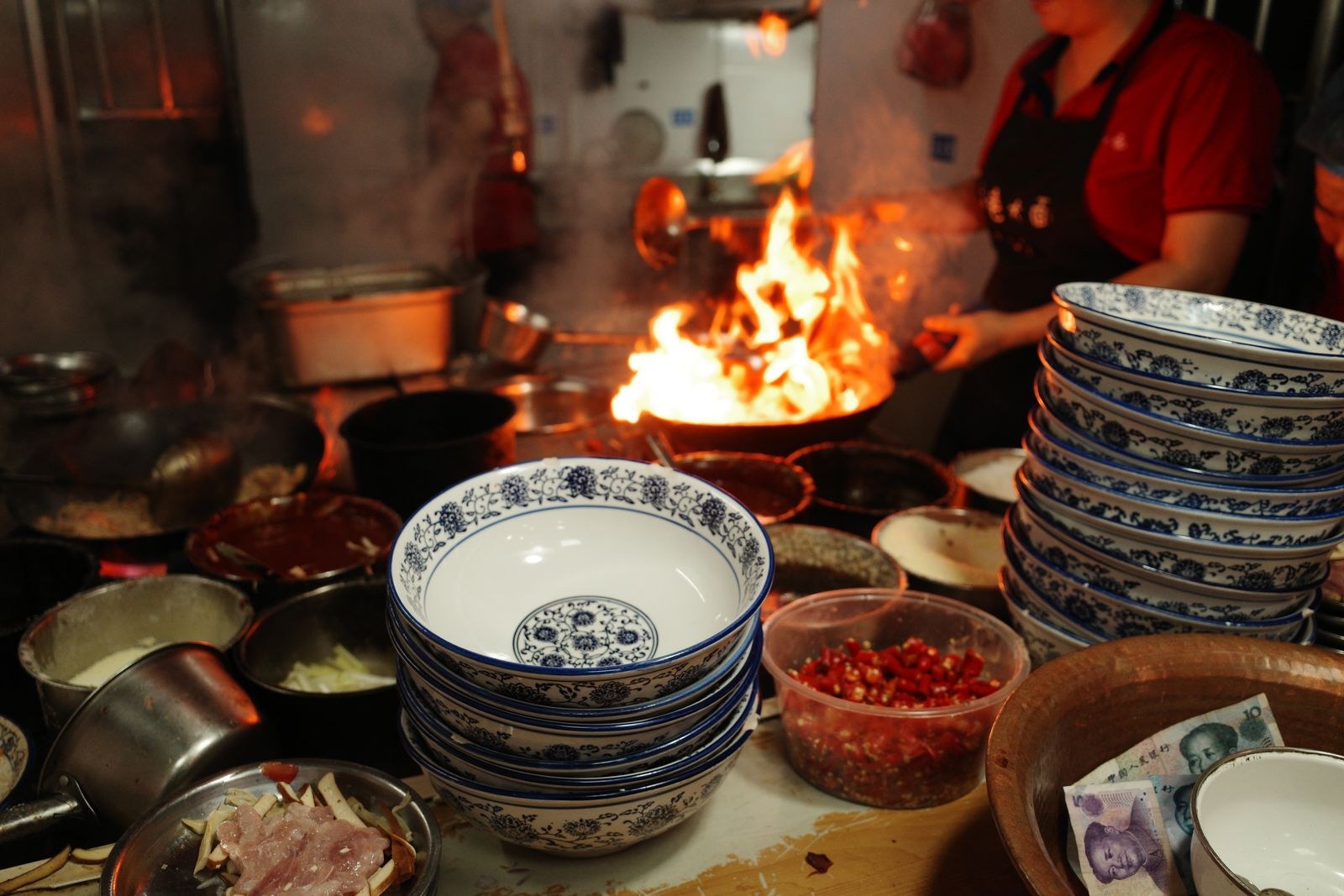
Three things happen in order. The greens are fried first, and fried separately – spinach, cabbage, celery, lettuce, watercress, garlic sprouts and bean sprouts each in the wok alone, so each keeps its colour and its bite, which is what the county means by 已切好的青菜随叫随下锅, the cut greens go in as they are called for. A second wok takes shiitake, shrimp, lean pork, 腊肠 làcháng sausage, char siu and 鱿脯 yóupǔ dried squid, with beans, 腐竹 fǔzhú bean-curd sticks and soaked vermicelli. Then the bowl is packed level-full, boiling stock goes over it, and the finish is 炒米 chǎomǐ, puffed rice, peanuts, pepper and a pinch of 铁脯烀 tiěfǔhū, ground dried flatfish.
The calendar is where it began. 菜茶 belongs to 正月 zhēngyuè, the first lunar month, and to one obligation inside it: a household that had gained a son hung a flower lantern at the village shrine on the 开灯日 kāidēng rì and fed the neighbours. In Shanwei speech 灯 dēng, lantern, and 丁 dīng, a male child, sound alike, which is why the bowl is also 丁茶 dīngchá, the baby tea, or 开灯茶 kāidēng chá. The county gazetteer for 1988-2004, the 海丰县志 Hǎifēng xiànzhì, records that it was made only in the first month, above all around 元宵 Yuánxiāo.
Two disagreements in the record are worth carrying rather than settling. The first is the date: the county government’s page, the provincial local-records account and one encyclopaedia entry put the season at 正月初七至十四, the seventh to the fourteenth, while an older version of that entry and a second site stretch it to 正月初十至二十 and call it 男丁节 nándīng jié, the men’s festival. The second is the broth: the earliest description is a tea broth, leaves pounded to a froth; the modern and far more common account is a pork-bone stock simmered for hours until it turns milky and sweet; and CCTV’s 《三餐四季》 Sāncān Sìjì used a boiling chicken stock in March 2026.
What the bowl means is easier to state than what is in it. Elders call the puffed rice 金银 jīnyín, gold and silver, and tell the children 吃得越多,福气越满, the more you eat the fuller your share of luck. The county keeps a vocabulary of 咸茶 occasions: 定头茶 dìngtóu chá and 定婚茶 dìnghūn chá between the families of an engaged couple, 过运茶 guòyùn chá to thank people who visited while you were ill, and 出月茶, 入厝茶, 三朝茶, 挑担茶, 换红茶 and 辞山茶 for a baby’s first month, a new house, a bride’s third day, a daughter’s wedding, a funeral and the end of mourning.
Words and Names
菜茶 càichá reads literally as vegetable tea and is not one; 丁茶, 壮丁茶 and 开灯茶 all mean this bowl and all point at the birth of a son. 咸茶 xiánchá, salted tea, is the family name the county gives it, and the crock that family is pounded in is the 牙钵 yábō, the toothed mortar. 炒米 chǎomǐ, elsewhere 爆谷, is the puffed rice on top; 铁脯烀 tiěfǔhū is the dried-flatfish powder that finishes it; 腐竹 fǔzhú are bean-curd sticks, 鱿脯 dried squid and 腊肠 cured sausage. 饭茶 fànchá is the variant with cooked rice stirred in. 擂茶 léichá, pounded tea, is a different dish from a different county.
What the Locals Know
In practice you eat 菜茶 on your feet and moving. The habit on the 元宵 nights is to leave dinner half-eaten and keep room, because the bowl is offered house by house down a street and a child working the round can put away a dozen of them. Arrive as the stock comes to the boil; the dish does not wait, since the greens soften and the puffed rice turns to paste within minutes of the pour. 汕尾城区 Shànwěi chéngqū, the urban core, runs its snack trade along 二马路 Èr mǎ lù, where 大街菜茶 at number 191 opens for the evening.
Two pieces of paperwork need care. The related 咸茶 was entered in 2007 in the first batch of the city’s municipal intangible cultural heritage, and that listing is documented; 菜茶 itself is called 非物质性的文化遗产, an intangible cultural heritage property, in newspapers and on official pages, yet no authoritative source shows it separately on a county or municipal list, so the 2007 entry should be read as covering the family rather than this bowl. The other is a broadcast: on 28 March 2026 CCTV’s 《三餐四季》 ran its Shanwei episode with 撒贝宁 Sā Bèiníng in the street, who said 快拿饭盒来,这么鲜一定要装走, bring a lunchbox.
Two stories travel with the dish and both should be handed on as stories. The first belongs to the hills, the tale of seven fairies who came down to a farm garden in 陆河 and left seven kinds of greens behind, which is why the seven-vegetable version, 七样菜茶 qī yàng càichá, has seven. The second is the account of a Three Kingdoms army cured of sickness by a pounded tea, told all over southern China rather than here, in two versions: Liu Bei leading troops south, or Liu Bei and Cao Cao at war with a plague in the camps.
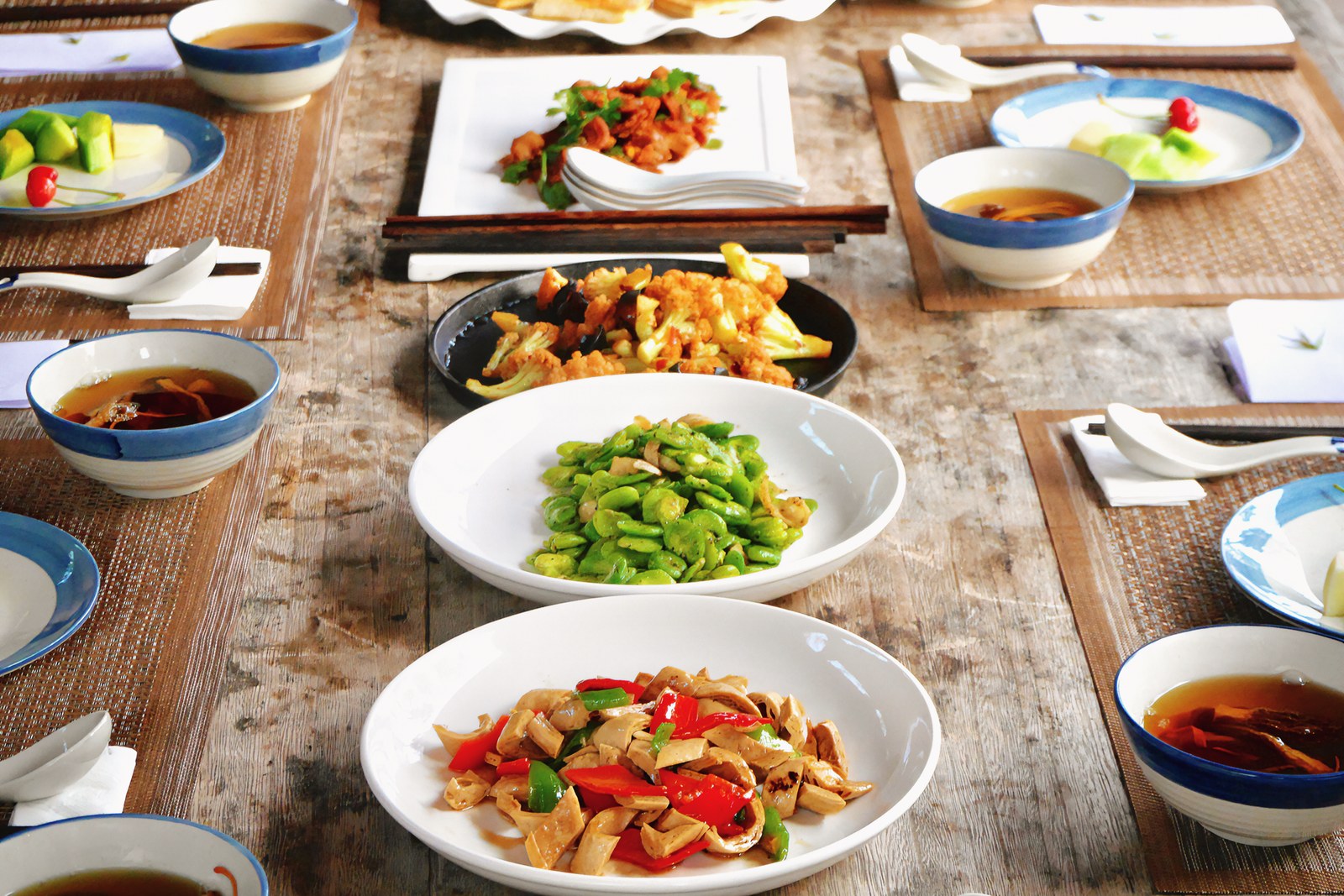
flowcloud would say that 菜茶 is the rare festival food named for a birth and eaten standing up – a dozen greens fried one at a time, a bowl packed level-full, hot stock poured over, peanuts and puffed rice on top, and the whole thing over in five minutes.
Where to find it: 二马路 Èr mǎ lù in 汕尾城区 Shànwěi chéngqū, the city’s snack street, where 大街菜茶 at number 191 opens in the evening and the bowl is sold in sets with 擂茶, 菜粿 càiguǒ and 扁食 biǎnshi; the county town of 海丰县 Hǎifēng xiàn and 公平镇 Gōngpíng zhèn, where the household version is concentrated; 东海镇 Dōnghǎi zhèn in 陆丰市 Lùfēng shì, where 饭茶 with rice in it is the everyday form; and in the first lunar month the villages of 海陆丰 Hǎilùfēng, where the bowl is still made house by house in 正月 zhēngyuè. Go in the evening, sit where the stock pot is still boiling, ask whether the bowl comes 饭茶 with rice, and eat it as soon as it is poured.