
邵东黄花菜 Shàodōng huáng huā cài is the dried daylily of 邵东市 Shàodōng shì, east of 邵阳市 Shàoyáng shì, and it is the crop the county is built on: five hundred years of cultivation, a national geographical-indication mark since 2005, a growing area of around sixty-six thousand mu and an annual crop of nearly five thousand tonnes of dried flower, which is somewhere near a quarter of everything China produces. The county calls itself 金针之乡, the home of the golden needle, which is what the dried bud is called in a kitchen, and it is the ingredient you have been eating for years without knowing the name of, in soups and braises and the small yellow threads in a bowl of 打卤面.
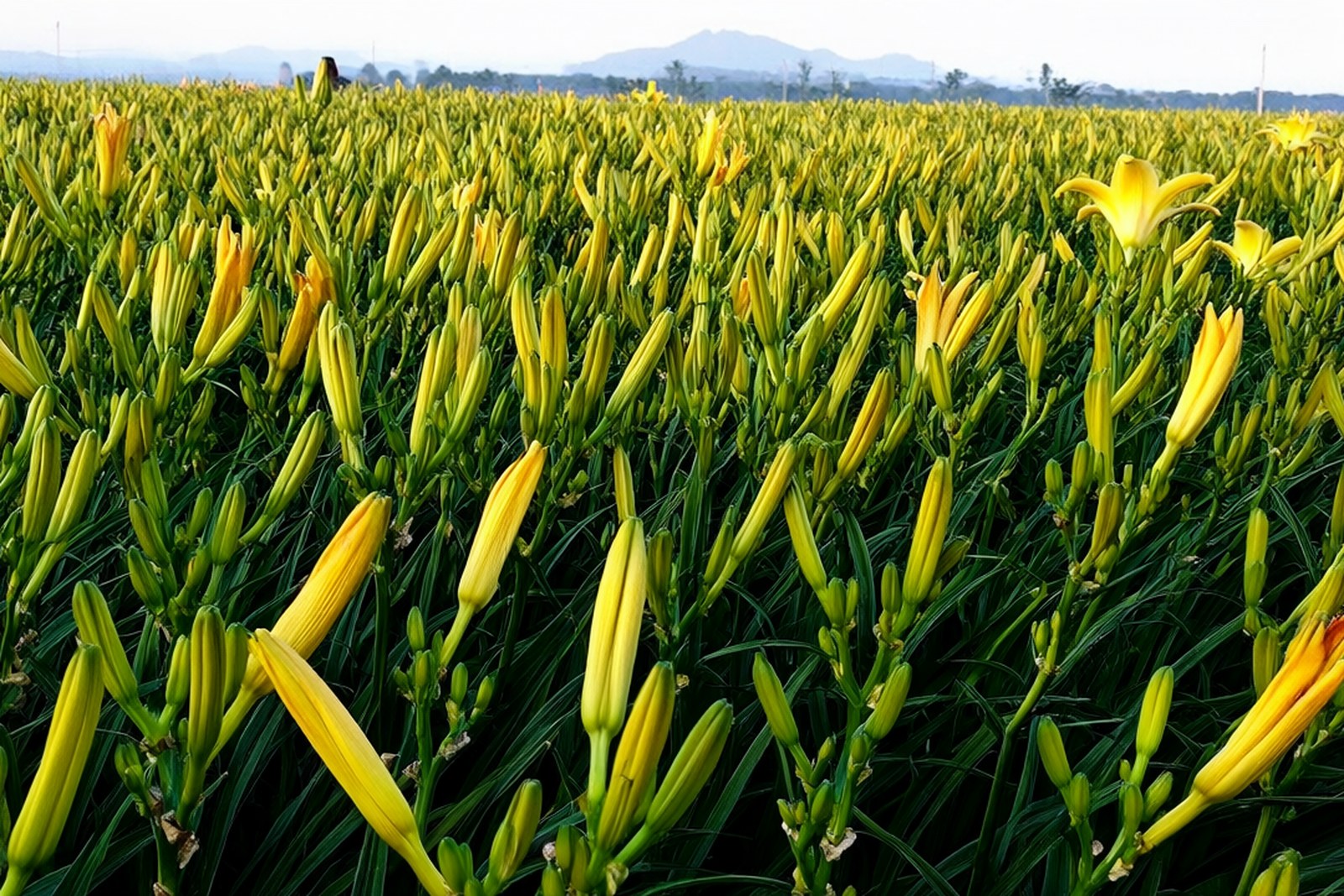
The picking is where the crop is won or lost, and it is done at dawn. The flower opens for a single day and is worthless once it has; a bud that is still closed, at the stage the growers call 青嘴 qīng zuǐ, the green mouth, is the harvest, and it has to be taken in the cool hours before it opens. Pickers are in the rows from about five, working to a fixed timetable, and the rule of the trade is that the flower must be off the plant and into the processor within hours. 邵东’s varieties carry names that describe exactly this fight — 四月花, 猛子花, 长嘴子花, 白花 — because the whole agronomy of the county is a negotiation with a flower that will not wait.
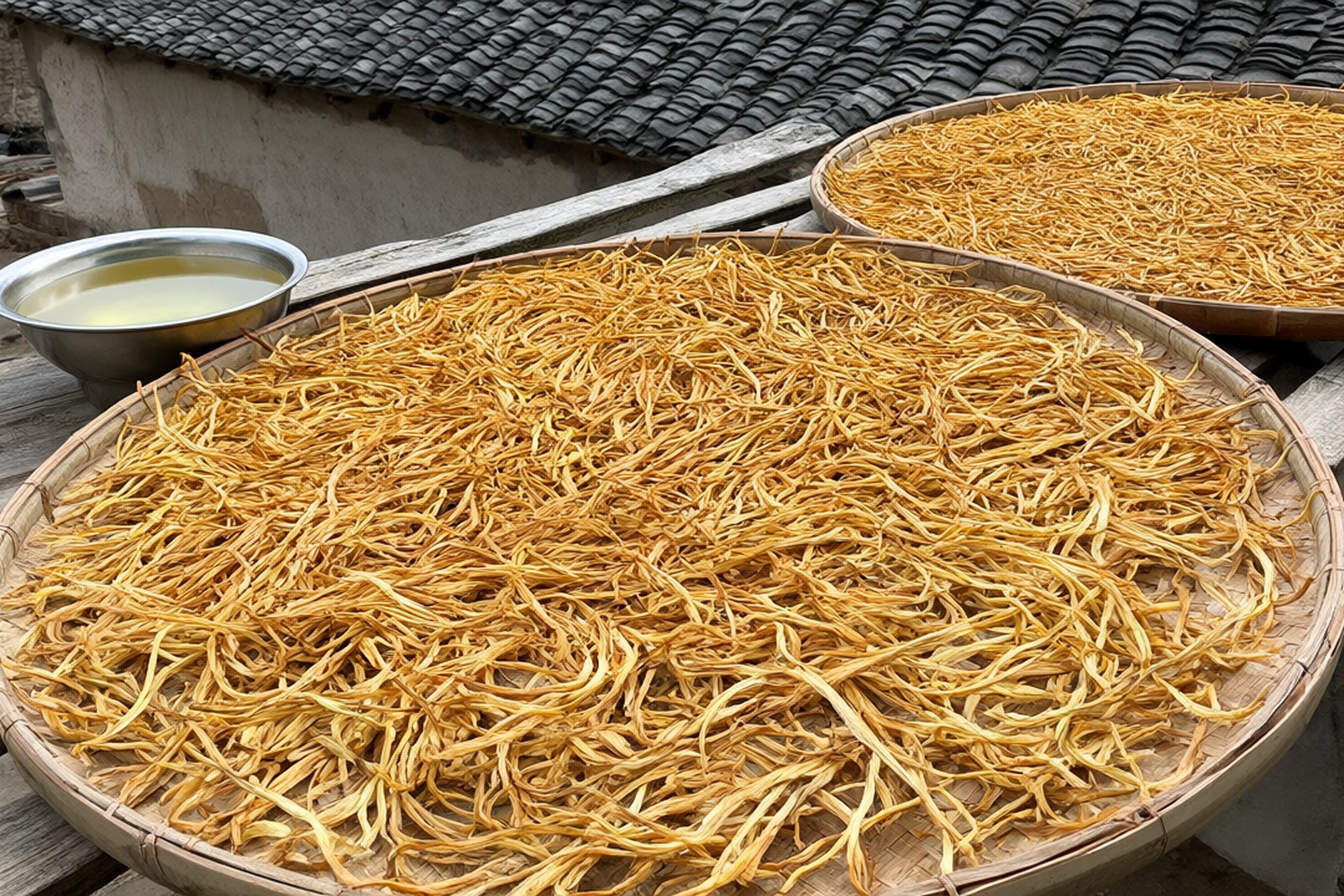
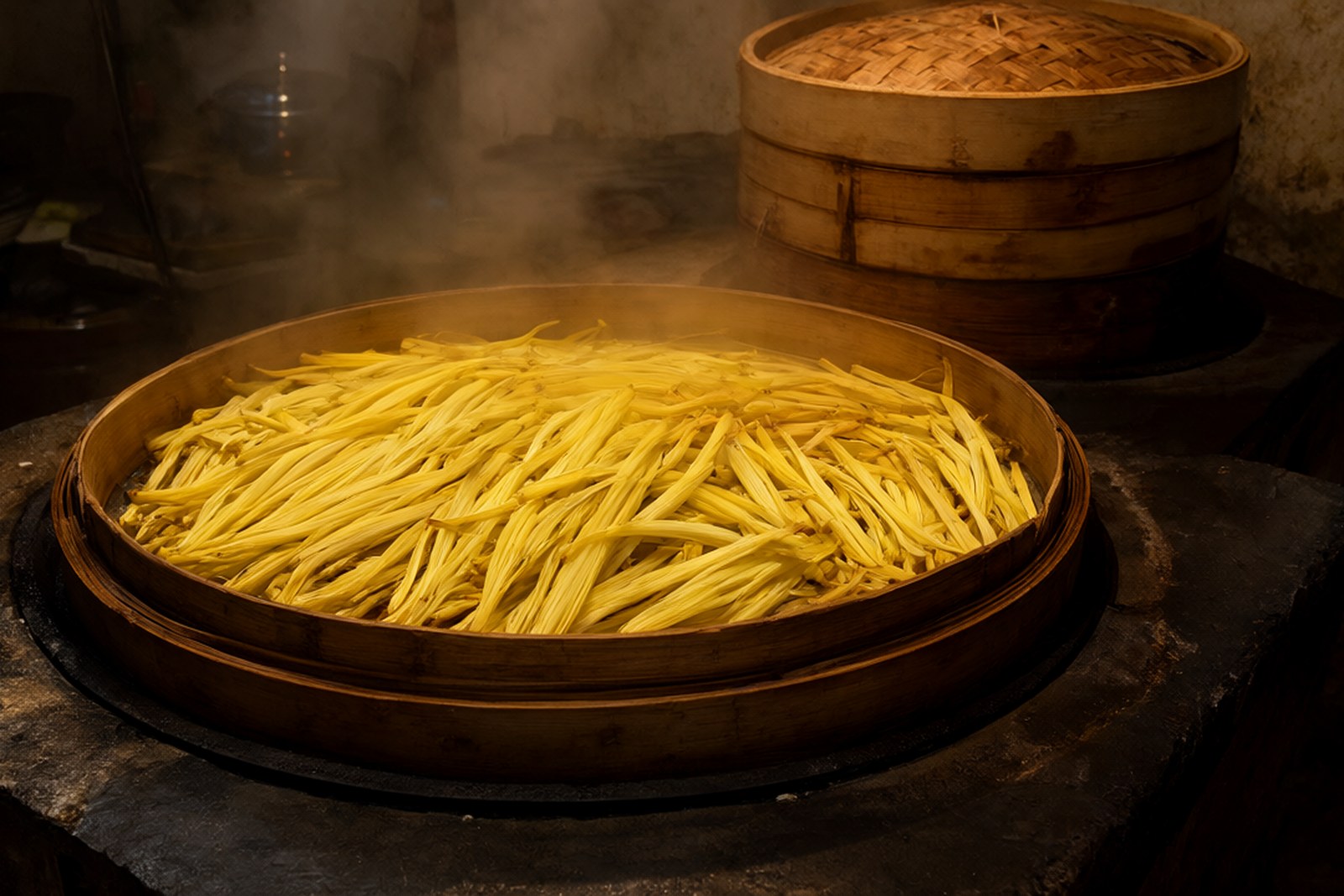
The processing is short and mostly about stopping time. The buds are steamed, or blanched in hot water, and then dried, in the sun or in a dryer; modern plants run the steam at a controlled eighty-five degrees, which the industry says locks in more of the carotene and lifts the amino-acid content, and takes the crop well away from the old practice of drying with sulphur. The result is a stiff, pale gold thread, shorter and firmer than the blade of a knife, which softens in water in twenty minutes and gives a faintly sweet, faintly smoky note to anything it is cooked in. The county’s own recipe is 黄花菜排骨汤 huáng huā cài pái gǔ tāng, a long soup of dried daylily with pork ribs, and it is the dish of a visit home in most of Hunan.
There is a safety note that belongs with the nostalgia. Fresh daylily, the kind sold green in a bundle in summer, contains colchicine and must be blanched and cooked through before it is eaten; the dried thread is far safer because the process has already done most of the work, but it should still be soaked and cooked rather than eaten raw, and the water it soaked in should be thrown away. Beyond that the crop is a good one nutritionally — the county quotes a protein content of twelve per cent, several times that of an ordinary vegetable — and it is used the way a dried mushroom is used, as something that gives body to a broth rather than something that dominates it. Buy it by weight from a market rather than in a decorative box, and look for even pale-gold threads with no white bloom and no smell of matches.
Words and Names
邵东黄花菜 Shàodōng huáng huā cài is the dried daylily of 邵东, 黄花菜 huáng huā cài literally the yellow flower vegetable, and 金针 jīn zhēn, golden needle, is the name it has in the kitchen. 花蕾 huā lěi is the bud and 青嘴 qīng zuǐ the growers’ word for the stage at which it must be picked; 采摘 cǎi zhāi is picking, 蒸制 zhēng zhì steaming and 漂烫 piāo tàng blanching. 四月花 Sì yuè huā, 猛子花 Měng zi huā and 长嘴子花 Cháng zuǐ zi huā are named varieties. 秋水仙碱 qiū shuǐ xiān jiǎn is colchicine, and 排骨汤 pái gǔ tāng is a rib soup.
What the Locals Know
Soak the dried thread in warm water for twenty minutes, squeeze it, and throw the soaking water away rather than putting it in the pot. If you are cooking fresh daylily in summer, blanch it in boiling water and pour that away too, and never eat it raw. The dried flower takes long cooking and gives it back, so put it in at the beginning of a soup rather than the end, and pair it with something fatty, because it has no fat of its own. A bag of the county’s 无硫, sulphur-free, crop is worth paying more for; the smell is the tell, and a good bag smells of hay and dried apricot rather than of fireworks.
flowcloud would say that a county which built a national industry on a flower that is worth nothing on the day it opens, and answered with a picking schedule timed to the hour and a processing line that has to be running by breakfast, has turned the shortest window in agriculture into the most reliable thing it owns.
Where to find it: the markets and dry-goods stalls of 邵东市 and 邵阳市, with the growing townships of 流光岭, 周官桥, 团山, 水东江, 杨桥 and 廉桥 the centres of the trade, and the county’s processors selling by weight and in gift packs. Dried daylily is ¥25 to ¥60 a jin, a pack of the sulphur-free crop ¥40 to ¥90, and a bowl of 黄花菜排骨汤 in a restaurant ¥25 to ¥50. 邵东市 is about forty minutes by road from 邵阳市, and 邵阳站 on the 怀邵衡 line is the nearest rail.