
猪血丸子 zhū xuè wán zi, the pig-blood ball, is the cured meat of 邵阳市 Shàoyáng shì, and in 隆回县 Lónghuí xiàn and the villages around it is the thing a household makes in the twelfth lunar month and eats all spring. It is not a sausage and it is not a meatball: it is a mixture of crumbled bean curd, fresh pig’s blood and diced pork, worked together with salt, ginger and chilli, shaped by hand into balls the size of a fist, dried in the sun and then hung over the kitchen fire until they are hard, black outside and dense enough to cut into slices like a salami. It is the one food this part of Hunan will not do without, and it is made at home rather than bought, which is why nobody here thinks of it as a speciality at all.
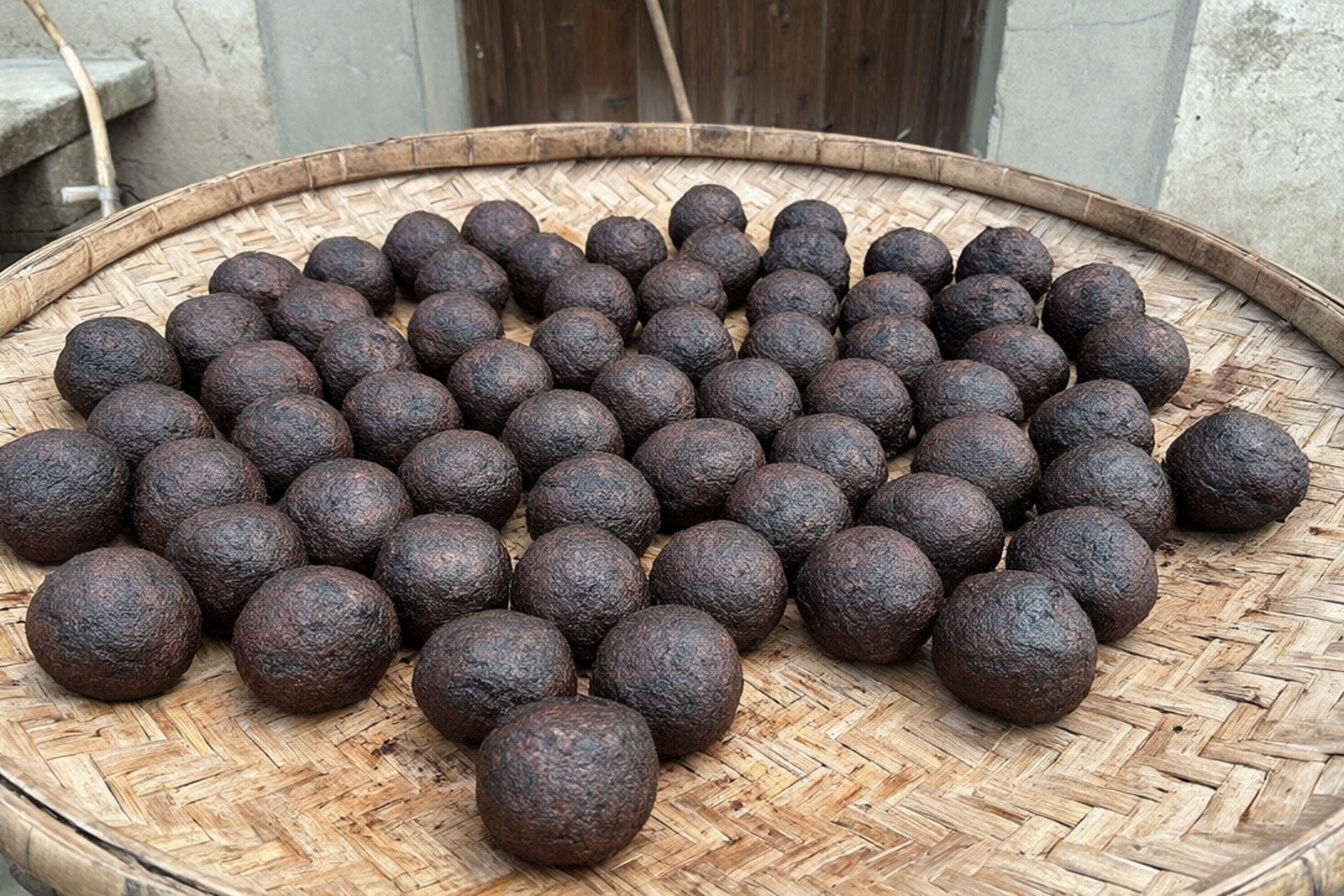
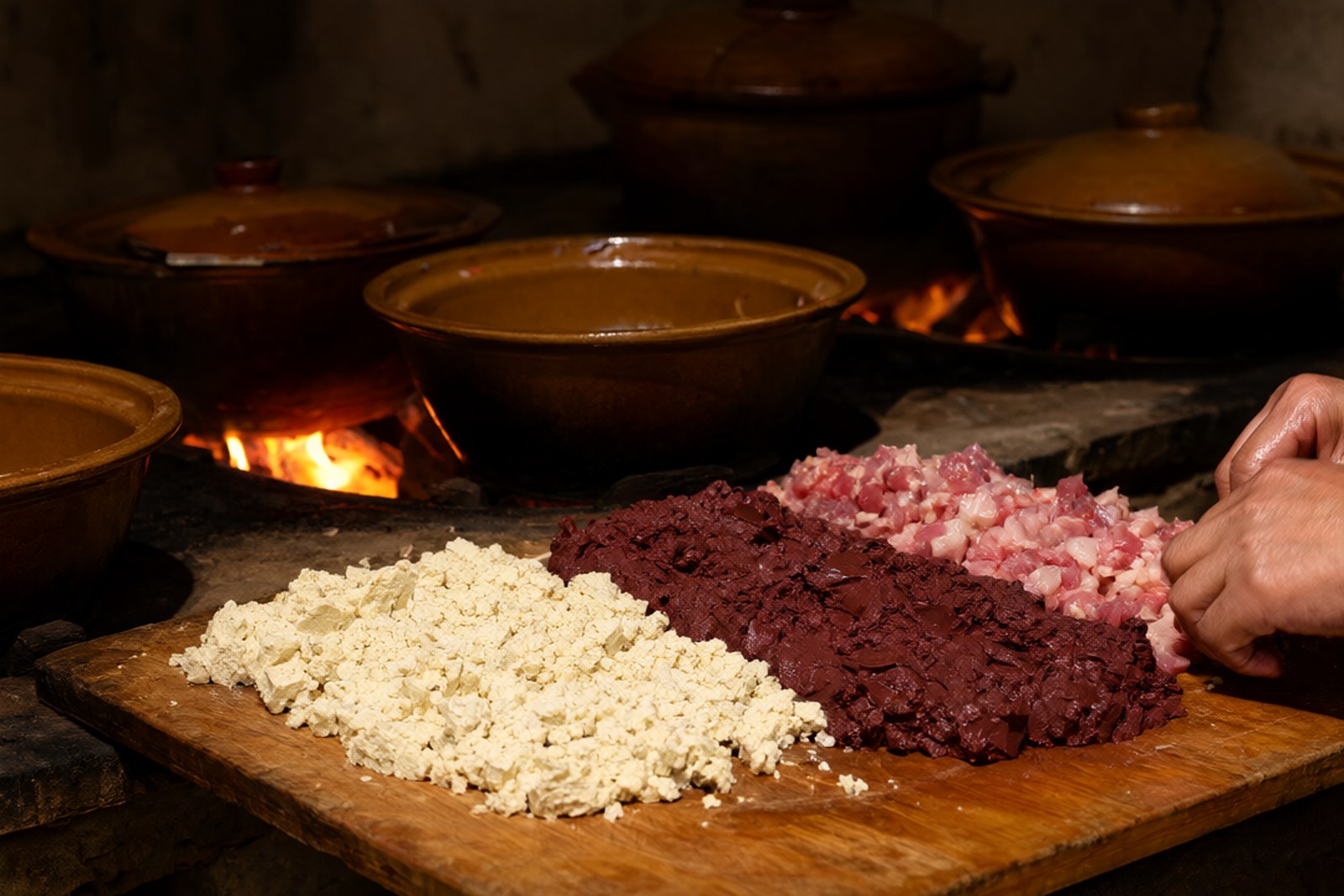
The method is a lesson in how a poor household turns a slaughter day into a store cupboard. When a pig is killed, the blood is caught and used at once, because it will not keep; the tofu is the firm kind, broken up by hand rather than mashed; the pork is belly, cut into small dice so that there is fat through the ball. The three go into a basin with salt, minced ginger, a little 五香粉 wǔ xiāng fěn, five-spice, and often a spoonful of chopped chilli, and they are kneaded until the mixture holds together and is dark enough that no white tofu shows. The balls are formed, left in the sun for a few days to firm, and then hung in the smoke of the kitchen fire, over the 火塘 huǒ táng, the hearth, for a week or a month depending on how dry the winter is.
Nothing about this is close to the blood cakes of western Hunan, and the difference is worth having straight. A 血粑 is glutinous rice cooked with blood, pressed into a block and either fried or cooked with duck; it is soft, sticky and sweet-edged, and it is eaten fresh. A 猪血丸子 is bean curd and pork, smoked hard, and it is a preserved food that keeps for months and gets better as it dries. The two are cousins only in the sense that both use blood; a 邵阳 kitchen would not recognise them as related. 隆回 and the villages around 邵阳 are the counties this is most associated with, and the provincial market regulator moved in 2026 to write a processing standard for it, which is a fair sign of how much of it is now made and sold outside the home.
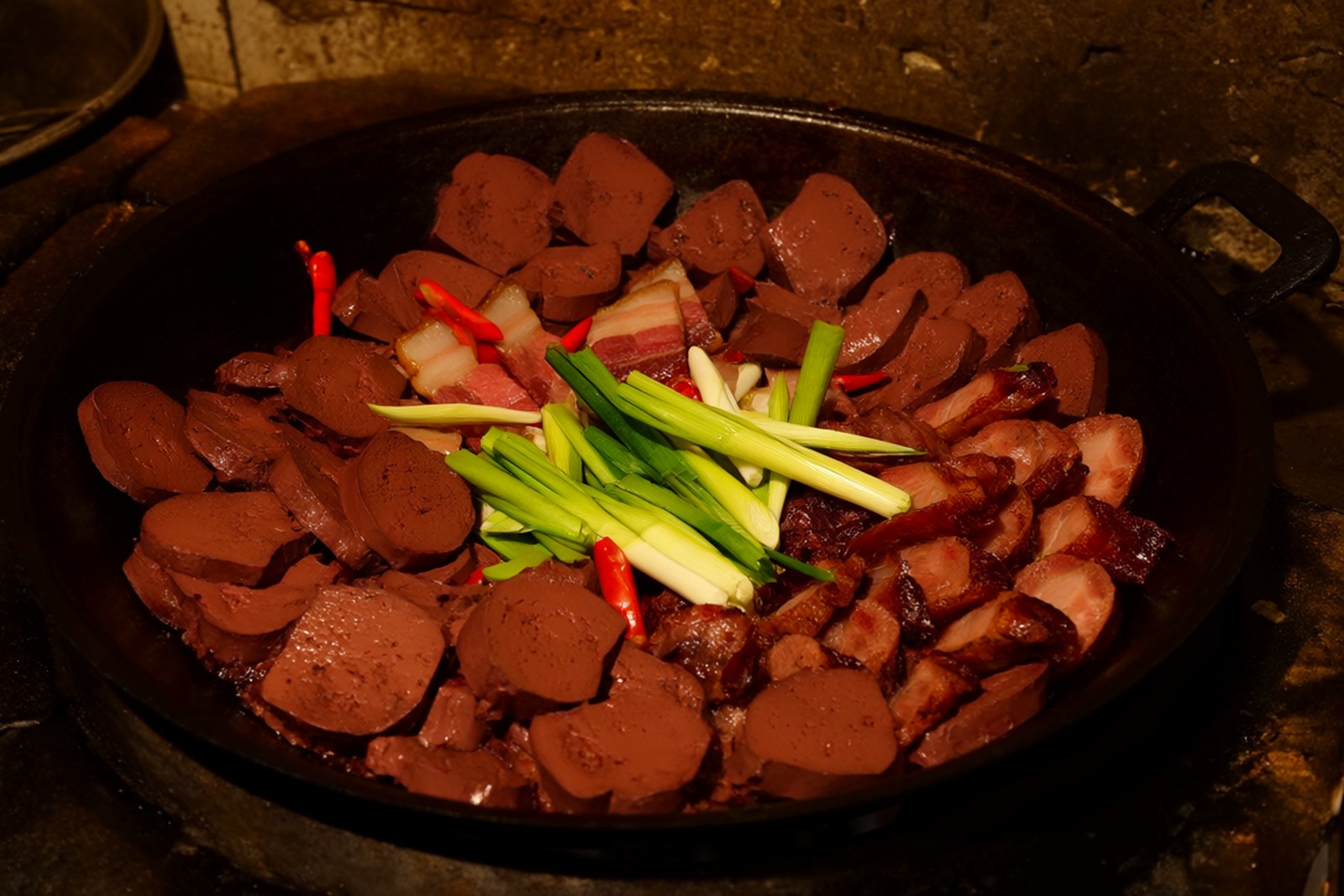
The eating is where the smoking pays off. A cured ball is washed, steamed or boiled until it softens, and then cut into slices a quarter of an inch thick; those slices are fried, and the classic 邵阳 dish is 猪血丸子炒腊肉 zhū xuè wán zi chǎo là ròu, the slices fried with cured pork, green garlic and red chilli, in which the ball provides the smoke and the cured pork provides the salt and fat. It is also eaten simply steamed, sliced and dressed with chilli oil, or dropped into a pot of rice to flavour the whole thing as it cooks. In a restaurant ask for it by name, and if it arrives very dark and slightly dry rather than soft, that is not a fault; that is a properly smoked one, and it is the version that the county is proud of.
Words and Names
猪血丸子 zhū xuè wán zi is the pig-blood ball, 猪血 zhū xuè pig’s blood and 丸子 wán zi a ball or croquette; it is also called 血粑豆腐 xuè bā dòu fu and 宝庆丸子 Bǎoqìng wán zi after the old name of the city. 豆腐 dòu fu is bean curd, 五花肉 wǔ huā ròu belly pork, 火塘 huǒ táng the fire hearth, 熏 xūn to smoke and 腊肉 là ròu cured pork. 五香粉 wǔ xiāng fěn is five-spice, 姜 jiāng ginger and 蒜苗 suàn miáo garlic sprouts. 隆回县 Lónghuí xiàn is the county, 邵阳 Shàoyáng the city, and 宝庆 Bǎoqìng the name it carried under the Qing.
What the Locals Know
A good 猪血丸子 is dense and dry rather than springy, and it smells of smoke and not of blood, which is the smell that frightens visitors and which the long curing takes away entirely. Wash the outside before you cook it, and soak it in warm water for half an hour if it is very dry; then steam it before slicing, which keeps the slices from crumbling in the pan. Do not fry it in a lot of oil, because it has enough fat of its own. And if you want the local verdict on a shop or a village, ask how long the balls were smoked; anything under a week is a shortcut, and anyone from 隆回 will tell you so.
flowcloud would say that a household which took the two things it could not store, fresh blood and soft bean curd, bound them with the cheapest part of the pig, and then hung the result in its own chimney until it became a food that outlasts the winter, has shown that a larder is not a place but a technique.
Where to find it: the market halls and dry-goods stalls of 邵阳市 and 隆回县, where cured balls are sold by weight from late winter onward, and the Hunan restaurants of the city, where 猪血丸子炒腊肉 is a standard dish. A cured ball is ¥8 to ¥20; a plate of it fried with cured pork ¥30 to ¥55. 邵阳市 is about two hours from 长沙 by the high-speed line to 邵阳北站; 隆回县 is on the 怀邵衡 line, and the county town is about an hour by road from the city.