
沙溪扣肉 Shāxī kòuròu, the braised pork belly of Shaxi, is the dish its own town calls 菜王 cài wáng, king of dishes – the festival centrepiece and the plate a Shaxi table is judged by. Its home is 沙溪镇 Shāxī Zhèn, Shaxi Town, whose old name 隆都 Lóngdù survives in the local dialect and the cooking circle it belongs to, covering Shaxi and neighbouring 大涌 Dàchōng, Dachong – the Longdu cuisine, of which this dish is the core. With white-cut chicken and kudzu braised with 洋鸭 yángyā, the muscovy duck, it makes the three treasures of Shaxi. Zhongshan is one of China’s four county-free cities; the anchor here is the town and its streets.
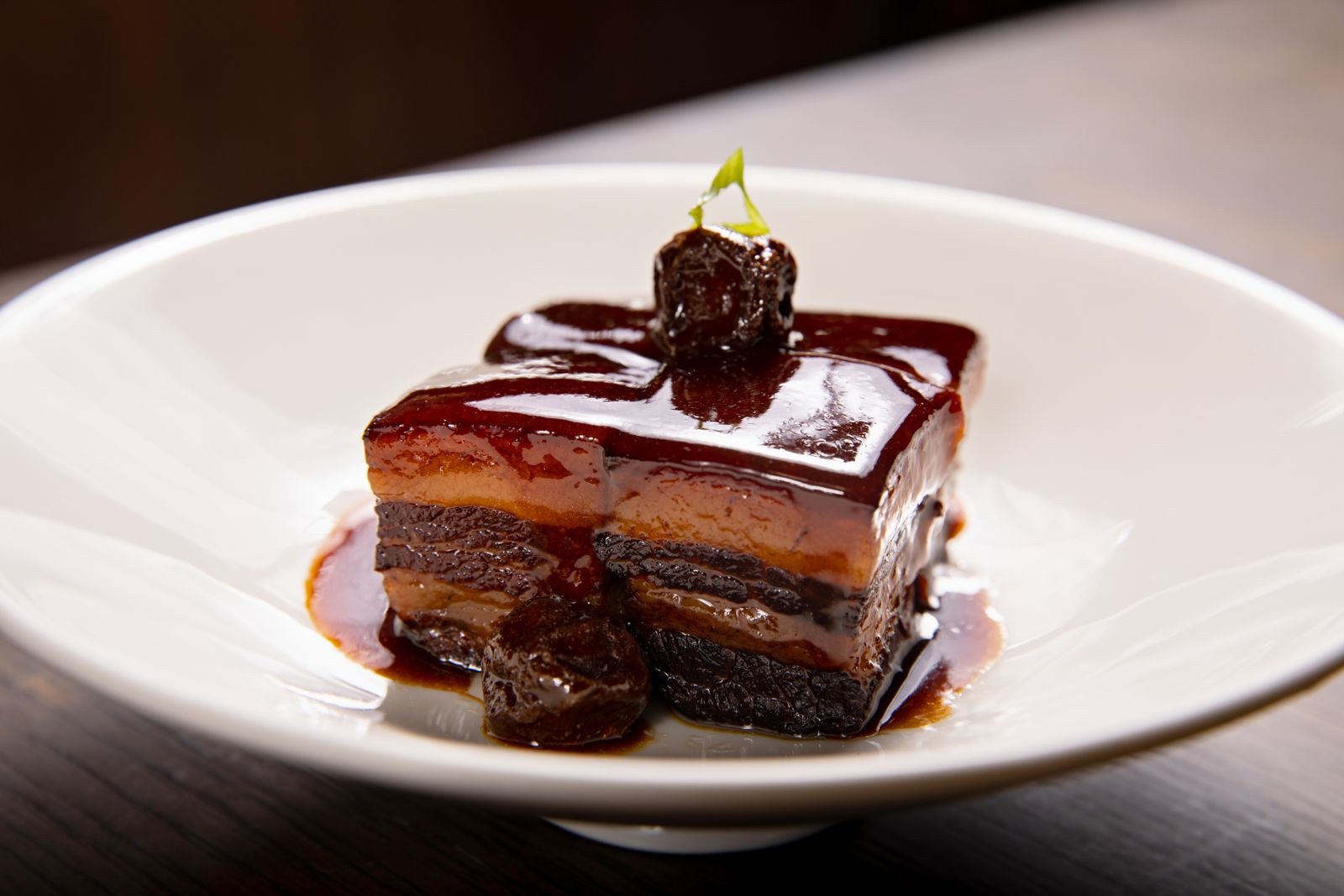
The heritage line must be read exactly: the dish has no listing of its own – no heritage list, at any level, carries 沙溪扣肉 by name. What the city listed on 28 March 2023, in its tenth municipal batch, is the 隆都九大簋传统烹饪技艺, the Longdu Jiu Da Gui banquet’s traditional cooking technique – and the kourou is one of its three fixed mains. The honest sentence: Shaxi kourou is the signature dish of the Longdu Jiu-Da-Gui banquet tradition, listed as a Zhongshan municipal intangible heritage in 2023. A separate Shaxi-kourou making technique does not exist in any register, and a writer who supplies one is inventing; the honour belongs to the banquet.
The 九大簋 Jiǔ Dà Guǐ, the Nine-Basket banquet, is the highest a Longdu table can run: the name wishes nine sons through the exams and everything long-lasting; the occasions are Spring Festival, the double third and double fourth, Mid-Autumn, weddings and birthdays; and the dishes arrive in six-corner porcelain boat bowls. Nine courses, eight savoury and one soup; three mains fixed – the kourou, white-cut chicken, and kudzu, or pork-skin jelly, braised with the muscovy duck; the rest move with season and family. The duck is its own document: a century or more ago overseas Chinese brought muscovy ducks home from the Americas and crossed them with local ducks into the fast-growing, sterile mule duck – kourou and braised duck on one table are two proofs of the emigrant centuries.
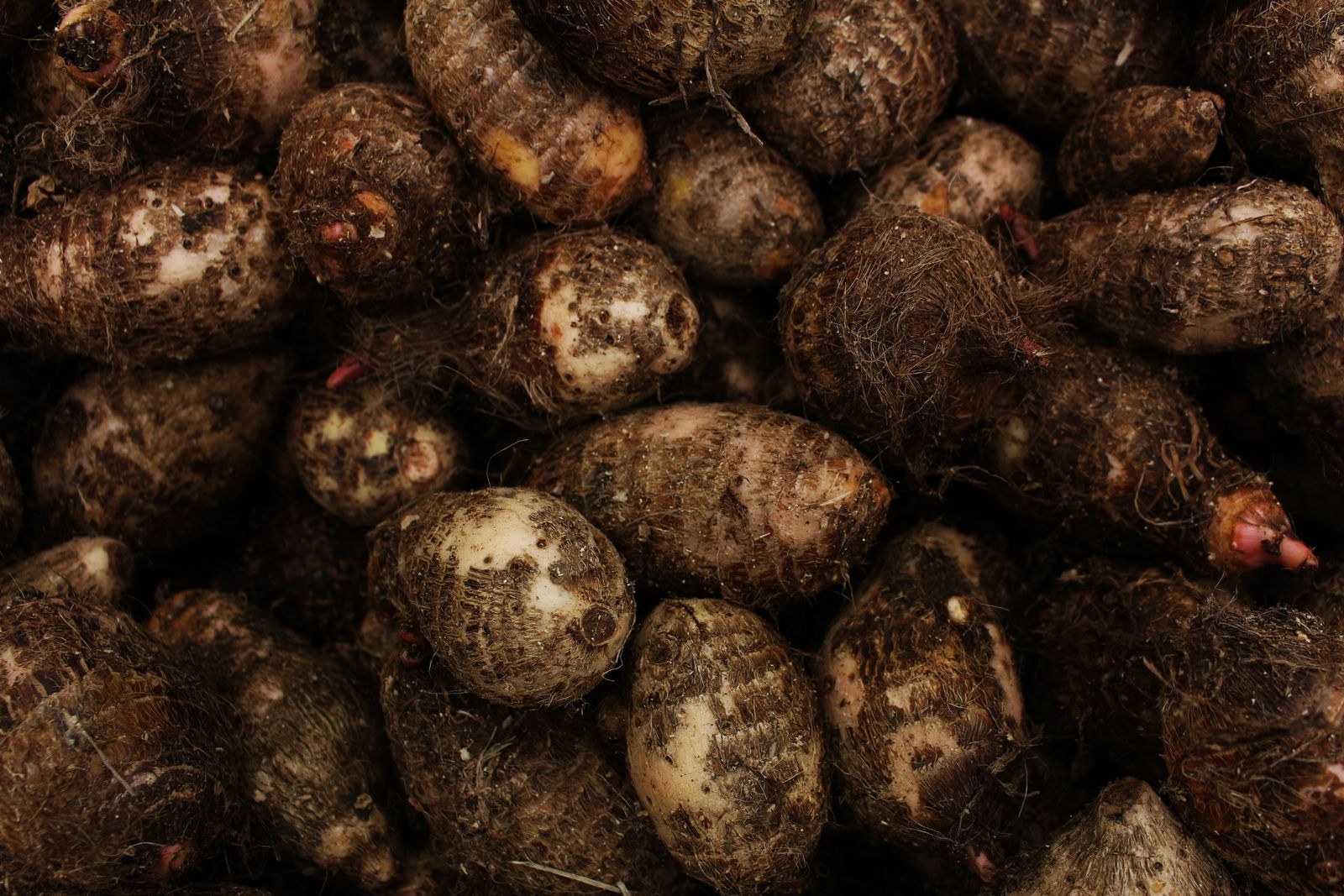
The work follows the archives’ annals version, stage by stage. Selection wants the fattier streaky belly, with the marbling the locals call 膈沙 géshā. Preparation boils the piece plain, hangs it to take colour, beats the skin with a nail board – another version rubs dark soy and pricks with a needle board to force the fat out – then fries it at 200 to 280 degrees until the skin reddens and blisters, cooling it in water so the fat runs free of the pricks. Cutting gives slices about a centimetre thick, every second slice carrying its filling – cooked kudzu for 葛扣 gě kòu, taro for 芋扣 yù kòu, greens underneath for 菜扣 cài kòu – and the kudzu the kitchens prefer comes from the alluvial plain of 三角镇 Sānjiǎo Zhèn, Sanjiao Town, small at both ends, big in the middle.
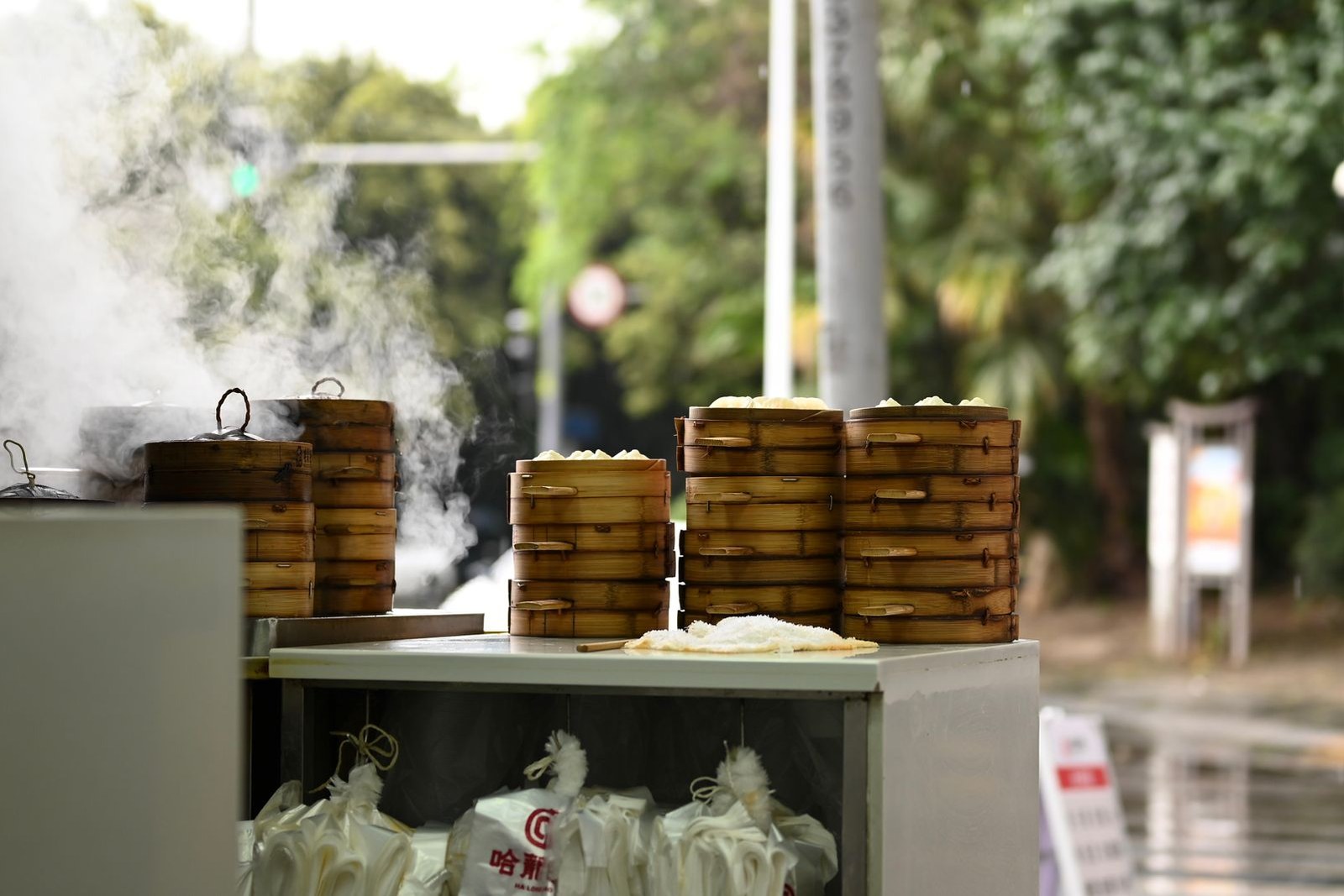
Seasoning leads with 南乳 nánrǔ, the red fermented bean curd, over soy, sugar, salt, wine, Sichuan pepper and star anise – and the Longdu signature is 蒌叶 lóuyè, also written 捞叶, a wild betel leaf grown locally, dried and minced into the sauce: the soul spice, the record calls it. Steaming goes skin down, alternating with kudzu or taro, packed into rooster bowls – and the hours disagree: the archives give about an hour of double-boiling for the assembled bowl, a master-cook account three hours of steaming, the city account five hours for the whole run including preparation. Service is the theatre the name comes from: sauce poured off, greens bedded, the bowl inverted onto the plate, the sauce thinned and glossed over – black-brown, shining, dissolving.
Words and Names
扣肉 kòuròu is the braised pork belly, its verb 扣 kòu the act of inverting the bowl that finishes the dish. 隆都 Lóngdù is the old name of the Shaxi area and its dialect and cooking circle; 九大簋 Jiǔ Dà Guǐ the Nine-Basket banquet, 簋 guǐ the ancient vessel the baskets are named for. 蒌叶 lóuyè, also written 捞叶, is lou-ye, the wild betel leaf dried as a local spice; 南乳 nánrǔ the red bean curd, 粉葛 fěngě the kudzu root, 膈沙 géshā the marbling the butchers look for. 鸡公碗 jīgōng wǎn the rooster bowl the steaming packs into, 六角船碗 the boat bowls the banquet serves from, 洋鸭 yángyā the muscovy duck.
What the Locals Know
The town government names the houses. 荔苑隆都菜馆 Lìyuàn Lóngdū Càiguǎn and 上上签 Shàngshàngqiān carry the food-shop badge on the city’s rural-tourism Longdu route; 福田酒楼 Fútián Jiǔlóu took China famous-dish awards at the Golden Horse prizes in May 2024 for its Nine-Basket and its Bawang duck; 象角群记 Xiàngjiǎo Qúnjì, 盏簋 Zhǎnguǐ, 大吉 Dàjí and 怡乐 Yílè round the list, some with dozens of branches across the city. The municipal transmitting inheritor of the banquet craft and head of the local food association is 卢添发 Lú Tiānfā.
The eating streets are their own address book: 龙瑞粥城 Lóngruì Zhōuchéng, the congee city – the Longrui congee craft is itself a 2022 municipal listing, its pork-bone base simmered at least six hours – then 圣狮海旁街 Shèngshī Hǎipáng Jiē, 港园大街 Gǎngyuán Dàjiē and 秀山美食街 Xiùshān Měishí Jiē. Per-head numbers for the kourou houses are unpublished; the only quotable yardsticks come from elsewhere in the city – 70 to 103 yuan at the Shiqi houses, 98 at a Xiaolan Cantonese room.
Shaxi’s heritage shelf gives the scale: twelve items as of May 2023 – one national, three provincial, eight municipal – a seventh of the whole city and the most of any town or subdistrict; a 2024 encyclopaedia update counts sixteen, and both figures stand with their dates. The town holds a national folk-art title too, and the emigrant line runs both ways: the Nine-Basket technique travelled with the overseas villages to dozens of countries, so the same inverted bowl can land in a Chinatown as at a Shaxi wedding.
flowcloud would say that Shaxi kourou is patience stacked in a rooster bowl – a pig boiled, nailed, fried, sliced and inverted for hours, perfumed with a leaf that grows nowhere else, and honoured under another dish’s name because the banquet, not the pork, is what the ledger lists.
Where to find it: the Longdu houses of 沙溪镇 Shāxī Zhèn named by the town government – 荔苑隆都菜馆 Lìyuàn Lóngdū Càiguǎn, 上上签 Shàngshàngqiān, 福田酒楼 Fútián Jiǔlóu with its Golden-Horse Nine-Basket, 象角群记, 盏簋, 大吉 and 怡乐; the congee tables of 龙瑞粥城 Lóngruì Zhōuchéng; and the eating streets 圣狮海旁街, 港园大街 and 秀山美食街. Come in a heritage week for the full nine baskets, order the kourou with the braised muscovy duck, and finish with the congee with its base on the fire since dawn.