
Shidu Rainbow Trout: Charcoal Smoke, Cold Spring Water and Riverside Farmhouse Tables of Fangshan District, Beijing
十渡崖前一炉炭,烤鱼香里客忘还。Shí dù yá qián yī lú tàn, kǎo yú xiāng lǐ kè wàng huán – Before Shidu’s cliffs one charcoal hearth; in the grilled-fish fragrance the guest forgets to go home.
十渡虹鳟鱼 Shídù hóngzūnyú Shidu rainbow trout is the cold-water fish Beijing’s southwest grills over charcoal beside the river it grew in, and the address is a gorge: 十渡 Shídù Shidu, the 房山区 Fángshān Qū Fangshan District, Beijing stretch of the 拒马河 Jùmǎ Hé Juma River where the karst peaks close in and the river bends through the valley – the “ten ferries” the name counts, one crossing per bend, 一渡 yīdù to 十渡 shídù – a scenery valley of cliff walls, pebble shallows and weekend buses. The fish live in the river’s own cold spring water, the upland springs that keep the Juma moving unfrozen deep into winter; rainbow trout are famously unforgiving tenants, needing clean, cold, oxygen-rich water or simply dying, which is why the ponds sit where the springs feed and why the flesh tastes of nothing but fish and cold water. The form is the 农家院 nóngjiāyuàn riverside farmhouse – ponds by the gate, a grill by the pond, tables under the vine trellis – an institution built for hikers’ appetites rather than banquet menus. The craft most visitors under-rate is the water: a trout pond is only as honest as its spring channel, and the houses that own their own inlet can point at the water while they make the sale – worth confirming the details, pond by pond. The naming is the tell: the address of dinner is a ferry count, a river grammar older than any restaurant sign in the valley.
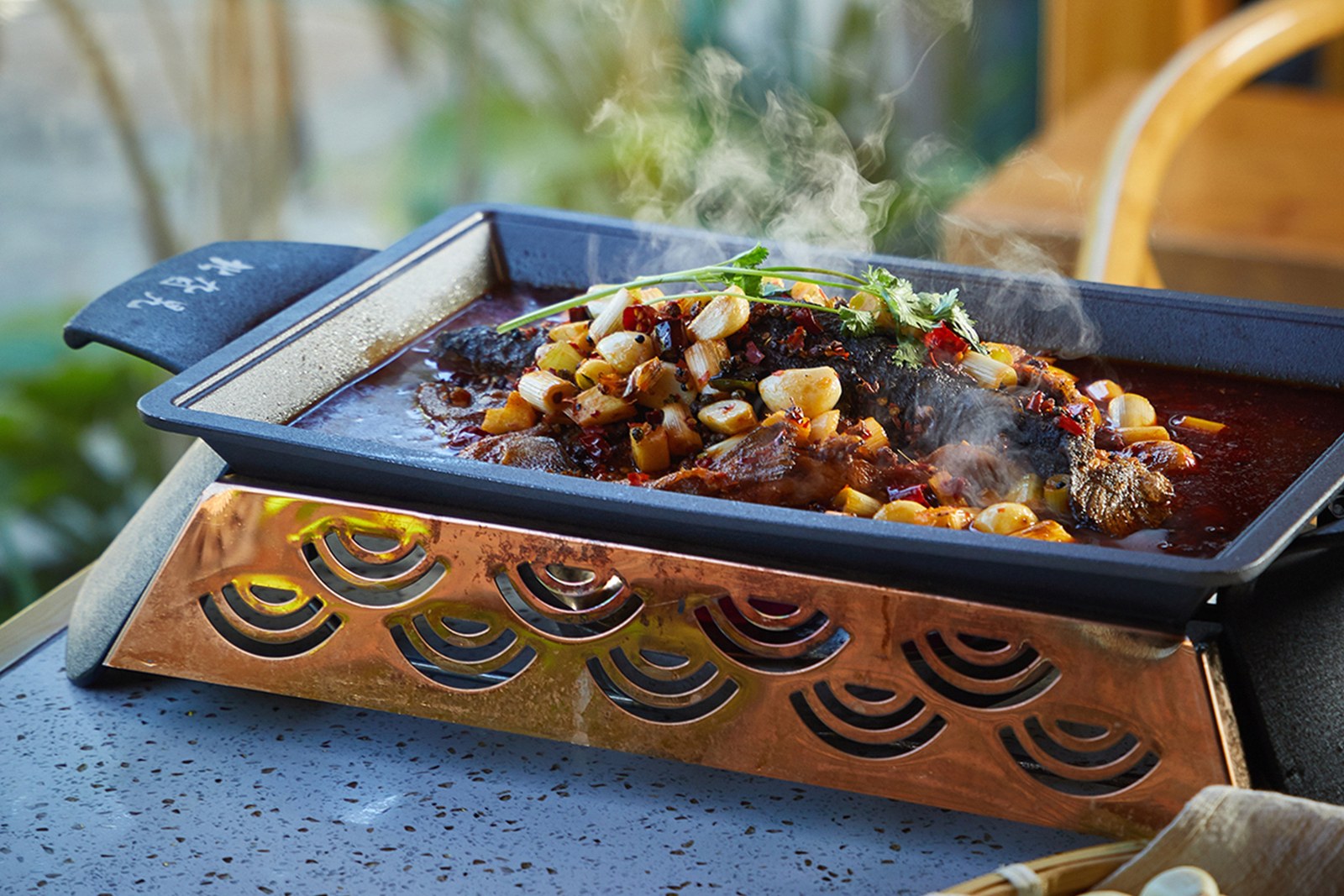
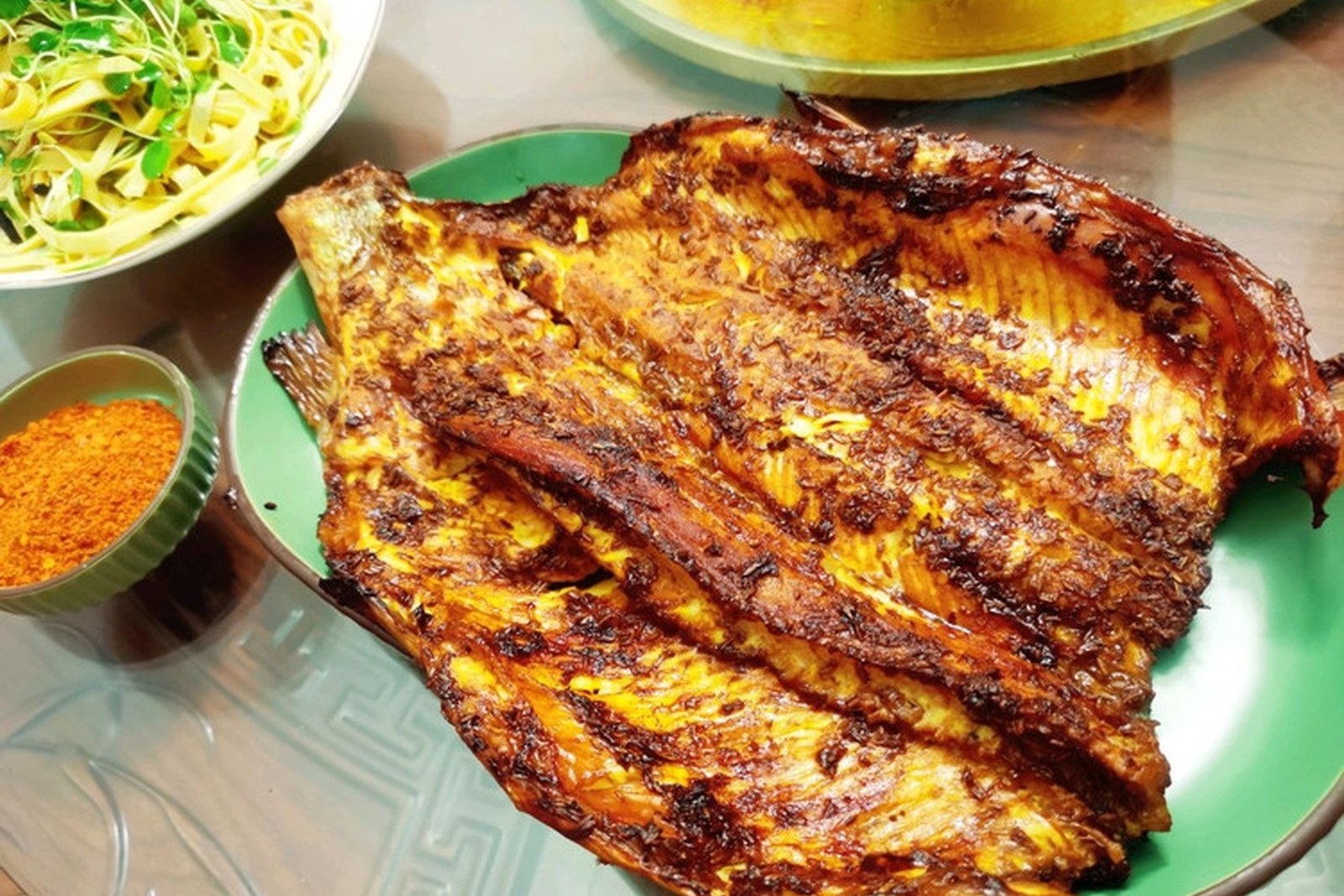
The eating is a fire-and-river grammar written for walking appetites, and the menu leans 炭火 tànhuǒ charcoal plus 山野 shānyě mountain-sides to match the excursion crowd. The anchor is the 烤虹鳟 kǎo hóngzūn charcoal-grilled trout – a whole fish split flat, salted, grilled over the coals and finished with 孜然 zīrán cumin and chili flakes the northern-grill way, skin crackling and the meat pulling off the bone in slabs – cooked, by the valley’s own taxonomy, three ways: whole on the rack for looks, in sections for flavour, sealed in foil for the steamed-in-its-own-juice version. Around the grill the kitchens run the cold-water register: 清蒸 qīngzhēng steamed trout for the plain taste, 红烧 hóngshāo red-braised, the northern 垮炖 kuǎdùn stew, and the raw-cut plate – thin-sliced trout sashimi the valley has served since before most city diners learned the word – plus the mountain half of the table: 花椒芽 huājiāoyá Sichuan-pepper leaf shoots, seasonal 山野菜 shānyěcài wild greens, 贴饼子 tiēbǐngzi maize cakes against the pot wall, and the Juma’s own small river shrimp. The fish carries few pin bones, which is why the family with children orders it twice, and why the grill smoke and not the menu is the real signboard of the valley.
The honest grade is geography plus the 周末 zhōumò weekend clock. Shidu sits a long drive southwest of the central city up the mountain roads (worth confirming the details by season and traffic), the gorge fills hard on fine weekends when the rafting crowds and the tour buses share one road, and the farmhouse tables grade themselves by their ponds: a trout lifted from running cold water and grilled within the hour reads firm, sweet and clean, a tank-trucked fish reads soft and muddy, and no extra cumin hides it – worth confirming the details, house by house, because the valley’s houses are not equal and the pond is the tell. A per-person bill runs on the fish and the grill, so call it worth confirming the details rather than a fixed number, and come on a weekday if you can – the riverbanks empty, the grill lit when you sit down, the ferry crossings theirs alone – while in the quiet months some courtyards keep weekend-only hours and cook by booking, so the traveller who arrives unannounced in February may be grading an empty patio (worth confirming the details).
The wry truth is that 十渡虹鳟鱼 Shídù hóngzūnyú is over-rated as a “scenic-area must-eat” and under-rated as working aquaculture: travel lists file the fish between photographs of cliffs, while the actual thing – spring channels dug and kept, water tested by the fish themselves, a mountain valley that learned to farm cold water because the river would not warm – is an agriculture the visitors eat without seeing. The real divide is 活水 huóshuǐ living water versus 贩运 fànyùn trucked-in stock, and the locals read it through the flesh before the first skewer lands. The self-deprecating footnote, and the district braid: a food writer will lecture the 农家院 nóngjiāyuàn keeper on “sustainable trout” between bites, compare the sashimi plate to a Tokyo counter at heroic volume, photograph the charcoal at heroic shutter, and then call the fish “commendably primal” as if fire were a discovery – which is the honest grade: 十渡虹鳟鱼 Shídù hóngzūnyú is a river-farm table the writer will philosophise over more than he finishes, and the family at the next table has already stripped one fish to the spine and called for the second before the shutter closes. The same 房山区 Fángshān Qū Fangshan District, Beijing thread runs on: the sugar-fried woks of 良乡板栗 Liángxiāng bǎnlì Liangxiang chestnuts crack on the plain’s market streets, the lantern fruit of 房山磨盘柿 Fángshān mópánshì Fangshan mopan persimmons weighs the orchard boughs downriver, the paddy wind of 长沟大米 Chánggōu dàmǐ Changgou rice combs the southern wetlands, and the glass jars of 霞云岭蜂蜜 Xiáyúnlǐng fēngmì Xiayunling honey glow on the mountain shelves – one district, four more tables.
Words and Names
- 十渡 Shídù / Shidu · the ten-ferry karst gorge of the Juma River - 拒马河 Jùmǎ Hé / Juma River · the cold spring-fed water the trout grow in - 虹鳟鱼 hóngzūnyú / rainbow trout · the cold-water fish that demands clean springs - 烤虹鳟 kǎo hóngzūn / charcoal-grilled trout · the valley’s anchor dish, whole or in sections - 农家院 nóngjiāyuàn / farmhouse courtyard · the riverside pond-and-grill institution - 花椒芽 huājiāoyá / Sichuan-pepper shoots · the numb-fragrant mountain side of the table - 垮炖 kuǎdùn / northern stew-fry · the homestyle way with a whole fish - 房山区 Fángshān Qū / Fangshan District · the Beijing district holding the gorge
What the Locals Know
- Order the grill, not the menu: charcoal trout is the valley’s craft; the deep-fried city dishes on farmhouse lists are strangers here (worth confirming the details).
- Ask where the water comes from: houses with their own spring channel keep live ponds, and the fish grills within the hour – trucked-in stock is a different dinner.
- Beat the weekend: weekday lunches mean the pond, the grill and the pebble banks to yourself, and some courtyards cook by booking only in the quiet months (worth confirming the details).
- Order the mountain half of the table: 花椒芽 huājiāoyá pepper-leaf shoots and seasonal wild greens are the river’s neighbours – without them the fish eats lonely.
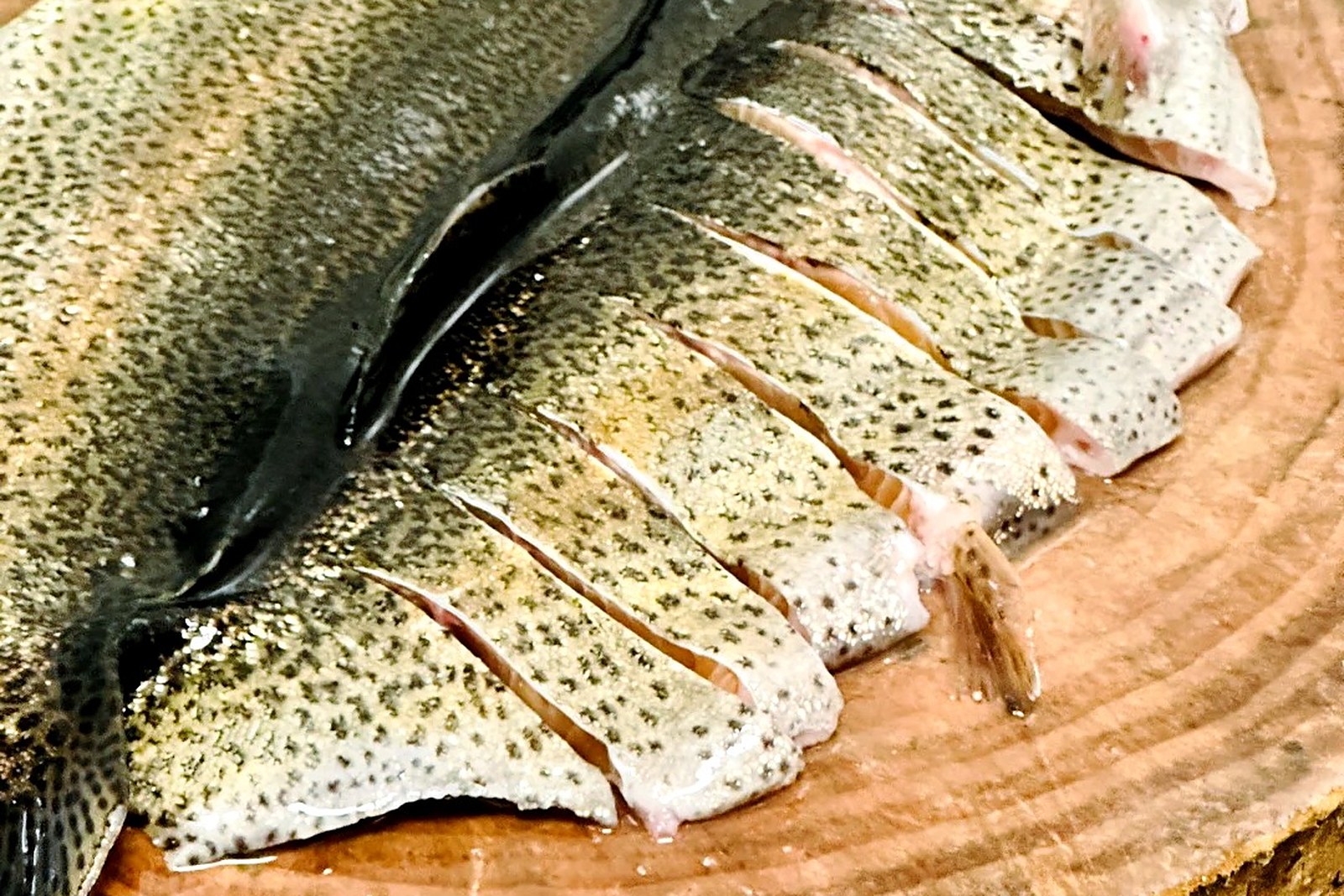
flowcloud would say that the 十渡虹鳟鱼 Shídù hóngzūnyú is the charcoal smoke, cold spring water and riverside farmhouse tables of Fangshan District, Beijing – a 十渡 Shídù valley where the 拒马河 Jùmǎ Hé springs grow the trout and the 农家院 nóngjiāyuàn grills finish them with cumin and chili – and that the honest move is to order the grill, ask about the water, and come on a weekday, because the pond is the grade and the weekend is the queue. All checked October 2026.
Where to find it: Fangshan District Fángshān Qū, Beijing – the riverside 农家院 nóngjiāyuàn farmhouses and their trout ponds along the 拒马河 Jùmǎ Hé through the 十渡 Shídù gorge and its ferry villages in southwestern Fangshan, where charcoal-grilled 烤虹鳟 kǎo hóngzūn, trout sashimi and mountain greens are served under the trellises (worth confirming the details – which houses keep live spring-fed ponds and which keep winter hours); a per-person bill runs on the fish and the grill, so call it worth confirming the details rather than a fixed number. Shidu rainbow trout is the charcoal smoke, cold spring water and riverside farmhouse tables of Fangshan District, Beijing, river before recipe.