
Shiqi Roast Squab, the Dish That Became Zhongshan’s Calling Card
石岐乳鸽 Shíqí rǔgē, the roast squab of Shiqi, is the dish 中山市 Zhōngshān Shì puts forward when asked what it eats – the provincial chroniclers rank it among Zhongshan’s strongest food images. Zhongshan is one of China’s four county-free “straight-through” cities, answering directly for 15 towns and 8 subdistricts, so the addresses here are towns and subdistricts. The home quarter is 石岐街道 Shíqí Jiēdào, Shiqi Subdistrict, and the dish is built on a bird of its own, the 石岐鸽 Shiqi pigeon, whose flock lives elsewhere.
The paperwork comes twice. On 25 December 2020 the Ministry of Agriculture and Rural Affairs registered 石岐鸽 as a national agricultural product of geographical indication – one of two pigeon breeds so certified then. In June 2025 the National Intellectual Property Administration granted a second, different protection, Announcement No. 632, a geographical-indication product – Zhongshan’s fourth GI, after Huangpu cured pork, crispy grass carp and Shenwan pineapple. The June date disagrees by source – 28 June in Southern+, 9 June in the encyclopaedias – and both are printed, not averaged. The protected territory is the whole city, 1,800 square kilometres.
The breed is a documented crossing, and the addresses stay in two lines. In 1915 returned overseas Chinese brought American King pigeons, Runts and Homers, crossed them with local birds, later Japanese and Australian strains, and by the 1930s the mix had settled into a large meat pigeon named for Shiqi. On 29 May 2020 it entered the National Catalogue of Livestock and Poultry Genetic Resources – one of two local pigeon breeds the annals admit, with Xinjiang’s Tarim. The flock is the second line: the agriculture bureau names 三乡镇 Sānxiāng Zhèn, Sanxiang Town, the main production area, its Sanxiang Shiqi pigeon farm turning out over a million birds a year, the only farm carrying the national GI mark. The dish belongs to Shiqi; the flock belongs to Sanxiang.
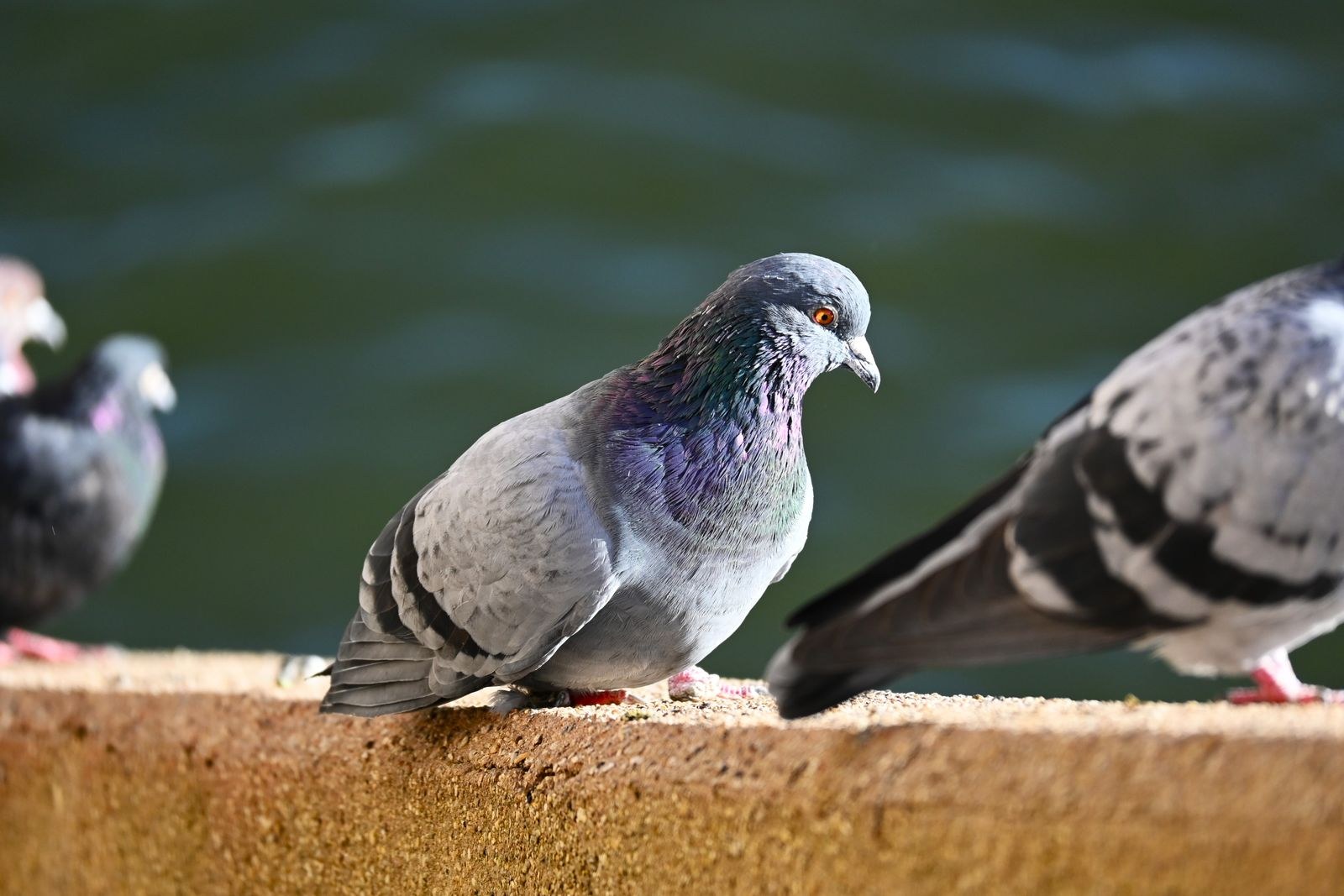
The birds are counted in three series, each with its year. As of 2024 the municipal agriculture bureau puts output at 1.2 million birds worth about 16 million yuan, Sanxiang the main producer; a Southern+ report of January 2024 gave more than a million birds and nearly 20 million yuan; an older 2019 line carried 2.1044 million birds and about a thousand tonnes. In 1970 about 10,000 breeding pairs shipped some 30,000 squabs a year – overseas-Chinese federation figures.
Even the nutrition panel arrives twice, and the sets must not blend. The agriculture bureau prints protein at or above 20 grams per 100 grams, fat at or below 2.6; the 2025 GI announcement gives protein at or above 14 grams, fat at or below 19, cholesterol at or below 110 milligrams – two official documents, side by side with their years. Trade standards fix the age vocabulary: a 妙龄 miàolíng tender-age squab is 12 days old or less, a milk squab 24 or less, past 28 days it may not be called a squab. The kitchens disagree – published ages run from 7 to 28 days – and the text carries the spread, not a verdict.
Words and Names
石岐乳鸽 Shíqí rǔgē is the dish, 石岐鸽 Shíqí gē the breed; 红烧乳鸽 hóngshāo rǔgē the red-cooked classic, 生炸妙龄鸽 the raw-fried tender-age school, pan-fried not roasted. 白卤水 báilǔshuǐ is the white brine, 淮盐 Huáiyán the seasoned salt, 喼汁 jiēzhī the Worcestershire-style sauce, gap-jup. The registers keep their names apart too: 农产品地理标志 is the agriculture ministry’s line, 地理标志产品 the IP office’s – the pigeon holds one of each.
What the Locals Know
The red cook follows the county annals. A 12-to-14-day squab steeps about ten minutes in white brine – cloves, fennel, star anise, Sichuan pepper, cassia, tsaoko, Shao wine, sugar – comes out lacquered with maltose, hung dry, then stands under ladle after ladle of rolling oil until the skin turns crisp, golden and glass-transparent, landing with the seasoned salt and gap-jup sauce. The raw-fried school is younger: 郑耀荣 Zhèng Yàoróng, city culinary association president, who trained under the third-generation master 黄锐坤 Huáng Ruìkūn, moved the spice powder into the cavity and the bird into a hot raw fry that took an Asia food gold award – the version most tables meet now; 朱德强 Zhū Déqiáng at the hot-spring hotel still specifies a 13-day bird.
The lineage runs through a foreign menu. Canton’s Taiping Restaurant was frying squab by 1885, but the red-cooked Shiqi squab got its fixed name at 佛笑楼 Fóxiàolóu in Macau, founded by 黄民成 Huáng Mínchéng of Changzhou, Zhongshan: a 21-to-28-day bird of about 8 两 liǎng, steeped in white brine, finished in the oven. Before 1949 the house kept a boat running to Shiqi for its birds; a Shanghai magazine recorded the fashion in 1943, in an issue number the sources never settle, so none is printed. The technique sailed home: the 中山温泉宾馆 Zhongshan Hot Spring Hotel opened on 28 December 1980 as China’s first Sino-foreign cooperative hotel, 霍英东 Huò Yīngdōng had Macau chefs demonstrate the dish at the opening banquet, and in May 1994 its chefs carried 150 prepped squabs to the Diaoyutai State Guesthouse for a state dinner.
The craft is listed: in 2022 the Shiqi squab cooking technique entered Zhongshan’s ninth municipal intangible-heritage batch, the record counting more than a hundred dish forms – braised, raw-fried, medicinal, salt-baked, soy-soaked. To eat it: 石岐佬中山菜馆 at 36 康华路 Kānghuá Lù, a twenty-year-old house with its own farm of some 100,000 birds a year, signature a 13-day bird; per-head figures move between 70 and 103 yuan across the 2020-2024 snapshots, the red-cooked bird 32 yuan in the oldest – counter prices quoted with their years. 香山家宴 in the West Subdistrict is the standing alternative, and the Shenzhen-Zhongshan Link, open since 2024, delivers Shenzhen to a queue that starts at half past four on weekends.
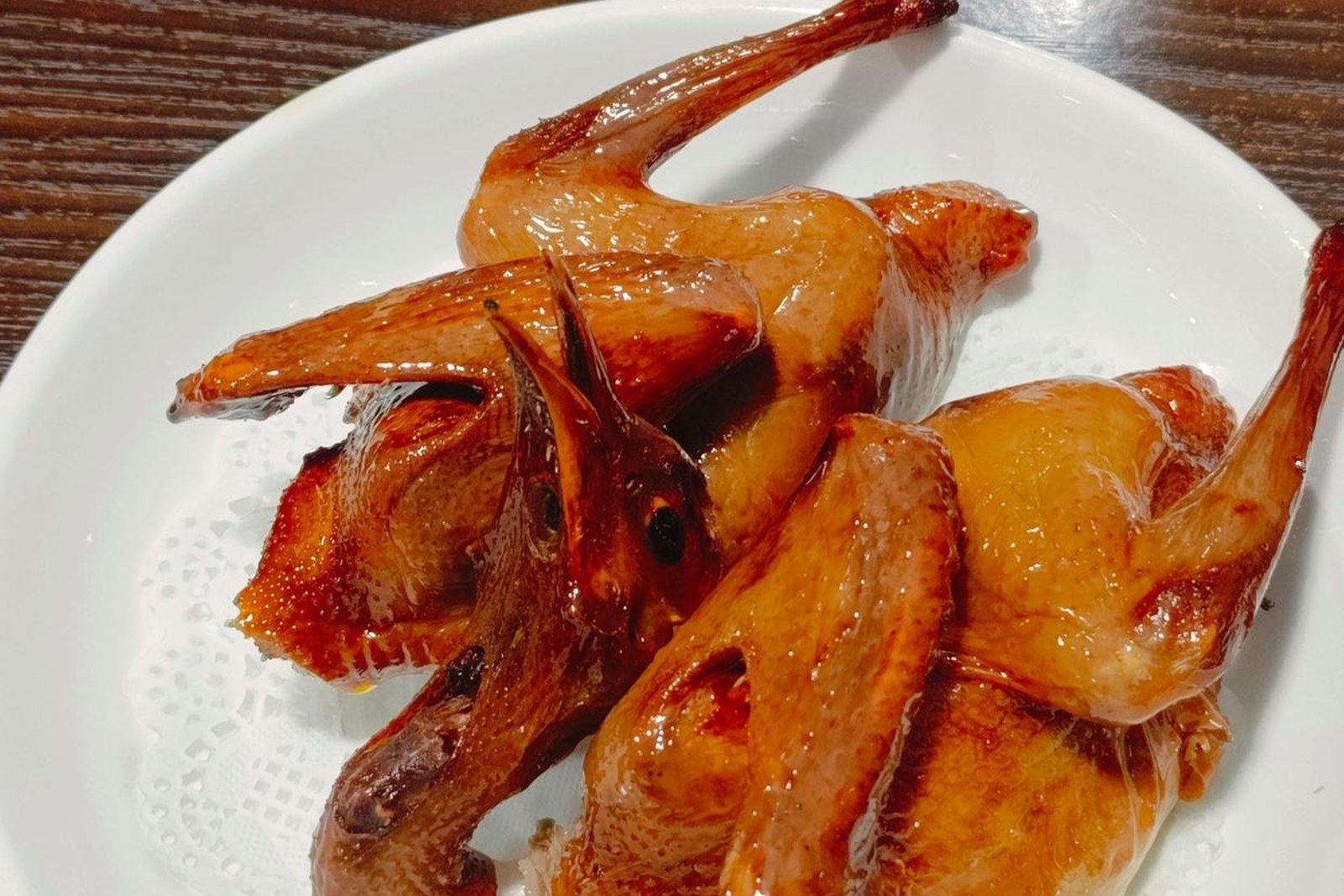
flowcloud would say that 石岐乳鸽 is a breed that crossed an ocean and a dish that crossed back – pigeons assembled from American stock in 1915, red-cooked in a Macau dining room, served at a state banquet in Beijing, registered twice at home by two ministries that rarely sign the same page.
Where to find it: 石岐佬中山菜馆 Shíqí Lǎo at 36 康华路 Kānghuá Lù in 石岐街道 Shiqi Subdistrict, opposite the Jinzuan hotel, queueing from half past four on weekends, a ten-per-cent holiday service charge; 香山家宴 Xiāngshān Jiāyàn in the West Subdistrict; and the 中山温泉宾馆 Zhongshan Hot Spring Hotel in 三乡镇 Sānxiāng Zhèn, where the state-banquet line can be traced in the exhibition menu. Come on a weekday if the queue is not the point; order the raw-fried and red-cooked birds side by side.