
Shuangyanlou
Order a bowl of 绉纱馄饨 at 双燕楼 and what arrives is not what most of the world means by a wonton.
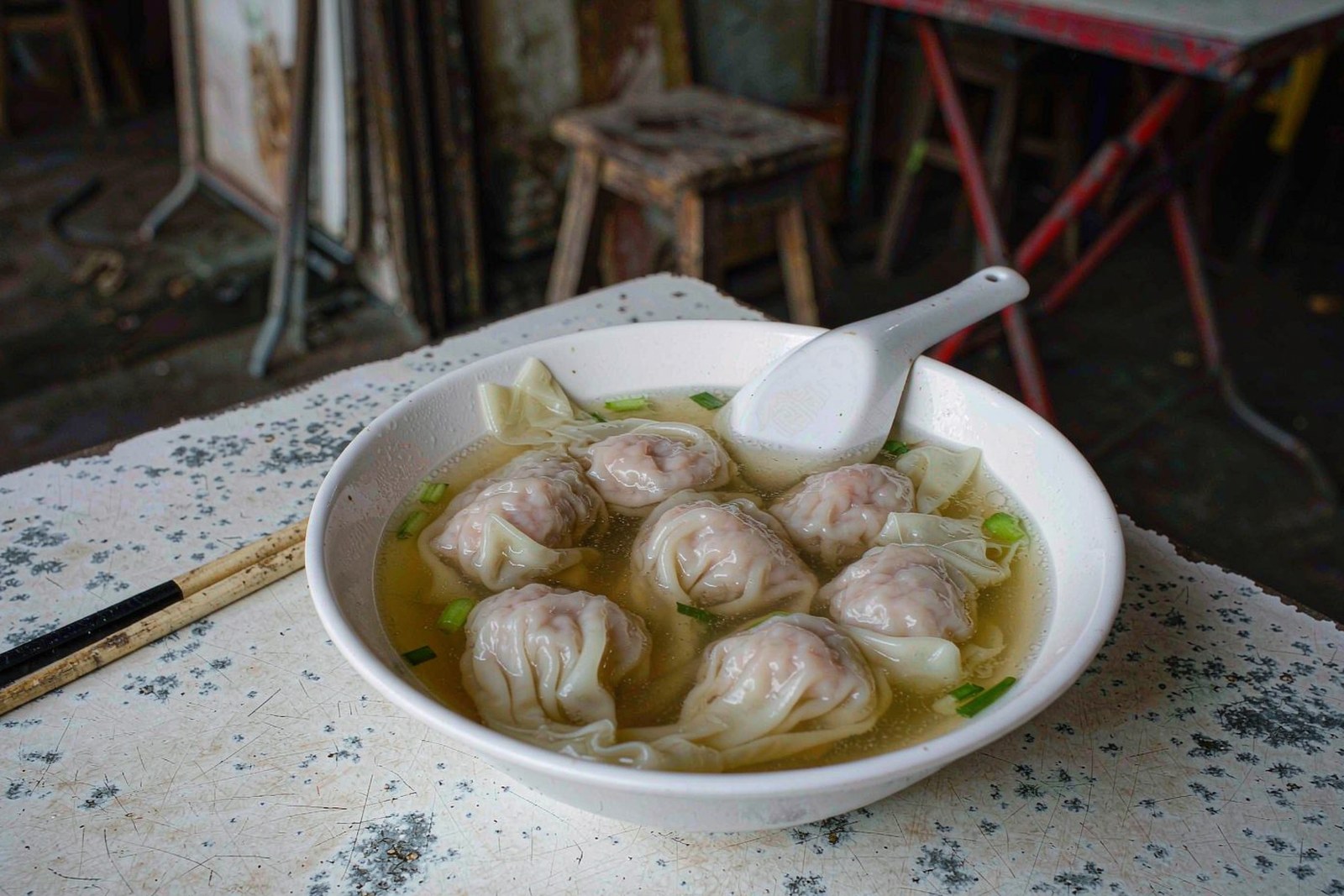
There are five or six of them, floating. The wrappers are so thin that you can see the pink of the pork through them, and each one trails a pleated, translucent tail — two fans of fine folds that hold their shape in the soup instead of collapsing into it. They look, unmistakably, like swallows. Which is the point: 双燕楼 means “Pavilion of the Twin Swallows”, and 双燕馄饨 — twin-swallow wontons — is the dish the shop has been named for since the last years of the Qing dynasty.
It is a humble thing to build a hundred-and-twenty-year reputation on: a dumpling, in soup, for about fifteen yuan. But 双燕楼 is the only place in Changsha that has ever been called 长沙第一馄饨店 — the city’s first wonton house — and the reason is entirely in that wrapper, which is engineered to about a third of a millimetre.
Three Men and a Carrying Pole
The shop began around 1907 — 清朝末年, the closing years of the Qing — and it began with three men whose names have survived: 李少明 (Li Shaoming), 刘风章 (Liu Fengzhang) and 柳子顺 (Liu Zishun).
They set up at 南墙湾 (Nanqiangwan), a lane that is now buried under the 黄兴南路 pedestrian street, and their operation was not a restaurant. It was a carrying pole. Two baskets, a stove, a pot, a stack of wrappers: 挑担现煮, “shoulder-pole cooking to order” — the wontons were wrapped and dropped into the water where you stood. That is how a great many of Changsha’s famous food businesses started, and it is worth remembering when you sit in one of the tiled branches today. The first version of this shop had no address at all.
The three founders had learned the trade young and had their own method, and the method is the thing that has been preserved. Around the 1930s the business was large enough to incorporate itself — 1935 — and by 1960 it had moved to 黄兴南路 199 号, by which point it was an institution.
Their customers’ verdict, quoted in the city’s food writing ever since, is that 双燕楼’s wontons were 皮薄肉嫩、落口消融、汤鲜味美 — thin-skinned, tender, dissolving at the moment of swallowing, in a soup that tasted of something. The tribute poem that the shop still uses went further, in the slightly overheated manner of the period:
皱纱折燕尾,蝉翼裹芳扉。 真容关不住,秀色比贵妃。 Crepe folds into a swallow’s tail; cicada wings wrap a fragrant door. / Such beauty cannot be hidden — a complexion to outshine the imperial concubine.
It is a poem about a dumpling compared to Yang Guifei. It has survived for a century, which is either a testament to the wontons or to the Changsha sense of humour.
A Third of a Millimetre
Here is what makes the wrapper work, in the shop’s own published specification.
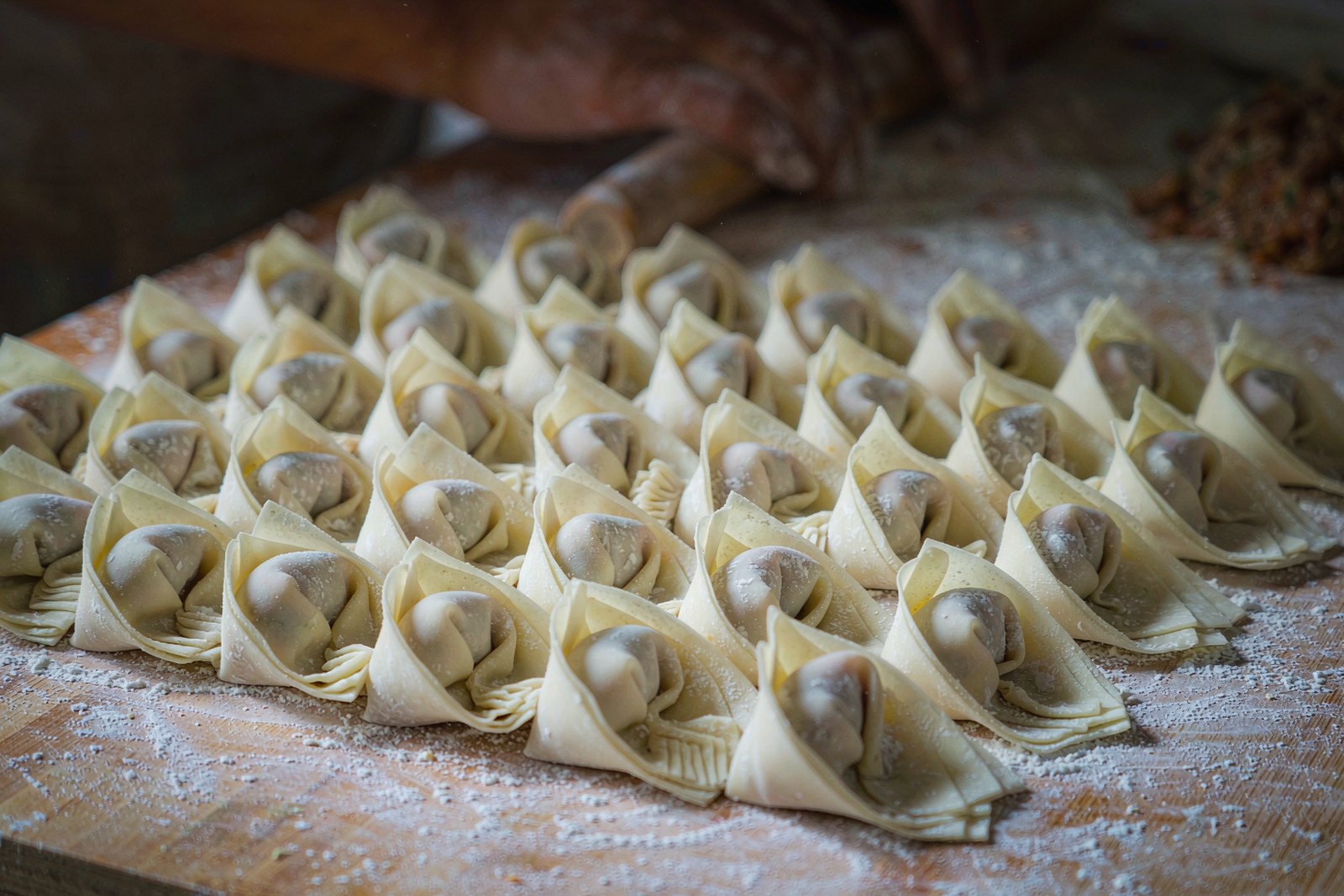
The wrapper is rolled to about 0.37 millimetres. The dough is rolled and cut so that one 斤 (500 g) of wrapper yields 140 sheets or more. Each one is folded with what the house calls the 燕尾包法 — the swallow-tail wrap — which produces the pleated double tail and, more importantly, closes the dumpling tightly enough that it survives a long boil without leaking. 久煮不烂: long-boiled, never broken.
The filling is 前腿肉 and 五花肉 — front-leg pork and pork belly — minced together at a ratio of roughly two parts fat to eight parts lean. That is a rich ratio by modern standards. It is also why the wonton tastes like something rather than like texture.
And the stock is not a garnish. The shop’s stated practice is a daily pot built from five old hens, ten 斤 of pork belly, twenty 斤 of marrow bones and beef bones — boiled down, all of it, for the soup that the six dumplings sit in. A bowl of wontons costs fifteen yuan. The broth behind it is essentially a banquet stock.
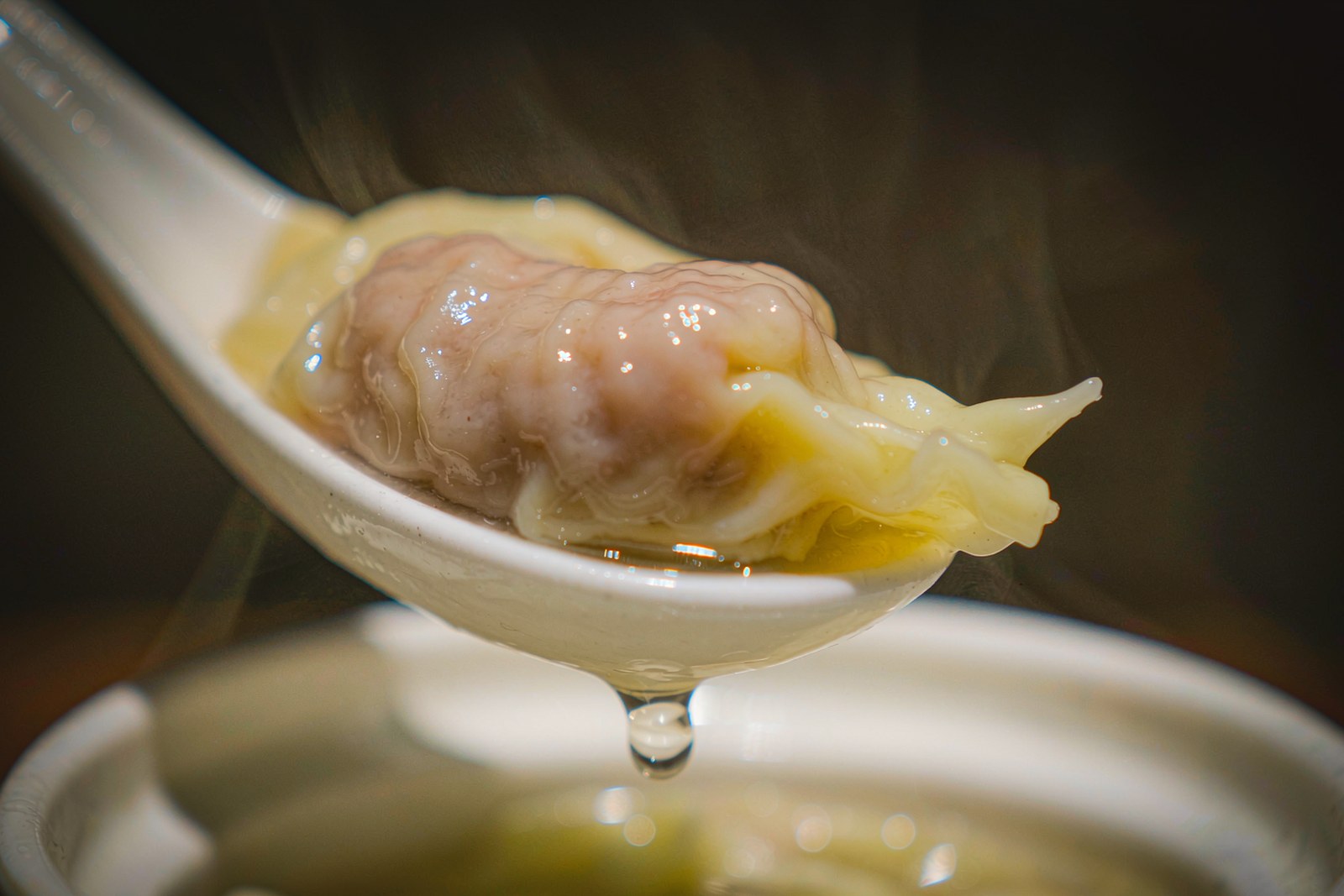
That is the trade 双燕楼 has always made: the wrapper is the show, but the soup is the reason the show works. A wonton that dissolves in your mouth is unpleasant in a thin broth and wonderful in a thick one.
There is also a small piece of local wordplay the shop lives on. 馄饨 (huntun, wonton) is a near-homophone of 混沌 (hundun, primeval chaos). The country saying is that eating them 打破混沌,开辟天地 — breaks open chaos and separates heaven from earth — and in Changsha it got flattened into a much better line: 吃馄饨不混沌, eat wontons, stay unchaotic. In the old north, wontons were a winter-dawn food, eaten at the solstice on exactly that reasoning. It is a good excuse for soup at 6:30 in the morning.
A Hundred Years of Being Knocked Down
双燕楼’s twentieth century is a record of a business being demolished and rebuilt, which is more or less the history of central Changsha.
The shop was doing well enough to incorporate in 1935. In 1960 it moved to 黄兴南路. Then the street changed: in 1996 the 黄兴路 reconstruction knocked it down and it stopped trading; in 2001 the pedestrian-street works took the rest. For years, one of the city’s oldest food names did not exist.
It came back in 2006, reopening on 坡子街 — which is the correct address for it, since 坡子街 and the surrounding lanes are where Changsha’s old snack trade now lives. In 2010 came the first real branch, at 东塘; in 2011 the business was incorporated as a company; in 2015 the Hunan provincial government granted it the status of 湖南老字号 — a provincial time-honoured brand — and it has held that through the reviews since.
What followed is the part traditionalists grumble about. From 2016 the menu widened past wontons into 糖饺子, 葱油粑粑 (scallion-oil rice cakes) and 臭豆腐. In late 2019 a 600-square-metre shop opened on 北正街 in the restored 潮宗街 historic district, with private rooms and some 湘菜 stir-fries restored to the menu. In 2023 the brand opened its first shop outside Hunan, in Shenzhen — and by mid-2024 there were around ten.
So there are two ways to read 双燕楼 in 2026. The romantic reading is that it is one of the last surviving Qing-era snack businesses in the city, and that a third-of-a-millimetre wrapper is still being rolled by hand. The sceptical reading is that a century-old Changsha name now sells bubble tea’s worth of fried snacks and has more branches in Shenzhen than on the street where it was born.
Both are true. The bowl is still the bowl.
What to Order
绉纱馄饨 — the crepe-skin wonton, the original. If you order one thing, order this. It is the dish with the poem attached to it.
油炸馄饨 — the fried version, which is a different animal entirely: crisp, not delicate, and much better with beer than with tea. 酸辣馄饨 and 鸡丝馄饨 are the two other standing variants; the sour-and-hot one is the one to take if you have already eaten three bowls of noodles and need your appetite back.
Order them plain the first time. The trap at 双燕楼 is that the shop now also sells a dozen other Changsha snacks, and a tray of 葱油粑粑 can easily convince you that you have eaten its signature dish. You have not. The wrapper is the reason this name has lasted a hundred and twenty years, and it takes about ninety seconds to eat.
Practicalities
The 三王街 branch — 天心区三王街 10 号, right by the 坡子街 junction — is the central one, and it keeps informal hours: roughly 6:30 in the morning until one in the morning, which makes it a plausible last stop of a night out as well as a first stop of the day. Budget around 15 yuan. The 北正街 shop (开福区北正街 22 号, in the 潮宗街 district) is newer and larger, runs a more conventional 7:00 to 21:00, and costs a little more; if you want to sit down properly rather than eat at a laminate table, that is the one.
Metro for 三王街 is line 1 or 2 to 五一广场; for 北正街 it is line 1 to 培元桥.
flowcloud would say that a dumpling rolled to a third of a millimetre is not food, it is a wager — and that a family which made that wager a hundred and twenty years ago and has been demolished twice since is entitled to the fifteen yuan it now asks.
Where to find it: 双燕楼 (Shuangyanlou), 天心区三王街 10 号, by the 坡子街 junction — metro line 1/2 to 五一广场; and 开福区北正街 22 号, 潮宗街 district — metro line 1 to 培元桥. Order 绉纱馄饨, eaten plain and quickly. About 15–25 yuan.