
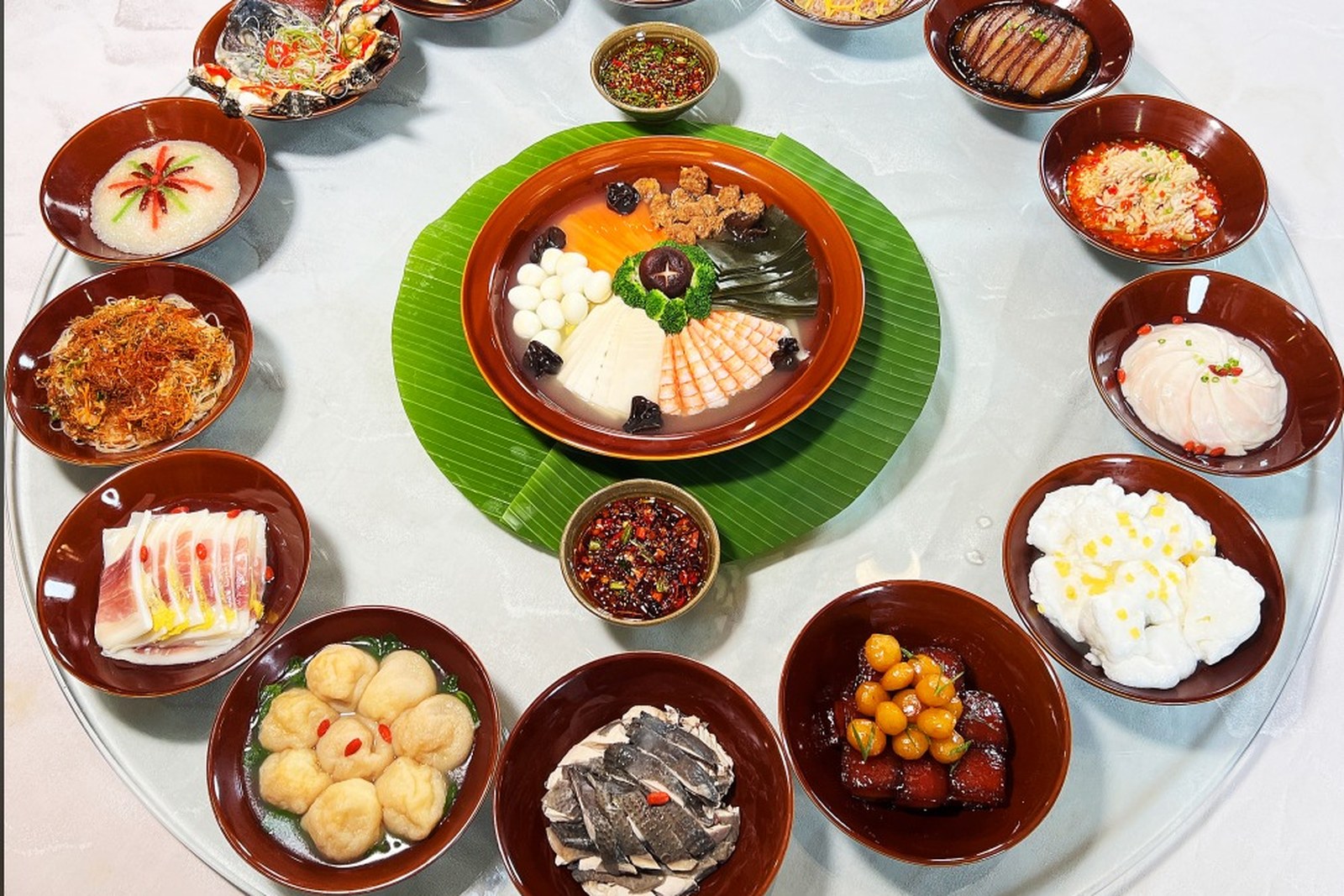
水八碗 Shuǐ bā wǎn, the water eight bowls, is the countryside feast format of 璧山区 Bìshān Qū, Bishan District: eight steamed dishes served in rough ceramic bowls on a square Eight-Immortals table, the meal a village throws for weddings, house-raisings, full-moon birthdays and the new year. The district’s own food literature names it as the most folk-flavoured of its traditional feasts – 大气而实惠, generous and affordable, in the phrase the district uses – and the modern revival runs it as a set priced for a table rather than a plate. This page is written as a format story, and it declines to enumerate “the” eight bowls: the versions differ by township and by decade, no official canonical list exists in the record consulted, and a page that named eight dishes would be inventing a canon the countryside itself never fixed.
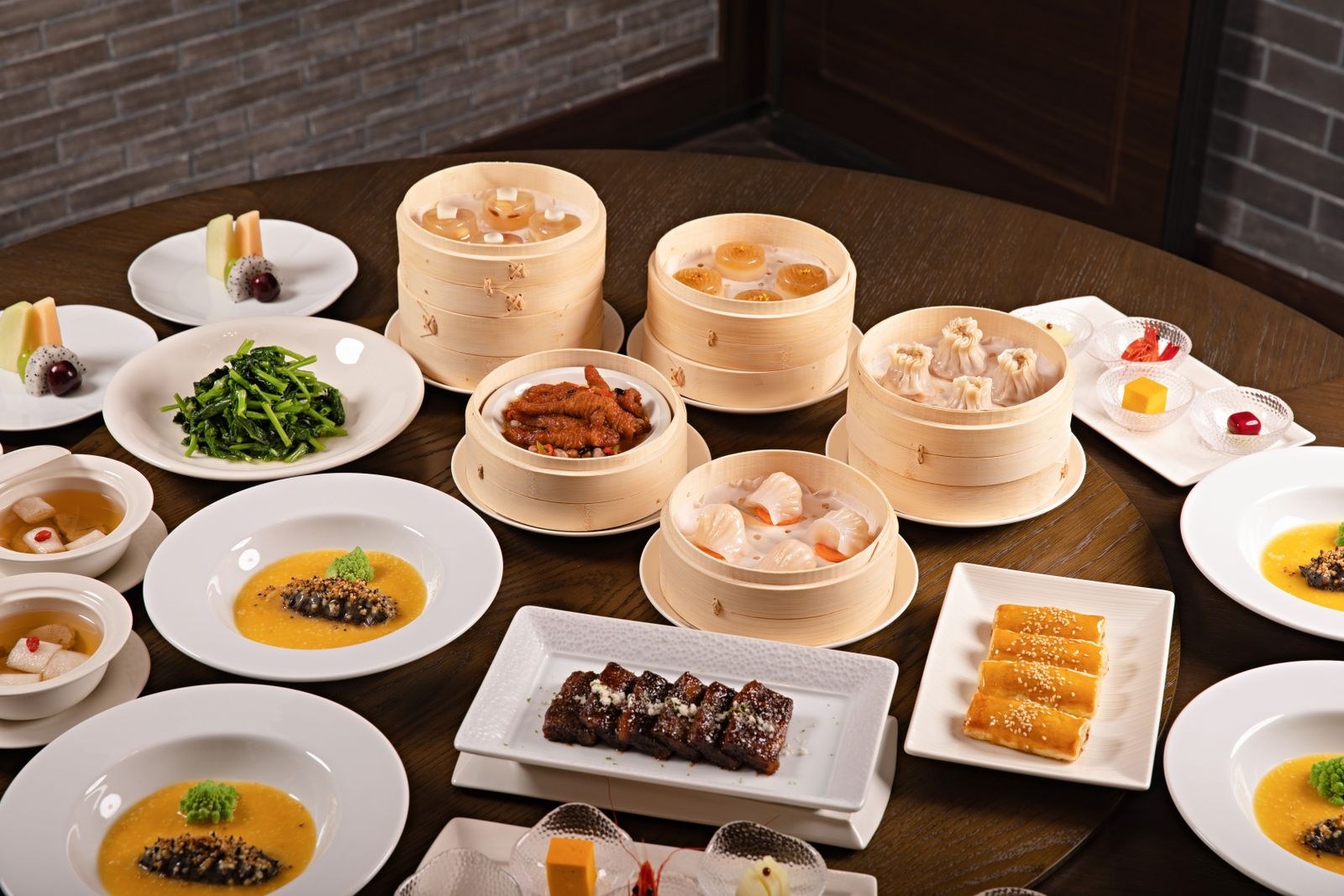
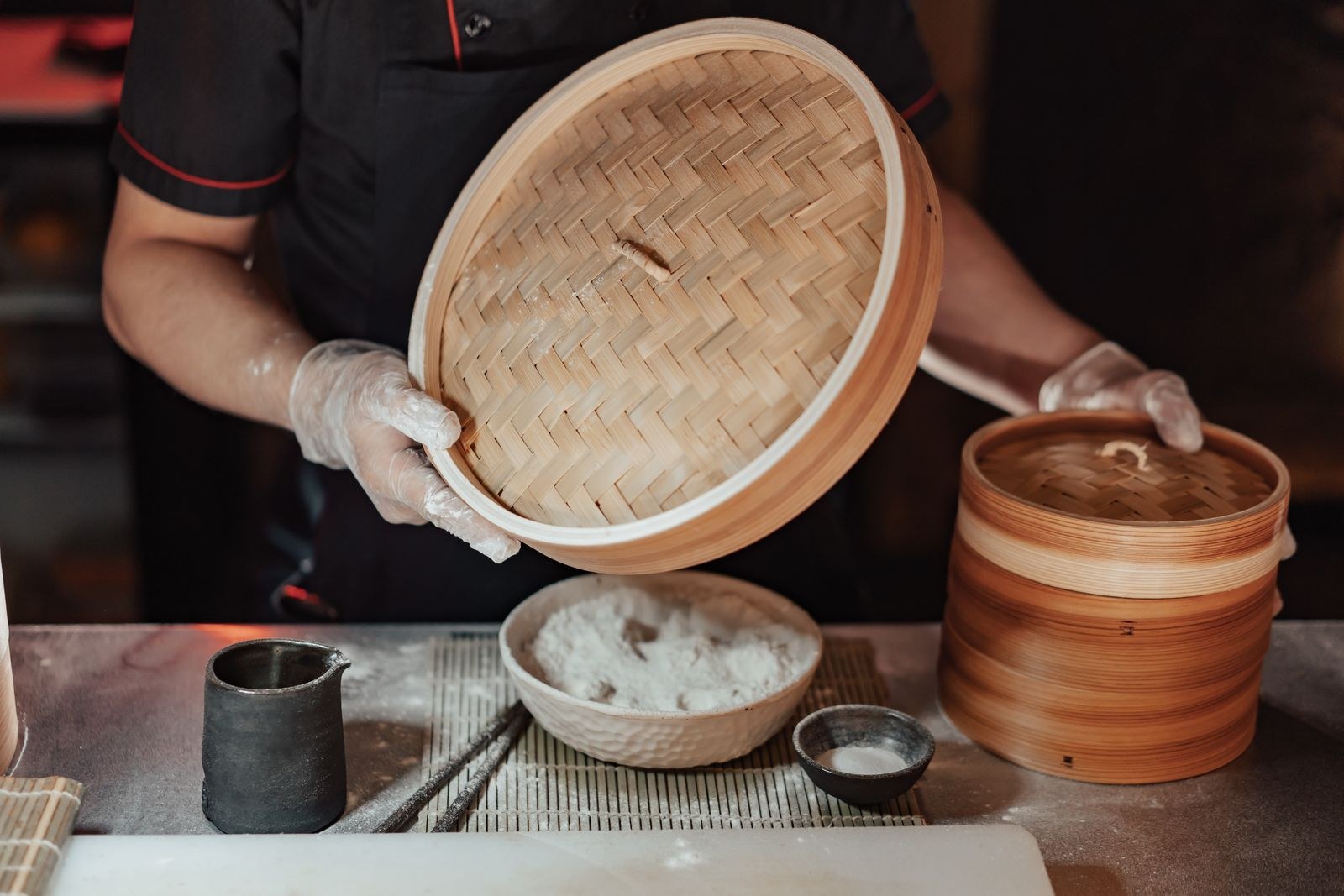
The format is the content. An eight-bowl feast is built for a village kitchen feeding a hundred covers in one midday sitting, which dictates everything: the dishes steam rather than stir-fry, because steamers stack; the vessels are bowls rather than plates, because bowls stack and hold heat on a trestle table outdoors; and the menu runs on pork, poultry, river fish, tofu, egg and preserved vegetables that a farm household can buy or raise ahead of the day. The steamed rice-flour pork and the pressed-and-braised cuts that anchor Sichuan rural feasts generally are the class of dish the format carries – rich, hold-well, slice-ahead food – but which eight bowls a given village serves is a local matter, and the honest page reports the class of food rather than inventing a fixed menu. What the format guarantees is the arithmetic: eight bowls, one table, eight diners, one midday, and a kitchen that has been preparing since dawn.
The occasion is as fixed as the food. The Eight-Immortals table seats eight at a bench a side, the seating follows the household’s kinship map, and the feast is the event’s real ceremony – the wedding or the house-raising is legally done at the registry or the beam-raising, but socially it happens at the eight bowls, where the two families’ relatives meet across one table. The district’s revival framing is honest about the modern form: the townships’ restaurants now run the banquet as a budget set for ordinary bookings, larger in portion and cheaper in real terms than the ceremonial original, which is a common pattern in Chongqing’s rural feast revivals and the reason a visitor can actually book one rather than wait for a village wedding. The page treats both forms – the ceremonial and the restaurant set – as the same format at two price points.
What the record supports and what it does not is worth stating plainly, because the eight-bowl format is exactly the kind of folk institution that attracts invented detail. The record consulted names the format, the district, the Eight-Immortals table, the festive occasions and the revival-as-set, and it quotes the district’s own two-word verdict – generous and affordable. It does not name a founding era, a canonical eight dishes, a standard price or a famous restaurant house for the banquet, and none of those is invented here. The class of dishes – steamed pork with rice flour, pressed braised cuts, whole-steamed items, tofu and egg bowls, preserved-vegetable bowls – is the general Sichuan rural steamed-feast repertoire and is offered as context, not as a Bishan canon. A reader who wants to eat the format should book the set at a township restaurant and accept the house’s own eight, because the house’s eight is the format working as designed.
The eight bowls also close the road-county food argument this batch is making. The fish is the road’s famous format, the rabbit is the county’s daily format, and the eight bowls are the village’s ceremonial format – three repeatable structures rather than three famous recipes, which is what a road county’s food culture produces: feeding strangers at speed and relatives at scale, with formats a hundred kitchens can run and no single kitchen needs to sign. The banquet’s survival into the restaurant-set era is the proof the format was built to survive: nothing in it depends on one cook, one address or one era. All checked October 2026.
Words and Names
水八碗 Shuǐ bā wǎn, the water eight bowls, the rural steamed-feast format of 璧山区 Bìshān Qū, Bishan District: eight steamed dishes in ceramic bowls on a square 八仙桌 bāxiān zhuō Eight-Immortals table, served at weddings, house-raisings, birthdays and the new year, and described by the district as 大气而实惠, generous and affordable. The dishes steam rather than stir-fry, run on pork, poultry, fish, tofu, egg and preserved vegetables, and the canonical eight are not fixed in any record consulted – the versions differ by township, and the page declines to invent a list. Township restaurants now run the format as a bookable set priced per table, larger and cheaper than the ceremonial original. No founding era, standard price or famous house is on the public record, and none is invented here.
What the Locals Know
The local knowledge is about booking and eating, not about canon. A set banquet is booked by the table, not the cover, and the local rule is to book the midday sitting for a weekend – the steamed format needs the kitchen’s morning, and an evening booking eats what was steamed at noon. The eating order is the bowls’ own logic: the dense steamed pork and pressed cuts first while the rice goes round, the lighter tofu and vegetable bowls late, and tea throughout, because the format is rich by design. The second thing locals know is that the eight differ by township and by house, and that arguing about the “correct” eight is a table sport rather than a fact question – the format is the fixed part, the bowls are the house’s signature. What the record does not support is any claim to a canonical menu or a single origin house, and the page declines both; the honest check is the district’s own phrase, generous and affordable, which is verifiable at the table.
flowcloud would say that 水八碗 the water eight bowls is the rural steamed-feast format of Bishan District – eight ceramic bowls on a square Eight-Immortals table for weddings, house-raisings and the new year, steamed because steamers stack and bowls hold heat, pork and poultry and river fish and tofu that a farm kitchen can prep ahead – and that the district’s own verdict is generous and affordable, with the modern form a bookable township-restaurant set and no canonical eight dishes on any record consulted, so the page names the format and refuses the invented canon. All checked October 2026.
Where to find it: the banquet format is a township-restaurant set across 璧山区 Bìshān Qū, Bishan District, booked by the table for the midday sitting, and the honest address is the bookable houses of the district’s townships rather than any single famous restaurant, because no founding house or canonical menu survives in the record consulted and none is invented here. No posted per-table price was found in the sources consulted and none is quoted. Pair this page with the Laifeng fish and rabbit pages, which are the road county’s other two surviving formats.