
Ten Seconds in the Pot: Water-Blanched Tripe
沸水三提肚脆生,麻酱一碗定输赢 Fèishuǐ sān tí dù cuìshēng, májiàng yī wǎn dìng shūyíng – Three dips in boiling water keep the tripe crisp; one bowl of sesame paste decides the winner
水爆肚 shuǐbàodǔ Water-blanched tripe is 天津市南开区 Tiānjīn Shì Nánkāi Qū Nankai District’s cleanest thrill – fresh beef tripe cut into strips, dipped seconds in boiling water, and eaten immediately with thick sesame paste, chili oil and a scatter of raw scallion. The 爆 bào in the name is the cooking itself: water at a full boil, tripe in and out before it can think about turning tough, and the whole dish decided in ten seconds of timing.
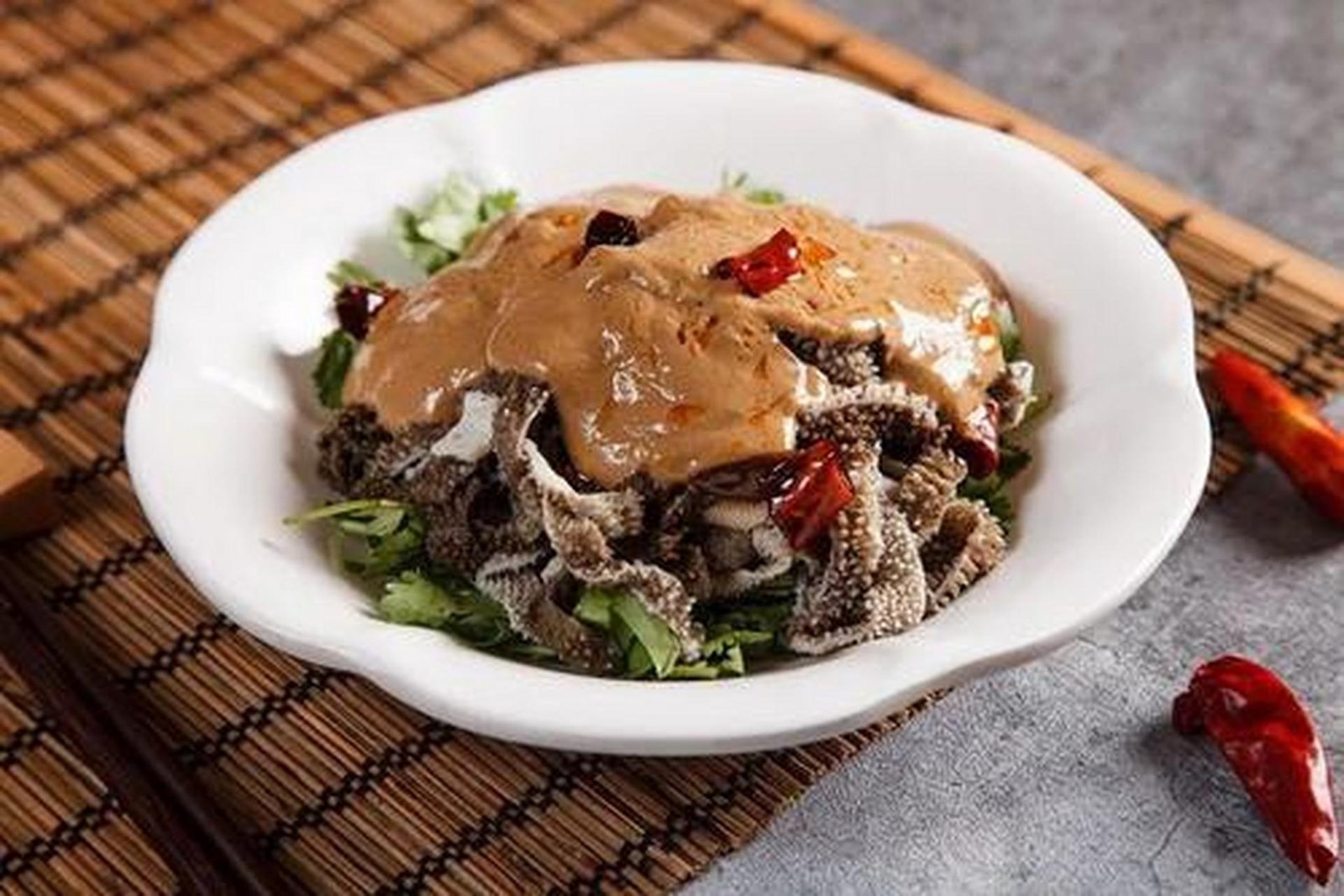
The eating is a texture study. Done right, the tripe snaps – crisp, faintly sweet, clean-tasting – and the sesame paste does the seasoning work: thick, nutty, salted just enough, with the chili oil lighting the top. Locals order by cut: 肚仁 dùrén the tripe core, the tenderest bite; 散丹 sǎndān the book tripe; 百叶 bǎiyè the many-leaved edge, blanched so fast it barely curls.
The dish came north with the Qing court’s appetite and settled into Tianjin’s Muslim restaurant rows, where the old families made a morning ritual of it – tripe delivered at dawn, water on the fire by opening, and a queue that judged every batch. The great names keep their own paste recipes, and the debate over whose sesame paste reigns is a local sport that has outlived every dynasty.
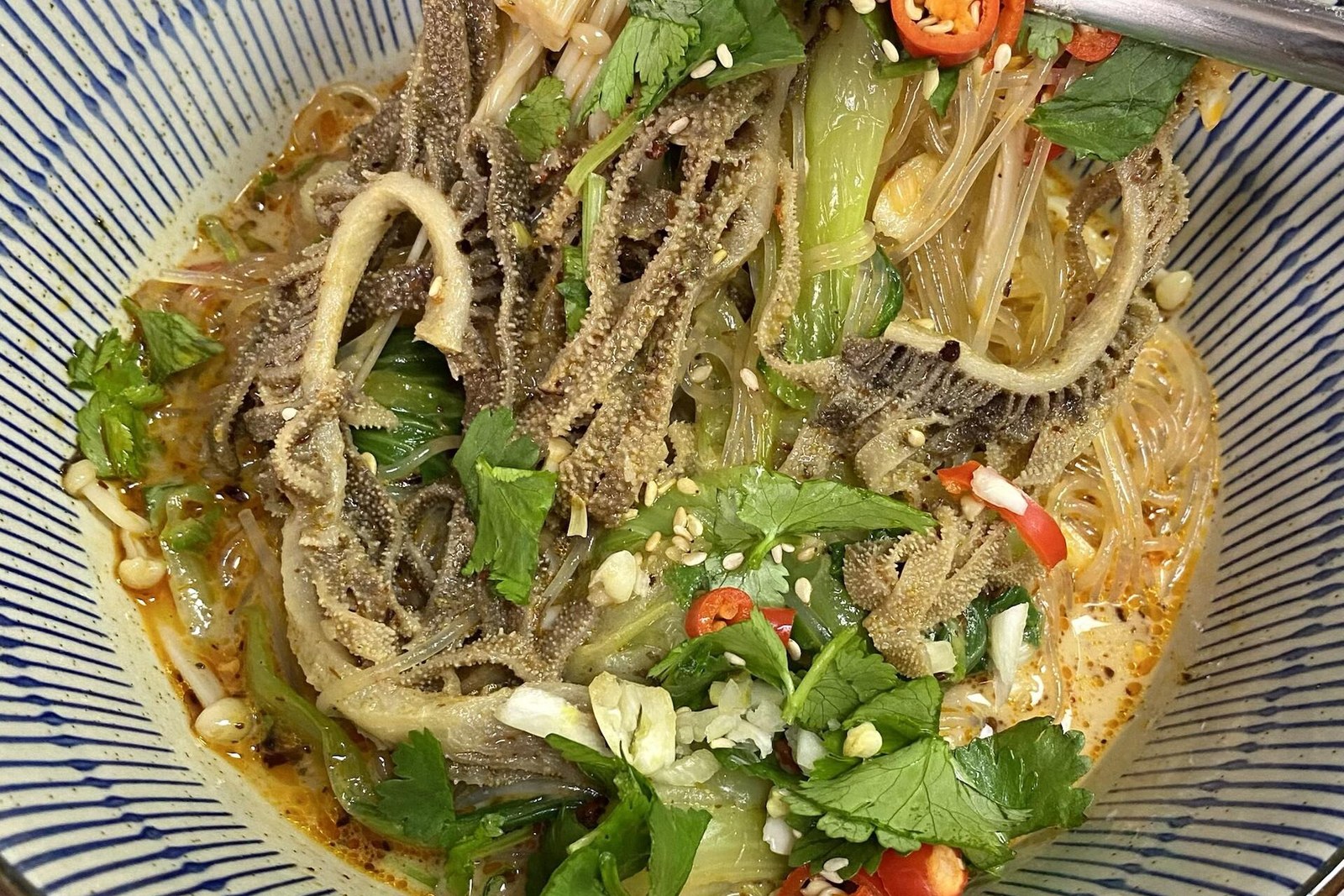
Eat it as a starter or a lunch, with 烧饼 shāobǐng sesame cakes alongside and hot tea after. The portions run small and the eating runs fast – tripe waits for no dip – so order it the moment you sit, dress it at the table, and finish it inside five minutes while the snap is still there.
The same district holds more flavors worth chasing: 黑蒜子牛肉 hēisuànzi niúròu the black-garlic beef, 贴饽饽熬小鱼 tiē bōbo áo xiǎoyú the cornbread-and-fish pot, 八大碗 bādàwǎn the Eight Great Bowls, or 官烧目鱼 guānshāo mùyú the official-style squid – four more doors into the same Nankai District table.
Words and Names
水爆肚 shuǐbàodǔ water-blanched tripe; 肚仁 dùrén the tripe core, the prime cut; 散丹 sǎndān the book tripe; 百叶 bǎiyè the many-leaved edge; 麻酱 májiàng the sesame paste that decides everything.
What the Locals Know
Order the 肚仁 first – it is the cut the regulars fight over – and judge the shop by its paste: thick enough to cling, loose enough to pour. Ask for the tripe blanched 嫩 nèn – just set – and eat it within minutes; the dish ages in front of you. All checked November 2026.
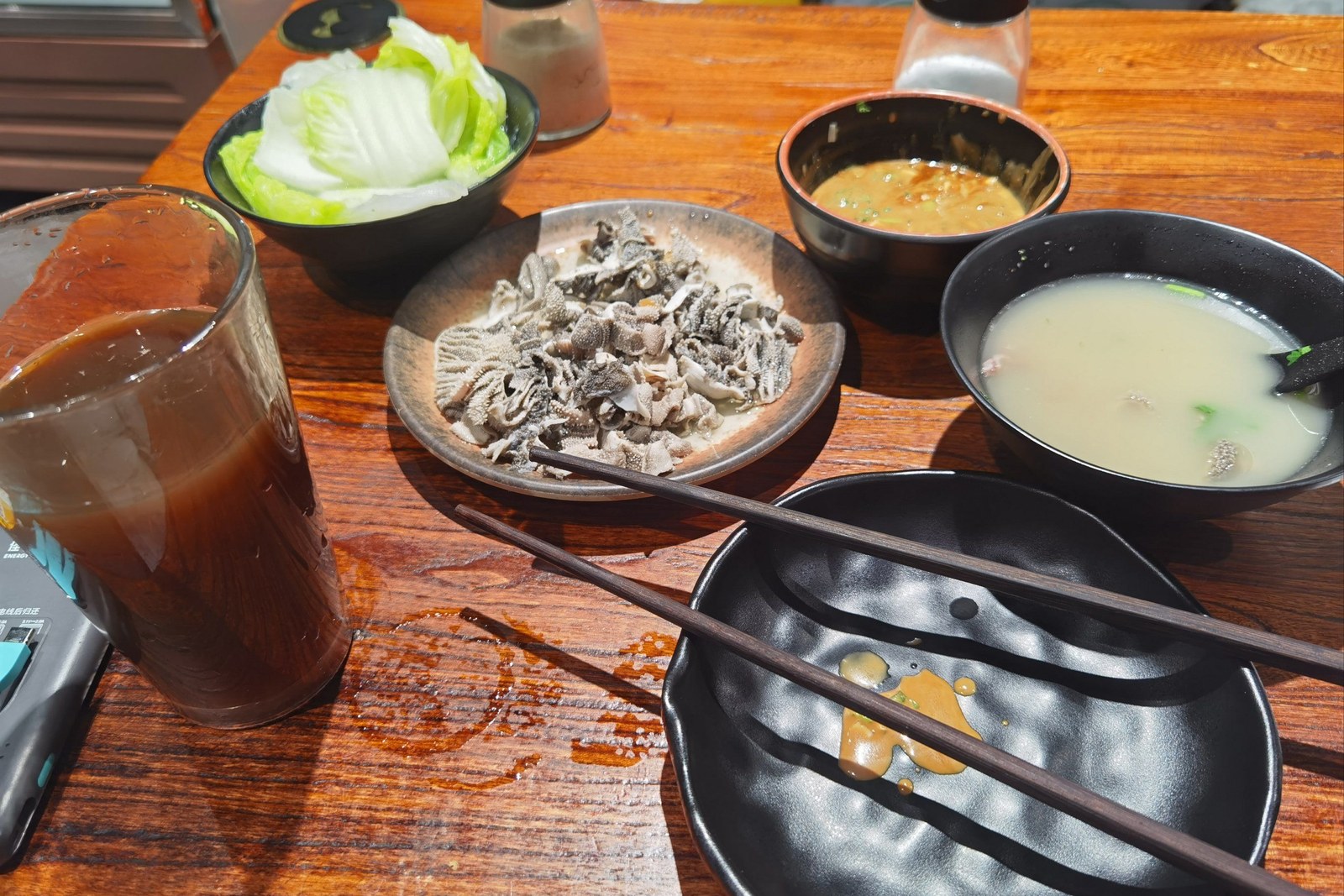
flowcloud would say water-blanched tripe is Tianjin at its most confident: ten seconds of fire, one bowl of paste, and no sauce on earth allowed to hide the crunch.
Where to find it: The halal restaurant rows near 天津鼓楼 Tiānjīn Gǔlóu the Drum Tower and the old-city snack streets keep water-blanched tripe on the counter menu – the busiest shops blanch to order, so expect the dish to land hot. All checked November 2026.