
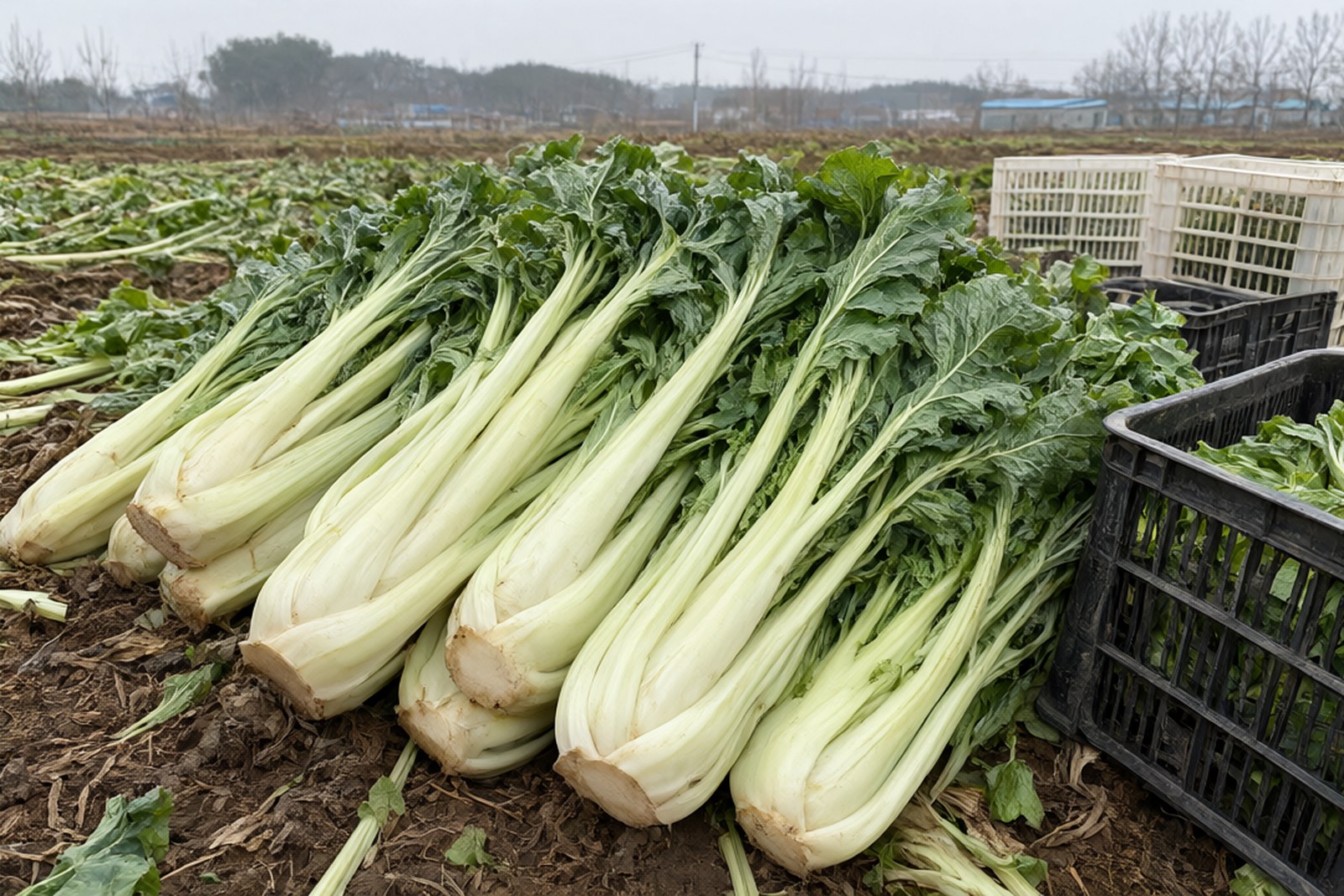
水东芥菜 shuǐ dōng jiè cài is a stem mustard, and it is the most local vegetable in the province, because the name is simply the address. It comes from 彭村 Péng cūn, a village in 水东镇 Shuǐ dōng zhèn in the 电白区 Diàn bái qū district of 茂名市 Mào míng shì, a few hundred metres from the 水东湾 Shuǐ dōng wān, where the sea air, the water and the fog come in off the bay together and the soil is a slightly acid yellow sand. The farmers of the village had grown ordinary mustard for generations; what they have now is a plant selected out of it until the leaves went away and the stem took over.
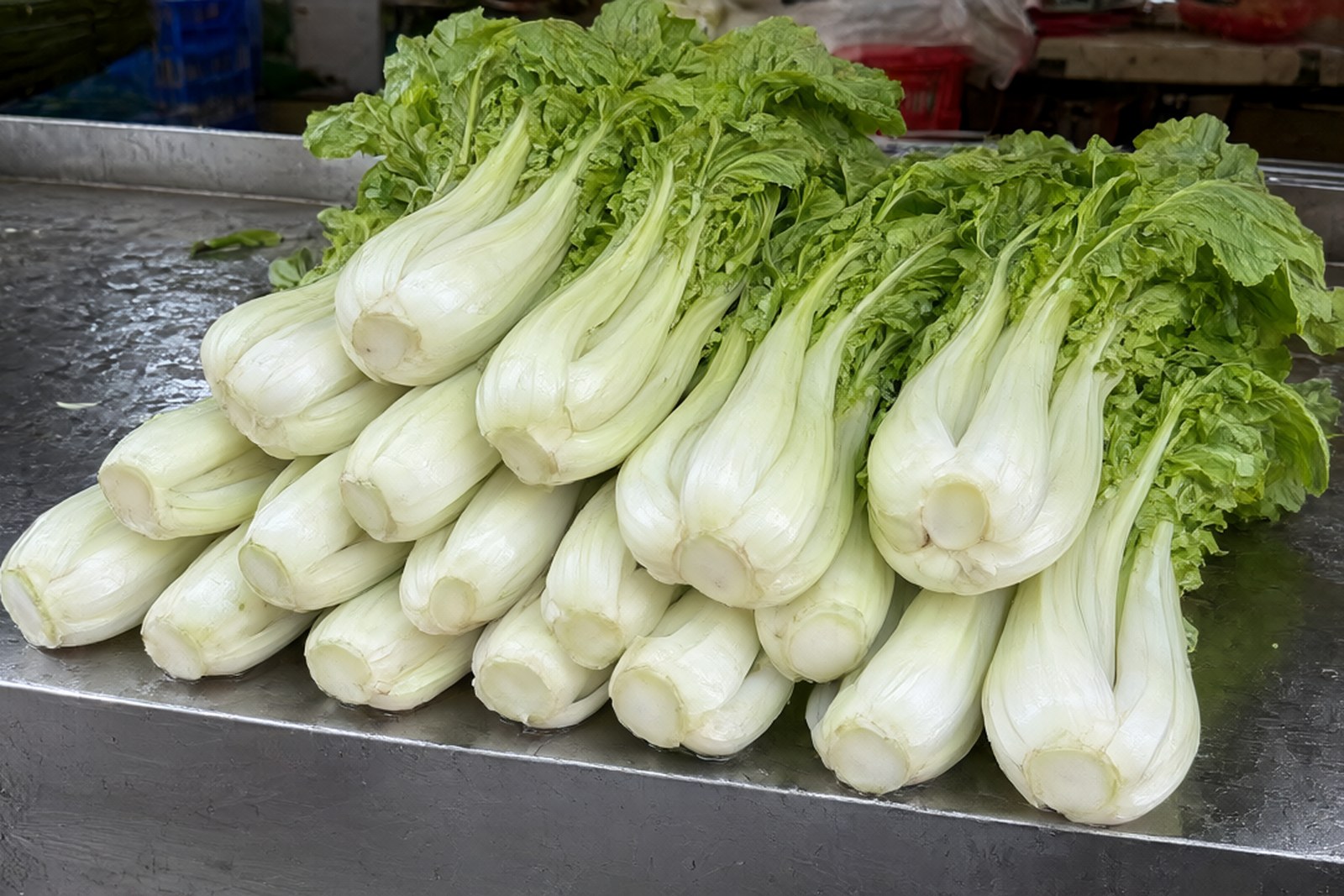
The description of the plant is a description of everything a mustard normally is not. The ordinary 芥菜 jiè cài is leafy and fibrous and tastes bitter at the edge; this one hearts like a cabbage, holds its weight in the stem rather than the leaf, and the stem is a milky white under the green. 水东芥菜 is heart-shaped, 鸡心状 jī xīn zhuàng, like a chicken’s heart, with the base of each stalk fat and rounded, glossy green and translucent, which is why the trade and the village both call it 灯笼芥 dēng lóng jiè, the lantern mustard. Snap a stalk in half and it breaks cleanly without drawing a single string of fibre; drop a whole plant on the floor and it shatters instead of bruising. The flavour follows from that: sweet at the centre rather than bitter, and crisp enough that the local claim is that a good stem can be eaten raw straight out of the ground. The compound behind the aroma is 芥子醣 jiè zǐ táng, which hydrolyses into the mustard oil that gives the vegetable its particular savour.
The history is short by the standards of this coast, because the crop as a commercial name is a 1980s and 1990s development, but the village’s memory of it is long. In the war years, when 电白 was hungry, the 吴 Wú family of 彭村 lived on 芥菜鱼仔粥 jiè cài yú zǎi zhōu, mustard with small fish in rice porridge, and the county’s own record of the period carries the line the village still repeats: 卖锅卖缸都不卖芥菜种 mài guō mài gāng dōu bù mài jiè cài zhǒng, sell the pot, sell the jar, but never sell the mustard seed. The small hearted mustard came out of that seed in the 1980s, was grown on a few mu and sold in the town, and by the 1990s it was going to 广州 and 深圳 and the acreage had reached about ten thousand mu. Today it is a Chinese geographical-indication product, concentrated in the three townships of 水东, 旦场 and 林头, on about fifty thousand mu, four crops a year, averaging a tonne and a half per mu per crop, which is around three hundred thousand tonnes and nine hundred million yuan of output a year and makes a vegetable into a pillar of the district economy.
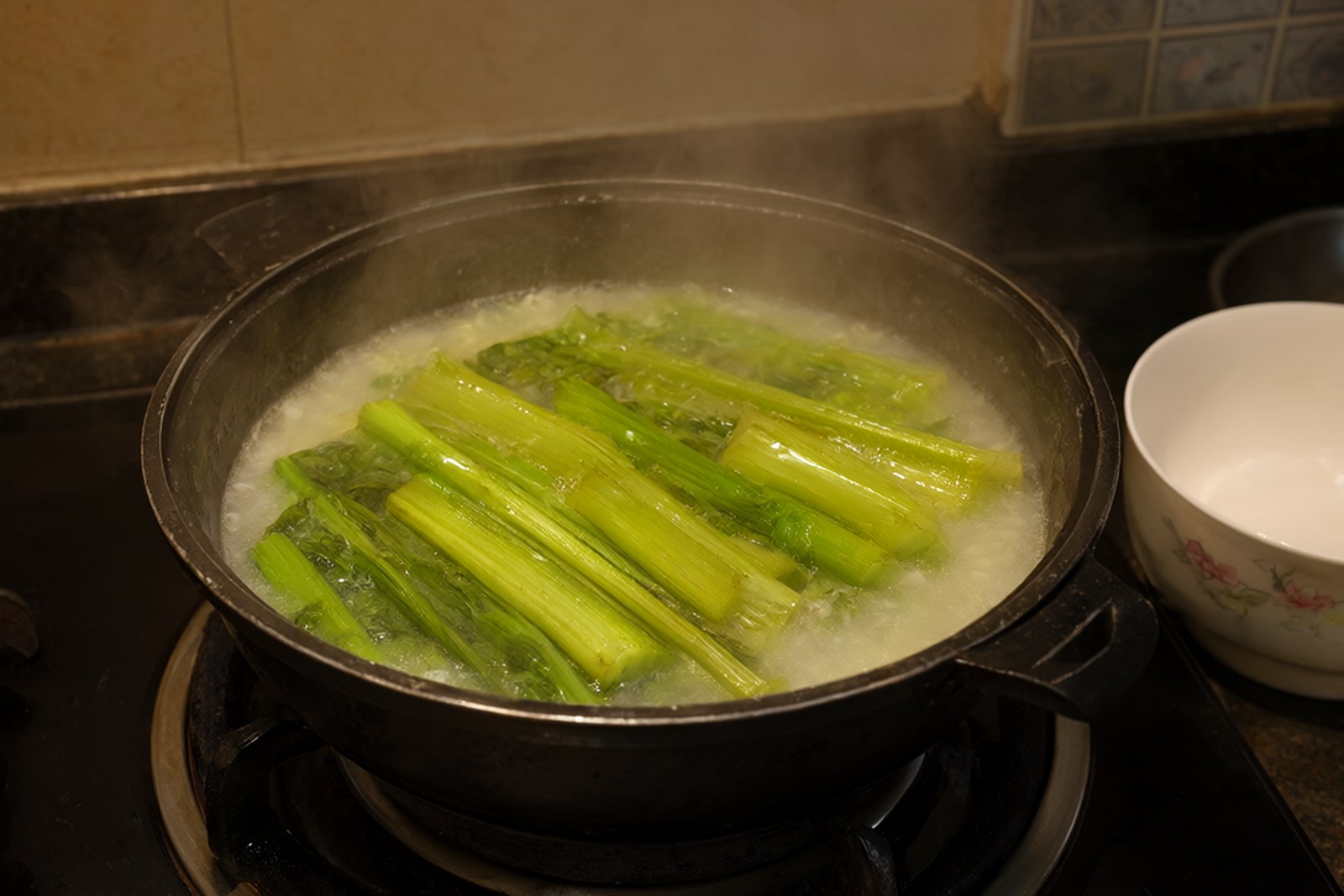
Cooking it is deliberately unambitious. The three ways the district names are 白灼 bái zhuó, blanched in boiling water and served with a splash of soy, 蒜蓉炒 suàn róng chǎo, stir-fried with garlic, and 酱油捞 jiàng yóu lāo, tossed with soy sauce and oil, and anyone who does more than that is told they have wasted the vegetable. The other use is the one that carries the reputation across the water: the 港澳 Gǎng ào households of Hong Kong and Macao cook it into 清水硬米粥 qīng shuǐ yìng mǐ zhōu, a plain rice congee boiled with the stems until the whole pot smells of mustard and nothing else, which is what 电白 people working away from home ask for when they ask for home.
Words and Names
芥菜 jiè cài is mustard greens and 水东芥菜 is the geographical-indication name, so the first two characters are the town and the last two the vegetable. 灯笼芥 dēng lóng jiè, lantern mustard, and 鸡心芥 jī xīn jiè, chicken-heart mustard, are the trade’s and the market’s nicknames for the shape. 白灼 bái zhuó is the blanch-and-dress treatment that suits the plant best, and 芥子醣 jiè zǐ táng is the glucoside whose hydrolysis makes the mustard oil behind the aroma. 硬米粥 yìng mǐ zhōu is the firm-grained congee the emigrant households cook it into.
What the Locals Know
The test the market uses is a physical one. A genuine 水东芥菜 should have a stem that is white to the core and heavy for its size, and it should break rather than bend; if the stalk bends and strings, it was grown somewhere else, whatever the crate says. It does not keep, because the whole point of the plant is the water in it, so it is bought and cooked the same day, and the district’s growers say the best of it never leaves 茂名 at all, because the people who know it buy it first. In the supermarkets of 广州 and 深圳 it is sold under the name and at a premium, and the 电白 community abroad buys it frozen for the congee, which is the one use where freezing is not a defeat.
flowcloud would say that the most valuable vegetable on this coast is one that the village refused to sell the seed of, that shatters when you drop it, that has almost no flavour of its own and is therefore cooked with nothing, and that a family ate through a war because there was nothing else.
Where to find it: the wet markets and vegetable stalls of 水东镇 and the rest of 电白区, where it is bunched and sold by weight through the winter and spring; the growers are concentrated in 水东, 旦场 and 林头, and the price in 茂名市 is a fraction of what the same name fetches in 广州 or 深圳. 茂名站 Mào míng zhàn on the 深湛 railway is the railhead, and the fields are twenty minutes east of it by road. Ask for it by the nickname 灯笼芥 if the stallholder looks blank at the formal name.