
The fish arrives as a plate of translucent slices and the argument starts over how to dress it. 顺德鱼生 Shùndé yúshēng is raw freshwater fish, filleted, skinned, and cut into slices thin enough to read through, arranged on a chilled plate and eaten with an array of shredded seasonings that each diner combines at the table. It is the most ceremonial everyday dish in Shunde cooking and also the most contested, because it is raw fish, and the local answer to every objection is a specific one: the fish is a particular species, farmed in running water, killed and filleted within minutes, and the whole dish is designed so that a fish past its best cannot be served at all. Served properly it is sweet, clean and firm, closer in texture to a scallop than to the sashimi most visitors have eaten.
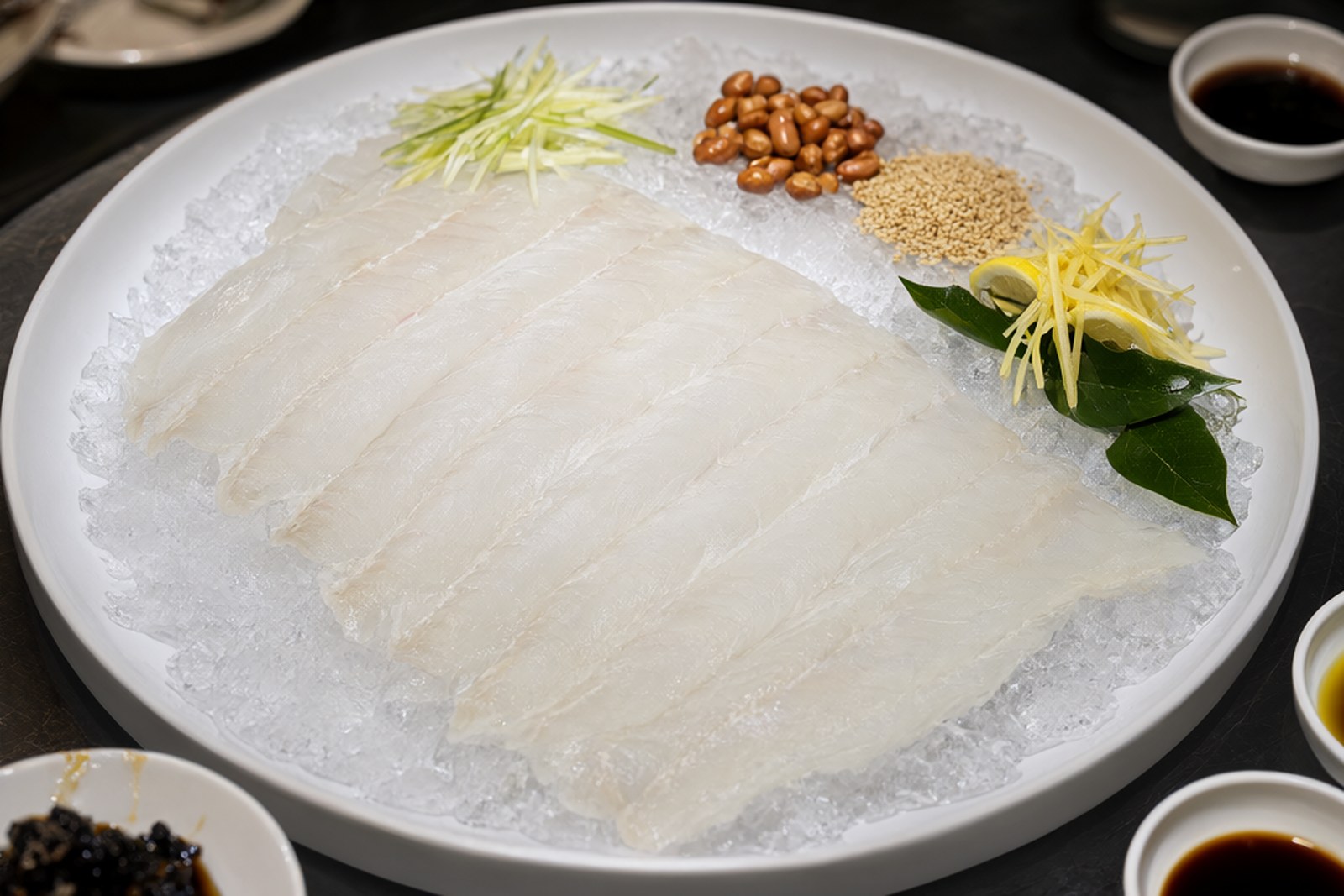
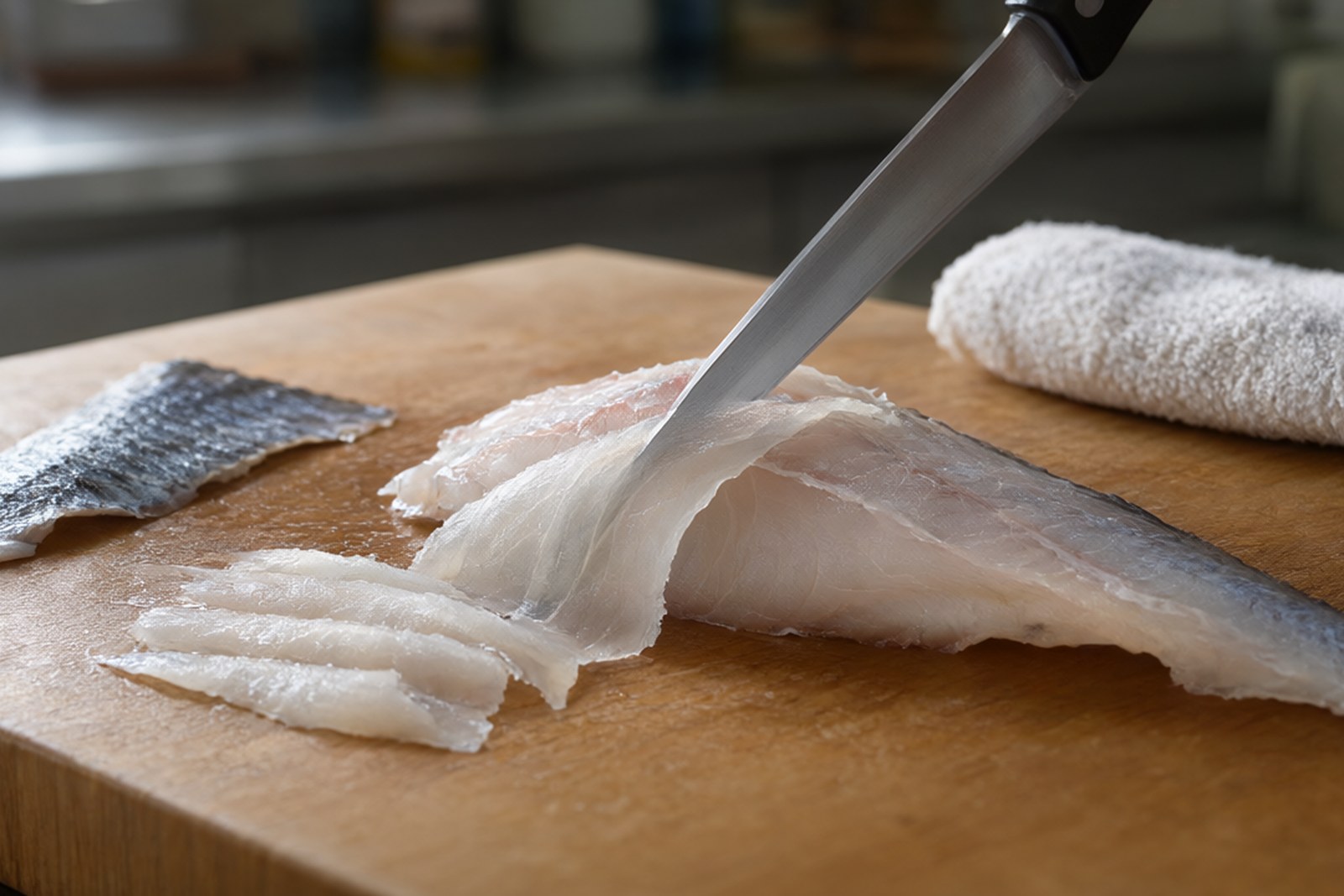
The fish is usually 草鱼 cǎoyú, grass carp, raised in the ponds of the Pearl River delta, and it is the freshness and the handling rather than the species that matter most. A traditional kitchen takes the fish live, bleeds and scales it, fillets it off the bone, removes the skin, and cuts the flesh across the grain into slices perhaps two millimetres thick, laying them out immediately so that they do not warm. Some cooks then chill the plate over ice. Because the flesh is raw, the slicing has to be confident; a hesitant cut bruises the muscle and the slice goes cloudy and soft. The bones are never discarded: the head and frame go into a soup or a congee served at the end of the meal, which is both a courtesy and a way of proving what the fish was.
The Seasoning Plate
What makes 顺德鱼生 a composition rather than a piece of fish is the 配料 pèiliào, the bowl of seasonings that comes with it. The standard set runs to a dozen or more items and each has a job: 姜丝 jiāng sī and 葱丝 cōng sī, shredded ginger and spring onion, for bite; 蒜片 suàn piàn, sliced garlic; 花生碎 huāshēng suì, crushed peanut, for texture; 芝麻 zhīma, sesame; 陈皮丝 chénpí sī, shreds of dried tangerine peel, which is the most local of them; 柠檬叶丝 níngméng yè sī, shredded kaffir lime leaf, for perfume; 酸姜 suān jiāng, pickled ginger; 炸芋丝 zhá yù sī, fried taro shreds, for crunch; and often 指天椒 zhǐtiān jiāo, small hot chillies. The dressing is 花生油 huāshēng yóu, peanut oil, and light soy, and the local habit is to pour the oil first, then fold everything together once, and eat the whole plate while it is still cold.
There is a second, cooked cousin on most menus. 鱼片粥 yúpiàn zhōu is a congee with the same fish sliced into it raw and cooked by the heat of the rice, and 鱼头汤 yútóu tāng is the soup made from the head and frame. Ordering all three means eating the whole fish, which is how a Shunde household would do it.
Words and Names
顺德鱼生 Shùndé yúshēng is the dish, 顺德 Shùndé being the district of 佛山 Fóshān and 鱼生 yúshēng literally raw fish. 草鱼 cǎoyú is grass carp, 鲩鱼 huànyú is the same fish under its other common name, and 罗非鱼 luófēiyú tilapia is a cheaper substitute that locals consider inferior for this purpose. 配料 pèiliào are the seasonings, 花生油 huāshēng yóu peanut oil, 生抽 shēngchōu light soy. 姜丝 jiāng sī, 葱丝 cōng sī, 陈皮丝 chénpí sī and 柠檬叶丝 níngméng yè sī are the shredded ginger, spring onion, dried peel and lime leaf. 鱼片粥 yúpiàn zhōu is the fish congee and 鱼头汤 yútóu tāng the fish-head soup.
What the Locals Know
Eat it where it is made and eat it early in the day. A Shunde fish restaurant buys its fish live in the morning and a kitchen serious about the dish will not serve 鱼生 after the fish have been sitting in a tank all afternoon; some shops decline to serve it at all outside their own confidence window. Ask to see the fish before it is killed, which is normal and not an insult, and check that the flesh of the slices is glossy and translucent rather than milky. Mix the seasonings yourself at the table, use the oil generously, and eat each slice within a few seconds of dressing it. The plate is priced by weight of fish, typically between eighty and two hundred yuan for two people including the soup and congee at the end, and the whole meal is one fish rather than several dishes.
flowcloud would say that raw fish in Shunde is the local kitchen’s highest-stakes dish, since it removes every technique that could hide a mistake and leaves only the fish, the knife and the hour.
Where to find it: the fish restaurants of 顺德 Shùndé, especially those along the river in 大良 Dàliáng and the villages around 陈村 Chéncūn where the ponds are, with several rooms serving nothing but 鱼生 and the soup made from the frame. Ask at the door whether the fish are live in the tank that morning, and go for lunch rather than dinner if you have the choice.