
Soup Steamed Dumplings
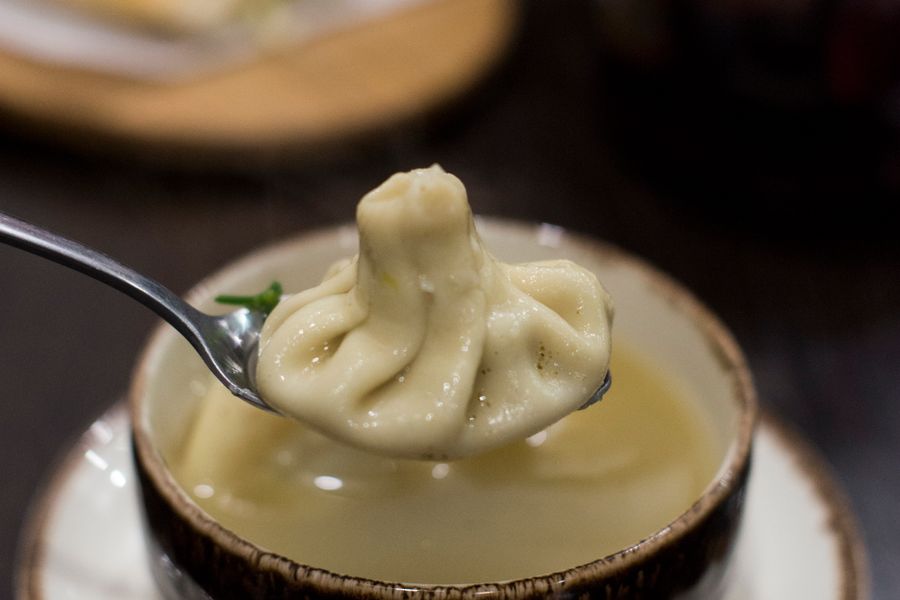
There are foods that keep their secrets well, and there is this one. A soup steamed dumpling arrives in its bamboo basket looking like a small, perfectly contented cloud — pale, pleated at the crown, utterly still. It gives nothing away. Then you lift it gently with your chopsticks and feel the faint, disconcerting weight of the soup moving inside, and you understand that you are holding a small miracle: a meal that has been folded, sealed, and silently filled with liquid heat.
A Legend Left to Simmer
The dish has roots in the north — some say in Kaifeng, where a man named Song’s riverside dumpling shop once fed the hungry in the Song dynasty. But the version the whole world knows, the xiaolongbao with its impossibly thin skin, belongs to Shanghai. The legend goes that a clever chef wanted to give his broth to his customers without a bowl, so he froze the gelatinous soup, folded it into his pork filling, and let the steamer do the rest. When the ice melted under the heat, the dumpling was left holding the whole sea in its arms.
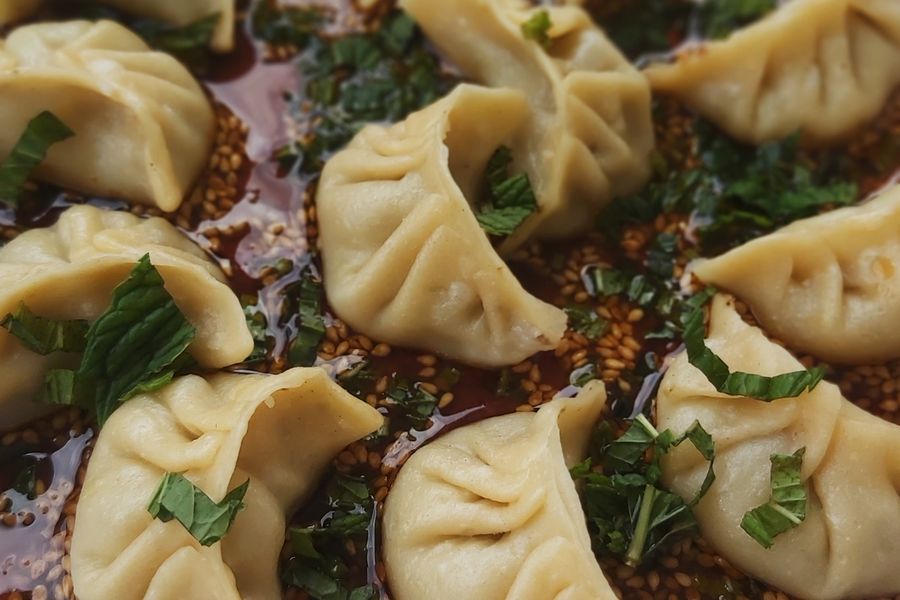
In Changsha, the dumpling arrived as a visitor and stayed as a friend. Hunan cooks, never content with plain things, began dusting the tops with chili and pairing them with a sour black vinegar dipping sauce. The soul of the dish stayed the same — that quiet surprise of liquid where you expected only solid — but it picked up the restless, fiery accent of its new home.
The Work of a Steady Hand
To make a soup dumpling is to practice a small, repetitive act of faith. The skin is rolled impossibly thin — so thin the cook can almost read a newspaper through it — and the filling is not just minced pork but a marriage of pork, crab or shrimp, ginger, and a translucent jelly made from rich broth and gelatin. As the jelly melts in the steam, it becomes the soup.
The pleating is the part that silences a room. A good xiaolongbao carries at least eighteen folds, gathered one at a time at the crown with a patience that looks like magic and is actually just years. There is a story told of the old masters who could judge a cook purely by the number of pleats — too few, and the seal would leak; too many, and the skin would thicken where it should stay gossamer.
The Ritual of Eating One
Eating a soup dumpling is a small ceremony with rules nobody writes down. You do not bite straight in, because the broth is volcanic and will punish your impatience. The trick, whispered across tables, is to pick it up by its crown, dip it briefly into the vinegar with the slivered ginger, take the tiniest bite to open a hole, and sip the soup from inside before you ever reach the meat. First the broth — salty, clear, tasting of the whole pig’s life — then the body of the dumpling, tender and delicate.
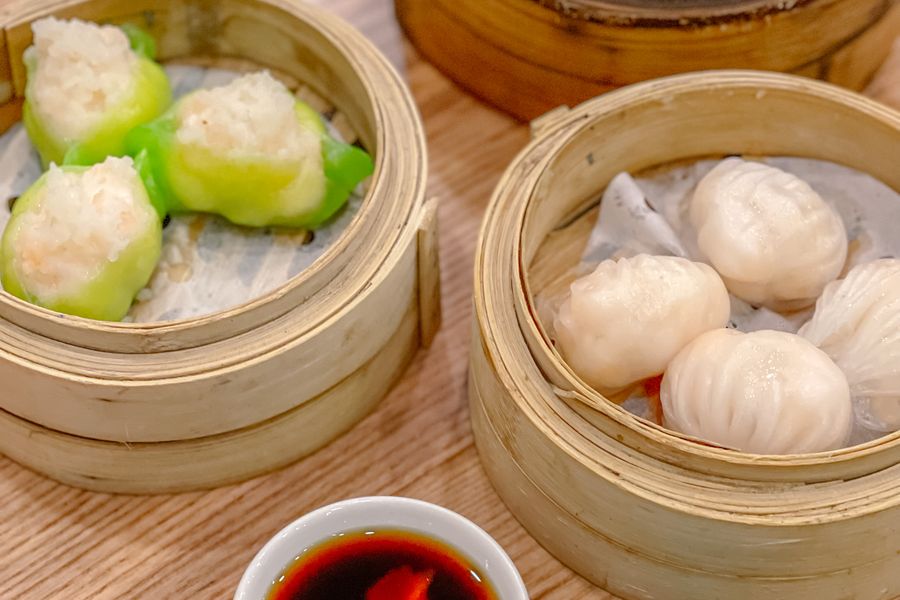
flowcloud once wrote that eating a soup dumpling is like meeting a person from a long distance: you must go slowly, test the surface, let the warmth announce itself before you commit. The impatient eaters burn their tongues and blame the food. The patient ones receive everything it had been holding.
Where to Find Them in Changsha
The best baskets in the city are not the expensive ones. In 坡子街 (Pozijie), the long food street that never quite sleeps, there are teahouse-style shops where steam climbs the windows all afternoon and old men sit over single baskets, making each dumpling last. Near 火宫殿 (Huogongdian), the ancient fire palace turned food hall, the dumplings are smaller and served with a chili paste that makes the whole thing feel more local, more Changsha.
南门口 (Nanmenkou), with its jumble of stalls and its soundtrack of sizzling oil, offers the late-night version: dumplings taken straight from a steamer at midnight, eaten standing up, the steam rising into the neon like a slow, forgiving ghost. That is the version flowcloud photographs — the whole basket, the window, the lone diner, and the city breathing around him.
A Quiet Philosophy
There is something melancholy about a soup dumpling, if you care to look. It carries its warmth sealed and private, revealing it only to those who are careful with it. It asks for trust and rewards it with tenderness. Maybe that is why travellers fall for it so completely — it is the kind of thing that asks nothing of you except patience, and then gives back more than it had promised.
Eat them early in your trip, while the novelty is still sharp. And eat them again on your last night, when you understand the ritual, when you can pick one up without flinching, when the steam no longer seems like a warning but like a hello.
Where to find it: 坡子街, 火宫殿, 南门口. Look for the bamboo baskets stacked high and the windows fogs. Go slowly. The soup will still be there.