
汽锅鸡 Qìguō Jī Steam-Pot Chicken is Yunnan’s quiet classic – a whole chicken steamed in a special 建水紫陶 Jiànshuǐ zǐtáo Jianshui purple-clay pot with a central steam column, so the broth condenses from steam alone and not a drop of water is added. The dish is a recognised intangible-heritage craft, and what a visitor actually tastes is the result: a clear golden broth and chicken that falls at the chop, the mountain-lake sweetness the sources call the most original in the province. The honest shape is that this is steam as the cook, not fire, and the pot is the whole machine.
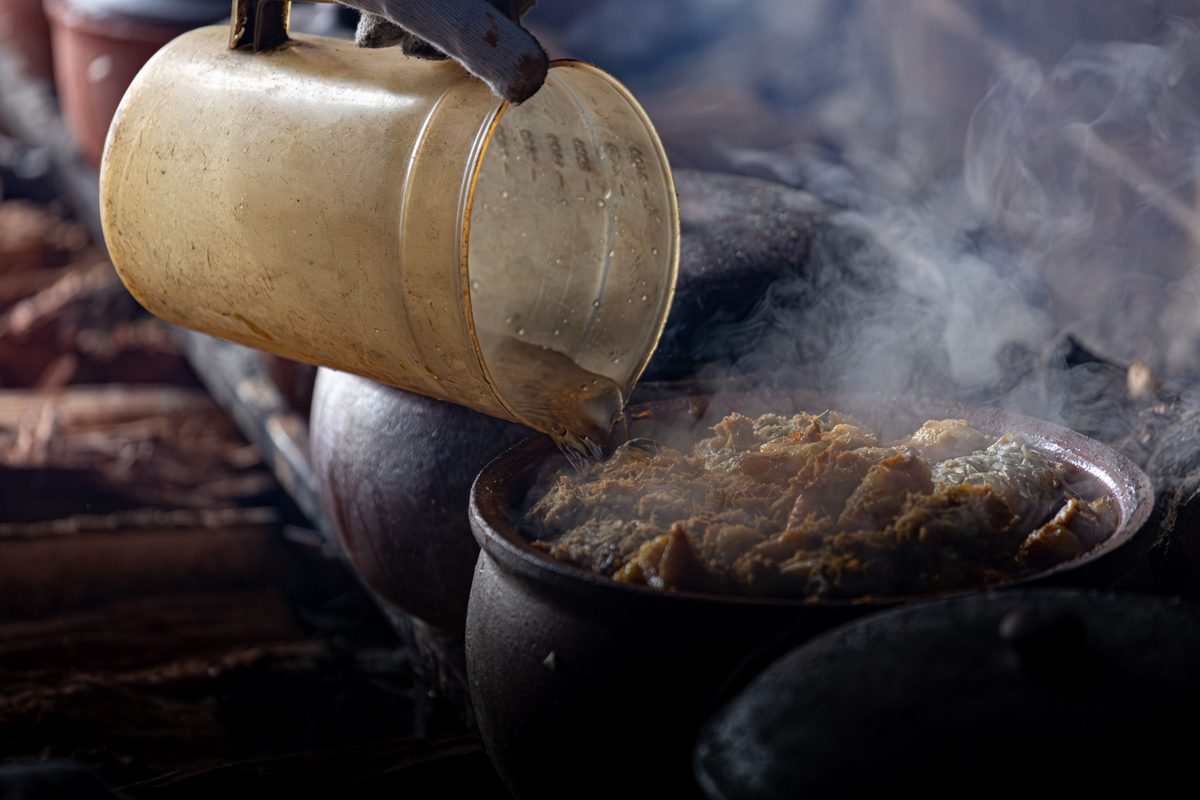
What the eater actually drinks is the condensed broth, and the condensation is the whole technique. The 汽锅 qìguō steam pot sits over a wok of boiling water, the central column pulls steam up through the chicken, and the drip falls back as broth – no stock, no water, just the bird and the steam, which is why the soup is gold and clean rather than cloudy. The 福照楼 Fúzhàolóu Fuzhaolou house adds 三七 sānqī notoginseng or 天麻 tiānmá gastrodia for a tonic edge, and the chicken is the Yunnan free-range the sources name as the base. No source publishes a free taste, so treat the restaurant bowl as the tariff for the proper pot.
The herb is the second thing to know, and it is stated plainly. The plain version is the chicken and the steam, while the 三七 sānqī notoginseng or 野生菌 yěshēngjùn wild-mushroom add turns the pot into a winter tonic, a split the guides cite as the city’s range rather than a single bowl. The comparison with any boiled chicken is exact: the steam-pot is the ceremony of condensation, and only the pot method differs. The useful caveat is to order the proper 建水 Jiànshuǐ Jianshui clay pot, because the clay is the column that makes the broth, not the chicken alone.
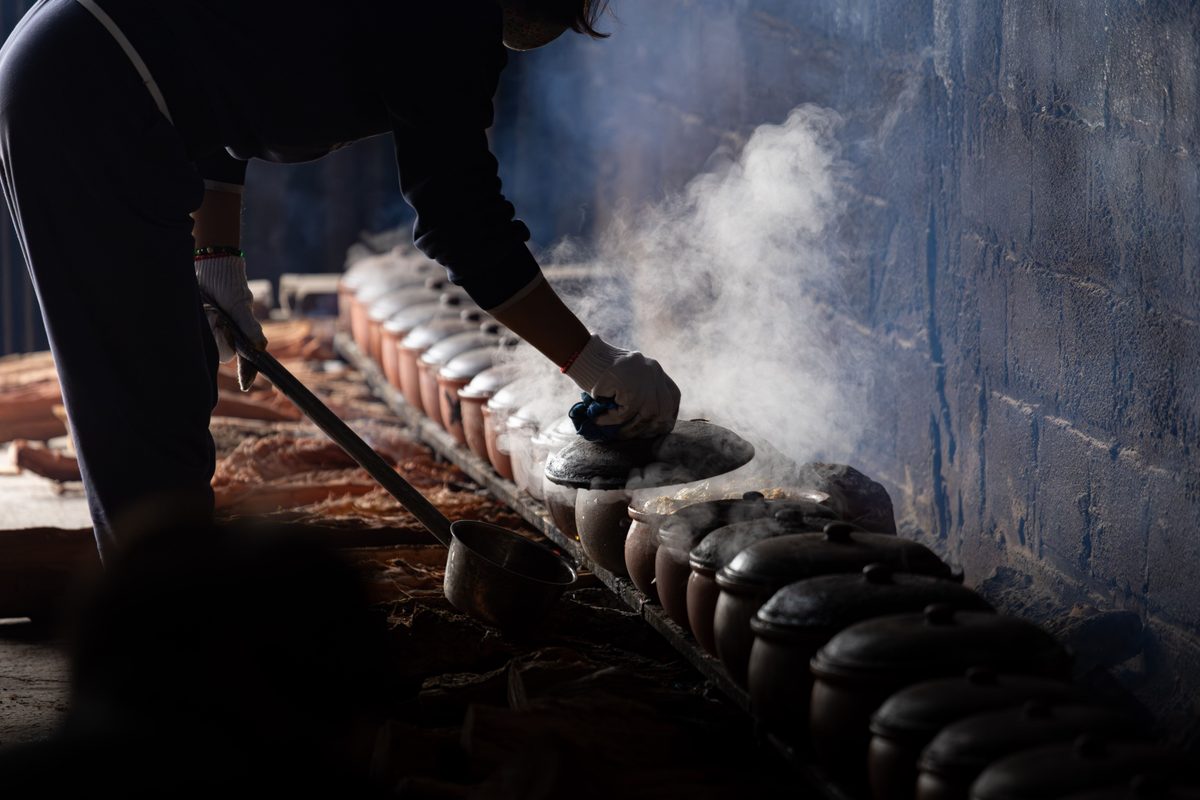
Getting it right is the part a visitor must plan, and the house is the identifier. 福照楼 Fúzhàolóu Fuzhaolou and 祥云荟馆 Xiángyún Huìguǎn Xiangyun House are the names the guides name for the proper steam-pot, and a first timer is told to take the notoginseng version in the cold months rather than chase novelty. The dish is a Kunming constant through the year, so the only limit is the house you pick, and the 汽锅 qìguō pot is the thing to see, not just eat. The honest form is that the pot is the city’s craft, and the house is the address worth naming.
What the record does not give is a quick boil, and that absence is the dish’s model rather than a gap. The restaurant bowl is the standing charge, with no published free taste and no seasonal surcharge named, so the practical answer is to pick the house and the herb. The broth is the steam the pot makes, and the chicken is the reason the bowl is more than soup, which is the honest shape of the article: a clay pot that is a still inside.
Words and Names
汽锅鸡 Qìguō Jī Steam-Pot Chicken, a Yunnan intangible-heritage classic – a whole chicken steamed in a 建水紫陶 Jiànshuǐ zǐtáo Jianshui purple-clay 汽锅 qìguō steam pot with a central steam column, so the broth condenses from steam alone and not a drop of water is added, yielding a clear golden soup and chicken that falls at the chop. The 福照楼 Fúzhàolóu Fuzhaolou house adds 三七 sānqī notoginseng or 天麻 tiānmá gastrodia for a tonic edge; the plain version is the bird and the steam, the herb or 野生菌 yěshēngjùn wild-mushroom add turns it into a winter tonic. The dish is a recognised heritage craft, no source publishes a free taste, so the restaurant bowl is the tariff for the proper pot.
What the Locals Know
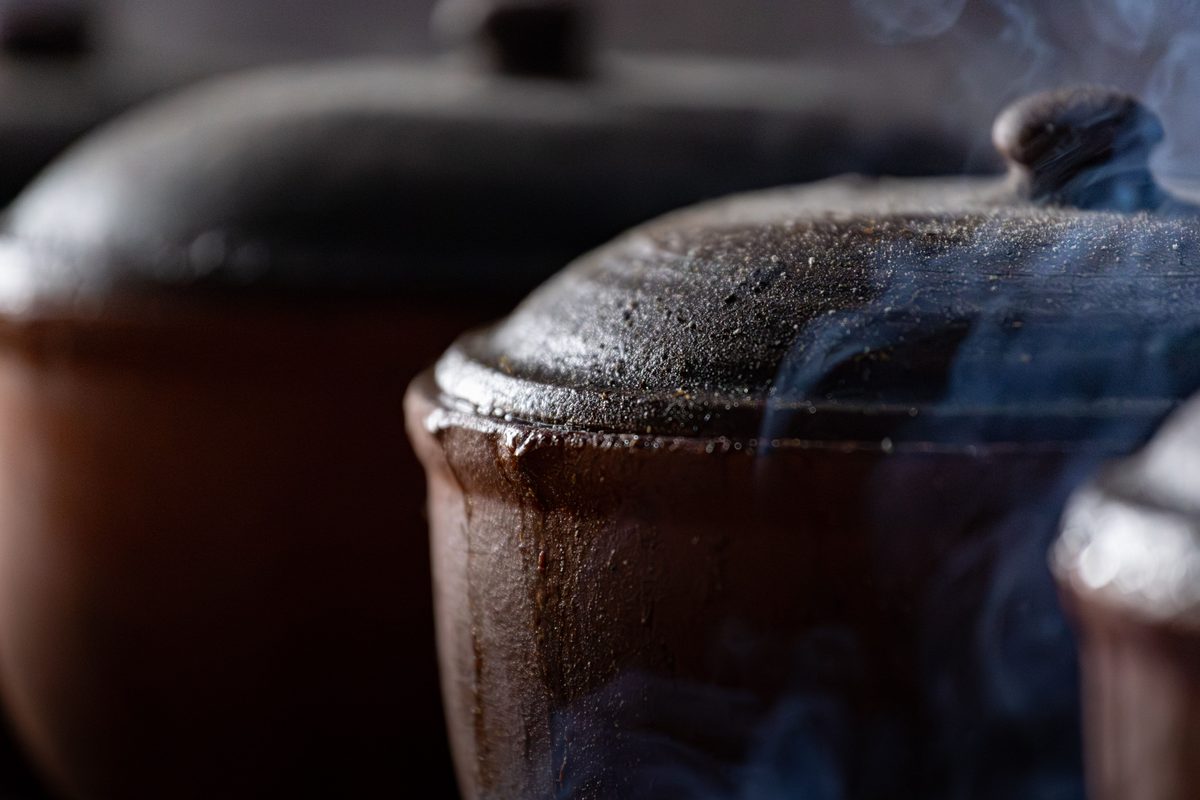
The local knowledge about the steam-pot is about the condensation and the clay, and it is the same check a Kunming regular makes whatever house the pot sits in. The broth should be gold and clear, not cloudy, which is the sign the steam did the cooking and no water was added, and a bowl that reads like stock has broken the rule. The second check is the pot: a true 建水紫陶 Jiànshuǐ zǐtáo Jianshui purple-clay 汽锅 qìguō with the central column, because the clay is the still that makes the broth, not the chicken alone. The trade also knows the dish is a heritage craft not a recipe, which is why 福照楼 Fúzhàolóu and 祥云荟馆 Xiángyún Huìguǎn are named here as the addresses, and a first timer should take the notoginseng version in the cold months, not chase the mushroom tier that the season may not allow.
flowcloud would say that Steam-Pot Chicken is Yunnan’s quiet classic – a whole chicken steamed in a Jianshui purple-clay pot with a central steam column, so the broth condenses from steam alone and not a drop of water is added, gold and clear, with notoginseng or gastrodia for a tonic edge – and that the correct way to treat it is as a heritage craft not a recipe, taking it at 福照楼 or 祥云荟馆 and checking the clay pot, because the steam is the cook and the chicken is the reason the bowl is more than soup. All checked October 2026.
Where to find it: the steam-pot chicken is a Kunming constant served through the year, at houses 福照楼 Fúzhàolóu Fuzhaolou and 祥云荟馆 Xiángyún Huìguǎn Xiangyun House, a whole chicken steamed in a 建水紫陶 Jiànshuǐ zǐtáo Jianshui purple-clay 汽锅 qìguō with a central steam column so the broth condenses from steam alone, plain or with 三七 sānqī notoginseng / 天麻 tiānmá gastrodia / 野生菌 yěshēngjùn wild mushroom, and no source publishes a free taste, so treat the restaurant bowl as the address rather than any counter that does not name the clay pot.