
沙虫 shā chóng, sand worm, is the sipunculid of 遂溪县 Suìxī xiàn: a smooth, boneless, pink-grey tube about the length of a finger and rather thicker than a chopstick, which lives buried upright in the sand of the tidal flat and is dug out by hand at low tide. The proper name is 方格星虫 fāng gé xīng chóng, the square-patterned star worm, for the grid of muscle bands across its skin, and the name it is sold under in the county is 下六沙虫 Xià liù shā chóng, from 下六 Xià liù in 草潭镇 Cǎotán zhèn on the western shore, where the 北部湾 Běibù Wān, the Gulf of Tonkin, comes up against a long shallow beach of clean sand.
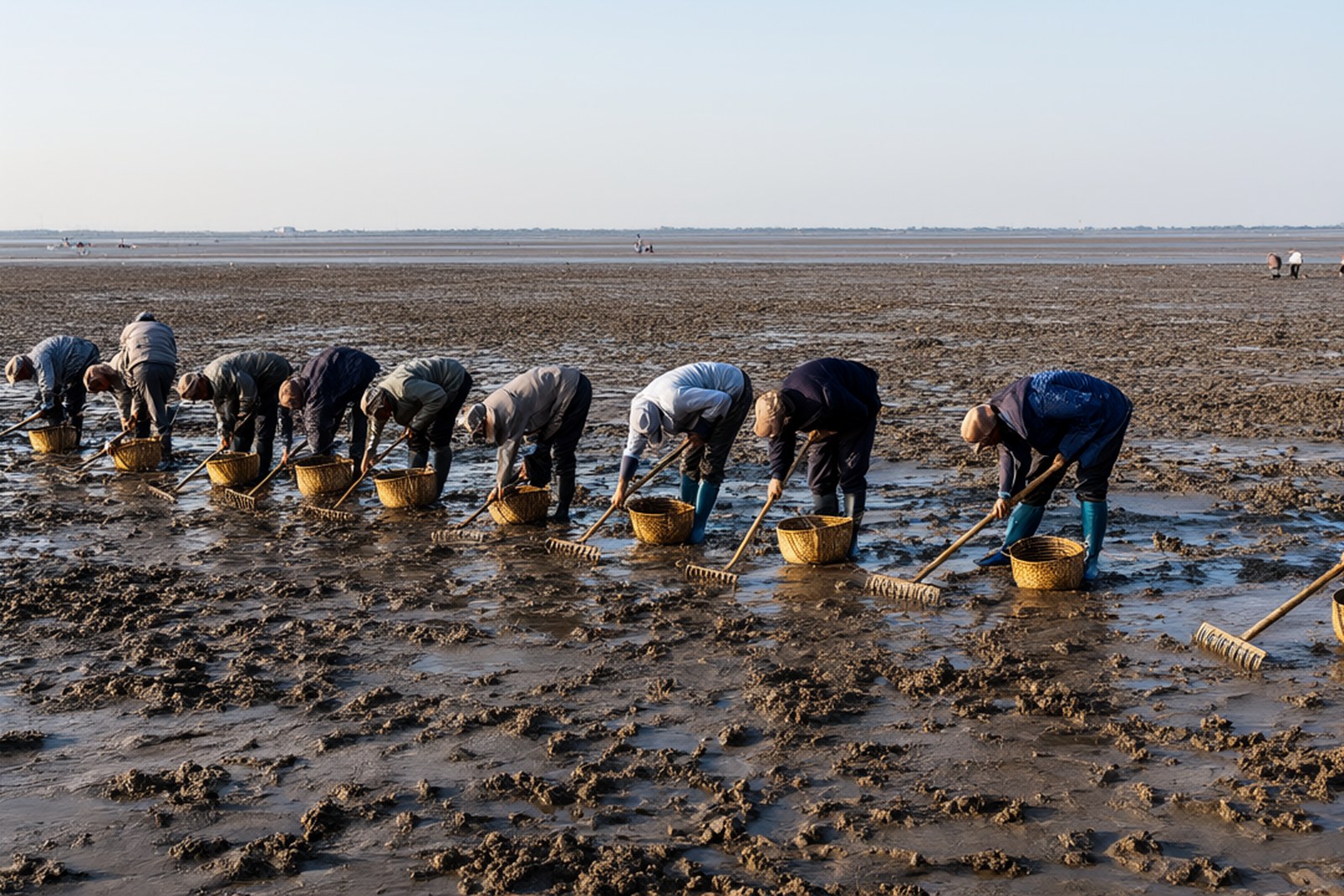
The trade is a low-tide trade and a skilled one, and it is done by eye. The worm keeps a small hole to the surface and the flat is read for it: a faint dimple, or a little ring of displaced sand where the animal has withdrawn and pulled the surface down after it. The digger puts a narrow spade or a hooked iron in beside the hole and turns the sand over fast, because the worm contracts and drops the moment it feels the blade, and the layer it drops into is deeper than the spade is long. A good hand takes a few kilos in a single tide and a poor one goes home with a handful. The county has a sand worm culture and science hall at 草潭镇下六 Cǎotán zhèn Xià liù, and the 赶海 gǎn hǎi, the going out onto the flat as the water drops, is a visitor activity in its own right when the tide and the daylight line up.
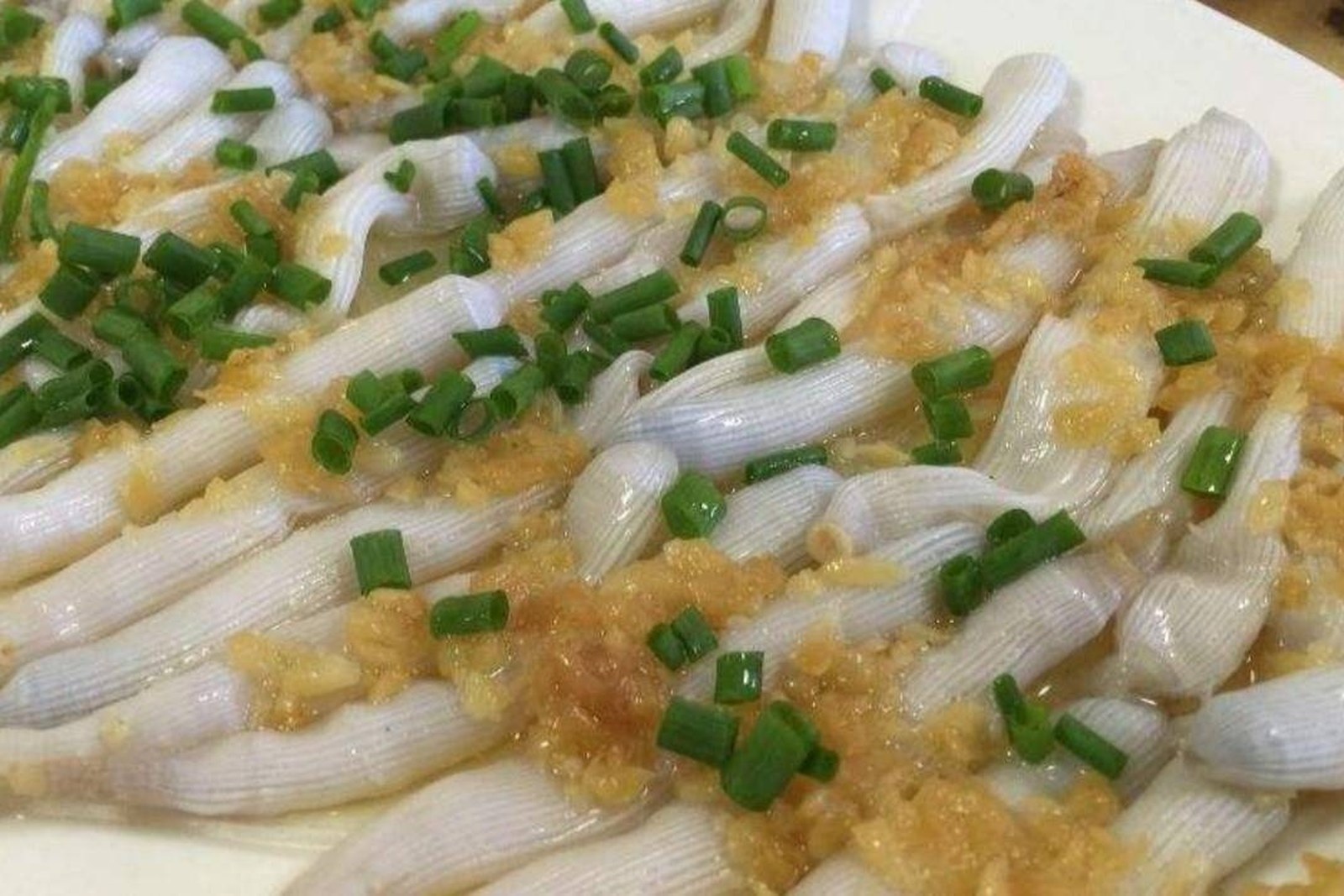
What you do with it afterwards is deliberately little. 沙虫 is sweet and firm, closer in texture to a clam than to anything a European would call a worm, and it goes to rubber in a few seconds of overcooking, so the local rule is that it is done the moment it has changed colour. The classic is 沙虫粥 shā chóng zhōu, the worm cut into short lengths and stirred into rice congee off the heat, with ginger, spring onion and white pepper, so that it cooks in the residual warmth of the pot; the congee comes out faintly sweet and rather more savoury than it smells. Next is 蒜蓉蒸 suàn róng zhēng, laid out on a plate or on the half shell with garlic, oil and a splash of light soy, in which it comes out like a very tender clam. Third is 沙虫汤 shā chóng tāng, a clear soup, and there is a cold version in the better places, in which the cleaned worm is served with 沙姜 and soy and eaten raw.
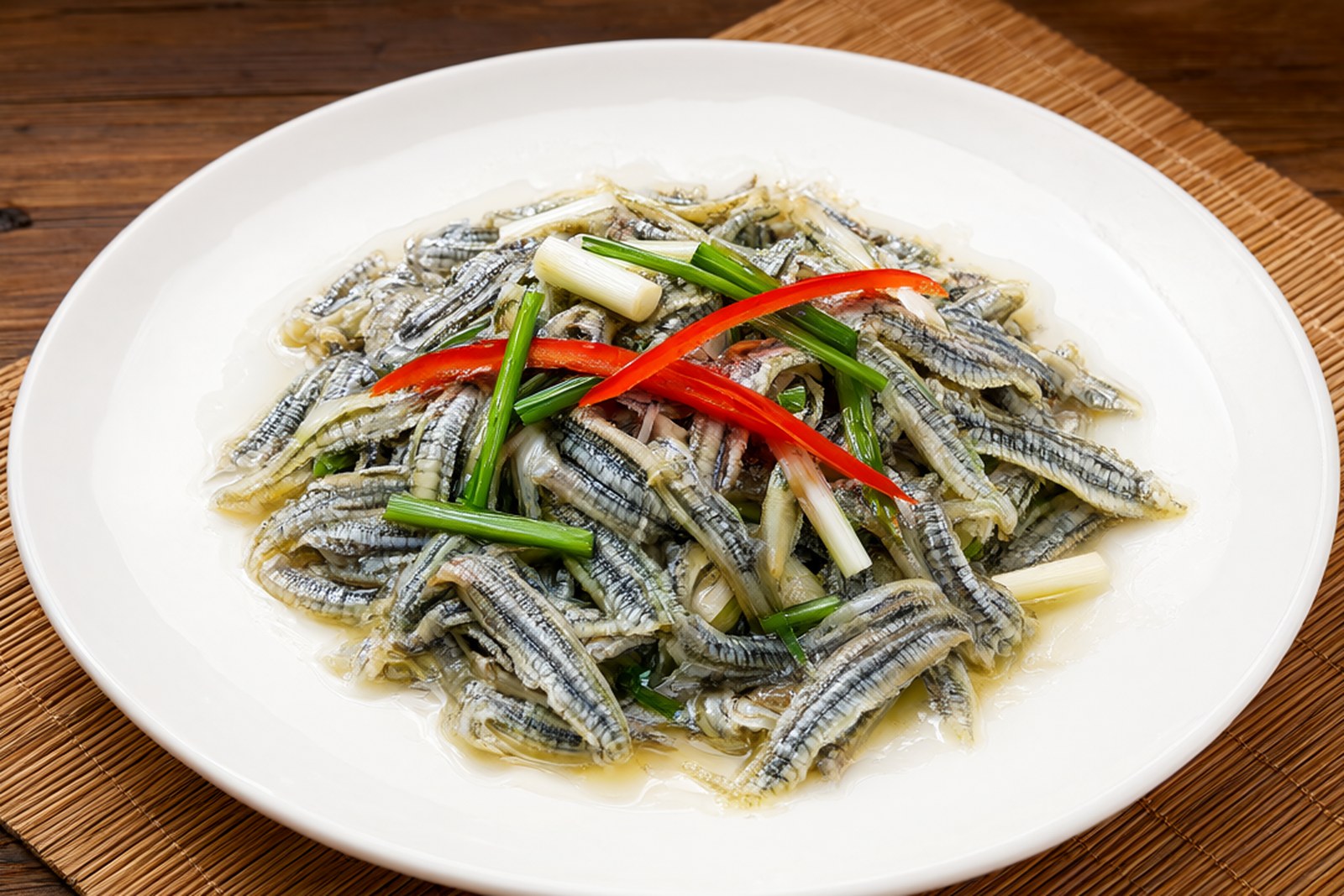
The rest of the crop becomes 沙虫干 shā chóng gān, dried sand worms, and this is the expensive form. Cleaned, split open, rubbed free of sand, strung on bamboo and dried in the sun, the worm keeps for a year and sells by weight for several times the fresh price; a handful goes into a soup or a braise as a flavour base the way a dried scallop does, and a soup made with dried sand worm is what a family in 湛江 puts in front of a guest it wants to honour. Fresh 沙虫 sells from about eighty to a hundred and fifty yuan a 斤 for the larger sizes and less for the small, and the price climbs when the wind is wrong and the boats and the diggers stay ashore. 遂溪 eats it plainly and often: on a weekday the congee is breakfast, and the fried version with chives or with egg is what comes with a beer at night.
Words and Names
沙虫 shā chóng sand worm, 方格星虫 fāng gé xīng chóng the sipunculid itself, 海肠 hǎi cháng the unrelated species sold under the same idea in Shandong. 下六沙虫 Xià liù shā chóng is the local trade name, from 草潭镇下六 Cǎotán zhèn Xià liù. 沙虫干 shā chóng gān is the dried form, 沙虫粥 shā chóng zhōu the congee, 沙虫汤 shā chóng tāng the soup and 蒜蓉蒸 suàn róng zhēng the steamed one. 赶海 gǎn hǎi is going out onto the flat at low tide, 沙姜 shā jiāng the small aromatic ginger of the south, and 北部湾 Běibù Wān the Gulf of Tonkin that the county faces.
What the Locals Know
Buy it alive; a sand worm that hangs limp and does not move when it is picked up has been out of the sand too long, and one that is broken has been dug badly and will be gritty. Ask the seller to clean it in front of you, which means the tube turned inside out, the gut run out under a tap and the sand worked off with salt, because the cleaning is most of the work and most of the ways to ruin the dish. In a restaurant, order the congee first and the steamed version second, and leave the raw version to a place you trust. If you are buying to take home, buy the dried worm: it is the only form that will survive the journey.
flowcloud would say that a county which makes its most valued dish out of an animal that most of the world has never thought of eating, and which has to be dug out of a beach one at a time by a person who knows how to read the sand, is running an economy of attention rather than of volume.
Where to find it: the congee shops and seafood restaurants of 遂溪县, with 草潭镇 Cǎotán zhèn and its 下六 village the centre of the trade, and the wet markets of 遂溪 and 湛江 selling the fresh worm and the dried one by weight side by side. A bowl of 沙虫粥 is ¥15 to ¥30, a plate of 蒜蓉蒸沙虫 ¥60 to ¥120, and dried 沙虫干 ¥400 to ¥900 a 斤 depending on size. 遂溪 is on the 黎湛 and 深湛 rail corridor north of 湛江市, about forty minutes from the city on the expressway, and the coast at 草潭 is another forty minutes west of the county town.