
Swiss Chicken Wings — the Sweet-Soy Classic With the Wrong Geography
甜醬浸出赤銅色,一碟原來不是山 Tián jiàng jìn chū chìtóng sè, yī dié yuánlái bù shì shān – Sweet soy steeps the wings to copper; the plate, it turns out, is no mountain
瑞士雞翼 Ruìshì Jīyì Swiss chicken wings are the tea-restaurant classic with the wrong geography: wings braised long in a sweet soy marinade until the skin turns mahogany and the meat slips from the bone, a dish with nothing to do with Switzerland. The name, by the popular telling, came from a waiter’s mix-up – a guest asked for the sweet-soy chicken of the Swiss Cafe and the dish took the cafe’s name for its own – and the misnomer stuck so hard that every cha chaan teng menu now prints it without a blush.
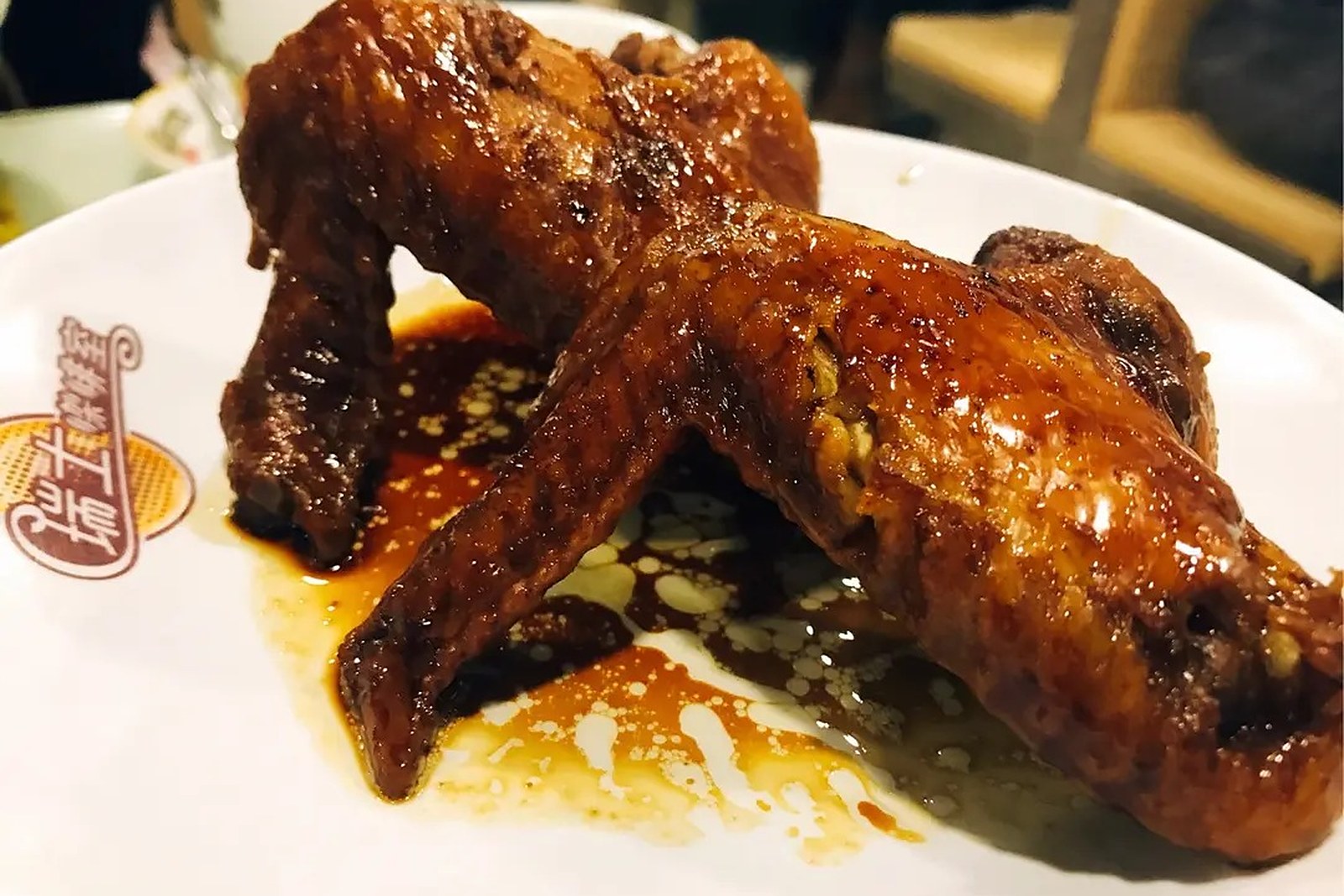
The marinade is the family secret: light and dark soy, rock sugar, Shaoxing wine and often a back note of ginger or star anise, steeped at a low simmer until the glaze clings. The best wings are warm, not hot; the flavor deepens on the second bite, and the skin – lacquered, sticky, faintly chewy – is the part regulars order around.
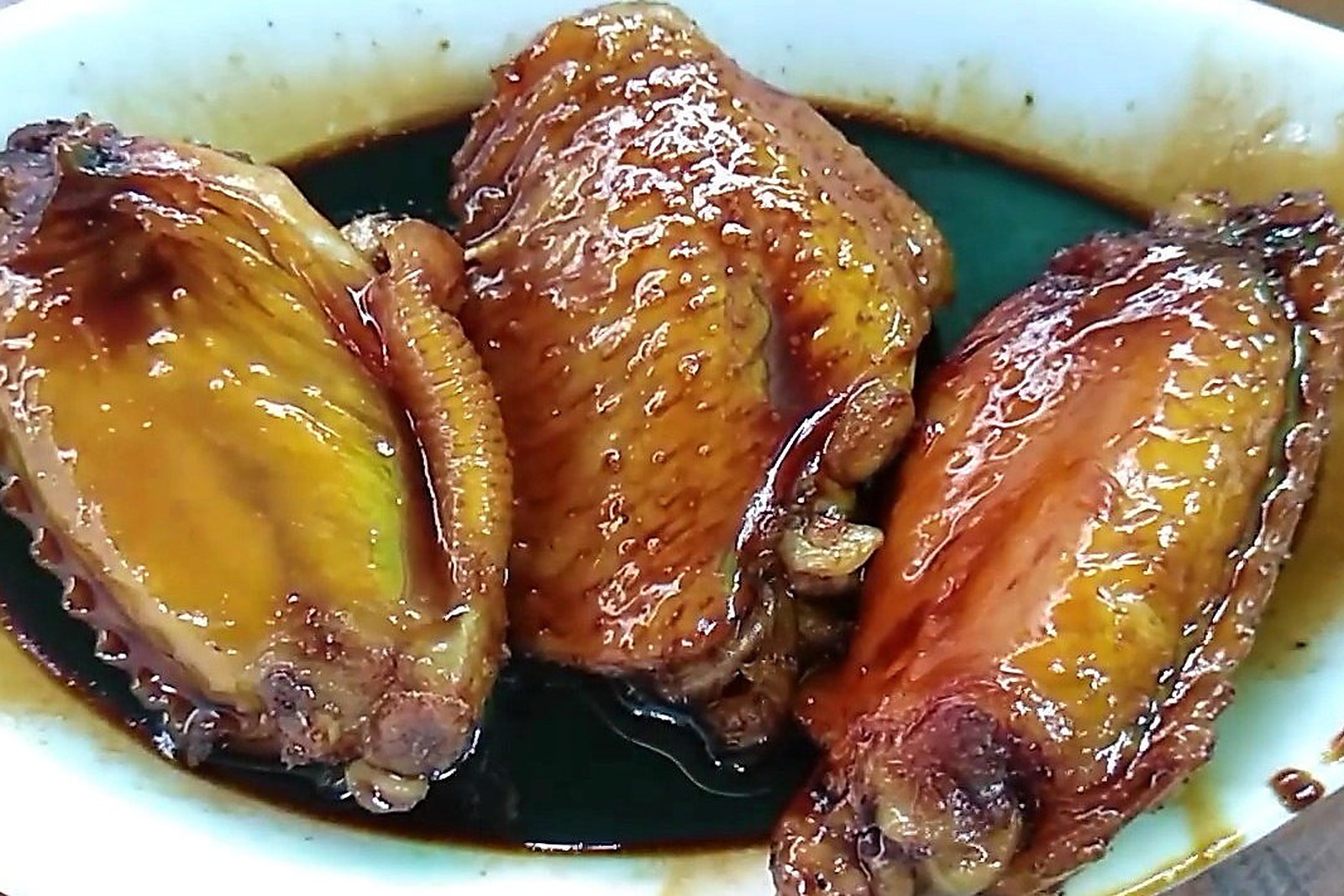
The dish lives in two habitats. The cha chaan teng serves it over rice or noodles at lunch, the glaze soaking into the bowl’s white canvas; the specialized chicken shops – the Swiss Cafe lineage and its rivals – serve it cold-ish by the plate as the point of the visit. Both schools keep the same sweet-soy spine, and the argument over which does it better is a Hong Kong lunchtime institution.
Order it with the classics around it: with noodles for the soup-and-glaze pairing, over rice for the honest lunch, or beside the milk tea that sweetens the salt. The wings travel poorly and reheat worse – eat them where they are braised, and judge a tea restaurant by whether the glaze tastes of rock sugar rather than syrup.
Words and Names
瑞士雞翼 Ruìshì Jīyì Swiss chicken wings, the misnomered classic; 瑞士雞髀 Ruìshì Jībià the Swiss chicken leg, the plate’s big sibling; 茶餐廳 chácāntīng the tea restaurant that carries it; 甜豉油 tián chǐyóu the sweet soy marinade, the dish’s whole spine; 瑞士咖啡室 Ruìshì Kāfēishì the Swiss Cafe lineage that named it. The same 東區 Dōng Qū Eastern district holds more flavors worth chasing: 咖喱魚蛋 Gālí Yúdàn the curry fish balls, 缽仔糕 Bōzǎigāo the crock-steamed rice cake, 楊枝甘露 Yángzhī Gānlù the mango-pomelo cream, or 港式西多士 Gǎngshì Xīduōshì the deep-fried peanut-butter toast – four more doors into the same district table.
What the Locals Know
Locals judge the kitchen by the glaze’s texture: it should lacquer and cling, not pool and run, and the meat should pull from the bone without resistance. If the cafe braises its own and the wings sell through by mid-afternoon, the kitchen is the real thing – and the leg, not the wing, is the portion regulars actually order. All checked November 2026.
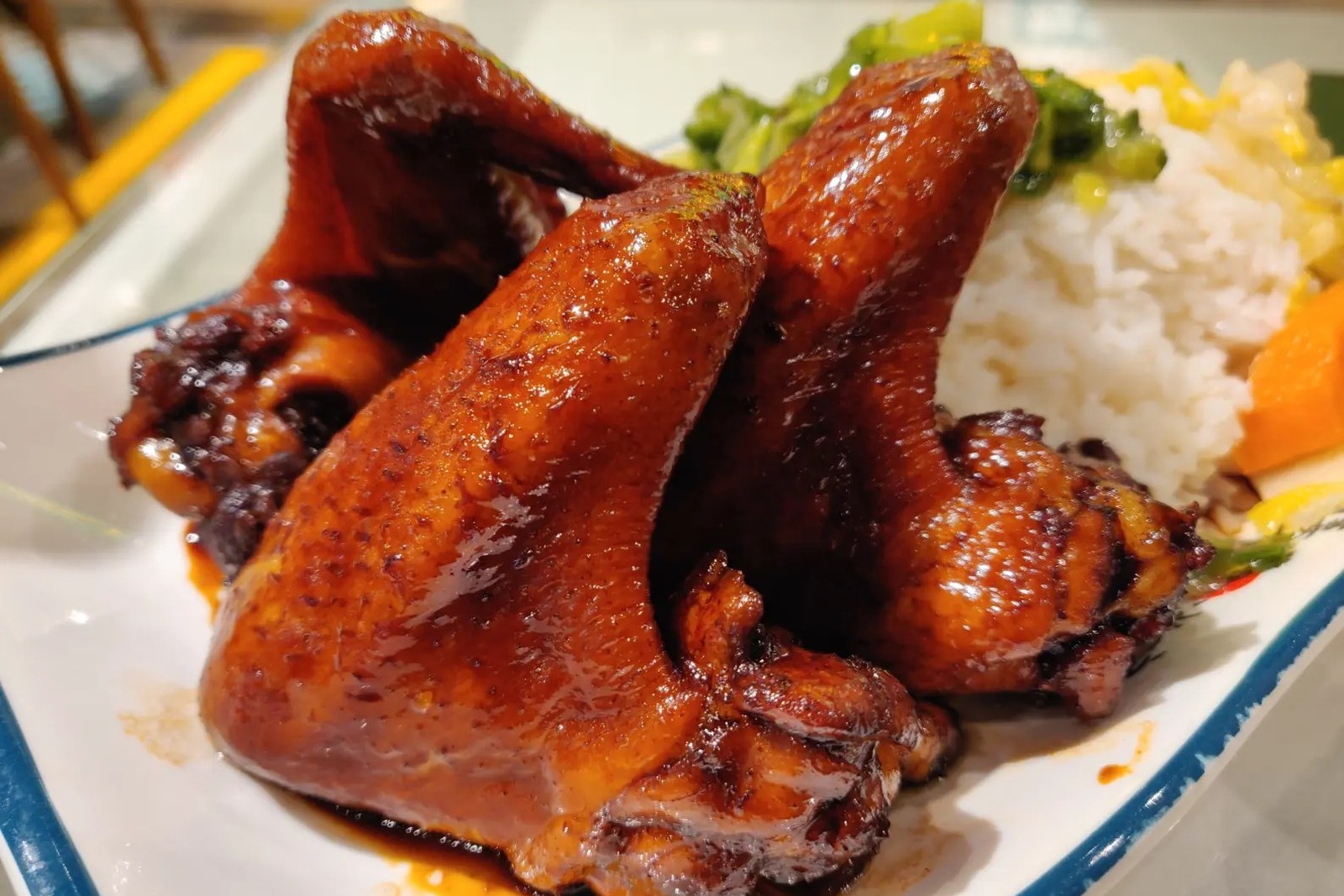
flowcloud would say the Swiss wing is the city’s naming humor served hot – a dish that took one waiter’s slip and made it a classics column of its own.
Where to find it: The district’s cha chaan tengs plate it at lunch, and the old-line cafes that carry the Swiss name serve it all day – the lacquered red-brown wings in the display case identify the real kitchen. All checked November 2026.