
Autumn’s Iron Prison: Taihu Hairy Crab
九月团脐十月尖,一壶黄酒蟹正肥 Jiǔyuè tuánqí shíyuè jiān, yī hú huángjiǔ xiè zhèng féi – Round bellies in September, pointed in October; with a pot of huangjiu the crab is at its fattest
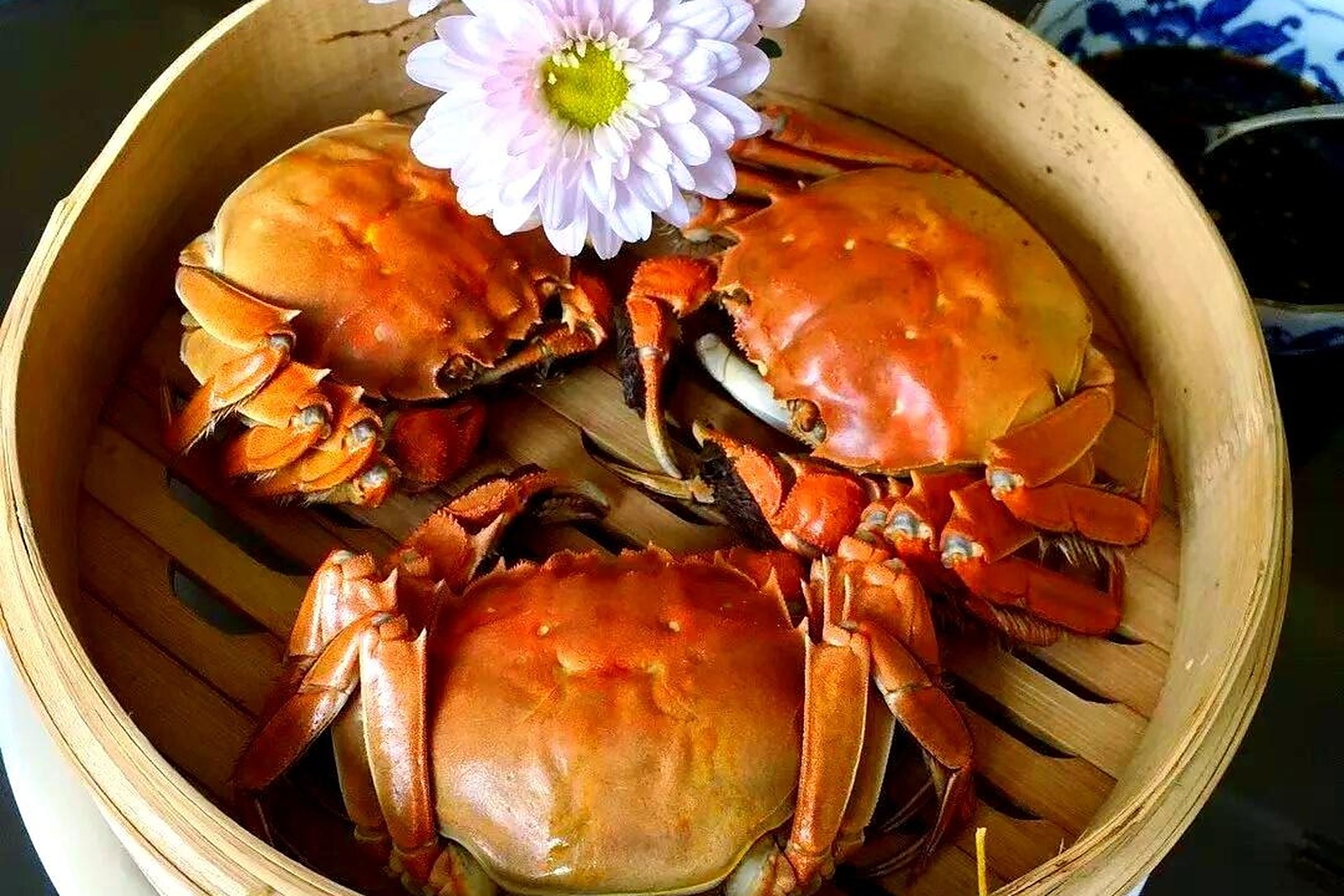
太湖蟹 Tàihú xiè – the hairy crab of Lake Taihu – is Huzhou’s autumn appointment: from the ninth lunar month the lake’s boats come in at dusk with their bamboo-tank cargo, and the lakeside tables of the 南太湖 Nán Tàihú shore turn into de-shelling factories. The local saying dates the season precisely – 团脐 tuánqí the round-bellied females first, 尖脐 jiānqí the pointed-bellied males from the tenth month – and the standard serving is defiantly plain: steamed plain, tied in their straw bands, dipped in vinegar with young ginger, the better to taste the water the crab grew in.
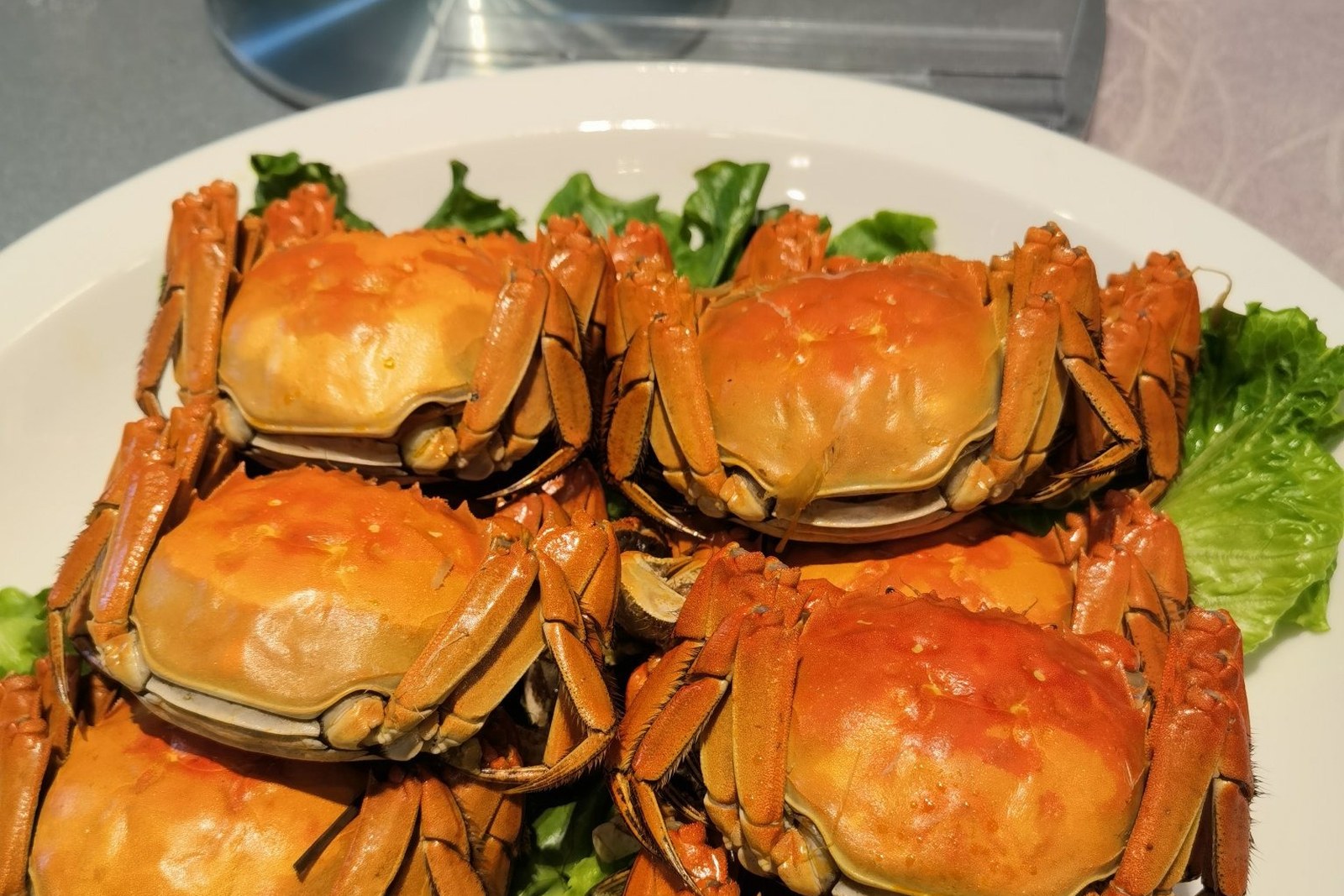
Taihu’s crabs run a little smaller than the famous Yangchenghu brand but the water is cleaner of hype: green shell, white belly, and by late October a roe load – 蟹黄 xièhuáng the orange roe paste, 蟹膏 xiègāo the translucent male milt – that locals judge by pressing the shell near the joints. The good ones feel full to the knuckle; the empty ones go back to the tank.
The eating is a slow ceremony: twist the legs, crack the claws with the little hammer, lift the shell, and read the season – roe to the last grain in a female, cream-heavy in a male. The table pours warm huangjiu – the rice wine warms the body against the crab’s cooling nature, the oldest food logic in the region – and the session runs hours, with ginger tea at the end.
The lakeside crab rows around Fisherman’s Wharf and the fishing villages north of town set the tables practically over the water, and the full Taihu board rides along: 太湖三白 Tàihú sān bái the Three Whites – whitefish, white shrimp, silverfish – with the crab as the headliner. One crab, one pot of wine, one slow evening: the lake’s whole autumn in an hour of shell-cracking.
The same city holds more flavors worth chasing: 千张包子 qiānzhāng bāozi the tofu-skin buns, 烂糊鳝丝 lànhú shànsī the soft eel shreds, 湖州粽子 Húzhōu zòngzi the pillow rice dumplings, or 安吉竹笋 Ānjí zhúsǔn the bamboo-shoot banquet – four more doors into the same 湖州市 Húzhōu Shì Huzhou City table.
Words and Names
太湖蟹 Tàihú xiè the Taihu hairy crab; 蟹黄 xièhuáng the female roe paste, the orange prize; 蟹膏 xiègāo the male milt, the translucent second prize; 团脐/尖脐 tuánqí/jiānqí round or pointed belly, the sex-and-season calendar; 黄酒 huángjiǔ huangjiu rice wine, the warming pour.
What the Locals Know
Eat females first, males later – the season’s own sequence. Refuse any crab cooked with its belly up and the roe spilled. And the ginger-vinegar dip is not optional: it is chemistry, the sharp lifting the sweet, and the old-timers mix it themselves rather than trust the table bottle.
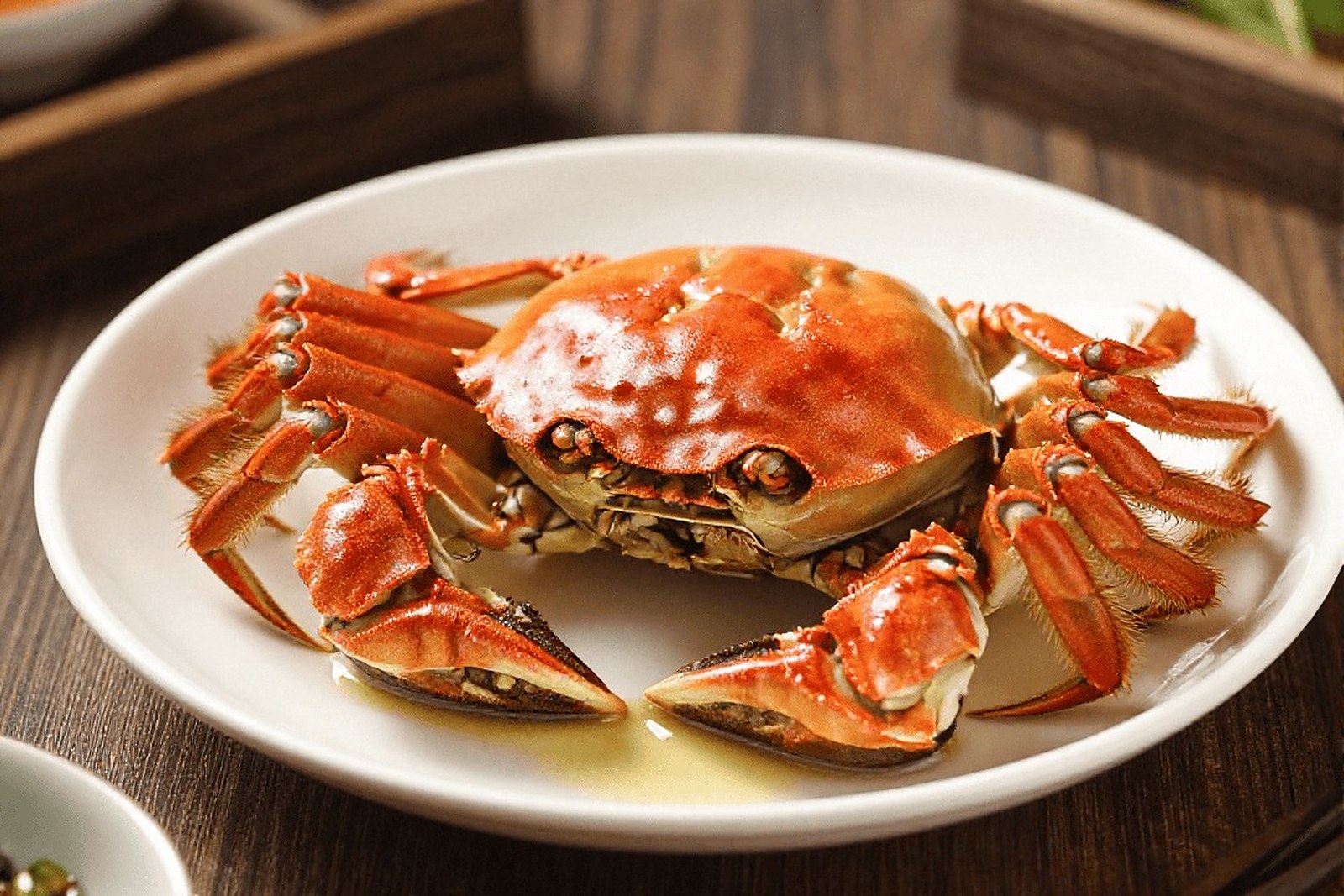
flowcloud would say a Taihu crab is autumn keeping its valuables in a shell bank: nine months of the lake’s ledger sealed under one carapace, opened slowly at a waterline table, and audited to the last grain of roe by people who brought their own huangjiu. All checked November 2026.
Where to find it: Crab rows and lakeside restaurants on the 南太湖 Nán Tàihú shore of 湖州市 Húzhōu Shì Huzhou City serve the season from the ninth lunar month – thirty to a hundred yuan a crab by size, steamed plain is the test order, and the roe-press check at the tank decides which crabs go to your table. All checked November 2026.