
The Geographic-Indication Melon of the Ziya Bars: Taitou Watermelon
子牙河畔沙壤地,一拳拍开蜜沙瓤 Zǐyá hé pàn shārǎng dì, yī quán pāi kāi mì shā ráng – Sandy loam by the Ziya River; one knock splits the honeyed, sandy flesh
台头西瓜 Táitóu xīguā holds the national geographic-indication mark – sandy-textured, thin-rinded melons raised on the dry ridge fields along the Ziya river bars in 天津市静海区 Tiānjīn Shì Jìnghǎi Qū Jinghai District, hand-knocked at roadside stalls from July and shipped ice-crated to Tianjin markets before the season turns. The town’s melon fields have fed the capital’s summers for decades, and the July fair turns the main street into one long tasting table.
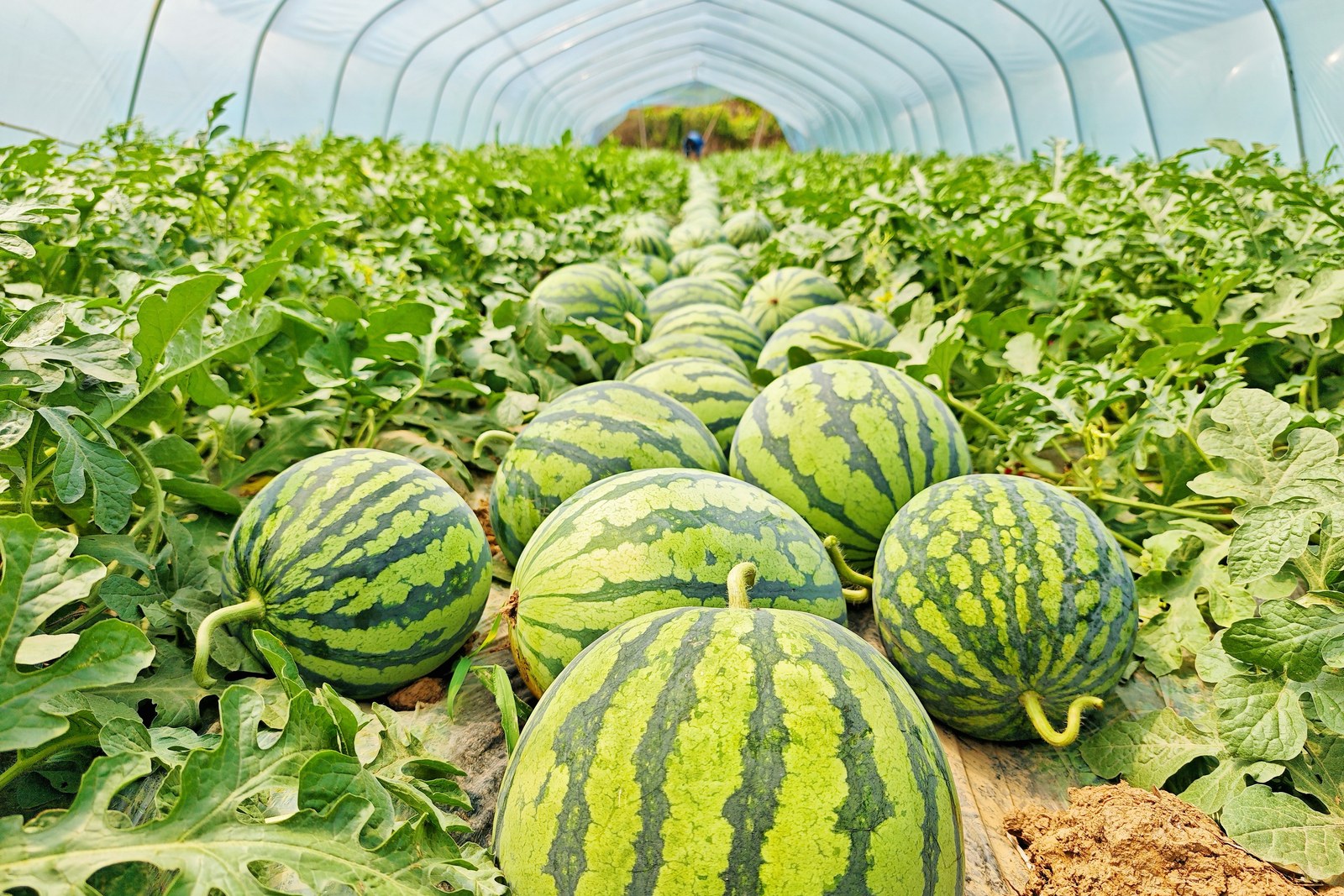
The ridge fields set the terroir – sandy loam that drains fast and heats the roots, so the vines stress just enough to concentrate the sugar. The greenhouse beds bring the early melons in June; the open-field crop peaks through July; and the picking crews cut at dawn while the rinds still hold the night’s cool.
The buyer’s craft is public theater. The knock test – knuckle rap for the hollow resonance of a ripe one – happens at every stall, and the vendors hand the knife for the split check: thin rind, sandy red flesh, black seeds set loose in the sugar. A proper Taitou melon cracks itself at the tap of a fist.
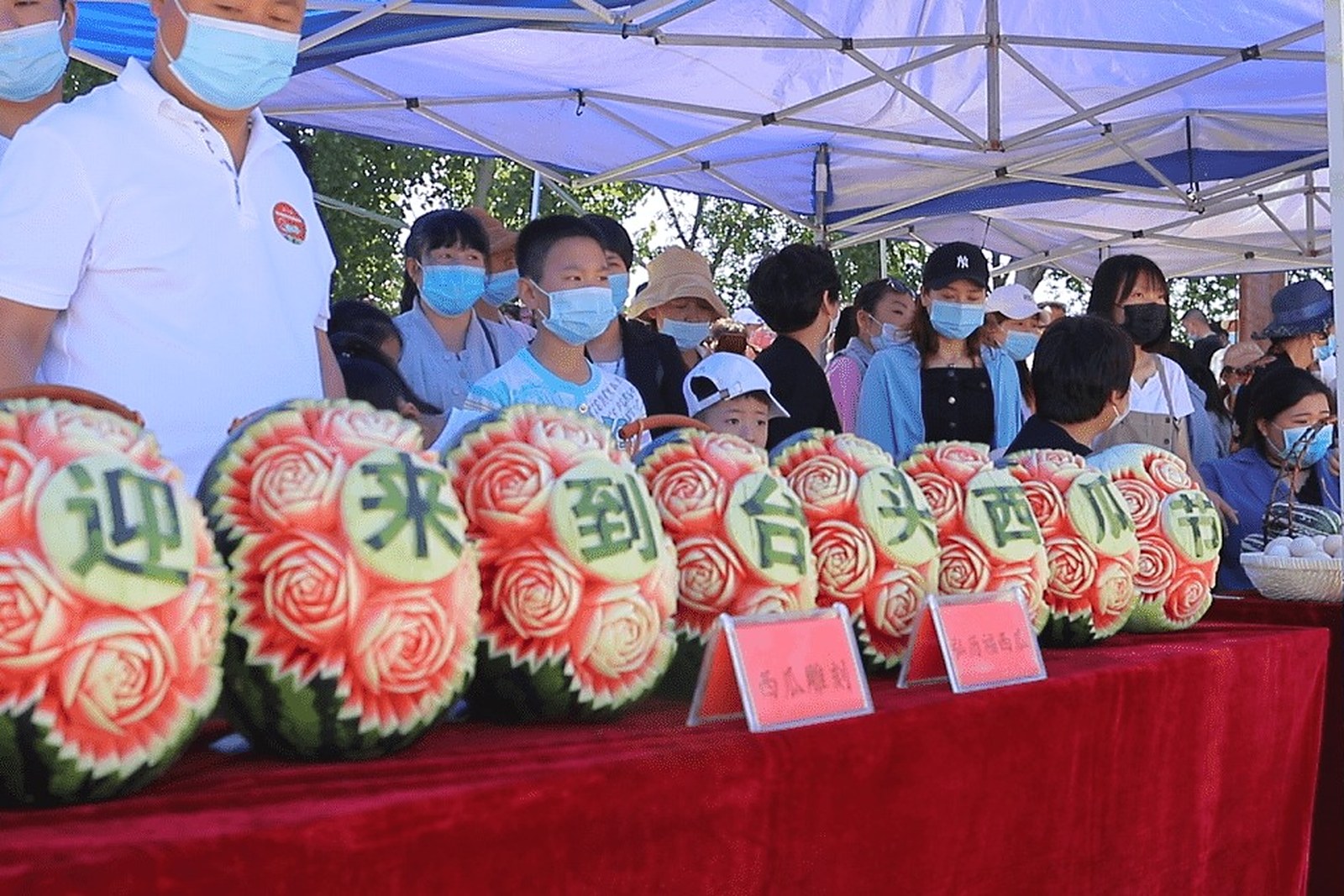
The season’s rituals run big. The watermelon festival fills the fairground with carved melons and vendor rows; the cold-chain trucks load ice-crated fruit for the city markets; and the village stalls sell by the truckload to families who drive out from Tianjin for a trunk’s worth. August weekends are the honest rush.
The same district holds more flavors worth chasing: 独流老醋 Dúliú lǎo cù the canal-town aged vinegar, 金丝小枣 jīnsī xiǎozǎo the golden-thread jujubes, 王口炒货 Wángkǒu chǎohuò the roasted-nut wholesale town, or 独流焖鱼 Dúliú mènyú the braised canal fish – four more doors into the same Jinghai District table.
Words and Names
台头西瓜 Táitóu xīguā Taitou watermelon; 地理标志 dìlǐ biāozhì the geographic-indication mark; 沙瓤 shā ráng the sandy, sugar-crisp flesh; 拍瓜 pāi guā the buyer’s knock test; 子牙河 Zǐyá Hé the Ziya River along the ridge fields.
What the Locals Know
The field-edge stalls sell the sugar-richest picks – market crates travel firm, so the ripest melons stay roadside. Locals chill melons in the well or the stream, never the freezer; the sandy texture turns mushy below ten degrees. Ask for a “knock-and-split” at the stall – the honest vendor opens the melon you buy. All checked November 2026.
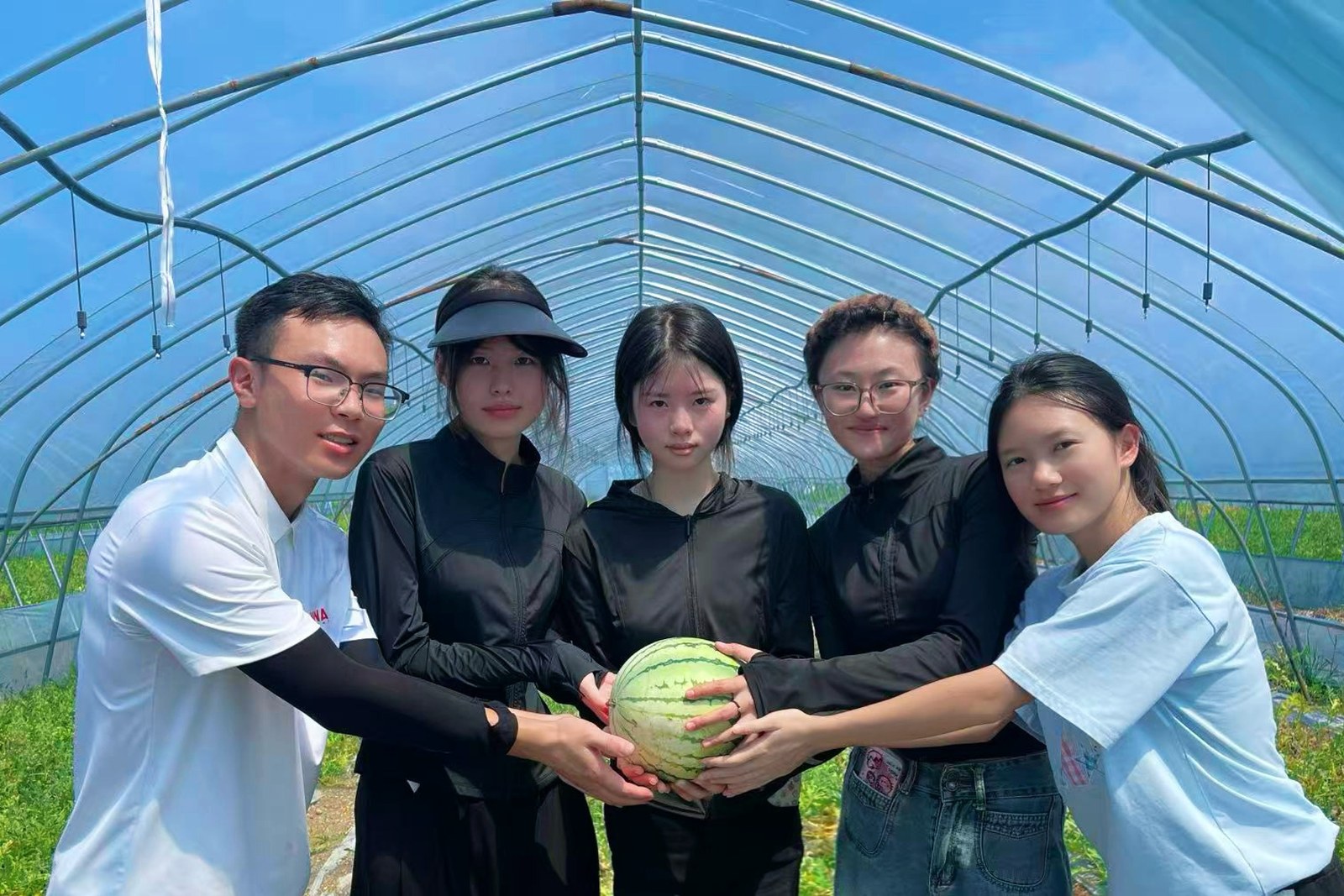
flowcloud would say the Taitou melon is the district’s summer contract: sandy loam, a hollow knock, and a split that sweats sugar down the wrist.
Where to find it: The roadside stalls along the Ziya river road run from the fields, the July festival fairground stacks the vendor rows, and the district wholesale market ships the ice crates cityward. All checked November 2026.