
The Morning’s First Act: Taizhou Shredded Tofu
一壶早茶三丝味,刀落豆腐细如发 Yī hú zǎochá sānsī wèi, dāo luò dòufu xì rú fà – One pot of morning tea, the taste of three shreds; the knife falls and the tofu lies fine as hair
正文:泰州干丝 Tàizhōu Gānsī Taizhou gansi is the opening act of the city’s morning tea – squares of dried bean curd pressed firm, sliced and then cut by blade-work into threads as fine as needles, blanched in repeated changes of water until every whisper of bean bitterness is gone, then dressed while hot so the shreds drink the broth like noodles. The classic serving is 烫干丝 tàng gānsī blanched gansi: a neat mountain of pale threads dressed with young ginger, a scatter of peanuts or coriander and a lick of soy-and-broth, eaten with the day’s first pot of tea. The dish belongs to the morning-tea civilisation Taizhou shares with its neighbours – the city’s old slogan has it 一壶三丝 yī hú sānsī, one pot and three shreds, the minimum unit of a proper Taizhou morning – and the cut is the cook’s diploma: hair-thin and even, or the whole plate reads as tofu, not craft.
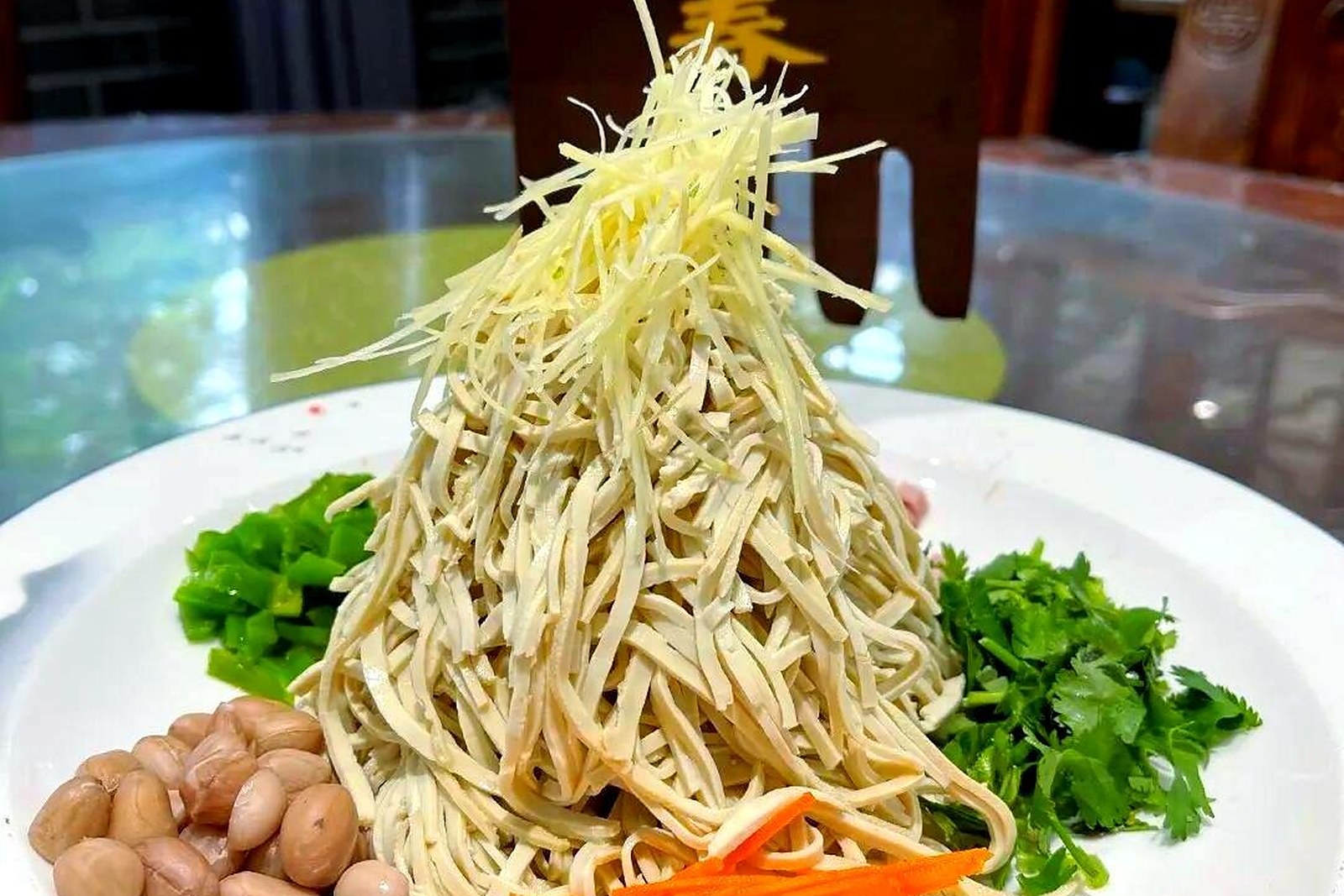
The plate is the argument. Threads piled high, blond and glistening, ginger shreds bright against the pale tofu – the dish looks like nothing until the first mouthful, when the broth-blanched shreds turn out to carry flavour the way fine noodles carry sauce. The best houses cut to order; yesterday’s gansi is a different, sadder dish.
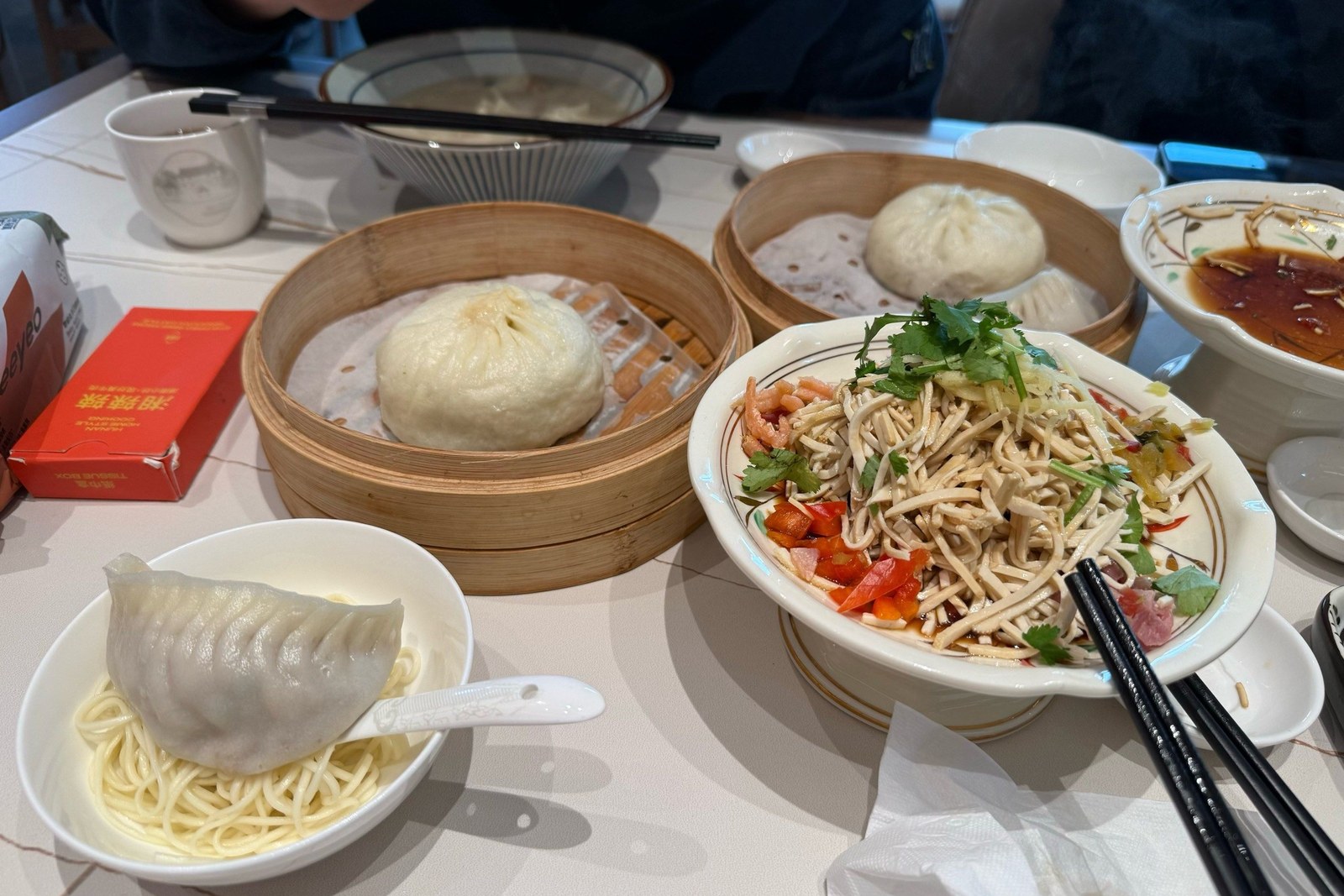
The morning-tea table is the dish’s true home. Steamer baskets of soup buns, the gansi plate, a second course of 煮干丝 zhǔ gānsī – the same shreds stewed rich in chicken and ham broth – and the teapot refilled without asking: the ritual runs two hours if you let it, and the tea houses are built for exactly that. Retirees hold court at the big round tables from seven; visitors who join them get the city’s cheapest masterclass in eating slowly.
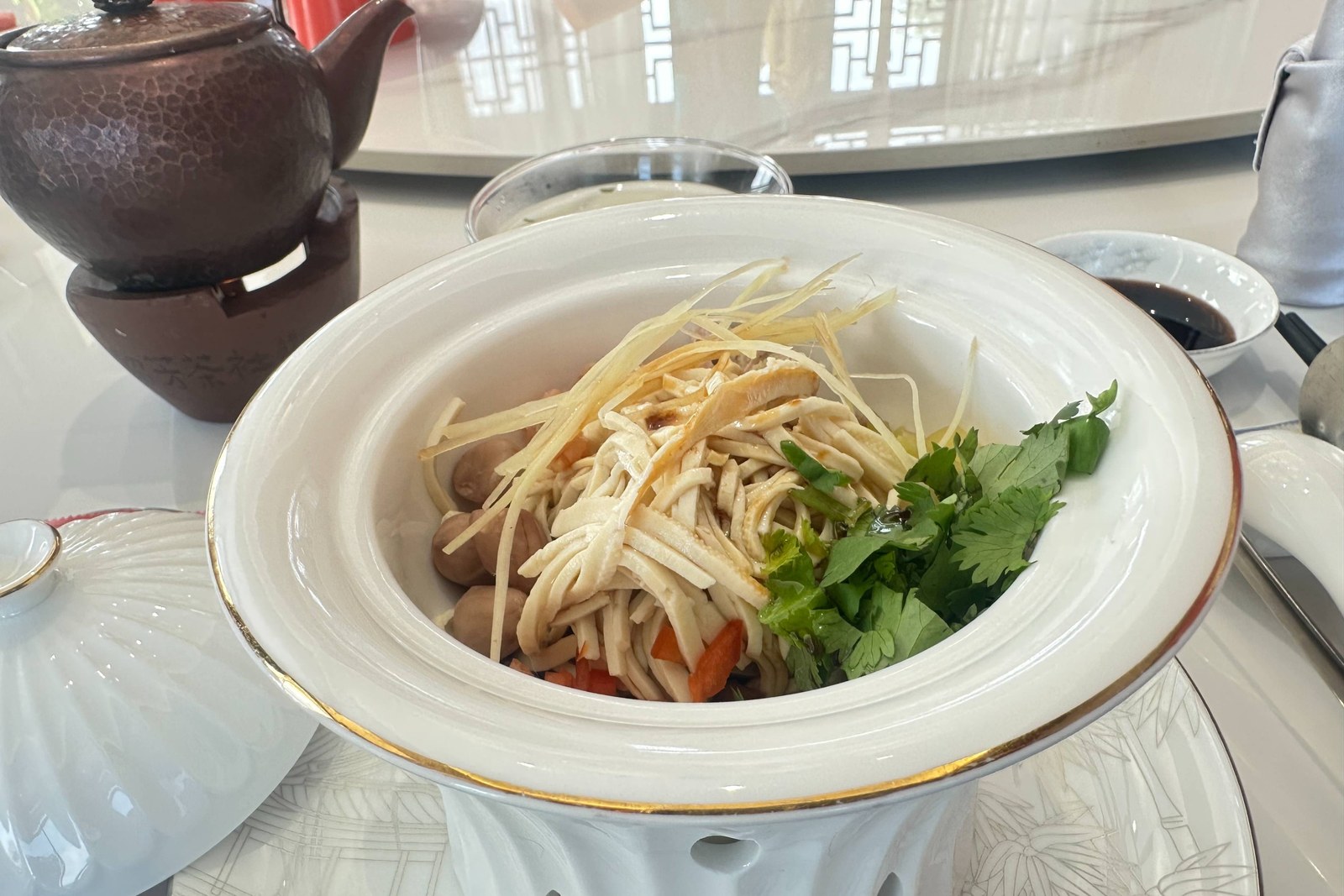
Ordering is simple: one blanched, one stewed, and the tea to match. The blanched plate is the purist’s test – nothing to hide behind, only the cut, the blanch and the dressing – while the stewed bowl is comfort itself, shreds drunk with broth until they eat like a soup. Either way, eat it in the morning: gansi is Taizhou’s dawn dish, and the houses that do it best do nothing else until noon.
The same city holds more flavors worth chasing: 蟹黄汤包 Xièhuáng Tāngbāo the crab-soup buns, 黄桥烧饼 Huángqiáo Shāobǐng the sesame campaign biscuits, 溱湖八鲜 Qínhú bāxiān the lake’s eight freshes, or 靖江猪肉脯 Jìngjiāng Zhūròupú the sweet pork jerky – four more doors into the same 泰州市 Tàizhōu Shì Taizhou City table.
Words and Names
What the Locals Know
flowcloud would say Taizhou gansi is knife-work masquerading as breakfast: a bean curd pressed, sliced and blanched into silk, served to a city that agrees the day should not begin in a hurry. All checked November 2026.
Where to find it: Gansi runs the city’s morning-tea houses from six or seven in the morning – old-school houses near the Fengcheng River loop and the old street pour the classic service, the blanched plate is the purist order and the stewed bowl the comfort pick, and the whole ritual costs a coffee’s change; go early, sit long, and let the refills come unasked. All checked November 2026.