
Autumn in a Paper Bag: Sugar-Roasted Chestnuts
黑砂炒透秋山色,纸袋携来满街香 Hēishā chǎo tòu qiūshān sè, zhǐdài xié lái mǎn jiē xiāng – Black sand roasts the autumn hills’ color through; a paper bag carries the fragrance down the street
糖炒栗子 tángchào lìzi Sugar-roasted chestnuts are the street-smell of a Tianjin autumn, and 天津市东丽区 Tiānjīn Shì Dōnglì Qū Dongli District’s corner stalls keep the season honest – great black woks of sand and chestnuts turning over a flame, sugar syrup smoking into the lane, and paper bags of hot kernels crossing the street before the frost does. The chestnuts themselves come down from the northern hill country, the same 燕山 Yānshān mountains belt that supplies the capital region’s best kernels, and the city has been roasting them for longer than anyone bothers to count.
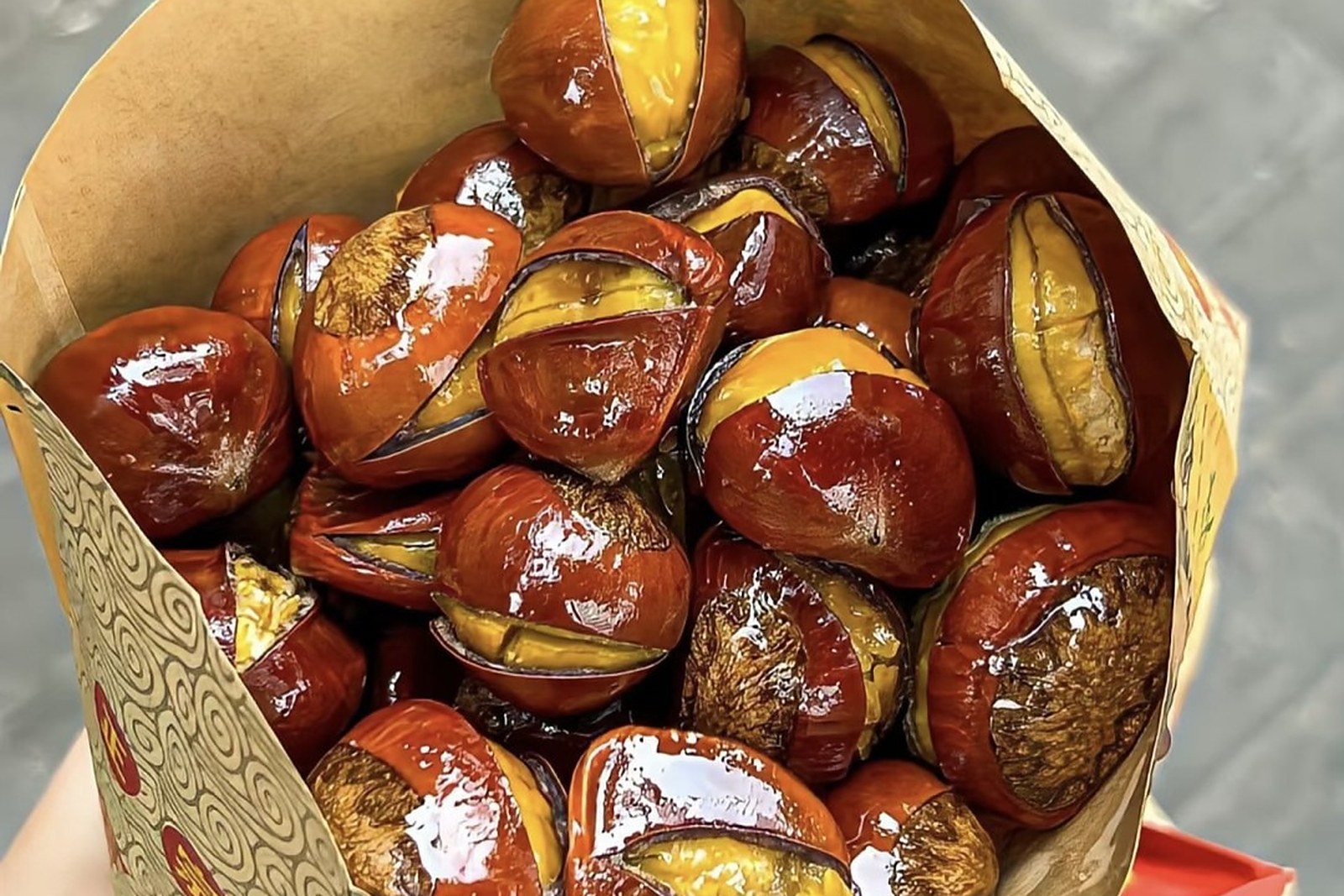
The method has not changed because it cannot. Chestnuts are cut and poured into hot black sand – sand, not oil, so the heat wraps every kernel evenly – with malt syrup spooned through to glaze the shells. The stirrer works the mass without pause, and the shells come out lacquered, splitting neatly where the knife nicked them. A good batch crackles as it cools; a great one peels clean of the bitter skin in a single pull.
Eating them is a race against the bag. Locals burn fingers happily rather than wait – peel, blow, eat – and the grading is instant: sweet and floury passes, hard or bitter fails, and the stall hears about it by next week’s custom. The best kernels crumble like roast chestnut cake, faintly sweet without the syrup doing the work, and a warm bag has ended more winter bus rides than any coat.
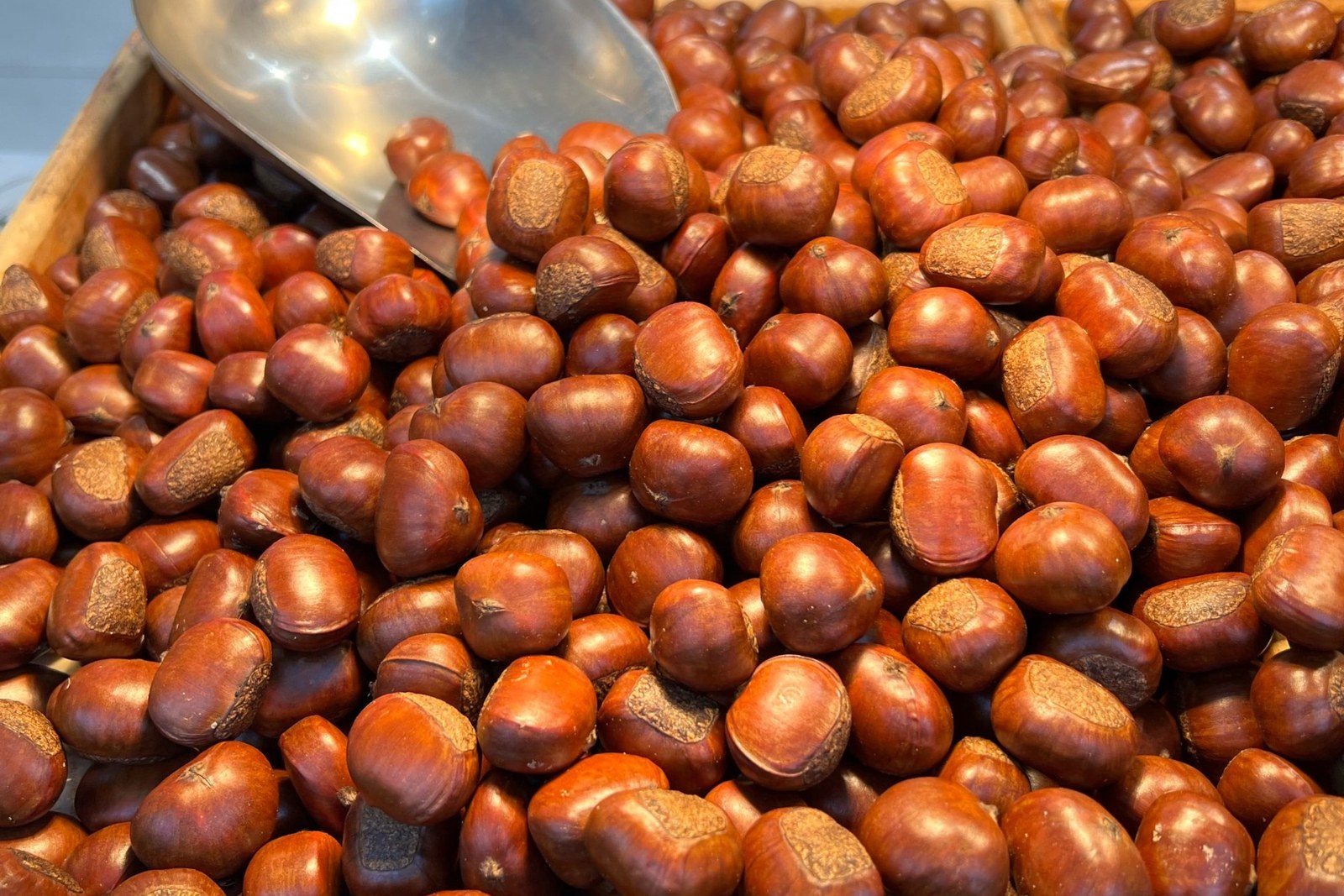
The trade also carries its rituals. Bags are sold by weight in quarter-kilo steps, the queue sorts itself by smell alone, and the first wok of the year is a small civic event that regulars date their autumns by. Buy a bag and the district hands you its season – mountain harvest, city fire, and the lane’s cold air all folded into one paper packet.
The same district holds more flavors worth chasing: 军粮城稻米 Jūnliángchéng dàomǐ the granary-town rice, 清炒虾仁 qīngchǎo xiārén the silk-glazed shrimp, 银丝卷 yínsījuǎn the thousand-thread rolls, or 锅贴 guōtiē the laced pan-fries – four more doors into the same Dongli District table.
Words and Names
栗子 lìzi the chestnut; 糖稀 tángxī the malt syrup that lacquers the shells; 黑砂 hēishā the hot roasting sand that spreads the heat; 燕山 Yānshān the northern mountain belt that grows the kernels; 趁热 chènrè “while hot” – the only correct serving temperature.
What the Locals Know
Season runs from the first cold snaps to deep winter, and the peak weeks are the best – early batches are thin, late ones dry out in storage. Shake the bag before buying: kernels that rattle loose in their shells passed their prime. And eat them the same hour; reheated chestnuts are the trade’s one unforgivable compromise. All checked November 2026.
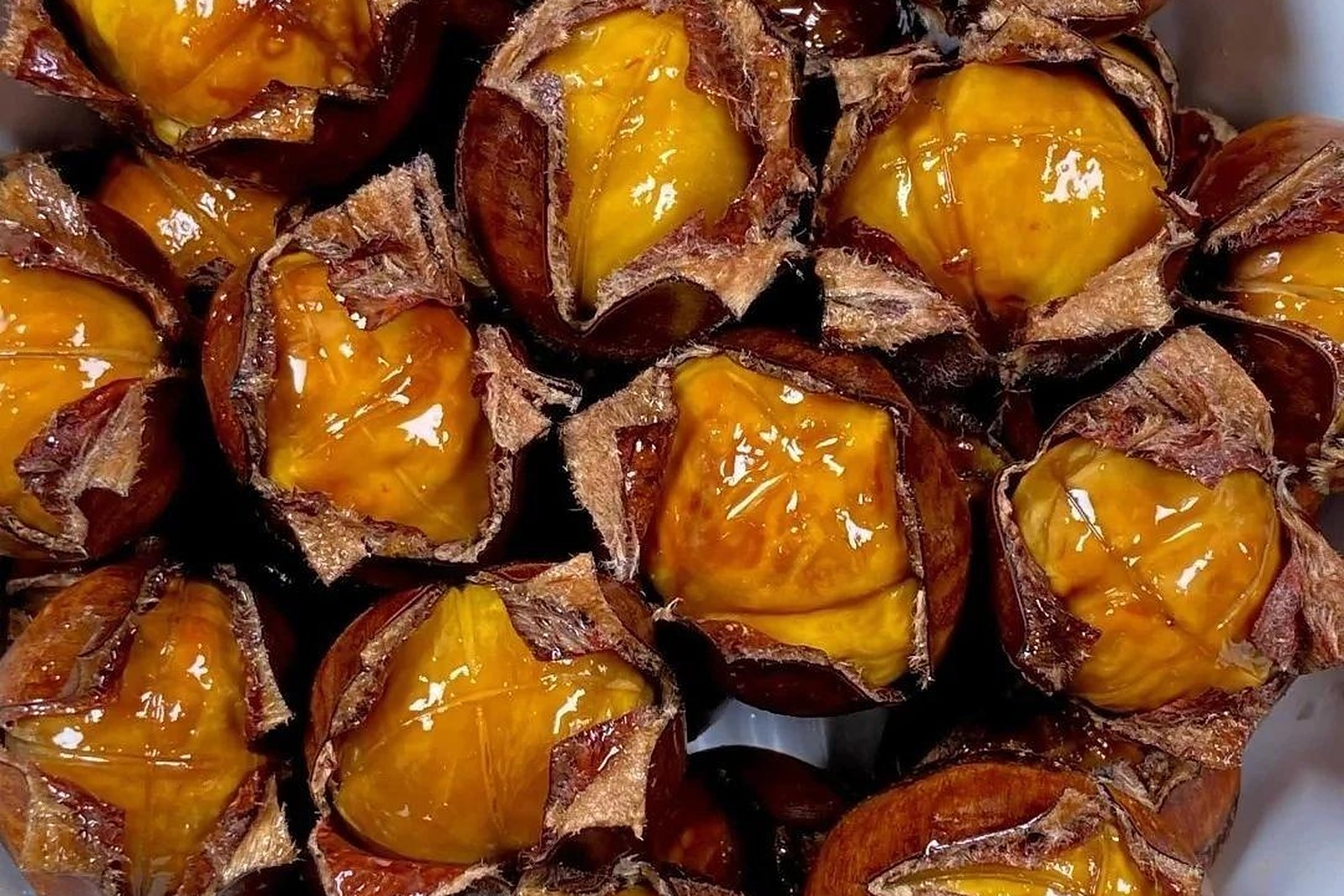
flowcloud would say the chestnut wok is autumn’s metronome: black sand turning in slow time, the street keeping count by smell, and every paper bag a small harvest festival.
Where to find it: Street roasting stalls across 天津市东丽区 Tiānjīn Shì Dōnglì Qū Dongli District fire up from mid-autumn – look for the black-sand woks near the markets and metro entrances, and buy where the queue is longest. All checked November 2026.