
Tianjin Calls Them Tangdur: Candied Hawthorn on a Stick
冰壳一咬脆如雪,红果串起冬天甜 Bīngké yī yǎo cuì rú xuě, hóngguǒ chuàn qǐ dōngtián tián – One bite through the ice shell, crisp as snow; red hawthorns string the winter’s sweetness
糖墩儿 tángdūnr Tangdur is what 天津市河西区 Tiānjīn Shì Héxī Qū Hexi District – and Tianjin at large – calls the candied hawthorn skewers the rest of the country knows by other names. Say 糖葫芦 tánghúlu elsewhere; here the street cry is tangdur, and the thing itself is winter’s own confection: whole hawthorns on a bamboo stick, dipped in hot sugar syrup that sets to a glassy shell you crack with your teeth.
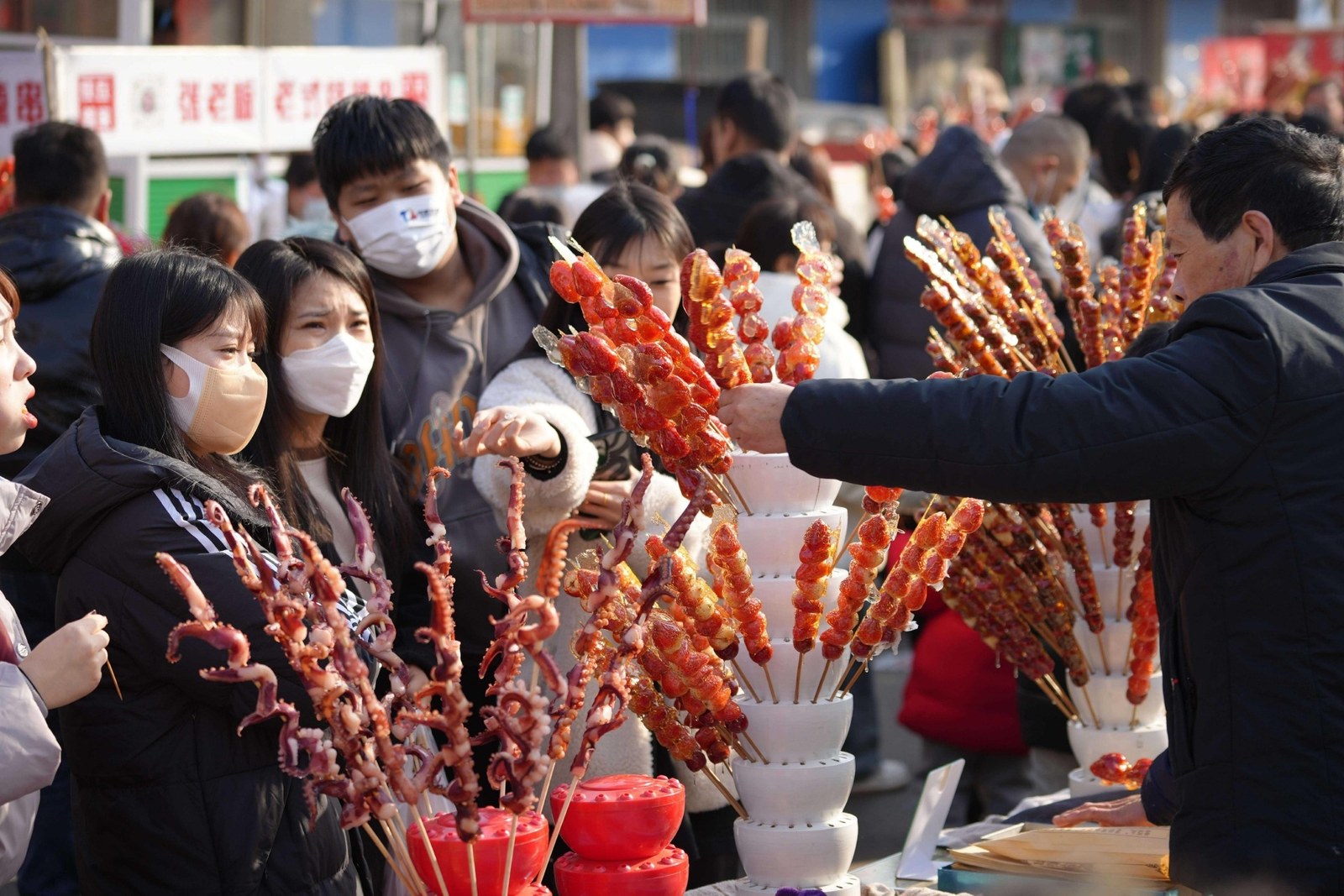
The craft is in the shell. The syrup cooks to a hard crack stage – one degree too far and it burns bitter, one short and it weeps – and the dipped skewers cool into a lacquer thin enough to shatter audibly. Under it, the hawthorns stay tart and firm: the point of the candy is that sour-sweet collision, not plain sugar.
The street version comes in seasons and schools. Winter markets stand them in straw frames like bouquets – classic hawthorn rows beside stylish builds wrapped in sesame, stuffed with bean paste, or spiked with mandarin segments and grapes. Kids pick by color; connoisseurs pick by shell: a proper tangdur snaps, holds its gloss, and never sticks to the paper.
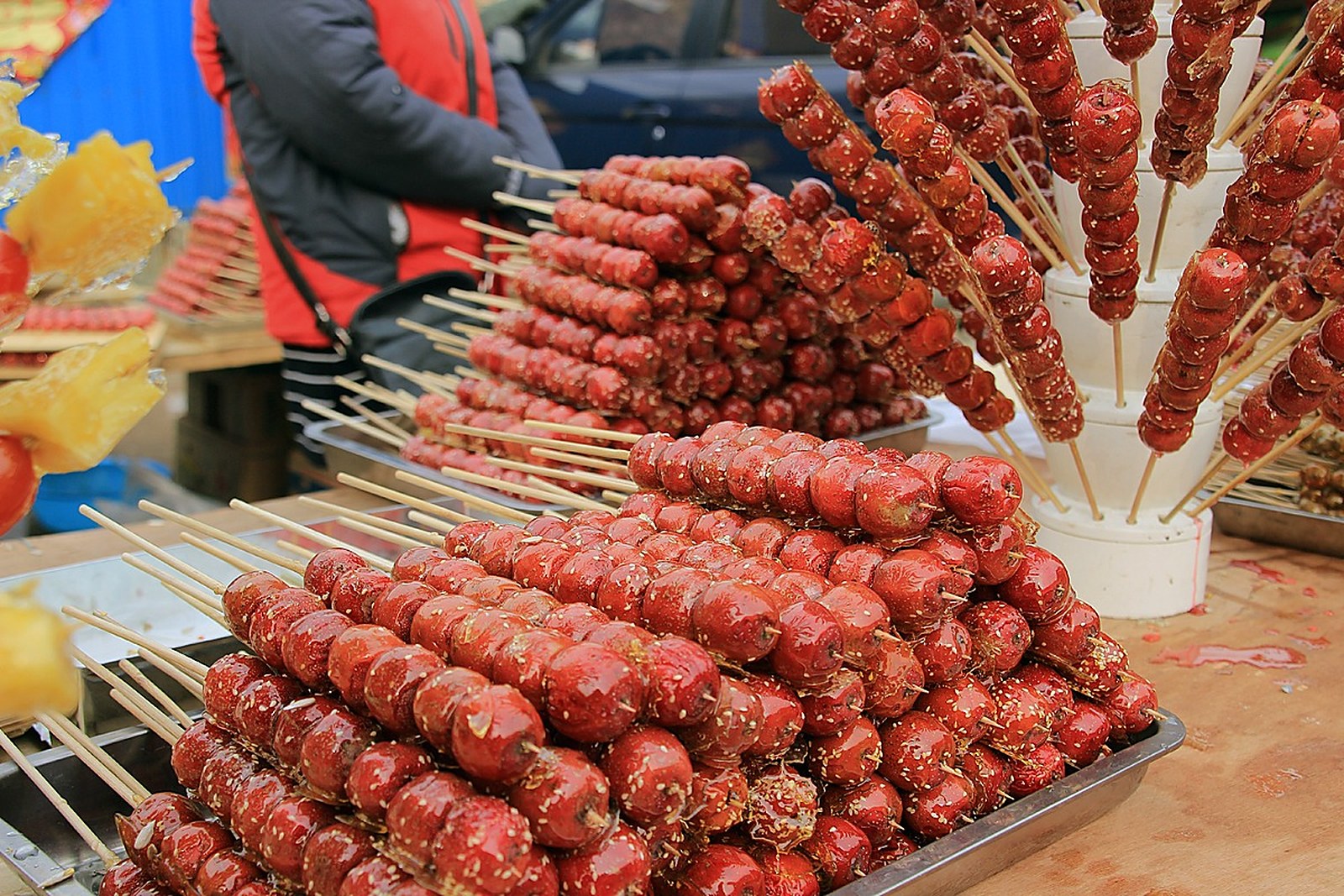
Eat it the Tianjin way, outdoors, in cold air, as dessert after the district’s hot street food – the sugar shell stays glassy and the fruit stays bright. One stick is the portion, two is a decision, and the paper bag it comes in collects the evidence.
The same district holds more flavors worth chasing: 罾蹦鲤鱼 zēngbèng lǐyú the crispy-scaled carp, 老爆三 lǎobāosān the triple offal stir-fry, 独面筋 dú miànjīn the braised gluten, or 炸糕 zhágāo the fried bean-paste cakes – four more doors into the same Hexi District table.
Words and Names
糖墩儿 tángdūnr tangdur, the Tianjin name for candied hawthorn; 红果 hóngguǒ the hawthorn fruit itself; 冰糖壳 bīngtáng ké the glassy sugar shell; 蘸糖 zhàn táng the syrup dip that builds the shell; 草靶 cǎobǎ the straw frames the skewers stand in at market.
What the Locals Know
Winter is non-negotiable – the shell only behaves in cold air, and locals treat the first tangdur stand of the season as the year’s real calendar. Tap two sticks together: a glassy ring means a fresh dip.
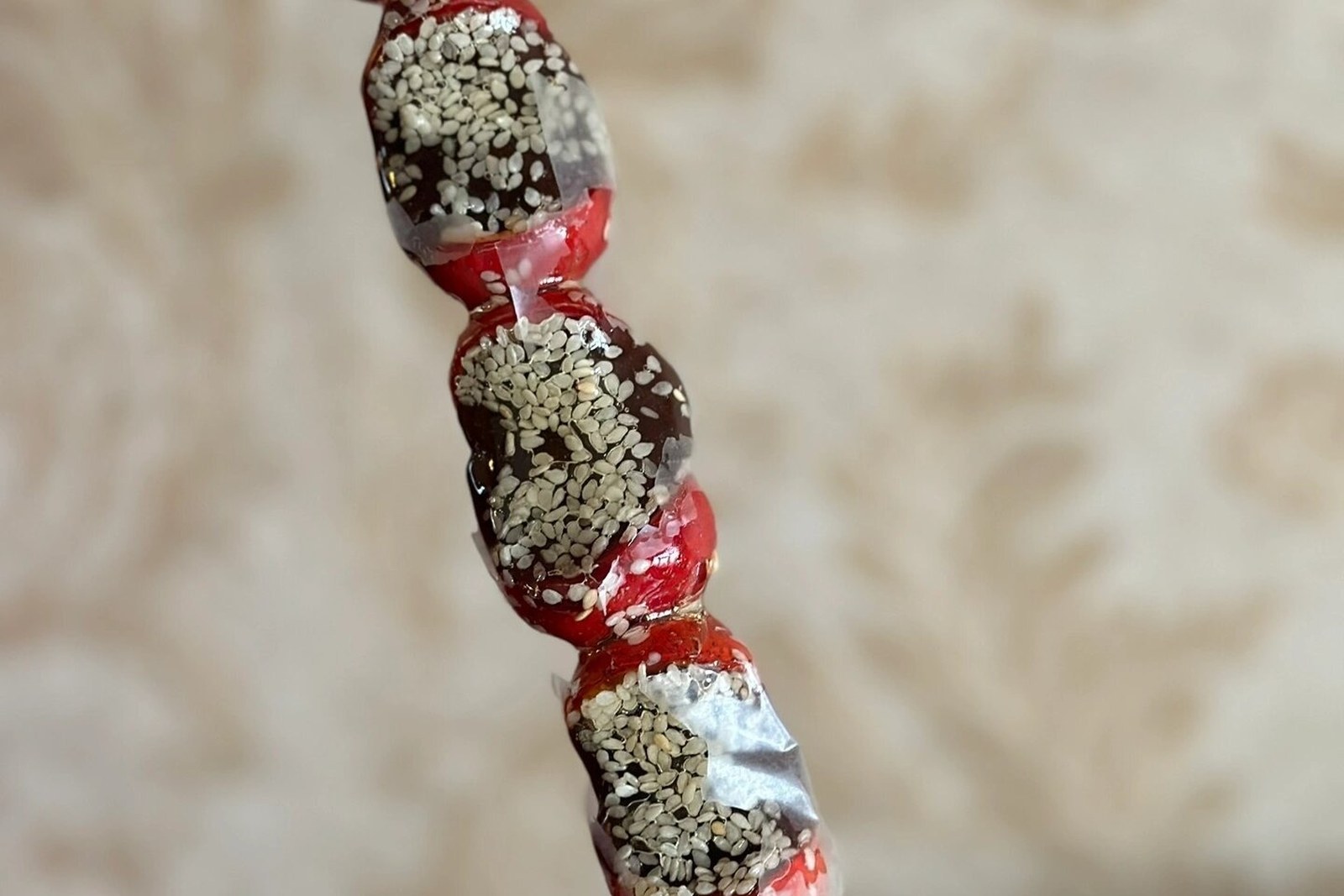
flowcloud would say tangdur is Tianjin’s winter jewelry: red fruit under glass, sold by the bouquet, worn out in bites. All checked November 2026.
Where to find it: Street stands and winter market corners across the district carry tangdur through the cold months – the promenades around 天塔湖 Tiāntǎ Hú Tianta Lake and the evening market rows near the river run the most decorated displays. All checked November 2026.