
Pinched by Hand: Tangfan, the Bowl That Ends the Market Night
面片汤滚慰风尘,一碗家常暖旅人 Miànpiàn tāng gǔn wèi fēngchén, yī wǎn jiācháng nuǎn lǚrén – The broth rolls with pinched dough to comfort the road-worn; one home-style bowl warms the traveler
正文:汤饭揪片子 Tāngfàn Jiūpiànzi tangfan – the pinched-noodle soup Xinjiang cooks make from nothing but flour, mutton and patience – is the bowl every market night in Shihezi ends on. The dough is worked soft, pulled into ropes, and pinched straight into the boiling broth, each thumbnail-sized piece catching a curl as it drops. What comes out is somewhere between dumpling and noodle, and entirely its own thing: a spoon food, a cold-night food, the bowl people say their grandmother made best.
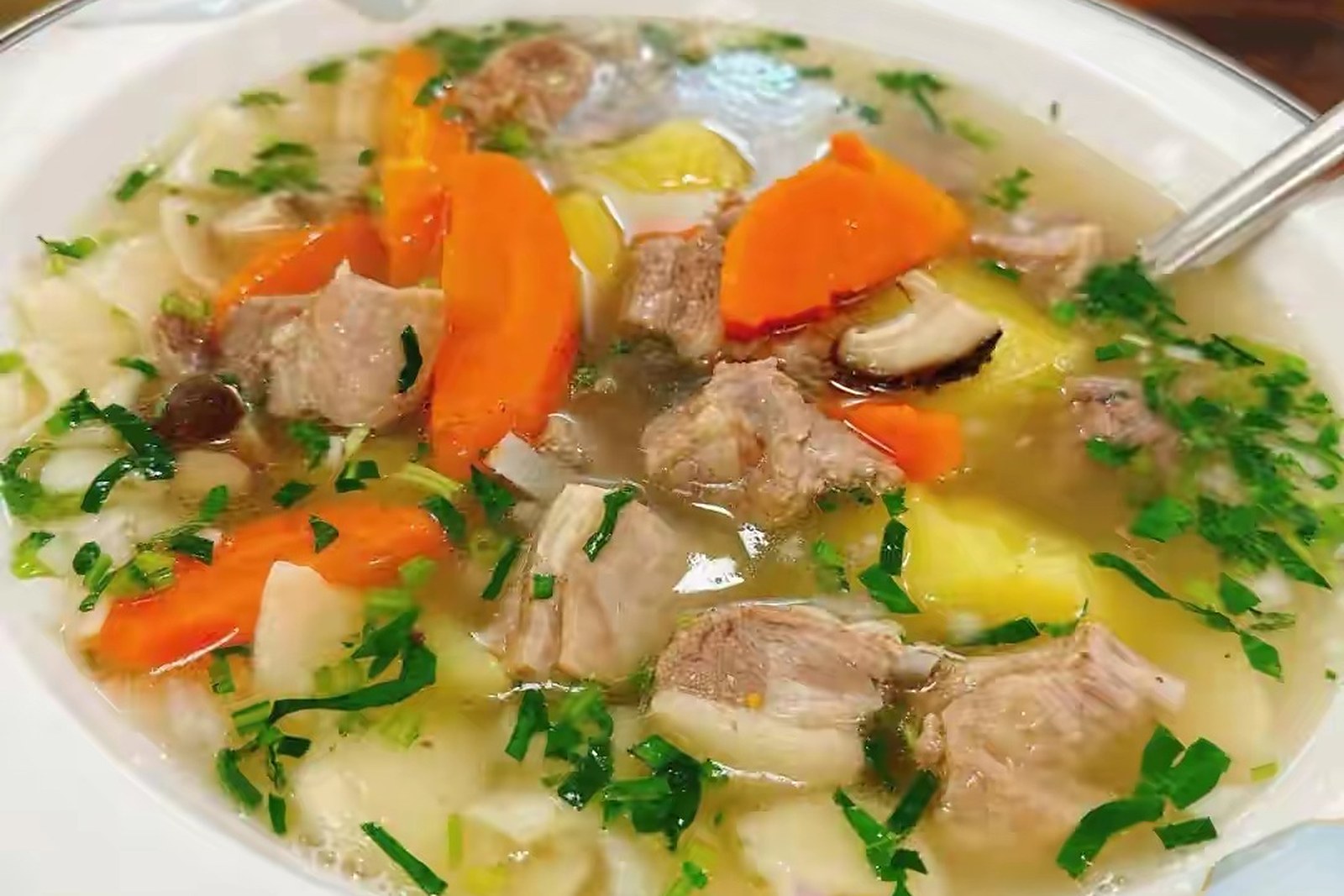
The broth is the soup’s soul, and it starts with bones. Mutton necks and knuckles simmer for hours with tomato, onion and a bay of greens until the liquor turns cloudy and faintly sweet; then come the vegetables – potato, carrot, cabbage – and finally the pinched pieces, which cook in minutes and thicken the pot with their starch. A bowl arrives steaming, dusted with coriander and scallion, with black vinegar and chili oil on the side for whoever wants to sharpen it.
You find the best tangfan the way locals do: by the steam and the sound. The counters nearest the market’s cold end keep the biggest pots, and the cook works the dough at a board beside them all evening, pinching and flicking without looking up. Order by size, take a stool, and let the bowl sit a minute – the pieces keep drinking broth, and the first spoonful is better for the wait.
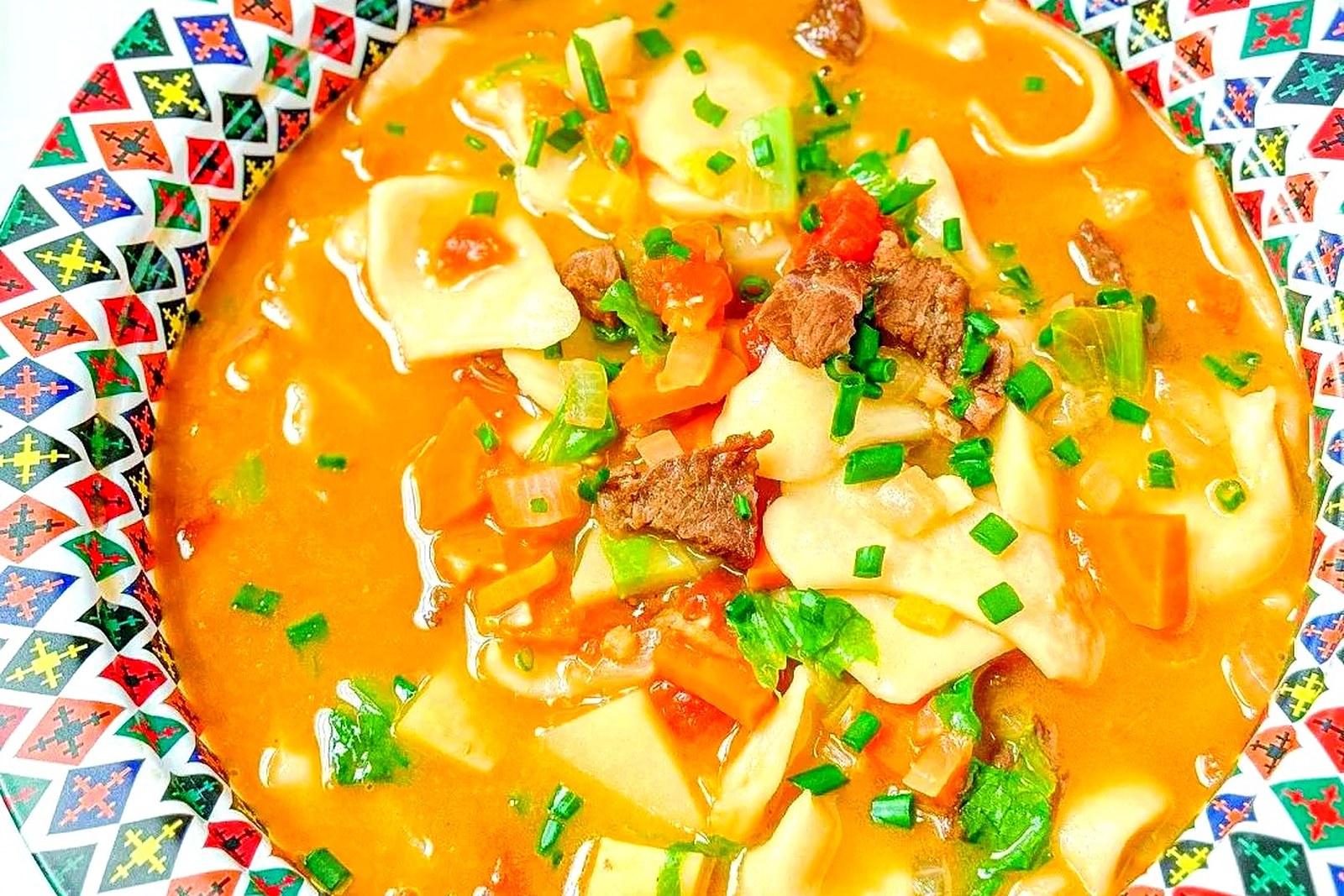
Travelers count tangfan among the cheapest full meals in northern Xinjiang, and the most local: no festival dish, no hotel version, just the everyday bowl the city eats standing up or sitting down, in every season, whenever the wind comes off the gobi. Start with a clear-broth bowl, learn the texture, then try the tomato-red variation the following night – and understand why a city of soldiers’ grandchildren still measures comfort by the pinch.
The same district holds more flavors worth chasing: 石河子蟠桃 Shíhézǐ Pántáo the flat saucer peaches, 下野地西瓜 Xiàyědì Xīguā the sandy-plain watermelon benchmark, 鲜食葡萄 Xiānshí Pútáo table grapes off the trellis, or 烤羊排 Kǎo Yángpái charcoal roast lamb ribs – four more doors into the same 石河子市 Shíhézǐ Shì Shihezi City table.
Words and Names
What the Locals Know
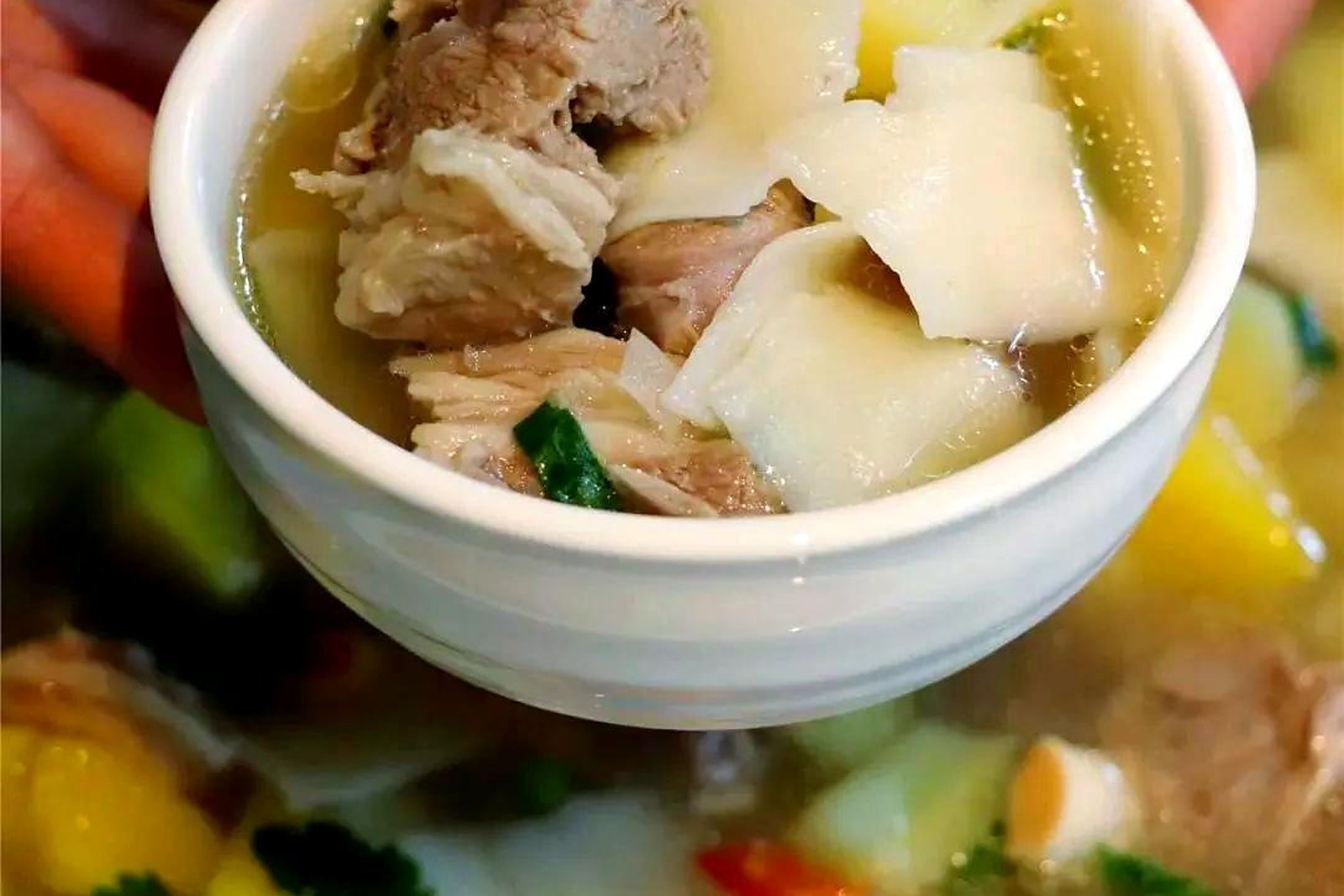
flowcloud would say tangfan is the oasis night in edible form: a pot that never stops simmering, dough pinched to order, and comfort served by the bowlful to anyone who finds the steam. All checked November 2026.
Where to find it: Tangfan counters cluster at the night markets’ cold end, open from late afternoon to midnight; bowls run small-medium-large with vinegar and chili oil tableside, and the tomato-red version is the variation to try on a second visit. All checked November 2026.