
海鲜 hǎi xiān, seafood, is what 潭门镇 Tán mén zhèn does, and the town does it differently from the rest of the island because of where its boats go. 潭门 is a port on the east coast of 琼海市 Qiónghǎi shì, the closest harbour on Hainan to the 南沙 Nán shā and the 西沙 Xī shā, and its fleet has worked those far reefs for centuries rather than fishing the shelf in front of it. A 潭门 boat can be out for weeks and come back with grouper, coral trout, red snapper, Spanish mackerel, sea urchin and reef squid, and the town’s whole argument about food follows from that: the fish is landed here after a long run and eaten within a day, so the cooking is arranged to stay out of the way.
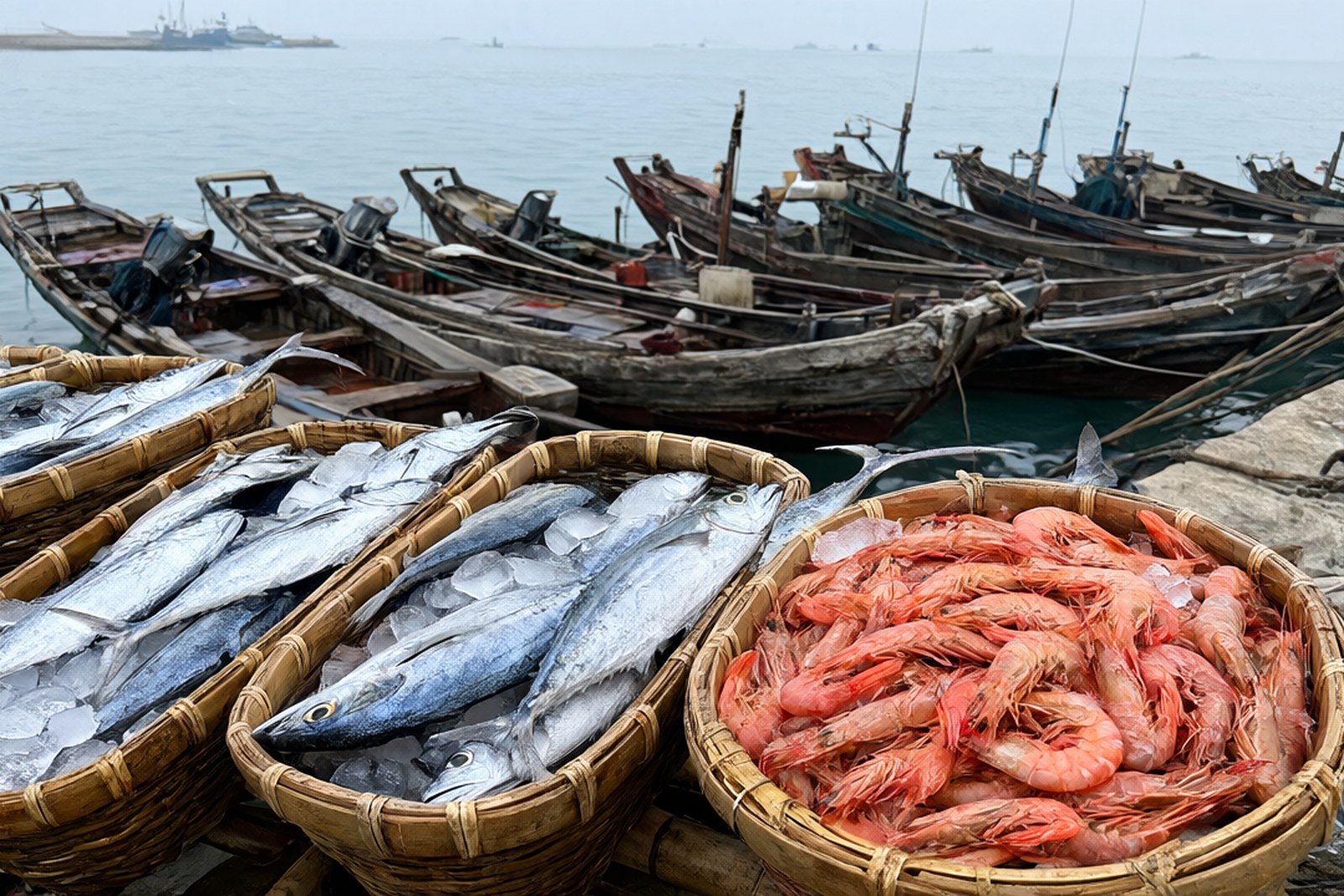
The port’s history is the part that is not on the plate. The fishermen of 潭门 were sailing to the 西沙, the 中沙 and the 南沙 from the Song dynasty, and they navigated there with a hand-written book, the 更路簿 gēng lù bù, a family’s own set of sailing directions in which 更 gēng is a measure of distance run and 路 lù is the compass bearing on a 罗盘 luó pán. Every captain had one, most were copied out by hand across generations, and they recorded the routes, the reefs and the names the fishermen gave them – 猫注岛 for what the charts now call 永兴岛, 大筐 for 华光礁. In June 2008 the 南海航道更路经 Nán hǎi háng dào gēng lù jīng was entered on the second national list of intangible cultural heritage, and the 更路簿 is now the spine of the museum at 潭门.
The town’s fishing has been recognised in more ordinary ways as well: the central harbour was made a first-class national fishing port in 2004 and was named one of the country’s civilised fishing harbours in 2010, and in April 2013 the president came to 潭门 and told the fishermen to build bigger boats, go further out and catch bigger fish. The old fishing village of 排港村 Pái gǎng cūn, at the mouth of the harbour, is one of the best-preserved on the island and still keeps the 祭兄弟公 jì xiōng dì gōng rite to the drowned and the 鲤鱼灯节 lǐ yú dēng jié, the carp lantern festival; the town now bills itself as 千年渔港、南海之门, a thousand-year harbour and the gate of the South China Sea.
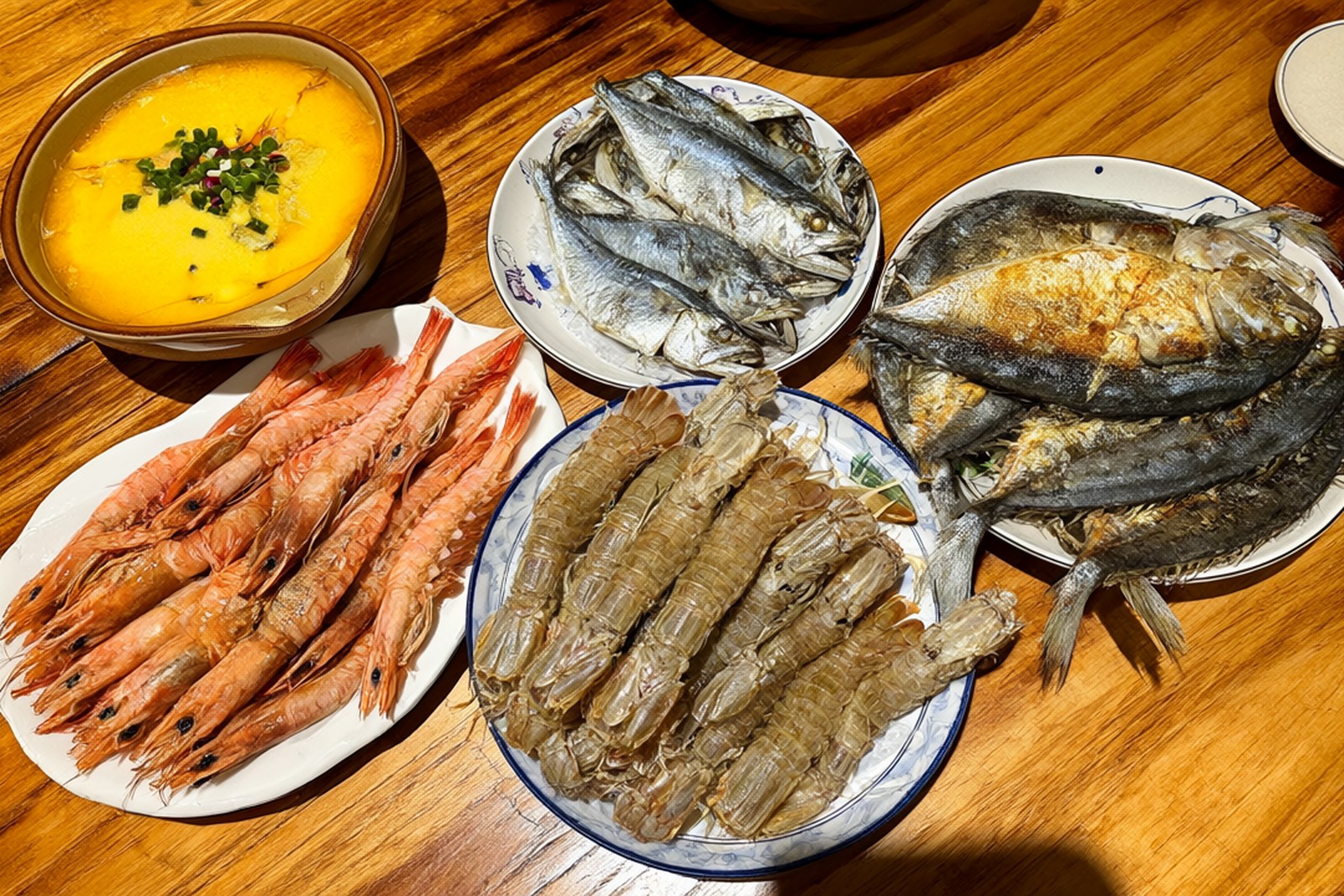
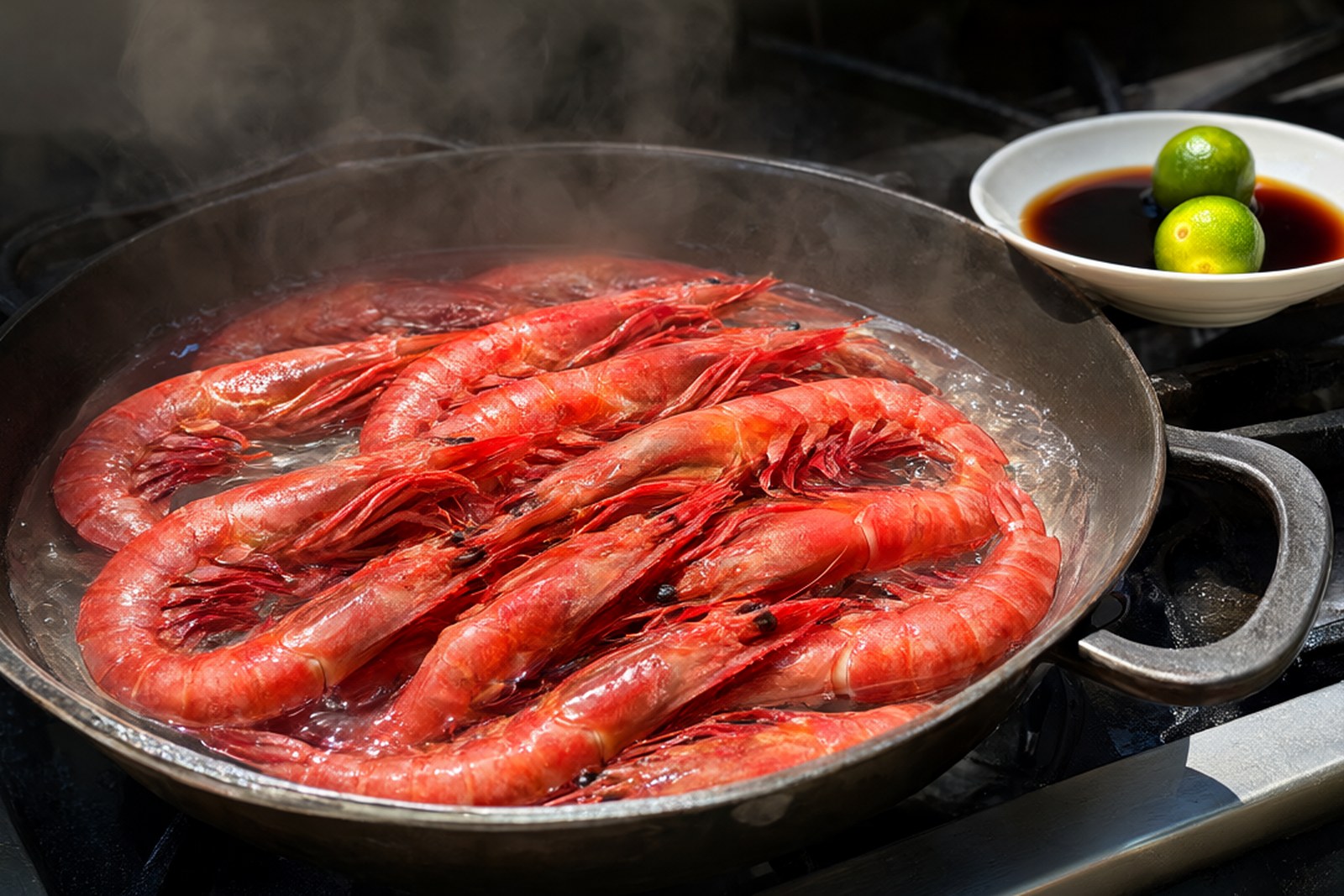
What to order is short and specific. 香煎马鲛鱼 xiāng jiān mǎ jiāo yú, Spanish mackerel cut into thick steaks and pan-fried hard on both sides until the outside is crisp and the inside still loose, is the dish the town is judged on. 白灼红角虾 bái zhuó hóng jiǎo xiā, red prawns boiled in plain water and eaten with soy and lime, is the second, and 椒盐皮皮虾 jiāo yán pí pí xiā, mantis shrimp tossed with salt and pepper, is the third. 海胆蒸蛋 hǎi dǎn zhēng dàn, sea urchin steamed in egg, is the one that shows off a reef, and the 打边炉 dǎ biān lú, a plain hotpot, is how a table of people eats a mixed catch: a pot of clear stock, a plate of fish and shellfish, soy, ginger and lime, and nothing else pretending to be a sauce. The instruction the town gives visitors is 原汁原味 yuán zhī yuán wèi, the original juice and the original flavour, and the way to test it is to eat the first piece of fish with nothing on it at all.
Words and Names
海鲜 hǎi xiān is seafood, 打边炉 dǎ biān lú the southern plain hotpot it is often eaten in, and 白灼 bái zhuó the method of boiling in plain water. 马鲛鱼 mǎ jiāo yú is Spanish mackerel, 红角虾 hóng jiǎo xiā the red prawn, 皮皮虾 pí pí xiā the mantis shrimp and 海胆 hǎi dǎn the sea urchin. 更路簿 gēng lù bù is the captains’ hand-written book of routes, with 更 gēng the distance run and 路 lù the compass bearing; 罗盘 luó pán is the compass itself. 潭门 Tán mén is the port, 排港村 Pái gǎng cūn the old fishing village at its mouth, and 南沙 Nán shā and 西沙 Xī shā the reefs the fleet works.
What the Locals Know
Go to the harbour in the morning and look at what is actually on the ice before you choose a restaurant, because the whole claim of the place rests on landing rather than on cooking and a bad day is visible on the quay. Ask for the fish by name and price it by weight before it is cleaned, and ask what came in this morning rather than what is on the printed menu. Order the mackerel pan-fried and the prawns boiled, and take the hotpot only if there are four of you; one fish, one shellfish and a plate of greens is a better meal than four dishes. Eat before seven in the evening in the summer, because the fish that was landed at dawn is at its best early and the kitchens fill with the boats’ own crews later on.
flowcloud would say that a harbour which navigated to the far reefs for a thousand years with a hand-copied book and a magnetised needle, and which now answers every question about how to cook its catch with the word plain, is telling you that it never needed either a chart or a sauce.
Where to find it: the harbour front and the seafood restaurants of 潭门镇 in 琼海市, with the quay at its best from about six in the morning and the 大排档 filling from six in the evening, and the wet market in 嘉积镇 Jiā jī zhèn selling the same landings for anyone cooking at home. A pan-fried mackerel is ¥60 to ¥150 depending on the weight, a plate of boiled prawns ¥50 to ¥120, and a hotpot for four ¥300 to ¥600. 潭门 is about twenty kilometres from 嘉积 and about thirty-five from 琼海站 Qiónghǎi zhàn on the 东环 high-speed line.