
Tanzhe Temple Vegetarian Food: Incense Smoke, Mushroom Broth and Temple Courtyards of Mentougou District, Beijing
潭柘钟声萦古刹,一碗素面待香客。Tán zhè zhōng shēng yíng gǔ chà, yī wǎn sù miàn dài xiāng kè – Bells of Tanzhe ring round the ancient temple; one bowl of vegetarian noodles awaits the pilgrim.
潭柘寺素斋 Tánzhè Sì sùzhāi Tanzhe temple vegetarian food is the meat-free noon meal Beijing’s western hills have fed to pilgrims for centuries, and the address is an incense route: 潭柘寺 Tánzhè Sì Tanzhe Temple, the 门头沟区 Méntóugōu Qū Mentougou District, Beijing monastery folded into the mountains west of the city – founded, by the temple’s own telling, some seventeen centuries ago and older, so the proverb runs, than the capital it watches (先有潭柘寺,后有北京城 Xiān yǒu Tánzhè Sì, hòu yǒu Běijīng chéng “first there was Tanzhe Temple, then came Beijing city”) – where 香客 xiāngkè incense-bearing pilgrims and weekend hikers have always taken a midday bowl before the bus home. The form is the 素斋 sùzhāi vegetarian refectory – a plain hall inside the temple’s precincts and the kitchens, tea rooms and snack counters strung along the gate road – a grammar of 香菇 xiānggū shiitake, 豆腐 dòufu tofu and 面筋 miànjīn wheat gluten simmered into noodle bowls and vegetable plates, priced for the climber rather than a banquet table. The craft most visitors under-rate is the restraint: a temple table built on 清淡 qīngdàn plainness lives or dies by the 卤 lǔ gravy – mushroom, sesame oil and bean stock simmered slow – and a kitchen that hides thin stock behind fake-meat theatrics has missed the point of a table that never needed meat to fill a pilgrim. The naming is the tell: the temple takes its name from the landscape itself – 潭 tán the pool, 柘 zhè the cudrania tree – a name written by mountain water and mountain wood rather than by any brand.
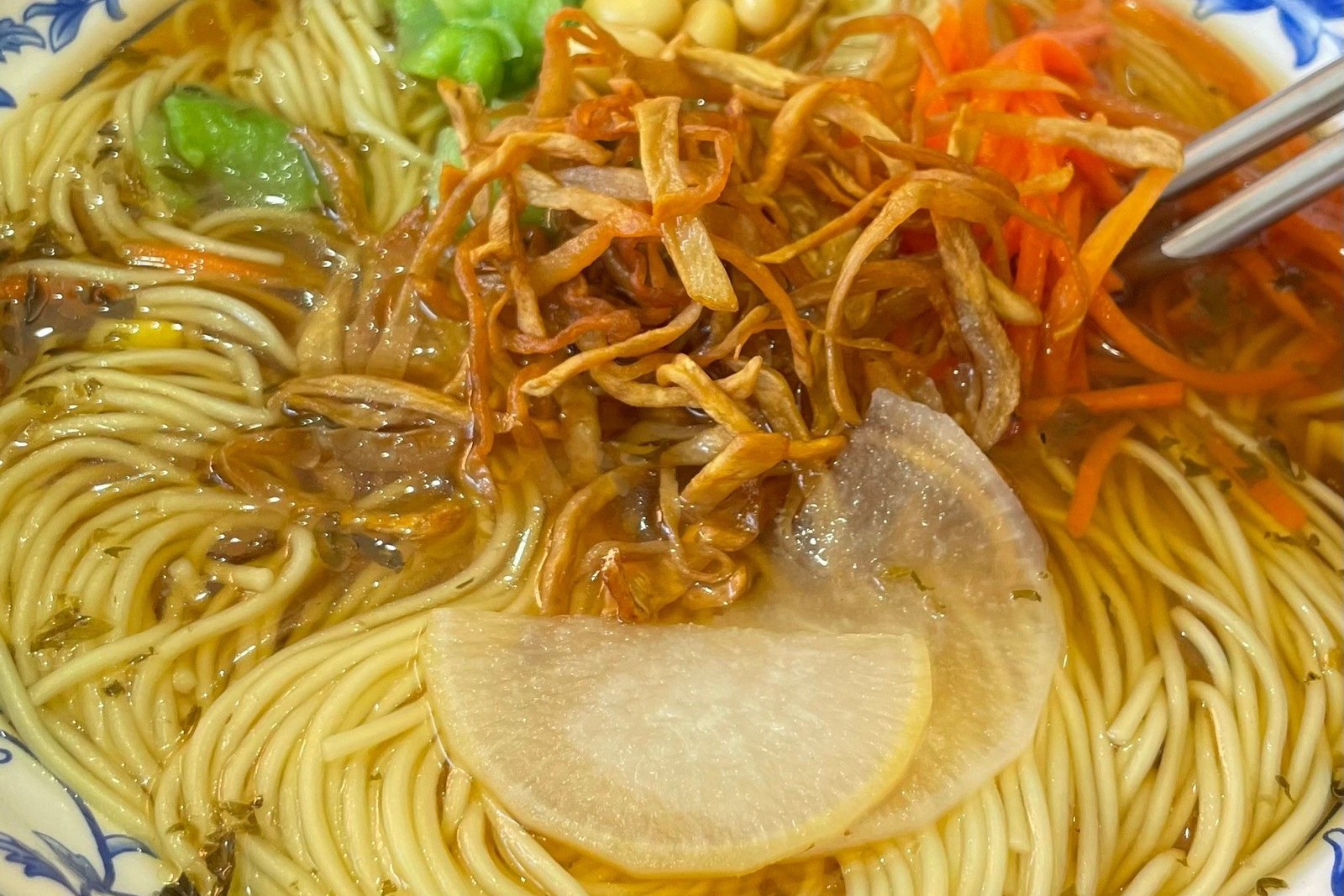
The eating is a bowl-and-plate grammar written for the incense route, and the menu leans 蘑菇 mógū mushroom plus 豆制品 dòuzhìpǐn bean products to match the 香客 xiāngkè crowd. The anchor is the 素面 sùmiàn – hot noodles under a dark 香菇 xiānggū shiitake and 面筋 miànjīn gluten 卤 lǔ, 豆腐 dòufu folded through, the standard lunch of the climb – backed by 素包子 sù bāozi vegetable buns steamed by the tray, seasonal 山野菜 shānyěcài mountain-greens plates, the set 素斋 sùzhāi meals the refectory lays on for groups, and the tea the gate shops pour for anyone needing to sit before the pagoda forest. Around the gate the gentler counters carry the family trade – 玉米 yùmǐ corn and drinks for the children, 酸梅汤 suānméitāng sour-plum drink in the summer shade – while the serious pots stay inside the vegetarian grammar, because the point of a temple meal is that the mountain, not the menu, supplies the interest: a bowl eaten in a courtyard under the 帝王树 Dìwáng Shù “Emperor Tree”, the temple’s enormous ancient ginkgo, tastes better than the same recipe served in any city dining room, and nobody at the table needs to say so. It is a small menu on purpose, and it has outlived every food fashion the city has sent up the valley.
The honest grade is geography plus the 香期 xiāngqī incense calendar. In 门头沟区 Méntóugōu Qū Mentougou District, Beijing the tables sit inside the temple grounds and along the short lane between the gate and the bus stop, where the clientele is half 香客 xiāngkè worshippers who climb with the lunar calendar – the first and fifteenth of the month, the New Year rush, the festival days – and half 周末 zhōumò weekend hikers off the city buses, a mix that keeps the pots honest in a way a themed temple restaurant downtown never could: a kitchen here is graded by grandmothers who fast by the calendar and can taste whether the 卤 lǔ was simmered that morning (worth confirming the details – which kitchens cook daily through the year and which thin out between festivals). Call it honestly: the vegetarian bowl is not cuisine-that-impresses but food-that-fits – plain, hot, filling, priced for the walk. A per-person bill runs on the bowl and the tea, so call it worth confirming the details rather than a fixed number, and come on a weekday morning if you can, because the 周末 zhōumò crowds queue the hall shoulder to shoulder by noon and the best pots sell through early.
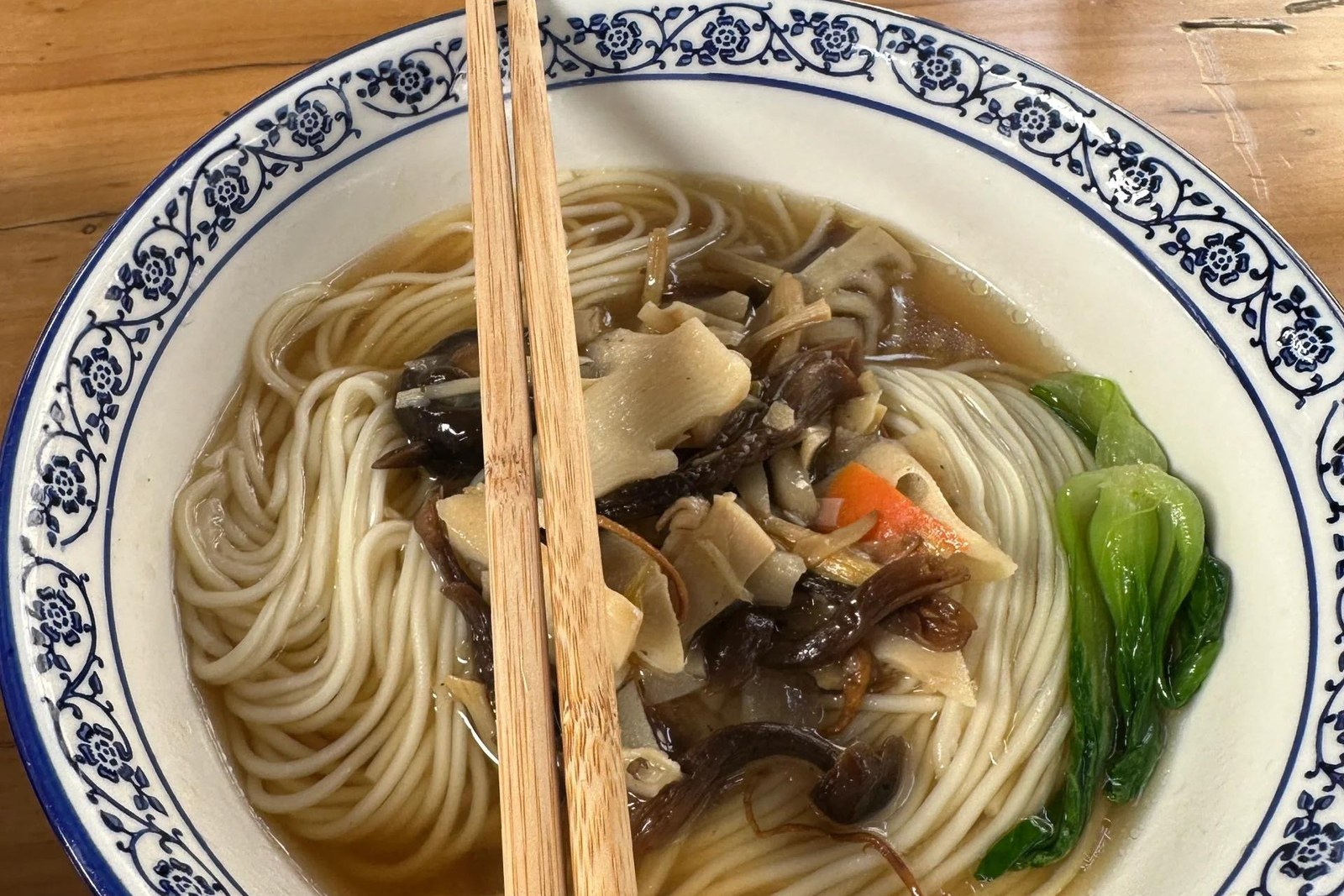
The wry truth is that 潭柘寺素斋 Tánzhè Sì sùzhāi is over-rated as a “spiritual dining experience” and under-rated as a working pilgrims’ canteen: travel lists file it as atmosphere, while the people who actually eat it – the 香客 xiāngkè families who have climbed at New Year for generations – treat it as lunch, the same way their grandparents did, eaten standing or on a courtyard bench and finished before the incense smoke clears. The real divide is 现煮 xiànzhǔ cooked-to-order versus 再热 zàirè reheated: a bowl ladled from a live pot reads 烫 tàng hot and clean-scented, a reheated one reads flat, and no 香油 xiāngyóu sesame-oil finish hides it – worth confirming the details, pot by pot, because the same counter can differ between the festival rush and a Tuesday lull. Season matters gently here: spring brings the incense crowds and the first mountain greens, autumn lays ginkgo gold over the courtyards, and winter – cold, empty, beautiful – is when the regulars swear the hot bowl tastes best against the mountain air.
The self-deprecating footnote, and the district braid: a food writer will garble the proverb 先有潭柘寺,后有北京城 Xiān yǒu Tánzhè Sì, hòu yǒu Běijīng chéng to a counter hand who has heard it from every tour guide of the last twenty years, explain “contemplative eating” over a bowl that is really refuelling a hiking club, photograph the 帝王树 Dìwáng Shù ginkgo at heroic shutter, and then call the noodles “commendably zen” as if noodles could meditate – which is the honest grade: 潭柘寺素斋 Tánzhè Sì sùzhāi is a pilgrims’ lunch the writer will aestheticise more than he finishes, and the 香客 xiāngkè grandmother at the next table has said her quiet thanks and emptied her bowl before the shutter closes. The same 门头沟区 Méntóugōu Qū Mentougou District, Beijing thread runs on: the rose ovens of 妙峰山玫瑰饼 Miàofēng Shān méiguībǐng Miaofeng rose pastries bake in the flower valley to the north, the wood-fire courtyards of 爨底下农家菜 Cuàndǐxià nóngjiācài Cuandixia farmhouse food steam in the ancient village deep in the hills, the noodle steam of 大峪城区食肆 Dàyù chéngqū shísì Dayu area eats rises by the district seat, and the glass jars of 京西白蜜 Jīngxī báimì Jingxi white honey glow on the mountain-product shelves – one district, four more tables.
Words and Names
潭柘寺 Tánzhè Sì / Tanzhe Temple · the ancient monastery the proverb ranks older than Beijing city itself 素斋 sùzhāi / vegetarian temple food · the meat-free table kept for pilgrims and hikers 香客 xiāngkè / temple pilgrim · the incense-bearing crowd whose calendar sets the kitchen’s clock 素面 sùmiàn / vegetarian noodles · the shiitake-and-gluten bowl that anchors the noon meal 面筋 miànjīn / wheat gluten · the chewy gluten-and-bean craft of the temple kitchen 帝王树 Dìwáng Shù / Emperor Tree · the temple’s vast ancient ginkgo over the courtyards 香期 xiāngqī / incense season · the lunar festival days that fill the hall and empty the pots 门头沟区 Méntóugōu Qū / Mentougou District · the Beijing district holding the temple table
What the Locals Know
- Eat at eleven: the 素面 sùmiàn pots are freshest before the tour buses land, and on the first and fifteenth of the lunar month the hall fills with 香客 xiāngkè by noon (worth confirming the details).
- Order the plain bowl: the 香菇 xiānggū 面筋 miànjīn 卤 lǔ is the craft; anything billed as a “premium vegetarian set” is performing for visitors.
- Climb with the calendar: weekday mornings are quiet, the first and fifteenth are busy, and the New Year climb crowds the whole temple road.
- Bring small change and patience: gate-road counters run on queue rhythms, and the courtyard seats open up again after one o’clock.
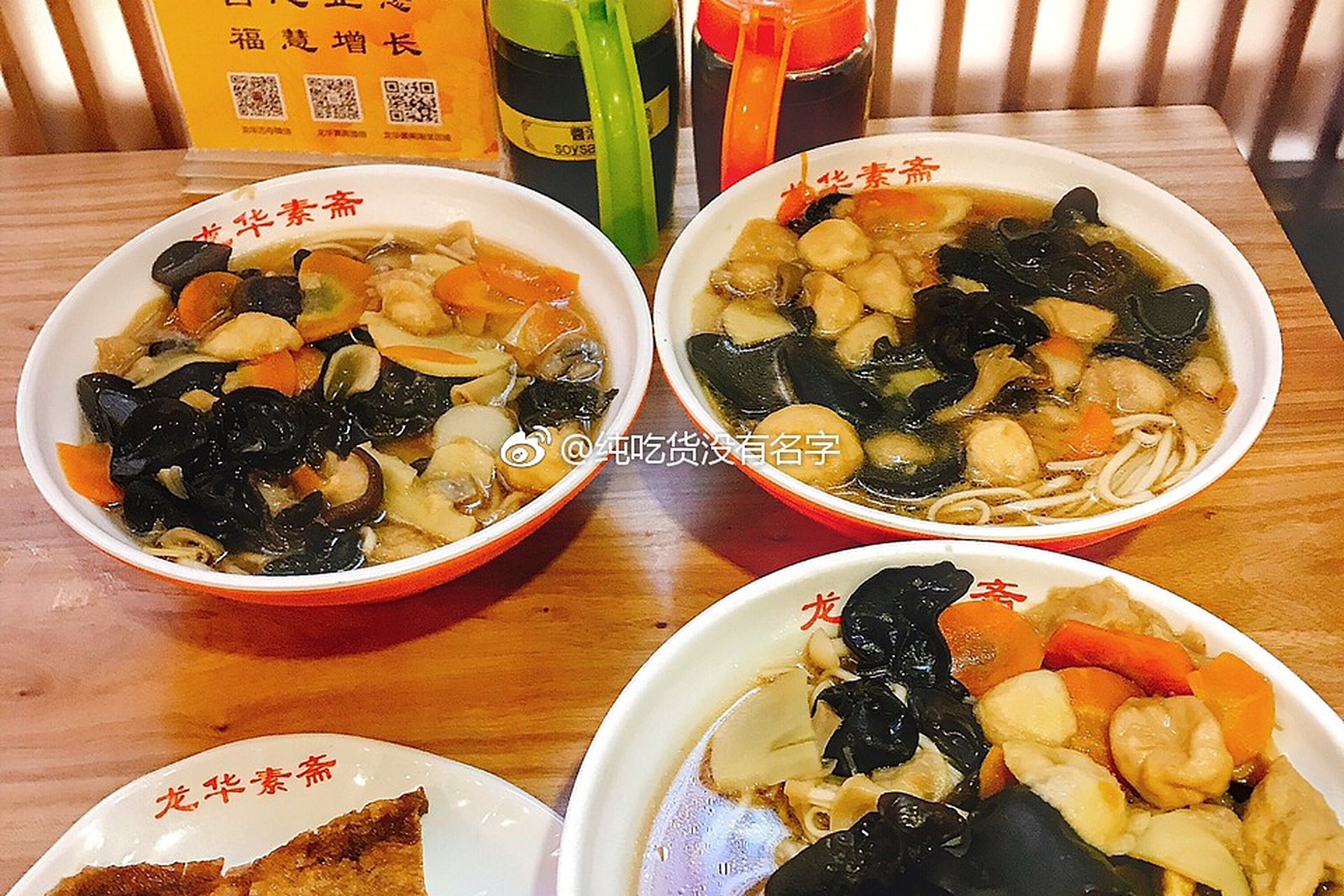
flowcloud would say that the 潭柘寺素斋 Tánzhè Sì sùzhāi is the incense smoke, mushroom broth and temple courtyards of Mentougou District, Beijing – a 潭柘寺 Tánzhè Sì older by proverb than the capital itself, where 香菇 xiānggū, 面筋 miànjīn and 豆腐 dòufu simmer into the noon bowl of the 香客 xiāngkè – and that the honest move is to climb early, order the plain noodle bowl, and let the courtyard do the seasoning, because the incense built the table and the pilgrims keep it honest. All checked October 2026.
Where to find it: Mentougou District Méntóugōu Qū, Beijing – the 潭柘寺 Tánzhè Sì Tanzhe Temple precincts and the gate-road counters below them in southeastern Mentougou, where the vegetarian kitchens serve 素面 sùmiàn, 素包子 sù bāozi and seasonal 山野菜 shānyěcài on the pilgrims’ clock (worth confirming the details – which kitchens cook daily through the year and which keep festival hours); a per-person bill runs on the bowl and the tea, so call it worth confirming the details rather than a fixed number. Tanzhe temple vegetarian food is the incense smoke, mushroom broth and temple courtyards of Mentougou District, Beijing, bowl before brochure.