
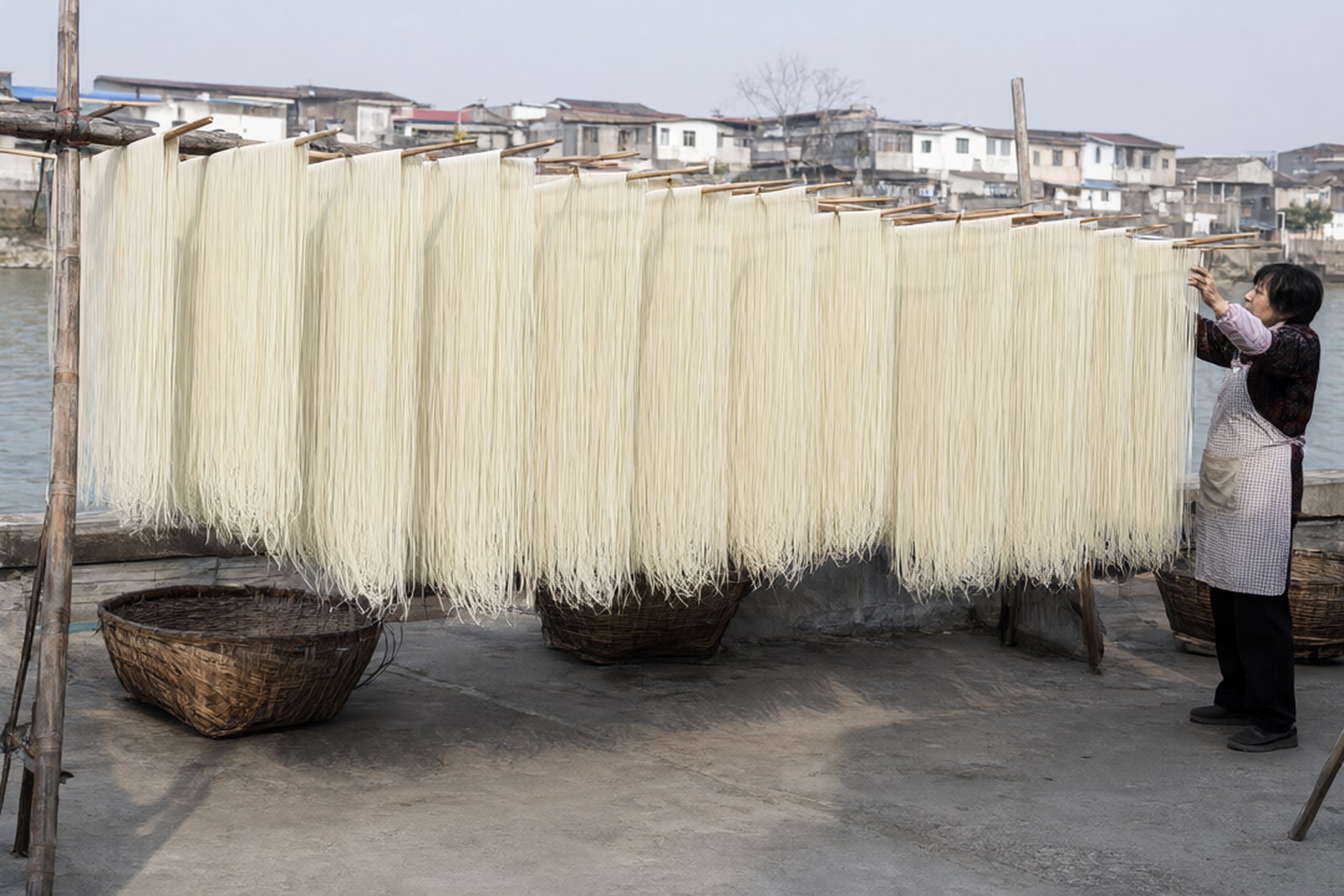
The noodles are hung over a river to dry, and the river is why they exist. 修山镇 Xiūshān Zhèn is a small town on the 资江 Zī Jiāng in 桃江县 Táojiāng Xiàn, and the local trade is 修山面 Xiūshān miàn, a thin dried wheat noodle that is made by hand, salted hard, and dried on bamboo frames in the wind that comes off the water. The result is a noodle that is almost brittle when raw, cooks in under two minutes, and has a chew and a faint salinity that the factory product does not. It is the everyday breakfast of the county and it is sold in bundles tied with string, by weight, in every market and roadside shop for thirty kilometres around.
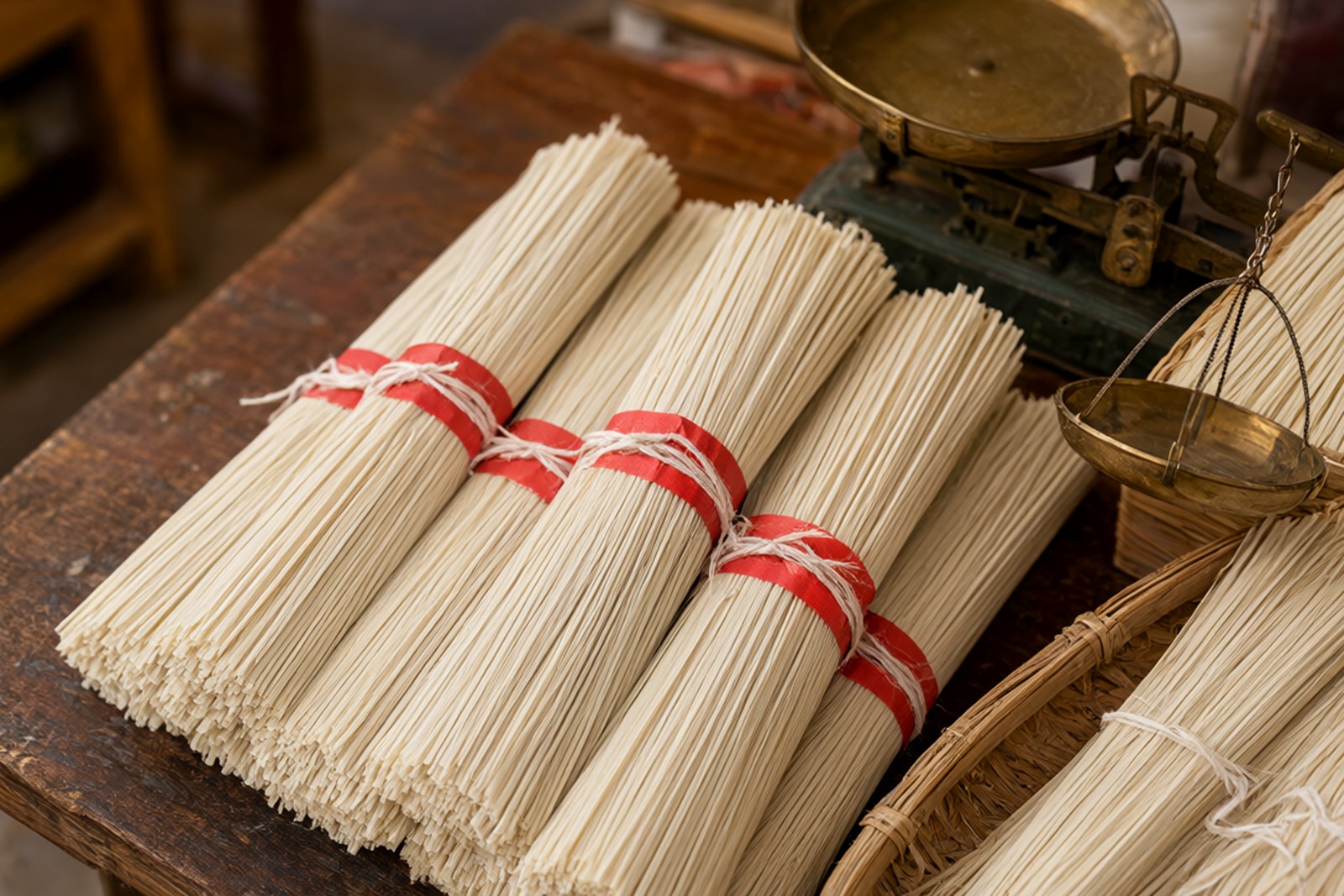
The method is short and unforgiving. Flour and water with salt — nothing else, no alkaline water and no egg — are kneaded into a stiff dough, rested, and then rolled and cut into very thin strands. The salt is at a concentration that would be aggressive in fresh pasta, and it does two things: it seasons the noodle from the inside and it draws water out during drying, so the strands stiffen rather than sag. The drying frames are set up on the roofs and along the embankment, and the noodles are lifted onto them in the morning and taken down in the afternoon, and how they dry is the whole difference between a good 修山面 and a bad one. Wind and shade make a noodle that keeps its bite; direct sun makes one that cracks and clouds. Watch a drying frame on a breezy spring day and you will see the strands moving slightly, which is the point.
How It Is Eaten
In the county it is a breakfast food and it is served 汤面 tāngmiàn, in soup, in a bowl that is assembled rather than cooked: a spoon of lard or of chili oil in the bottom, soy sauce, a little MSG, chopped scallion, pickled vegetables, and a ladle of hot pork or chicken stock, with the noodles dropped in for barely a minute and lifted straight out. 肉丝面 ròusī miàn, with slivers of pork, and 牛肉面 niúròu miàn, with braised beef, are the two standards, and 光头面 guāngtóu miàn, the plain version with nothing but the broth, is the one that shows whether the noodle itself is any good. On the side there is usually a bowl of 酸豆角 suān dòujiǎo, pickled long beans, and a spoon of 剁辣椒 duò làjiāo, chopped salted chili, which is the Hunan condiment that goes on everything here.
Words and Names
修山面 Xiūshān miàn is the noodle, named for the town. 面 miàn is the word for both noodle and wheat flour in this part of China, and 粉 fěn is the rice noodle, which is what the rest of Hunan eats in the morning and which the people of Xiushan will tell you is a different and lesser thing. 挂面 guàmiàn, hung noodle, is the general term for dried noodles made this way, and 手工面 shǒugōng miàn, handmade, is what to look for on a package. 汤面 tāngmiàn is the soup version; 干拌 gānbàn means dressed without soup. 酸豆角 suān dòujiǎo is the pickled long bean and 剁辣椒 duò làjiāo the chopped salted chili.
What the Locals Know
The test of a bought bundle is the sound it makes: a strand snapped in half should crack cleanly with a high, dry snap, and a good one is slightly translucent rather than chalky. Noodles that have been sun-dried rather than wind-dried look white and floury and will go soft in the pot. In the bowl the rule is the opposite of Italian pasta — overcook these and they go to paste, so the cook lifts them the moment they float and they finish cooking in the hot soup. Because they are salted, the broth has to be seasoned with that in mind, and a bowl made with a strong stock will be salty if you add soy without tasting. Buy them by weight from a shop with a drying frame you can see; a jin of the handmade article runs eight to twenty yuan, and a factory bundle next to it costs half that and is not the same food.
flowcloud would say that these noodles are a place rather than a recipe, since the salt is ordinary and the flour is ordinary and the only ingredient the town is not able to sell anyone else is the wind off the river.
Where to find it: the morning noodle shops of 修山镇 Xiūshān Zhèn on the 资江 Zī Jiāng, and any market in 桃江县 Táojiāng Xiàn for a bundle to carry home. Order 光头面 first to judge the noodle, then 肉丝面 with 酸豆角 on the side, and buy the dried bundles from a shop where the frames are out the back.