
Fish Over Desert Fire: The Tarim’s Red-Willow Roast
红柳穿河鱼,炭火出真味 Hóngliǔ chuān héyú, tànhuǒ chū zhēnwèi – Red willow skewers the river fish; charcoal fire brings out the true taste
正文:塔河烤鱼 Tǎ Hé Kǎoyú Tarim river roasted fish is the oldest recipe on the 阿拉尔市 Ālā’ěr Shì Aral City menu – whole river fish split flat, rubbed with salt and chili, spitted on green red-willow branches and stood around open coals in the manner the river’s fishing families have used since before the farms had names. The technique belongs to the boat people of the lower Tarim, who roasted their catch on the banks with no pan and no pot; the city version now runs from riverside fish farms’ own grills to dedicated roast-fish houses in town, and the taste is the same argument in both places: river fish, desert fuel, nothing in between.
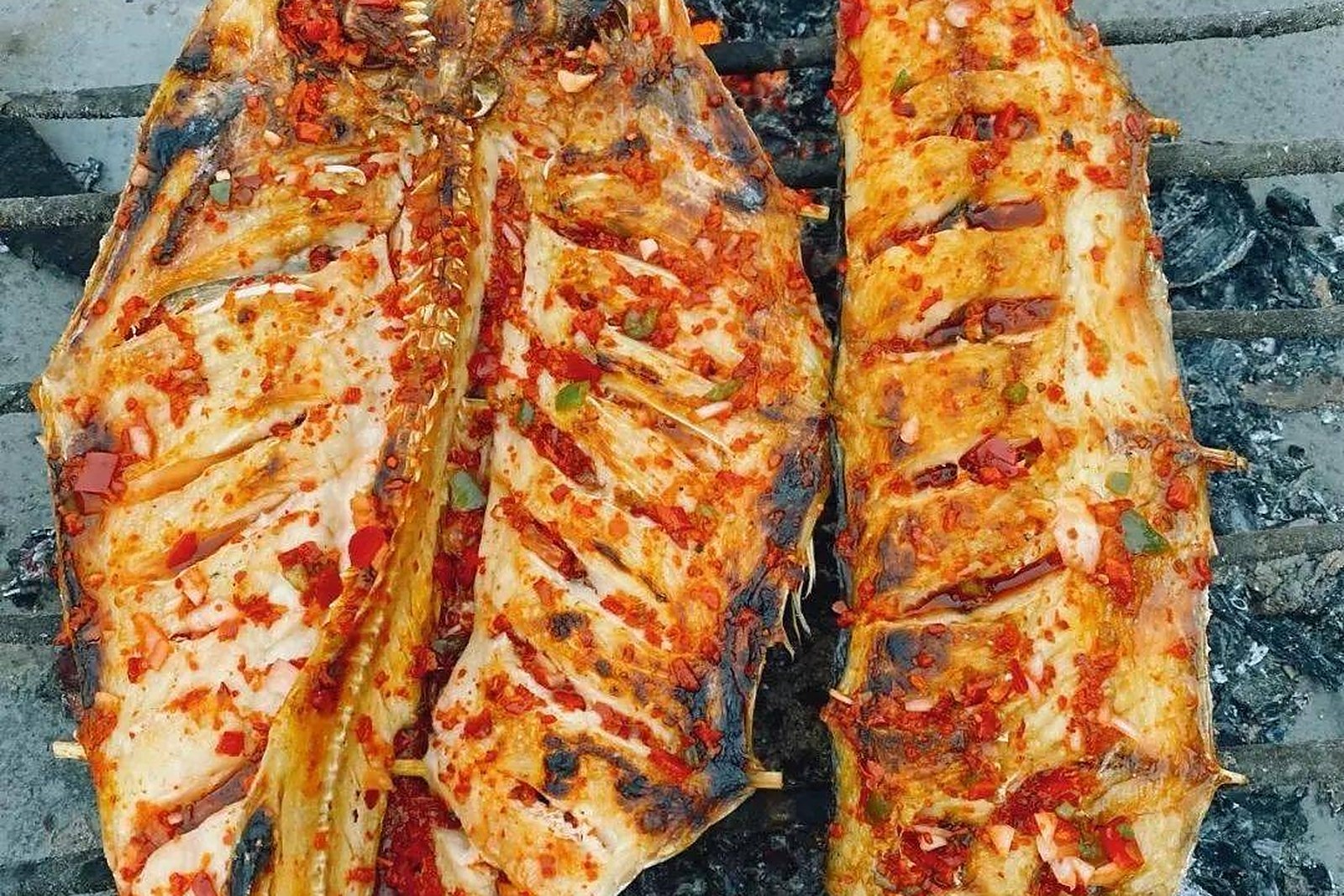
The fish itself is the first surprise. The Tarim’s reaches grow fat carp and the tough-scaled schizothoracin locals prize, and a good roast house picks them live from tanks by the door. The butcher’s work is quick and total: scaled, split along the belly, butterflied flat on the bone so it hangs like a shield, then dusted inside and out with the house mix – coarse salt, cumin, chili flake, a breath of Sichuan pepper in the modern shops. The willow spits are never dry wood; green branches spit and perfume the flesh as they burn, which is the whole point of using them.
The fire is managed like a talk. Coals get raked into a long trench; the fish stand in a row leaning over the heat on their willow spits like an audience; and the roast master walks the line for an hour or more, turning each shield a quarter at a time, basting with oil when the skin tightens, fanning the coals hotter where the queue ordered “urgent”. The skin crisps to lacquer while the fat under it renders into the willow smoke – and the smell, on an open bank at dusk, does half the advertising in town.
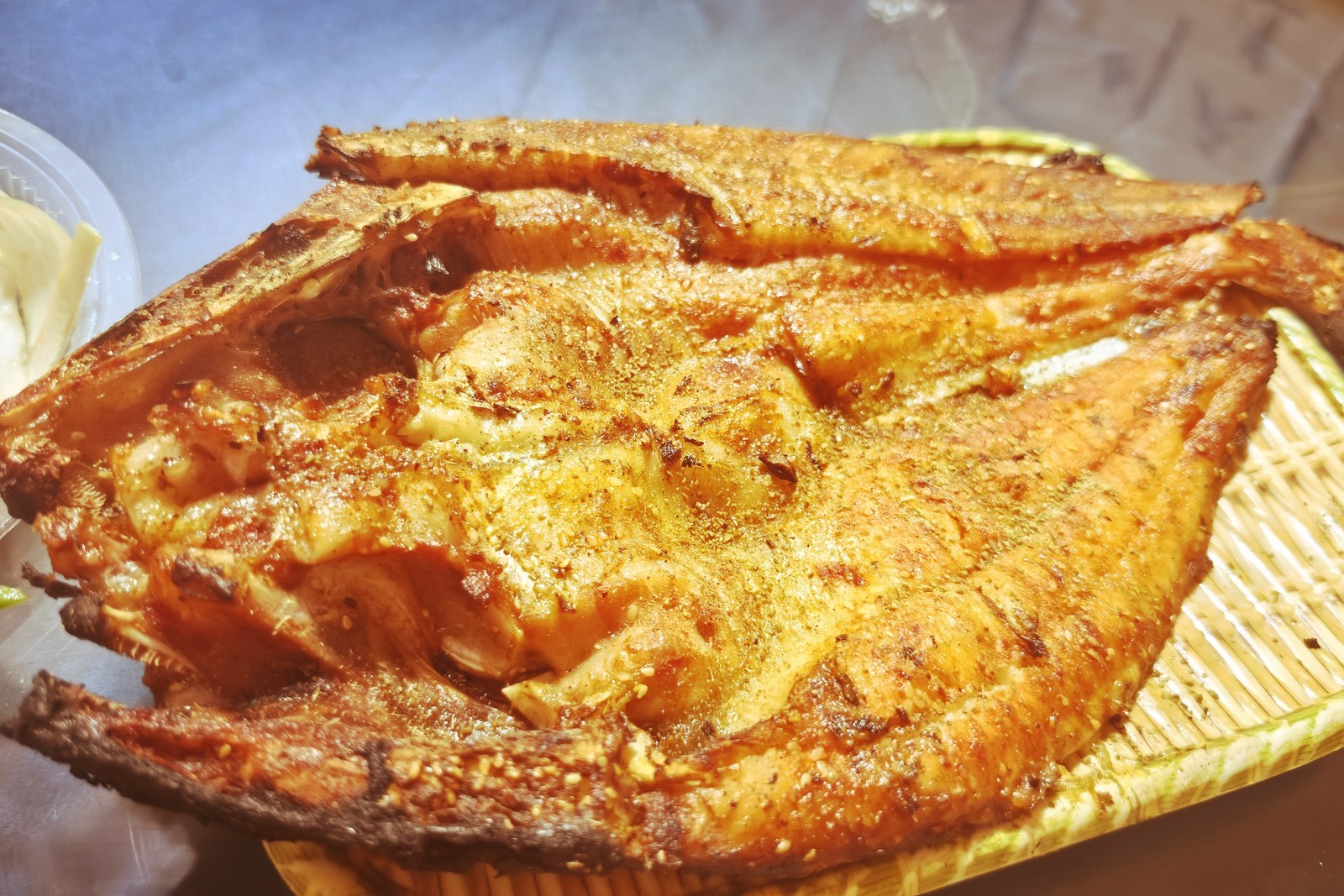
Eating it is a hands-on affair. The finished fish comes off the spit onto paper or a steel tray, cracked into strips along the grain, and the table argues happily over the two textures: the crisp skin-side against the sweet steamed flesh along the spine. Sides stay simple – raw onion, naan torn for wiping the tray, and the beer or brick-tea that the fire dictates. In the villages downriver the same fish might share the grill with eggs in foil and corn in husks; in the city roast-fish houses it arrives with its own tray of beansprouts and potato under the fish, hotpot style.
Beyond the fish itself, the same 阿拉尔市 Ālā’ěr Shì Aral City holds other flavors: 大盘鸡 Dàpán Jī Big Plate Chicken, 手抓饭 Shǒuzhuāfàn lamb pilaf, 馕坑肉 Nángkēng Ròu naan-pit roasted lamb, and 阿拉尔红枣 Ālā’ěr Hóngzǎo Aral red dates – four more doors into the same 阿拉尔市 Ālā’ěr Shì Aral City. With the fish settled, our Aral travel map fills the day.
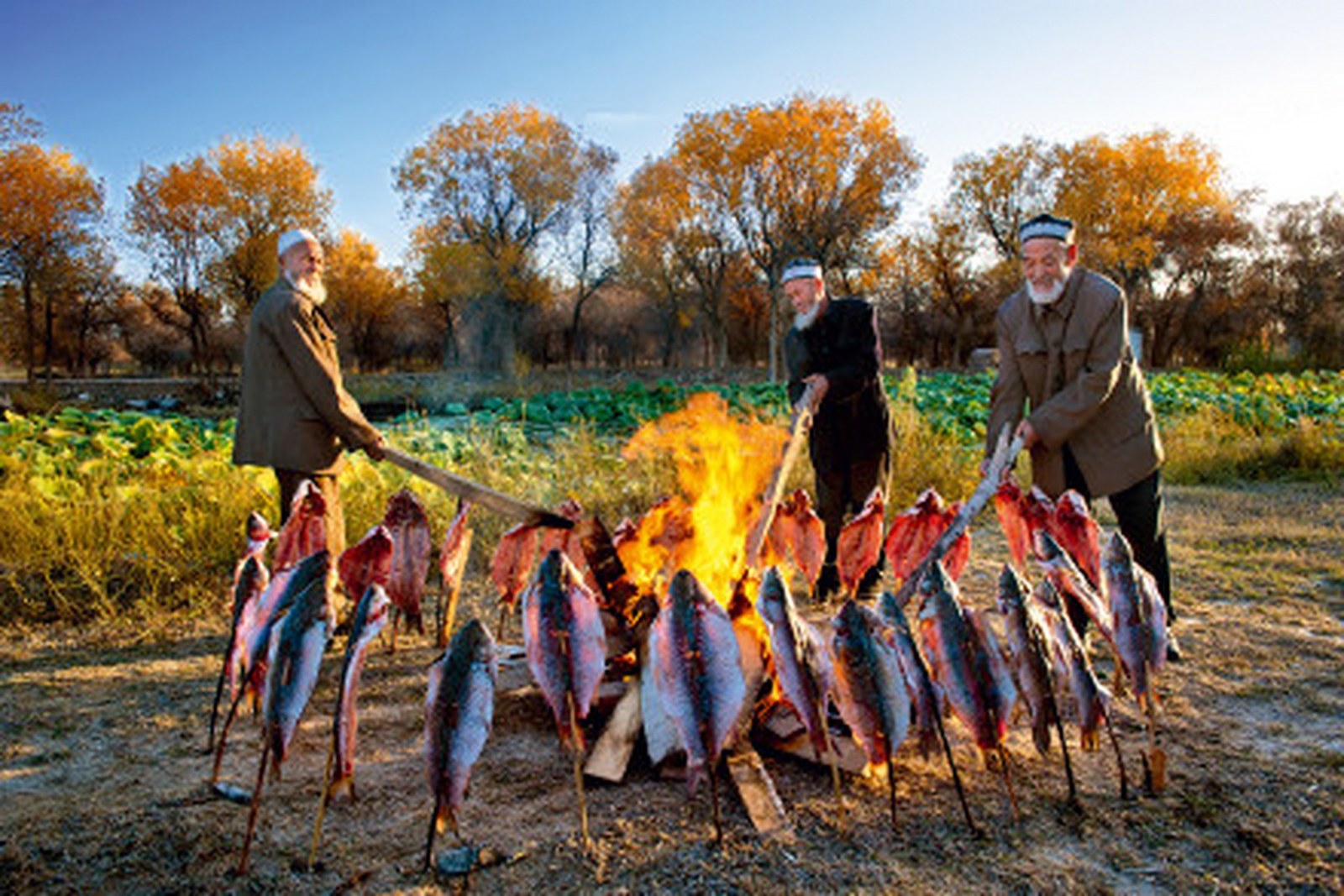
The tradition deserves its due. The roast-fish families of the lower Tarim – Luobu people, the oar-and-reed folk of the delta marshes – kept this fish culture alive through every change of administration and irrigation, and the Aral grills borrow from them with credit: the willow spits, the split-flat roast, the no-pot faith. Eating it in town with linen napkins is modern; the recipe is pure riverbank, and the elders who taste it will tell you which village the fire style came from.
Practicalities first. Roast fish runs from pocket-money prices for a pond carp to dinner-party money for a whole schizothoracin; the classic houses cluster near the river end of the food streets, and the farm grills on the south-bank road roast to order at weekends. Eat outdoors if the weather allows – the smoke and the evening air are part of the recipe – and order the fish “slow” if you have the time; rushed fire is the only way to spoil it.
Beyond the roast houses, fish season follows the river: summer grills run till midnight in the warm air, and winter moves the same fire into courtyards where the fish shares the trench with sweet potatoes. Either way the rule is constant – fish fresh from the tank, willow fresh from the grove, and no hurry anywhere.
Words and Names
What the Locals Know
flowcloud would say Tarim roasted fish is the river’s own cooking kept alive on a green branch: a shield of fish over trench coals, willow smoke doing the seasoning, and the delta’s oldest table manners – fingers, firelight and no hurry at all. All checked November 2026.
Where to find it: The roast-fish houses cluster near the river end of Aral’s food streets, with the south-bank farm grills firing on weekends; order a split-flat carp on willow, slow-roasted over trench coals, and eat it outdoors with onion and naan. All checked November 2026.