
铜瓢炭火,马帮余味。Tóng piáo tànhuǒ, mǎbāng yúwèi – Brass ladle and charcoal fire; the aftertaste of the caravans.
火瓢牛肉 Huǒpiáo Niúròu “fire-ladle beef” is the beef hotpot of 保山 Bǎoshān Baoshan and 腾冲 Téngchōng Tengchong, and the vessel is the whole point: a hand-hammered 黄铜 huángtóng brass 瓢 piáo ladle – the long-handled kitchen dipper of old, wide and shallow – set on a 风炉 fēnglóu charcoal brazier that keeps the soup at a lazy simmer. The dish is a 茶马古道 Chámǎ Gǔdào Tea-Horse Road survivor: 马帮 mǎbāng caravans crossing between 云南 Yúnnán Yunnan and 藏区 Zàngqū Tibet carried the light copper ladle on the trail and could boil beef at any camp, and locals place the dish’s home in 金鸡乡 Jīnjī Xiāng in Baoshan’s 隆阳区 Lóngyáng Qū, with 腾冲 Téngchōng the most famous place to eat it. The beef is 滇西土黄牛 diānxī tǔ huángniú the local free-range yellow cattle, pre-braised in 牛骨汤 niúgǔ tāng bone broth to 八九成熟 bā-jiǔ chéngshú eight or nine parts done, then sold by weight and sliced to order: 带皮牛肉 dàipí niúròu skin-on beef, 牛筋 niújīn tendon, 牛肚 niúdù tripe – called 领肝 lǐnggān locally – and 牛舌 niúshé, which the trade calls 撩青 liáoqīng. The broth comes 清汤 qīngtāng clear-golden or 红汤 hóngtāng red with 牛油 niúyóu tallow, 糊辣椒 hú làjiāo roasted chili, 草果 cǎoguǒ cardamom and 腾冲酸腌菜 Téngchōng suān yāncài pickles – 麻辣 málà hot without parching the throat. A meal runs about 50-70 yuan a head (worth confirming the details), and it is a cold-month, after-dark food.
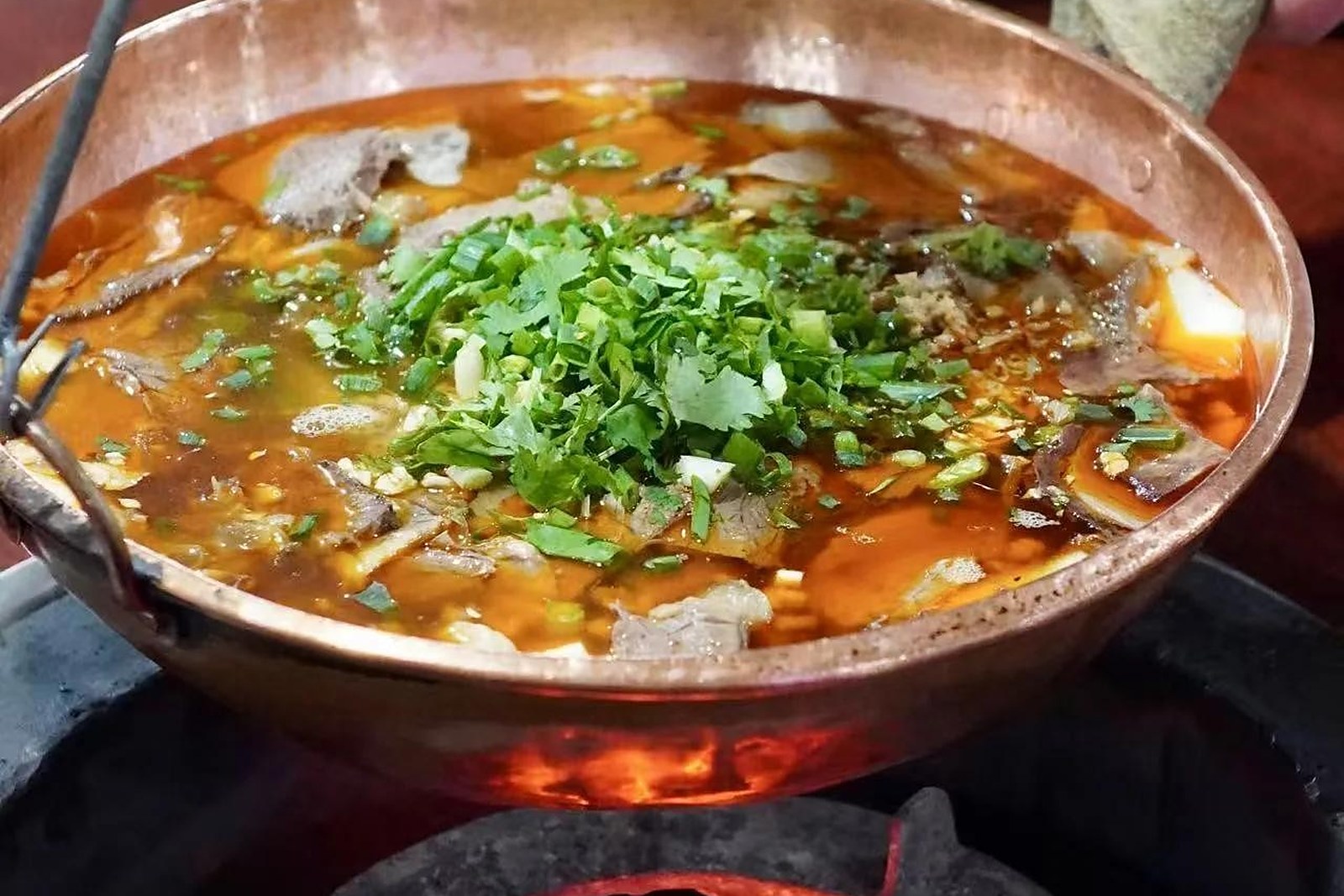
The mechanism is the copper, the charcoal and the pre-braise. Brass conducts heat faster and more evenly than iron, and the ladle’s shallow bowl gives the soup a wide surface, so the beef reheats in minutes and the broth slowly concentrates as it simmers – the 梨炭 lí tàn pear charcoal in the brazier is chosen because it burns steady and smokeless, and 栗炭 lì tàn chestnut charcoal does the same job. Because the meat arrives already braised, the diner waits minutes rather than hours, and the skin and tendon, which need the longest cooking, are what make the pot: 软糯 ruǎnnuò sticky and springy rather than lean-meat plain. The 红汤 hóngtāng works on the tallow-and-chili principle – 牛油 niúyóu carries the chili’s heat across the tongue, and the 腾冲酸腌菜 Téngchōng suān yāncài cuts it with a sour, fermented edge – while the 清汤 qīngtāng exists so the beef can be judged on its own. The other half of the dish is the 蘸水 zhànshuǐ dip: 糊辣椒 hú làjiāo – dried chili roasted then hand-rubbed into coarse flakes, never a grey powder – moistened with a ladle of the hot broth, plus 腐乳 fǔrǔ fermented tofu, 蒜泥 suànní garlic, 芫荽 yánsuī cilantro, 葱花 cōnghuā scallion, 花椒面 huājiāo miàn pepper powder and the non-negotiable 小叶薄荷 xiǎoyè bòhe small-leaf mint; 折耳根 zhé’ěrgēn for those who like it. The order of eating is fixed: 先喝汤 xiān hē tāng soup first, then the meat, then whatever the table has added.
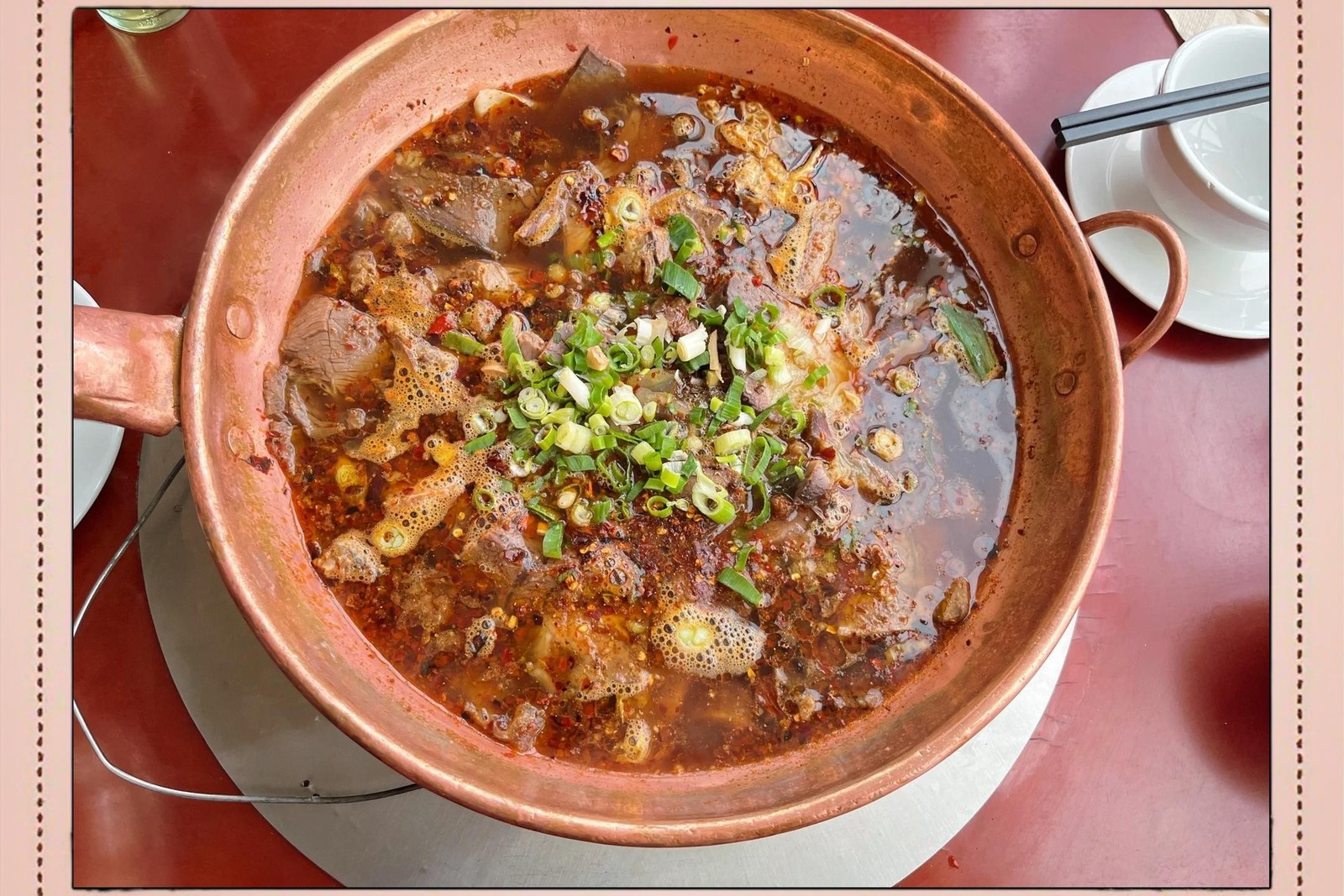
Locals eat it 围炉 wéilú gathered round the brazier, in the evening, once the weather turns. The move is to order by weight – 半斤 bànjīn 250 g of beef plus 牛杂 niúzá offal and a plate of vegetables will feed two (worth confirming current per-jin prices) – to ask for 现切 xiànqiè sliced to order, and to put the chili in the 蘸水 zhànshuǐ rather than the pot, so the soup stays drinkable to the last ladle. A plate of 腾冲酸腌菜 Téngchōng suān yāncài sits on the table as the 开胃 kāiwèi opener, and the vegetables – 洋芋 yángyù potato, 白菜 báicài cabbage, 豆芽 dòuyá bean sprouts, 豆腐皮 dòufu pí tofu skin and more mint – go in last, when the broth has absorbed the beef. The honest tests are three: the 糊辣椒 hú làjiāo should be hand-rubbed and roasted that day; the beef should bounce off the tooth rather than melt; and the broth should taste of bone, not of powder. Newcomers are told the mint is not a garnish but part of the bite – take a leaf with every piece – and that the pot is a rough, sleeves-up meal, 粗犷 cūguǎng by design, which is the caravan’s manners surviving on a city table.
Words and Names
火瓢牛肉 Huǒpiáo Niúròu fire-ladle beef · 保山 Bǎoshān Baoshan · 腾冲 Téngchōng Tengchong · 隆阳区 Lóngyáng Qū Longyang district · 金鸡乡 Jīnjī Xiāng Jinxi township · 茶马古道 Chámǎ Gǔdào the Tea-Horse Road · 马帮 Mǎbāng the caravans · 铜瓢 Tóng Piáo brass ladle · 风炉 Fēnglóu charcoal brazier · 土黄牛 Tǔ Huángniú local yellow cattle · 牛骨汤 Niúgǔ Tāng bone broth · 带皮牛肉 Dàipí Niúròu skin-on beef · 牛筋 Niújīn beef tendon · 糊辣椒 Hú Làjiāo roasted chili flakes · 小叶薄荷 Xiǎoyè Bòhe small-leaf mint · 蘸水 Zhànshuǐ the dip · 腾冲酸腌菜 Téngchōng Suān Yāncài Tengchong pickles
What the Locals Know
The local knowledge about the pot is the ladle, the dip and the soup’s first bowl. The 铜瓢 tóng piáo must be brass over 梨炭 lí tàn – copper conducts the heat evenly and keeps the ladle’s wide mouth at a steady simmer, and a house that serves the same beef in an iron pot has the recipe without the reason. The second check is the 糊辣椒 hú làjiāo: hand-rubbed the same day into coarse flakes, moistened with a spoon of the hot broth, never a grey pre-powder, and the 小叶薄荷 xiǎoyè bòhe goes in the dip rather than on the side of the plate. The third is the order of the meal: 先喝汤 xiān hē tāng – soup first, so the 牛骨汤 niúgǔ tāng is tasted before the beef and the chili – then 带皮牛肉 dàipí niúròu and 牛筋 niújīn, then the vegetables last, when the broth has taken the meat. And the fourth is the price logic: the beef is sold by weight and sliced 现切 xiànqiè to order, so 半斤 bànjīn plus offal and greens is the honest table for two (worth confirming prices and current houses).
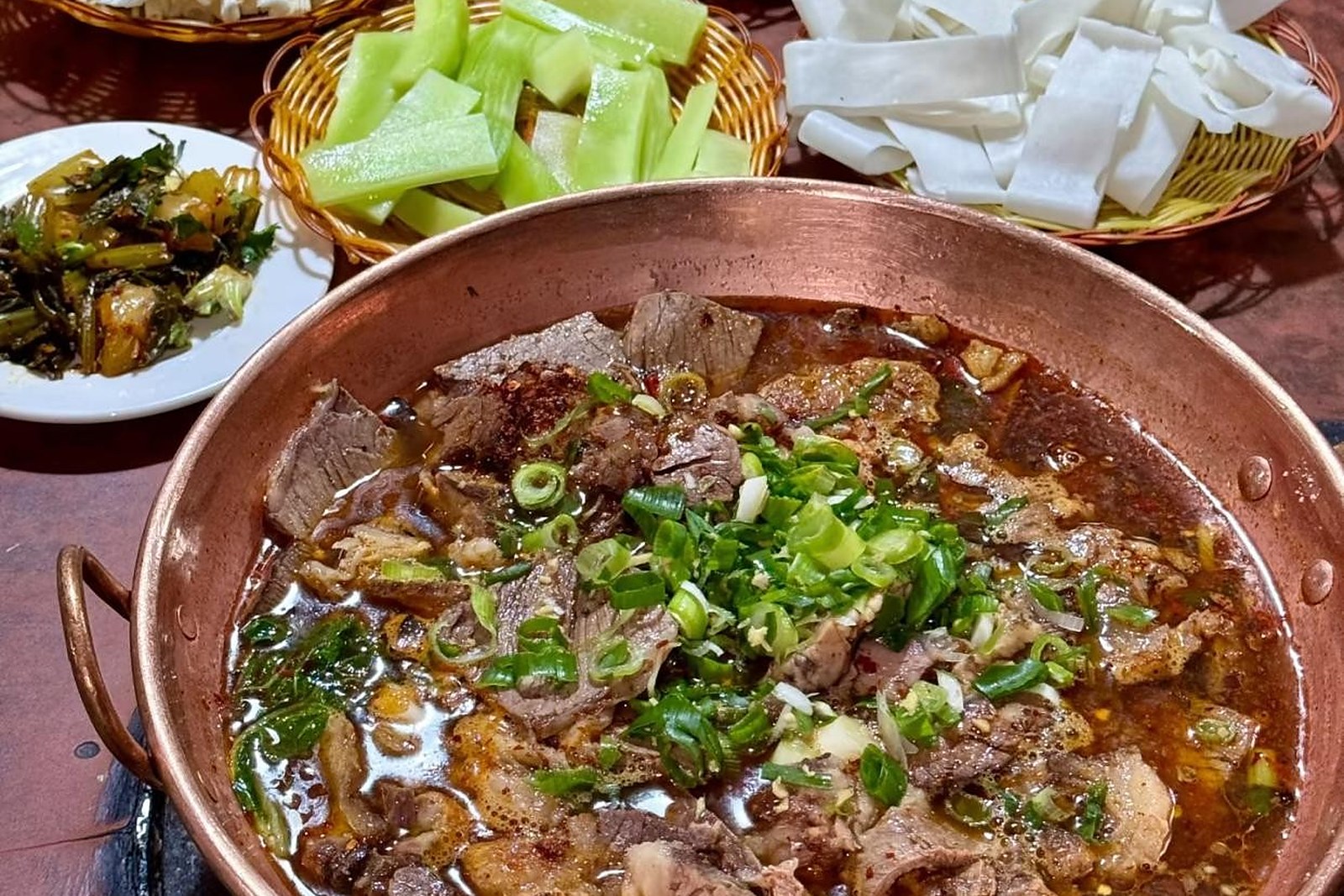
flowcloud would say that Huopiao beef is brass and charcoal – a hand-hammered 铜瓢 tóng piáo over 梨炭 lí tàn, 土黄牛 tǔ huángniú beef pre-braised and sliced to order, dipped in hand-rubbed 糊辣椒 hú làjiāo with 小叶薄荷 xiǎoyè bòhe – and that the honest move is a cold evening in 保山 Bǎoshān, soup first and mint in every bite, because the ladle is the pot and the charcoal is the stove. All checked October 2026.
Where to find it: the 火瓢牛肉 Huǒpiáo Niúròu houses of 保山 Bǎoshān’s 隆阳区 Lóngyáng Qū – 金鸡 Jīnjī and 板桥 Bǎnqiáo claim the origin – and of 腾冲 Téngchōng – brass ladle over 梨炭 lí tàn pear charcoal, about 50-70 yuan a head, with 糊辣椒 hú làjiāo dip and 小叶薄荷 xiǎoyè bòhe (worth confirming the details); queues build after five in the cold months. All checked October 2026.