
封坛七时,骨酥肉香。Fēng tán qī shí, gǔ sū ròu xiāng – Sealed in the jar for seven hours; bones soft, meat fragrant.
坛子鸡 Tánzi Jī jar chicken is the slowest dish in 腾冲 Téngchōng Tengchong: a whole bird sealed in a pottery jar over a low fire for seven hours, opened at the table and pulled apart by hand. Locals date it 源于明末,兴于清初 yuán yú míngmò, xìng yú qīngchū to the late Ming and the early Qing, and tie it to the same story as the city’s 大救驾 Dà Jiùjià: after the erkuai rescued the 永历帝 Yǒnglì Dì Yongli emperor on his flight to Burma, his cook is said to have found a farmhouse 土鸡 tǔjī free-ranging chicken and sealed it in a jar with a herbal brine, and the recipe stayed behind when the court’s servants scattered into the population. The bird matters more than the recipe: a 放养 fàngyǎng free-ranging local chicken of about ten months, neither too fat nor too thin, skin whole and unmarked – a broiler collapses in the jar. The jar is a 特制陶坛 tèzhì táo tán purpose-made pottery jar, or a local 腾冲砂锅 Téngchōng shāguō sand-pot when no jar is at hand, and the mouth is sealed with 湿布 shībù wet cloth or 面糊 miànhù dough paste so that nothing escapes. A whole jar chicken runs about 88-168 yuan and needs ordering ahead (worth confirming the details) – even in 腾冲 Téngchōng it is not a walk-in dish, because seven hours of fire cannot be hurried.
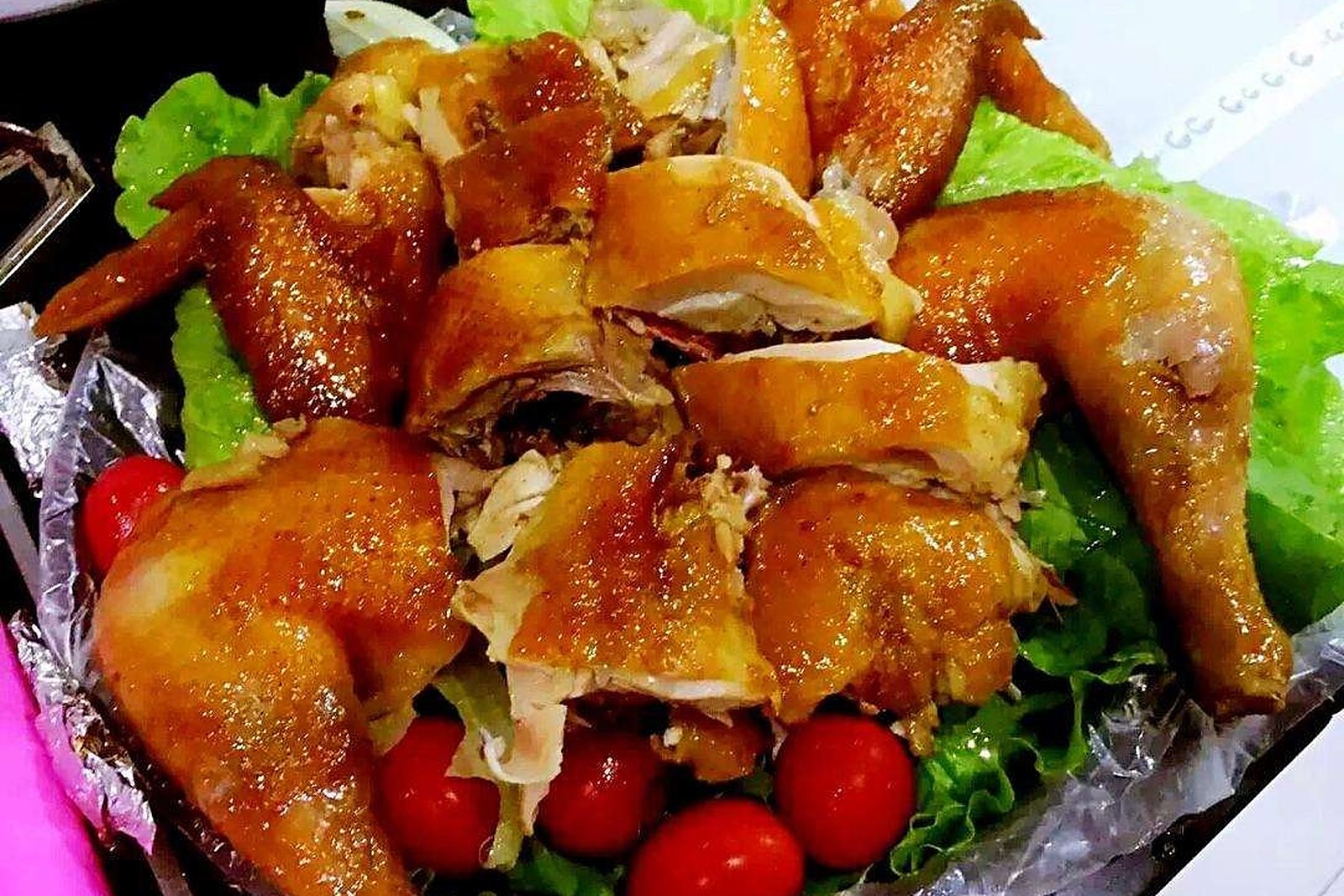
The mechanism is the lacquer, the seal and the time. The cleaned bird is dried and shaped, brushed with 蜂蜜 fēngmì honey for colour, then deep-fried 金黄 jīnhuáng golden – the glaze seals the skin so seven hours of steam cannot soften it, and the 鸡皮 jīpí comes out still 脆 cuì crisp. Into the jar goes a 卤水 lǔshuǐ brine of a dozen-odd 中草药 zhōngyàocái herbs in a 纱布袋 shābùdài gauze bag – 良姜 liángjiāng galangal, 桂皮 guìpí cinnamon, 草果 cǎoguǒ cardamom, 干姜 gānjiāng dried ginger – and some kitchens add 云腿 yúnhuǐ Yunnan ham, 菌子 jūnzi wild mushrooms or 干贝 gānbèi scallops. Then the jar goes over 小火 xiǎohuǒ the lowest fire for four hours; the fire is killed and the 余温 yúwēn residual heat finishes the bird for three more, seven hours in all, and the seal is never lifted – every peek loses the 香 xiāng. What comes out is 色金黄玉润 sè jīnhuáng yù rùn a glossy jade-gold, 皮脆肉嫩骨酥 pí cuì ròu nèn gǔ sū crisp-skinned, tender-fleshed, bones that crumble, 不闷不腻 bù mèn bù nì rich without heaviness, herbs in the background and never a 药味 yàowèi medicinal front. The dish is the border town’s history in a jar: 腾冲 Téngchōng sits on the old 蜀身毒道 Shǔ Shēndú Dào route to Burma, and the recipe is traced to 洪武 Hóngwǔ-era 戍边 shùbiān garrison soldiers whose central-plain kitchens met southern spices. The bird is eaten 撕着吃 sī zhe chī torn by hand, with a plate of 酸辣腌菜 suānlà yāncài sour-hot pickles beside it to cut the richness.
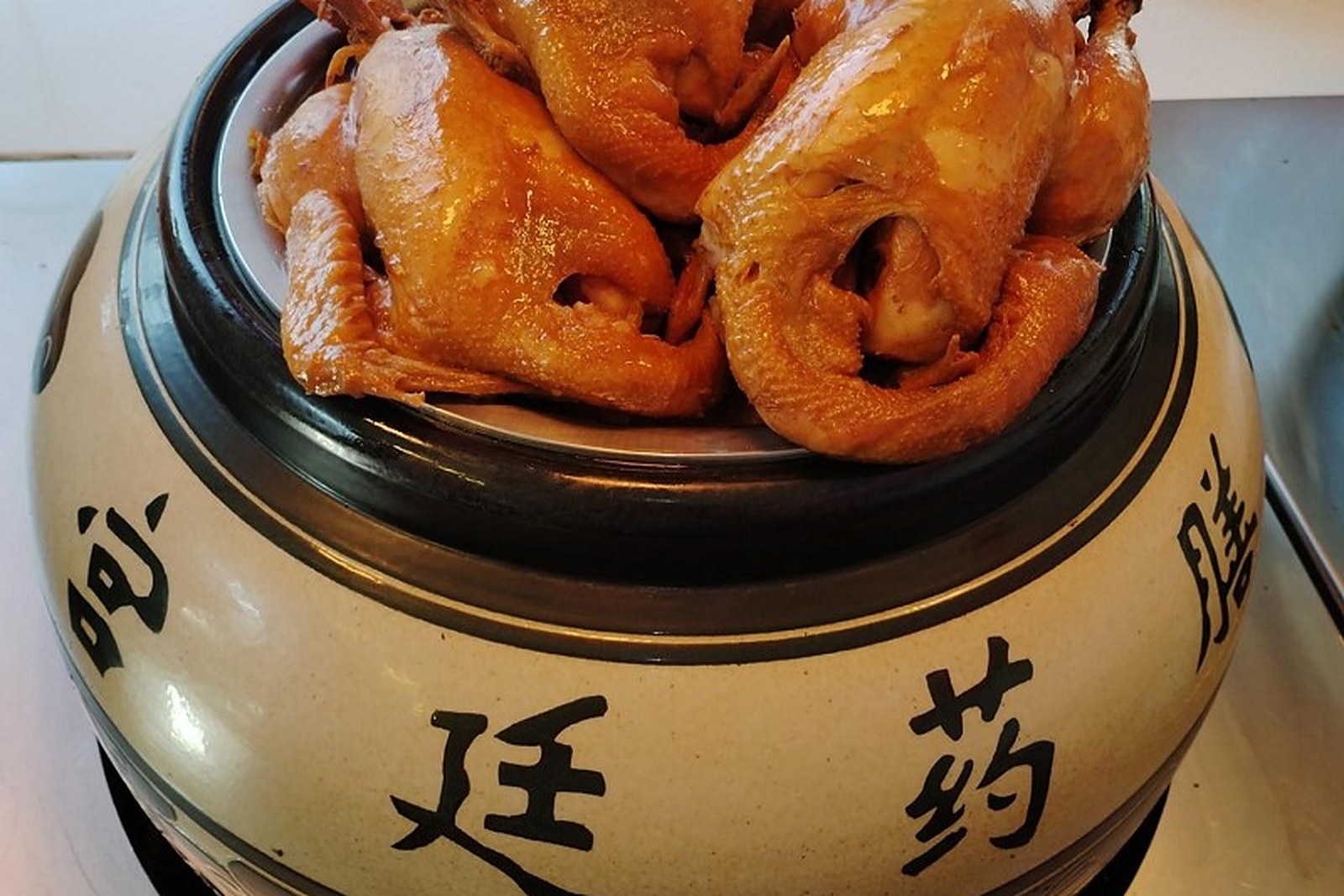
Locals treat it as an order-ahead dish for the table, not a weeknight bowl. The move is to phone a 腾冲 Téngchōng house a day early, collect the jar, and open it at the table if the house lets you – the first burst of steam is the dish’s own advertisement – then tear the bird apart rather than carve it, eating the 鸡皮 jīpí skin first while it is hot and mopping the plate with rice. A jar bird feeds three or four with rice (worth confirming jar sizes and prices), and the honest tests are three: the meat should fall from the bone yet the skin should still hold 脆 cuì crisp; the bones should be soft enough to chew, which is why locals give the dish to grandparents and children; and the herbal note should sit behind the chicken, never in front of it – a jar that tastes of 中药 zhōngyào medicine has been dosed, not seasoned. Newcomers are told to eat it with the 酸辣腌菜 suānlà yāncài and rice rather than alone, because seven hours over a low fire make a rich bird, and not to confuse it with the 汽锅鸡 qìguō jī steam-pot chicken of southern Yunnan, which is a clean chicken soup: the jar bird is lacquered, herbed and sealed, and it tastes of time more than of steam.
Words and Names
坛子鸡 Tánzi Jī jar chicken · 腾冲 Téngchōng Tengchong · 永历帝 Yǒnglì Dì the Yongli emperor · 土鸡 Tǔjī free-ranging chicken · 陶坛 Táo Tán pottery jar · 卤水 Lǔshuǐ herbal brine · 纱布袋 Shābùdài gauze bag · 良姜 Liángjiāng galangal · 桂皮 Guìpí cinnamon bark · 草果 Cǎoguǒ black cardamom · 蜂蜜 Fēngmì honey · 云腿 Yúnhuǐ Yunnan ham · 菌子 Jūnzi wild mushrooms · 蜀身毒道 Shǔ Shēndú Dào the old Burma route · 汽锅鸡 Qìguō Jī steam-pot chicken · 保山 Bǎoshān Baoshan
What the Locals Know
The local knowledge about the jar is the seal, the skin and the hours. The 陶坛 táo tán must be sealed – 湿布 shībù wet cloth or 面糊 miànhù dough paste over the mouth – because seven hours over 小火 xiǎohuǒ with a lifted lid is steaming, not jar-cooking, and the 香 xiāng that the dish sells walks out with the steam. The second check is the 蜂蜜 fēngmì glaze: the bird is brushed with honey and fried 金黄 jīnhuáng before it goes in, which is why the 鸡皮 jīpí comes out crisp instead of stewed, and a jar chicken with soft, pasty skin skipped the lacquer. The third is the 卤水 lǔshuǐ – a dozen-odd 中草药 zhōngyàocái in a 纱布袋 shābùdài, with the herbs behind the chicken rather than in front of it, because a jar that tastes of 中药 zhōngyào medicine has been dosed, not seasoned. And the fourth is the schedule: the bird needs four hours on the fire and three more off it, so the dish is ordered a day ahead and opened at the table, torn by hand, skin first while it is hot (worth confirming houses, jar sizes and prices).
flowcloud would say that Tanzi chicken is fire, seal and time – a free-ranging bird lacquered with 蜂蜜 fēngmì, sealed in a 陶坛 táo tán over a low fire for seven hours, opened and torn by hand – and that the honest move is to order it a day ahead in 腾冲 Téngchōng and eat the skin first while it is hot, because the jar is the slowest thing on the menu. All checked October 2026.
Where to find it: 腾冲 Téngchōng jar-chicken houses – a whole 坛子鸡 Tánzi Jī runs about 88-168 yuan, seven hours over a low fire in a sealed 陶坛 táo tán, ordered a day ahead (worth confirming the details); it appears on 保山 Bǎoshān menus too, but rarely done properly outside the region. All checked October 2026.