Tengqiao Ribs
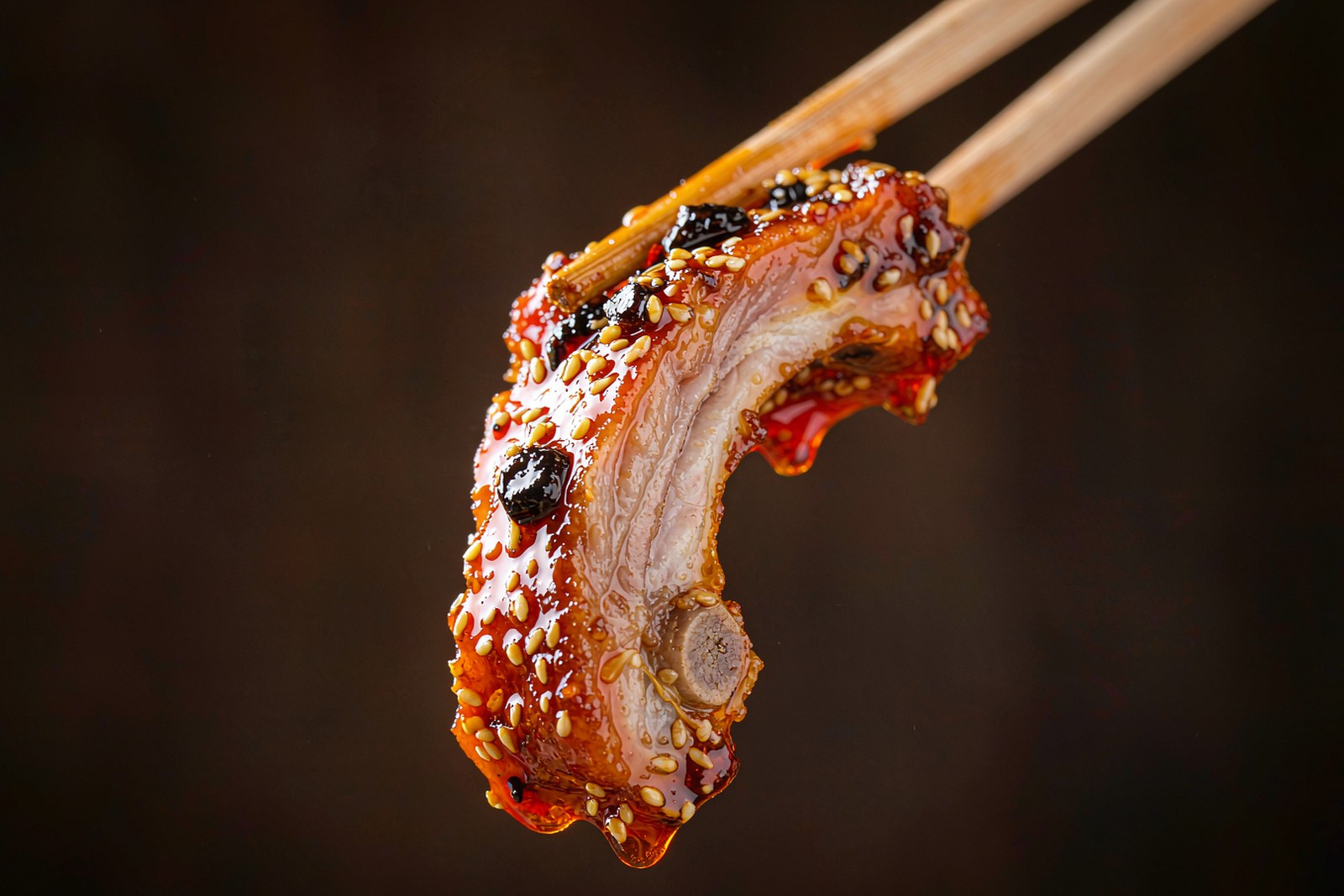
The ribs arrive a deep golden-red, glazed so they catch the light, and the smell reaches you before the plate does — a clean, sweet, fried smell, with a faint note of honey and something warm behind it. You pick one up, and the meat comes away from the bone in a single clean pull, crisp on the outside and tender within.
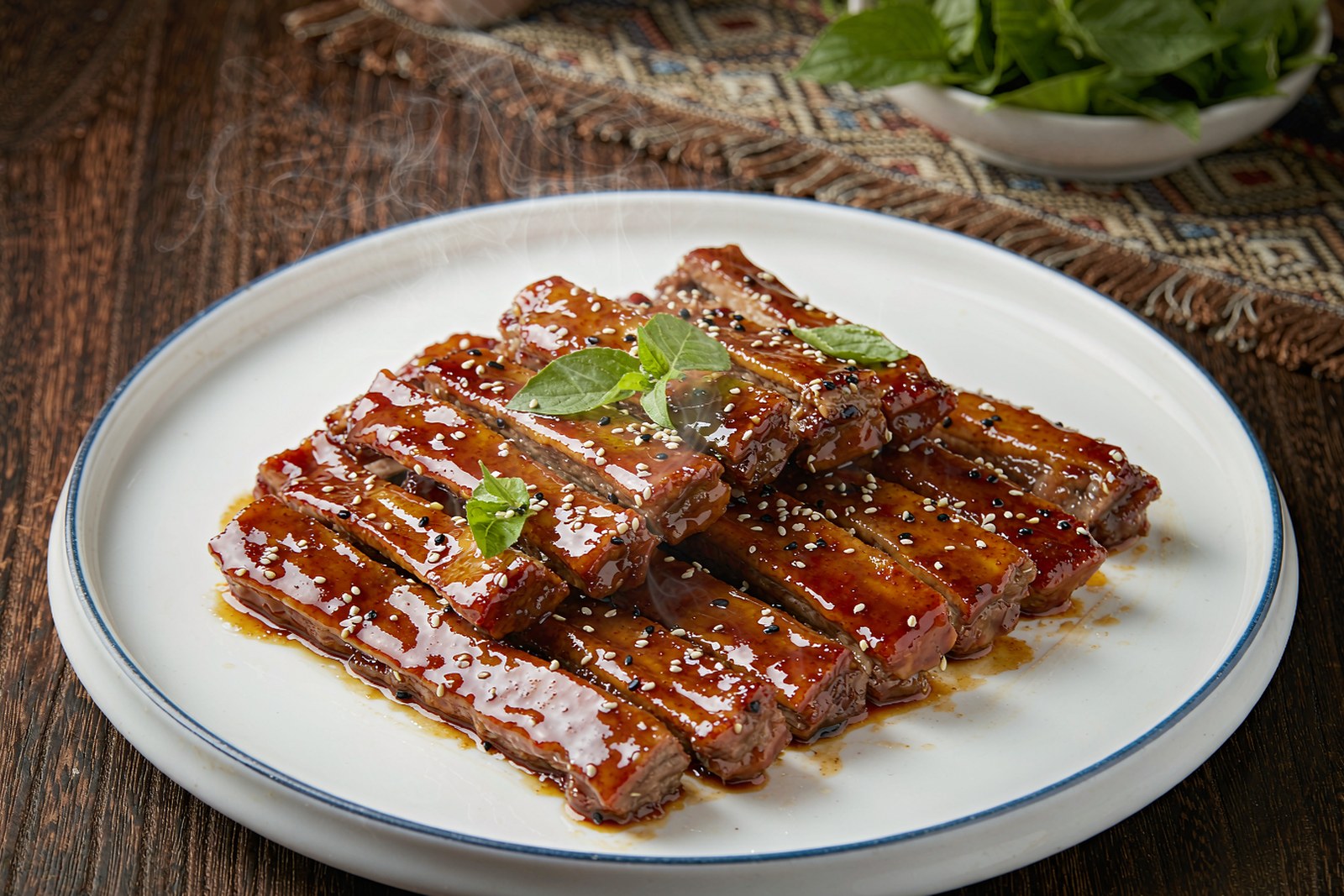
This is 藤桥排骨 (Téngqiáo páigǔ), Tengqiao ribs, and it is the dish that 三亚 (Sānyà) claims as the first of its 十大名菜 (shí dà míngcài, ten famous dishes). It is arguably the one dish that stands in for the city’s own cooking, because — unlike the famous rabbit — the four great dishes of Hainan all come from elsewhere in the province, and 藤桥排骨 is the one that 三亚 can call its own.
The Dish That Put a Town on the Map
藤桥排骨 is named for 藤桥 (Téngqiáo), a town in 海棠湾 (Hǎitáng Wān, Haitang Bay) in the east of 三亚 district, about twenty-eight kilometres from the city centre — the same area that holds 蜈支洲岛.
The story begins with a man called 朱征义 (Zhū Zhēngyì). In the 1970s he was already a well-known local cook, the man the town called in to do the cooking at weddings and other big occasions. Around 1983, he opened a small shop in 藤桥 town — at first a single-room 小平房, a low flat-roofed building — with a simple menu built around fried pork ribs. He marinated the ribs in ginger-garlic juice and honey and fried them slowly, and the result was so good that word spread far beyond the town, and people began driving out from 三亚 and even 海口 to eat them.
The restaurant became 朱家酒店 (Zhū Jiā Jiǔdiàn, the Zhu Family Hotel), and it has become the defining name of 藤桥排骨 — the one that near enough every 三亚 person will tell you is the place to go. From 1997 the dish was registered as a trademark, and in 2025 the 藤桥排骨制作技艺 (the craft of making Tengqiao ribs) was added to 三亚’s municipal list of intangible cultural heritage. It sits at the top of the city’s ten famous dishes, and in a 2024 city poll it placed third among the most popular.
The Secret Is the Honey and the Slow Oil
The official description of 藤桥排骨 is 外酥里嫩 (wài sū lǐ nèn) — crisp outside, tender inside — and it gets there through a specific method.
The ribs are the rack of a local pig — 藤桥本地农家自养土猪, a local farm-raised 土猪 (tǔzhū, “soil pig”), the deep-flavoured free-range pork that is prized across the south. The ribs are cut into long segments, about twelve centimetres, and they are marinated in a mix of 姜蒜汁 (ginger-garlic juice) and 蜂蜜 (fēngmì, honey), together with a range of seasonings that each shop keeps to itself. The honey is the crucial part, because it is what caramelises and gives the finished rib its glossy, red-gold glaze and its subtle sweetness.
Then they are fried slowly — 慢火油炸, low and slow, or in the more elaborate 三炸三焖 (“fry three times, braise three times”) method that some kitchens use — until the outside is crisp and lacquered and the inside is still moist and tender. The ribs emerge a deep golden-red, sweet and slightly salty, the meat pulling cleanly off the bone.
Eat them hot, immediately, the way they are meant to be eaten. The crispness fades as they cool, and a cold 藤桥排骨 is a different and lesser thing. Add a dip of 番茄酱 (ketchup), or 辣椒面 (chilli powder), or — the local preference — the 黄灯笼椒酱 (huáng dēng lóng jiāo jiāng, yellow lantern chilli paste), which gives the sweet rib a fierce, tangy heat that is the ideal counterpoint.
The Restaurant That Made It Famous
朱家酒店 deserves its own mention, because it is a genuine 老字号 (lǎozìhao, time-honoured name), and it has outlasted every fad that has come and gone in 三亚.
The restaurant has changed with the times but kept its character. It moved to a larger building in 2012 on 新居民路, near the 藤桥 highway exit, and it is a five-storey place that seats several hundred across its dining halls, with private rooms for groups. But the thing you notice first is how much has not changed: the wooden cabinet at the front, the old clock on the wall, the landscape painting — the decor of a 1990s Chinese restaurant, preserved for decades. The service, too, is old-school Hainan: a 铁壶 (tiěhú, iron pot) of 鹧鸪茶 (zhègū chá, the herbal tea of the island) is set down, and they bring a basin of hot water so you can rinse your own bowls and chopsticks — the island’s 烫碗 (tàngwǎn, bowl-warming) ritual — before you eat.
The ribs are the signature, and they are the reason to go. But the menu is a genuine 海南 vermilion table: 酸菜猪肚 (pickled-cabbage pork tripe), 椒盐泥鳅鱼 (salt-and-pepper loach), 香煎马鲛鱼 (pan-fried mackerel), 芒果鸡 (the yellow-skinned chicken that is raised in mango orchards), and 胡瓜粉丝炒虾米 (cucumber vermicelli with dried shrimp). It is an honest, unpretentious local restaurant, and it is the kind of place where the same families have eaten the same ribs for thirty years.
What the Locals Know
- Order the medium portion. A 中份 of ribs is the sensible order for two; it is rich and you will not need much else.
- Eat them hot, immediately. The crispness is the point and it does not wait. Do not let them sit at the table while you talk.
- Add the yellow chilli. The 黄灯笼椒酱 gives the sweet rib a tangy heat that balances it perfectly.
- Order 鹧鸪茶. The herbal 铁壶 tea that everyone drinks with 藤桥排骨 is exactly the right thing to cut the richness.
- Go for the atmosphere too. 朱家酒店 has not redecorated since the 1990s, and that is a feature, not a bug.
The Name
藤桥 (Téngqiáo) is the town in 海棠湾, and 排骨 (páigǔ) means ribs. The name means literally “Tengqiao ribs” — the ribs of the town of Tengqiao — and it is as simple as that. The town gave the dish its name because the dish was made famous there; 藤桥 the town is now, in turn, known across the province for the ribs.
flowcloud would say that a dish whose sole invention was to fry ribs in honey until they turn red-gold is the most honest kind of cooking — and that a restaurant which has done the same thing for thirty years without changing the wallpaper is exactly the kind of place that is worth a detour off a highway.
Where to find it: 朱家酒店 (Zhu Family Hotel), 新居民路, 藤桥, 海棠湾, 三亚 — near the 藤桥 highway exit, about 28 km east of the city centre. The home of 藤桥排骨 since 1983. Slow-fried local pork ribs marinated in ginger-garlic and honey, served red-gold, crisp outside and tender inside. Around ¥60–80 a head. Open roughly 11:00–21:00. Eat the ribs hot and add the yellow lantern chilli paste. Also try the 芒果鸡 and the 鹧鸪茶.