
The Bowl That Runs the City: Thukpa
一碗藏面暖三季,骨汤葱花慰旅人 Yī wǎn zàng miàn nuǎn sān jì, gǔ tāng cōnghuā wèi lǚrén – One bowl of thukpa warms three seasons; bone broth and scallion comfort the traveler
藏面 zàng miàn thukpa, the noodle soup that anchors Tibetan home cooking and teahouse menus alike, is the bowl most families of 西藏自治区日喀则市 Xīzàng Zìzhìqū Rìkāzé Shì Shigatse reach for on cold evenings – wheat noodles simmered in a broth of yak beef and bone, finished with slivered radish or greens and a spoon of chili. In the city’s noodle shops it appears from the first hour of the morning, ladled from vast stockpots into enamel bowls beside sweet tea and fried dough.
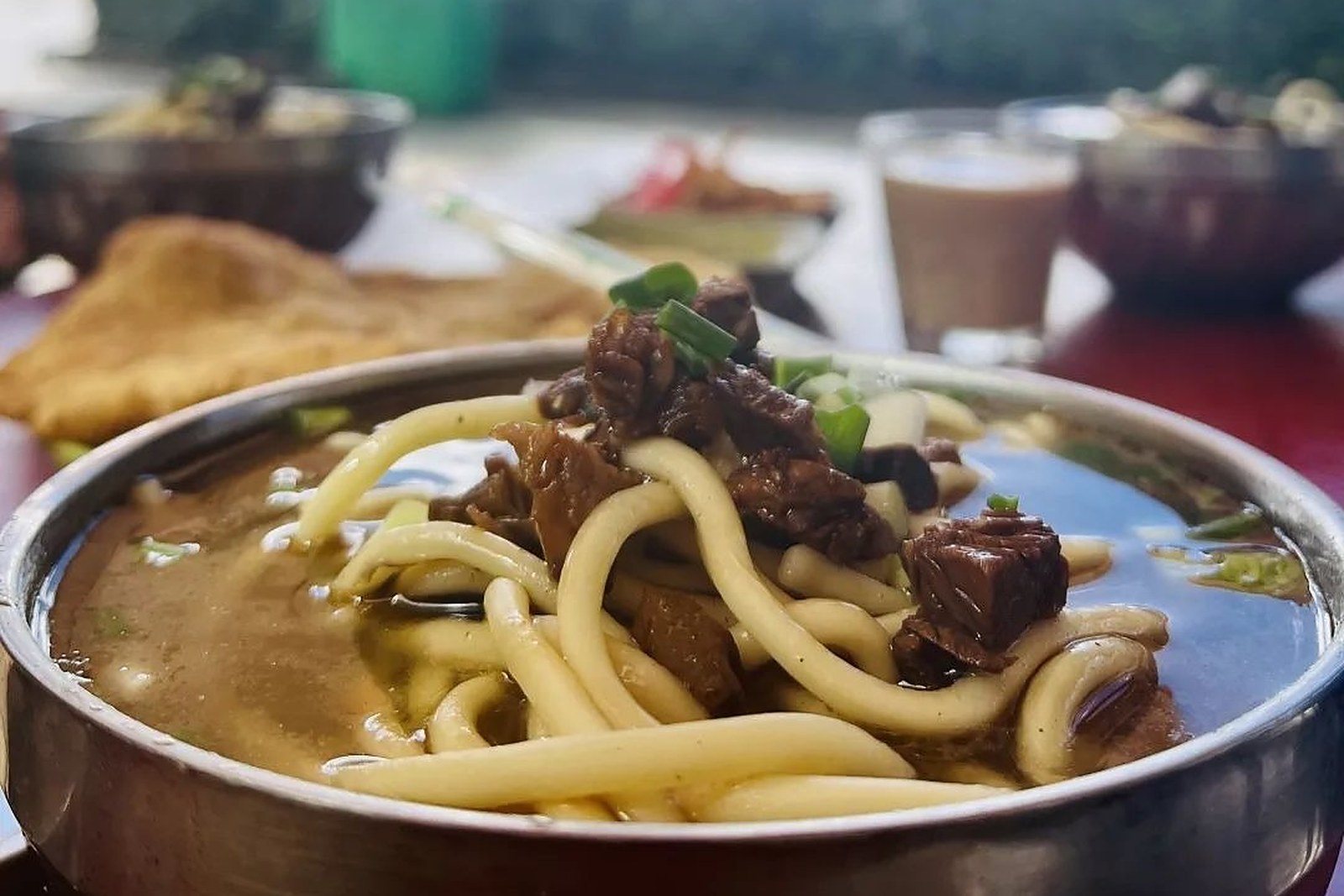
The broth is the craft. Yak bones go into the pot before dawn and stay there all day, and the good shops refuse to dilute – when the pot runs low they cut the service rather than add water, which is why the last bowls before noon taste the deepest. The noodles themselves are rolled and cut fresh each morning, thick enough to stand up to the broth, and the finished bowl runs a scatter of minced yak, onion and scallion over the top under a veil of steam.
Thukpa eats like a working meal because it is one. The small teahouse serving – a bowl the size of a fist, more broth than noodle – is the morning standard, ordered in twos and threes with the first thermos of sweet tea; the restaurant version enlarges everything and adds dried cheese or fried dough strips to the top. Either way the rhythm is the same: noodles first while they hold their bite, then the broth drunk straight from the bowl, then the long pause that a hot meal at 3,800 meters earns.
What thukpa really measures is the household behind it. Every family keeps its own broth habit – some richer, some sharper with radish, some with the winter’s dried cheese melted in – and a Shigatse grandmother judges a year by its noodle soups the way a wine region judges vintages. For the traveler, the bowl is the fastest route into that household logic: cheap, universal, unpretentious, and different at every counter that ladles it.
The same 西藏自治区日喀则市 Xīzàng Zìzhìqū Rìkāzé Shì Shigatse holds more flavors worth chasing: 朋必 péngbì the grasped pea-starch snack, 藏包 zàng bāo the steamed yak-meat buns, 青稞酒 qīngkě jiǔ the fermented barley wine, or 奶渣 nǎizhā the dried cheese curds – four more doors into the same Shigatse table.
Words and Names
藏面 zàng miàn thukpa, the Tibetan noodle soup; 牦牛肉汤 máoniú ròu tāng the yak-bone broth at its base; 骨汤 gǔ tāng the bone stock, the craft’s whole secret; 藏面馆 zàng miàn guǎn the noodle shop; 甜茶 tiánchá sweet tea, the bowl’s standing companion; 葱花 cōnghuā the scallion scatter that finishes it.
What the Locals Know
The depth test is the second sip of broth – it should land darker and sweeter than the first, a sign the pot has been running since dawn. The small bowl is not stinginess but rhythm: two small rounds beat one large, and the broth matters more than the noodles. And the morning counter knows its regulars by order, not by name – “the usual, two bowls” is a complete conversation. All checked November 2026.
flowcloud would say thukpa is the city’s comfort in enamel: a pot that started before dawn, a bowl that costs pocket change, and a warmth that outlasts the weather outside.
Where to find it: Every teahouse serves it with the morning service; the noodle shops around the market streets and the bus station run it all day, and the household version is what village guesthouses hand you across the prefecture. All checked November 2026.