
Golden Webs of the Festival: Sanzi
细面盘成千股辫,油锅一炸满盘金 Xì miàn pán chéng qiān gǔ biàn, yóuguō yī zhá mǎn pán jīn – Fine dough coils into a thousand-strand plait; one dip in the oil turns the whole tray gold
馓子 sǎnzi Sanzi are the Hui festival’s golden webs – ropes of fine dough fried into crackling coils that shatter at a touch, made in great bundles before Eid and packed as gifts, their sesame sweetness marking every celebration table in the quarter. The shape is architecture: each bundle a woven nest of dozens of dough strands, fried as one piece and carried whole.
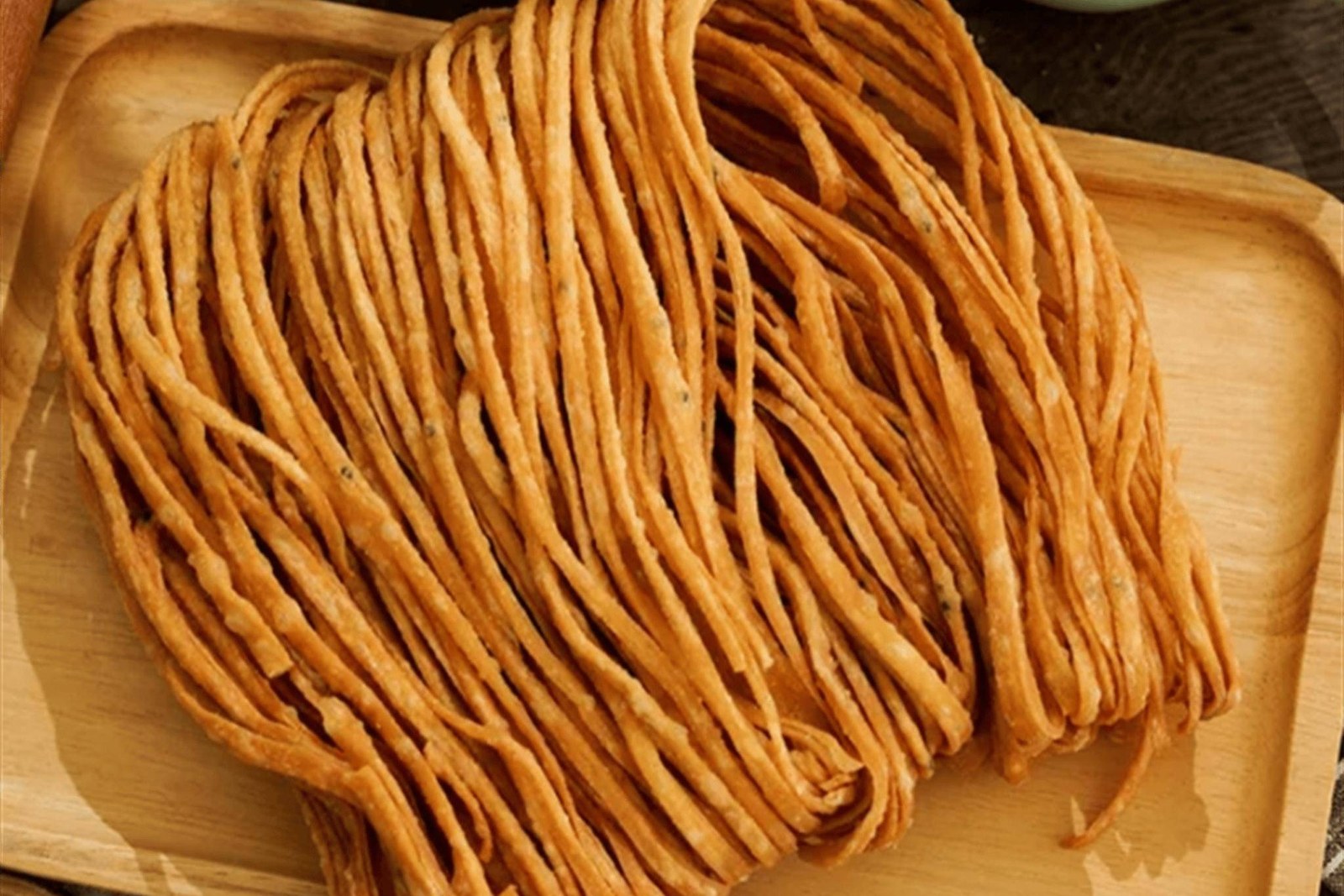
The pulling is the craft. Dough roped thin is stretched between the maker’s hands – wider with every pass, the strands multiplying and thinning into a hank fine as knitting yarn – then wound around two rods into the coil shape. Flour and oil keep the strands from marrying; the speed looks casual and is nothing of the sort.
The fry sets the crunch. The coiled hank slides into deep oil, puffs instantly, and takes its color in under a minute – pale gold at the fold lines, deeper at the thin strands. Lifted and drained hot, the web hardens as it cools into its final glassy snap. Color is the maker’s signature: underdone is doughy, overdone is bitter, and the quarter’s best stalls hit the same gold every batch.
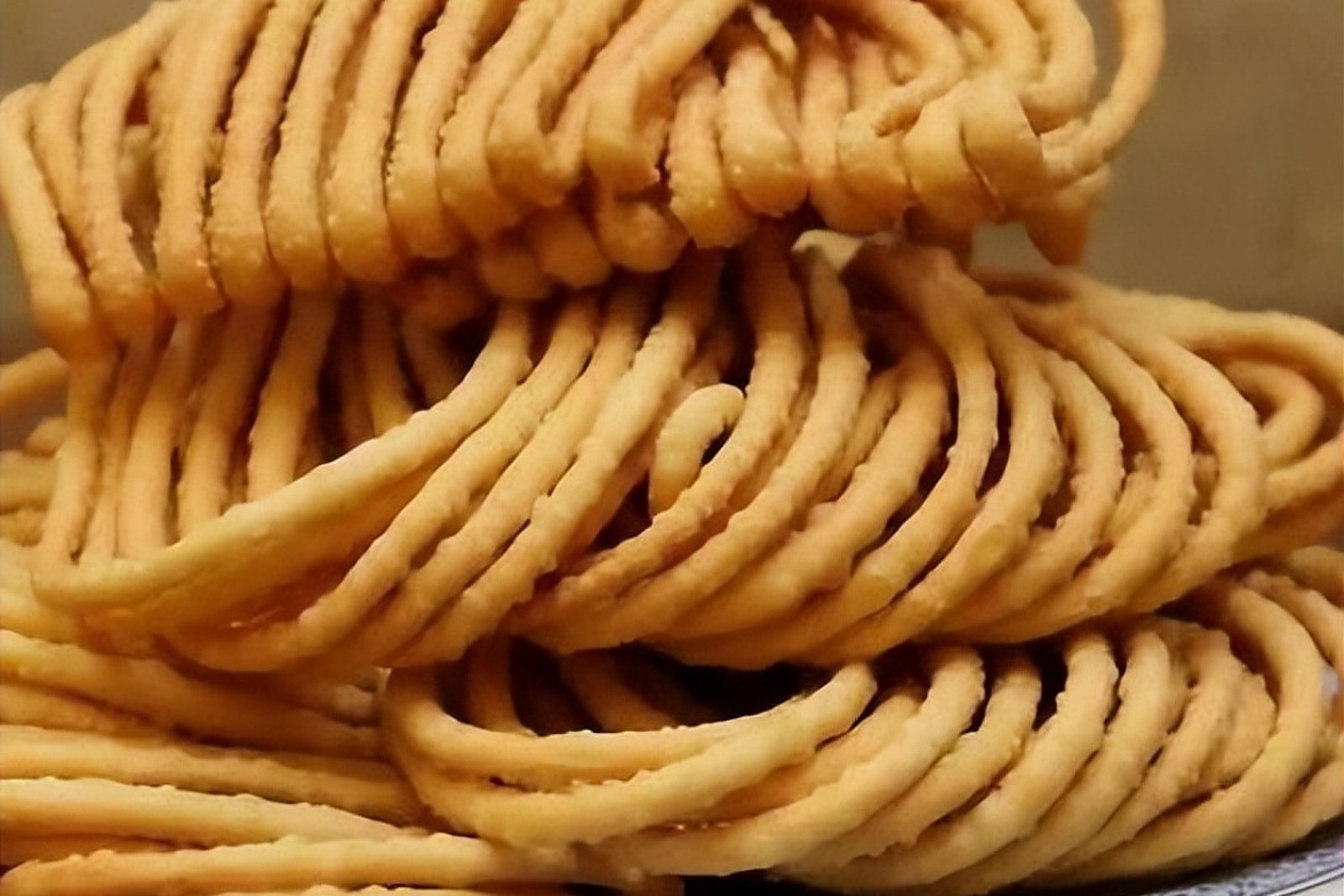
At table, sanzi are the festival’s percussion. Bundles arrive stacked like textiles, guests snap off strands that shatter with a sound the room can hear, and the sesame-salt sweetness sits somewhere between cracker and candy. Gifts move in paper parcels tied with string, and a household’s standing is measured – half in jest – by whose sanzi still crackles on the third day.
The same district holds more flavors worth chasing: 天穆酱牛肉 Tiānmù jiàng niúròu the ruby sliced beef, 天穆切糕 Tiānmù Qiègāo the festival rice cake, 天穆馅饼 Tiānmù Xiànbǐng the pan-fried beef pies, or 红烧牛窝骨 hóngshāo niúwōgǔ the braised knee-bone stew – four more doors into the same Beichen District table.
Words and Names
馓子 sǎnzi the fried dough web; 盘条 pán tiáo coiling the dough strands; 麻油 mányóu the sesame oil in the dough and the fry; 酥 sū the shattering crispness that defines a good batch; 开斋节 Kāizhāi Jié Eid, the peak frying season.
What the Locals Know
The snap is the whole grade – listen before you buy; stale sanzi bend instead of breaking. Dry paper storage, never plastic, and buy bundles fried that morning. The sesame-salt balance separates the quarter’s old stalls from the market copycats, so taste before gifting. All checked November 2026.
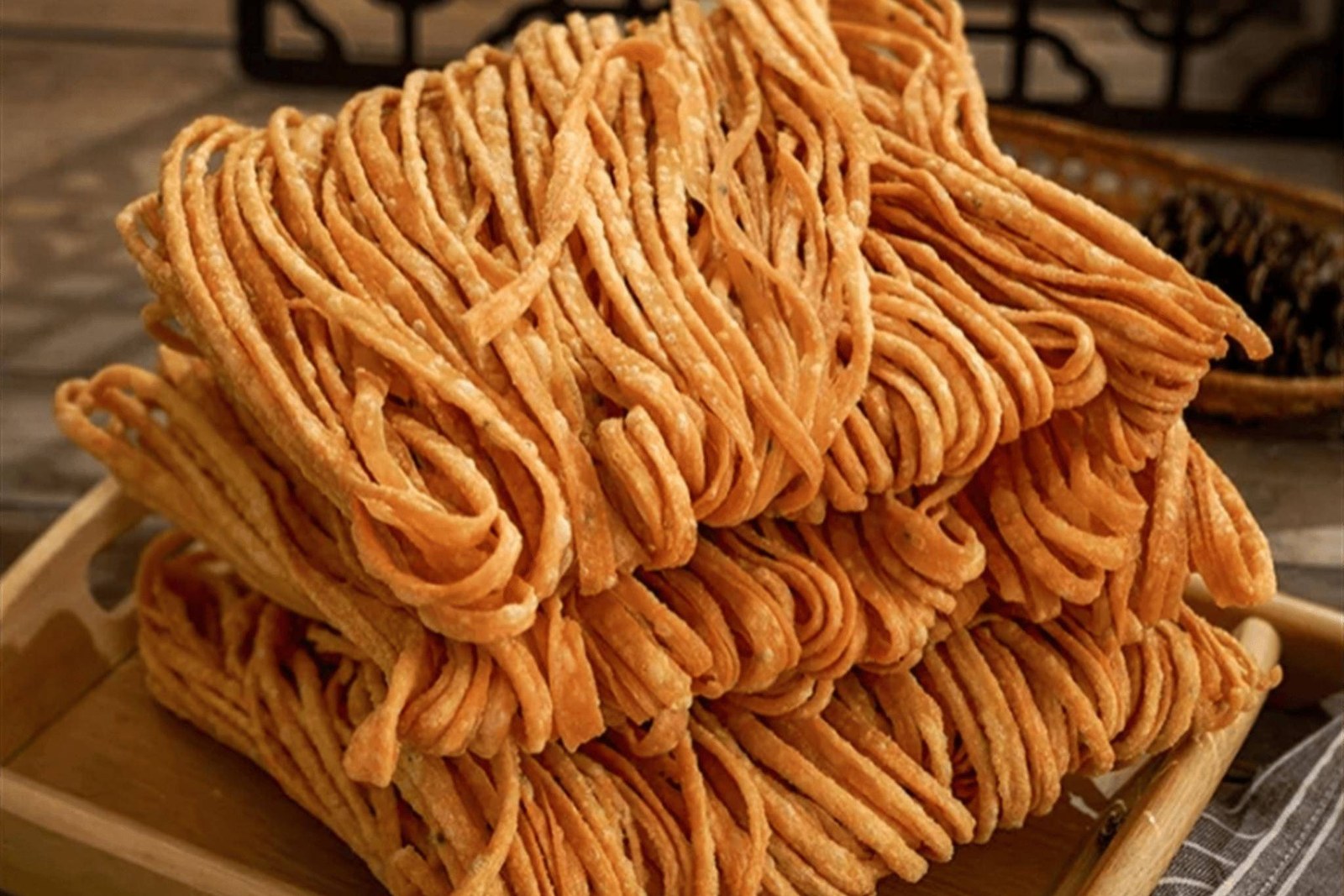
flowcloud would say sanzi are the quarter’s edible lace: pulled thin as yarn, fried gold in a minute, and loud enough to hear across the festival table.
Where to find it: The mosque-quarter fried-dough stalls make festival batches through the Eid calendar, the Shuangjie night market carries snack-size versions, and halal grocers across Tianjin stock the paper-parcel gift bundles. All checked November 2026.