
Tibetan Balep — the Everyday Bread of the Herder Kitchen
青稞入炉香气远,掰一块饼蘸咸茶 Qīngkě rù lú xiāngqì yuǎn, bāi yī kuài bǐng zhàn xián chá – Barley in the oven sends its smell far; break a piece of bread and dip the salty tea
藏式烤饼 Zàngshì kǎobǐng balep is the baked counterpart to tsampa, and in the far west it is the smell of every herder kitchen in the morning. The dough is nothing but barley or wheat flour, water and a starter, patted into rounds and baked on a heavy pan or in the banked ashes of the stove until the crust cracks and the middle stays dense and chewy. 巴莱普 bāláipǔ balep korkun, the classic round flat version, travels for days without going stale – which is why herders carry it on journeys and pilgrims carry it on the kora.
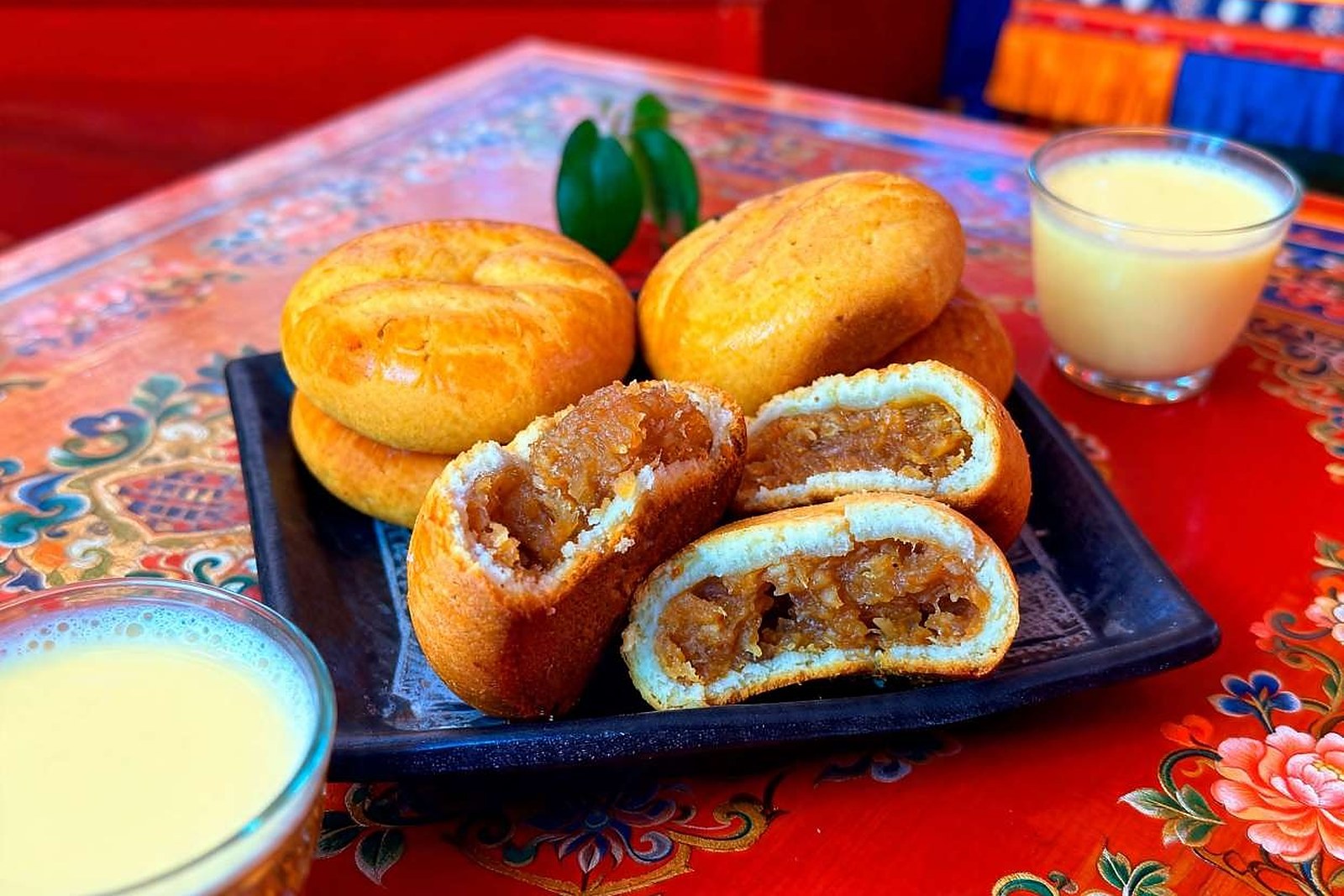
The baking is a morning rhythm. The dough goes down before the tea churn, pressed flat and marked with a thumb or a knife, and the fire must be exactly banked – hot enough to crack the crust, gentle enough to cook the dense barley crumb through. Good balep splits with a dry crack and smells of toasted grain; the crumb holds butter tea the way a sponge holds broth, which is precisely the point.
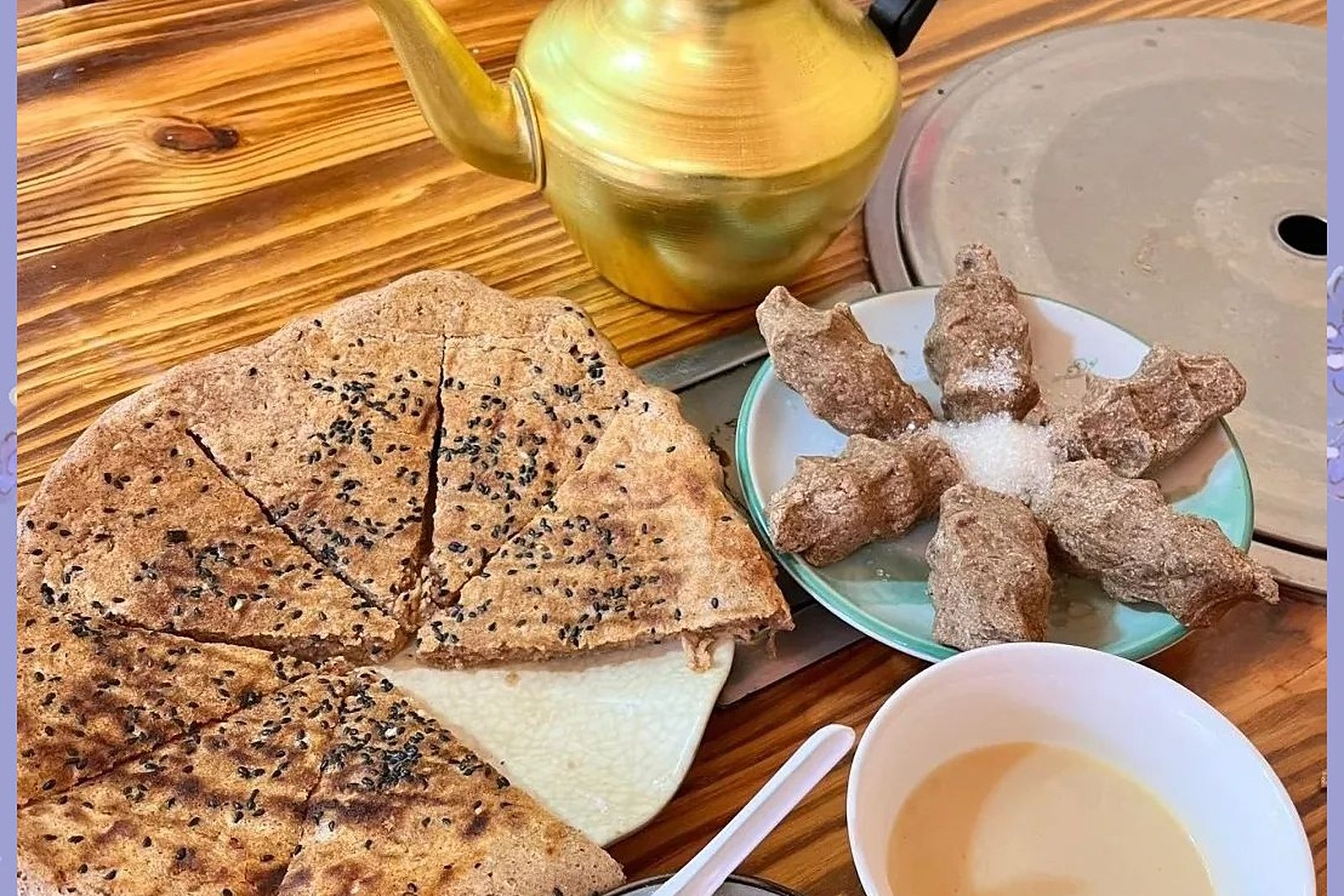
At the table the bread does everything. Torn and dipped into salty butter tea it is the standard working breakfast; split around a spoonful of tsampa and dried cheese it becomes a travel pack; festival versions go richer, with butter worked into the dough and sugar dusted on top, and monasteries bake large rounds for assembly days. In the market towns, bakeries sell it fresh each morning beside Chinese-style buns, and the queues decide which house got the flour right.
What balep measures is the household’s flour craft – the starter, the bake, the day’s moisture all read in one bite. Travelers should eat it warm from the pan where possible, with a bowl of tea for dipping and a jar of dried cheese for the roadside version; a round wrapped in cloth will feed you for two days of road, which is the bread’s whole design. Plain, dense and ancient, it is the far west’s true staff of life.
Words and Names
藏式烤饼 Zàngshì kǎobǐng Tibetan balep, the everyday flatbread; 巴莱普郭昆 bāláipǔ guōkūn balep korkun, the classic round pan-baked version; 青稞面 qīngkě miàn barley flour, the bread’s base grain; 酵头 jiàotóu the starter that lifts the dense crumb; 蘸茶 zhàn chá dipping into butter tea, the bread’s standing job. The same 阿里地区 Ālǐ Dìqū Ngari holds more flavors worth chasing: 普兰尼泊尔风味 Pǔlán Níbó’ěr fēngwèi the border-market thali, 普兰香料奶茶 Pǔlán xiāngliào nǎichá the spiced tea of the stalls, 狮泉河食肆 Shīquánhé shísì the capital’s mixed eating streets, or 札达杏 Zhádá xìng the orchard fruit of the Sutlej valley – four more doors into the same Ngari table.
What the Locals Know
Locals judge a bakery by its crust and its queue – the first crack of the morning round tells whether the fire was right, and the regulars line up before the tea churn is even going. Ask for the top round, not the bottom of the stack; it carries the aroma. All checked November 2026.
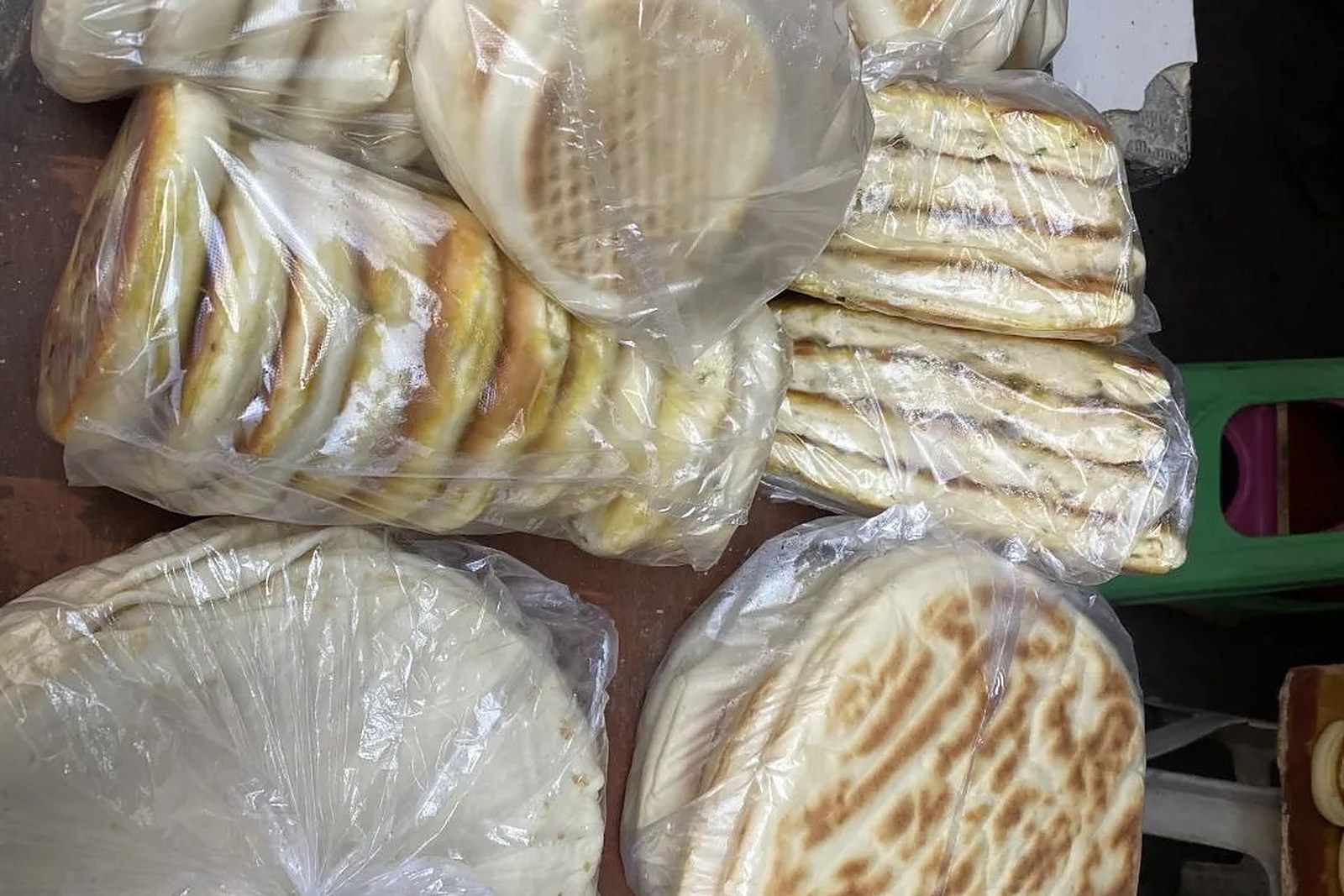
flowcloud would say balep is the plateau’s travel companion – a bread designed for the long walk, improved by dunking.
Where to find it: Morning bakeries and market stalls in Shiquanhe, Purang and Zanda sell balep fresh daily; herder-family kitchens along the roads bake it over the stove and will sell a round to travelers with a thermos of tea. All checked November 2026.