
Milk Kept for Winter: Tibetan Cheese
酸奶滤出千粒白,一袋奶渣走四季 Suānnǎi lǜ chū qiān lì bái, yī dài nǎizhā zǒu sìjì – Yogurt strained into a thousand white grains; one bag of cheese walks through all four seasons
奶渣 nǎizhā Tibetan cheese, chura, is the plateau’s way of keeping milk – yogurt from yak or dri cows boiled, strained through cloth and dried in the sun until it turns into hard white pellets or sheets that keep through the winter. In the households of 西藏自治区日喀则市 Xīzàng Zìzhìqū Rìkāzé Shì Shigatse the dried curds go into everything: softened in butter tea for breakfast, scattered over tsampa, simmered into noodle soup, or carried in coat pockets as the between-villages snack that takes serious chewing.
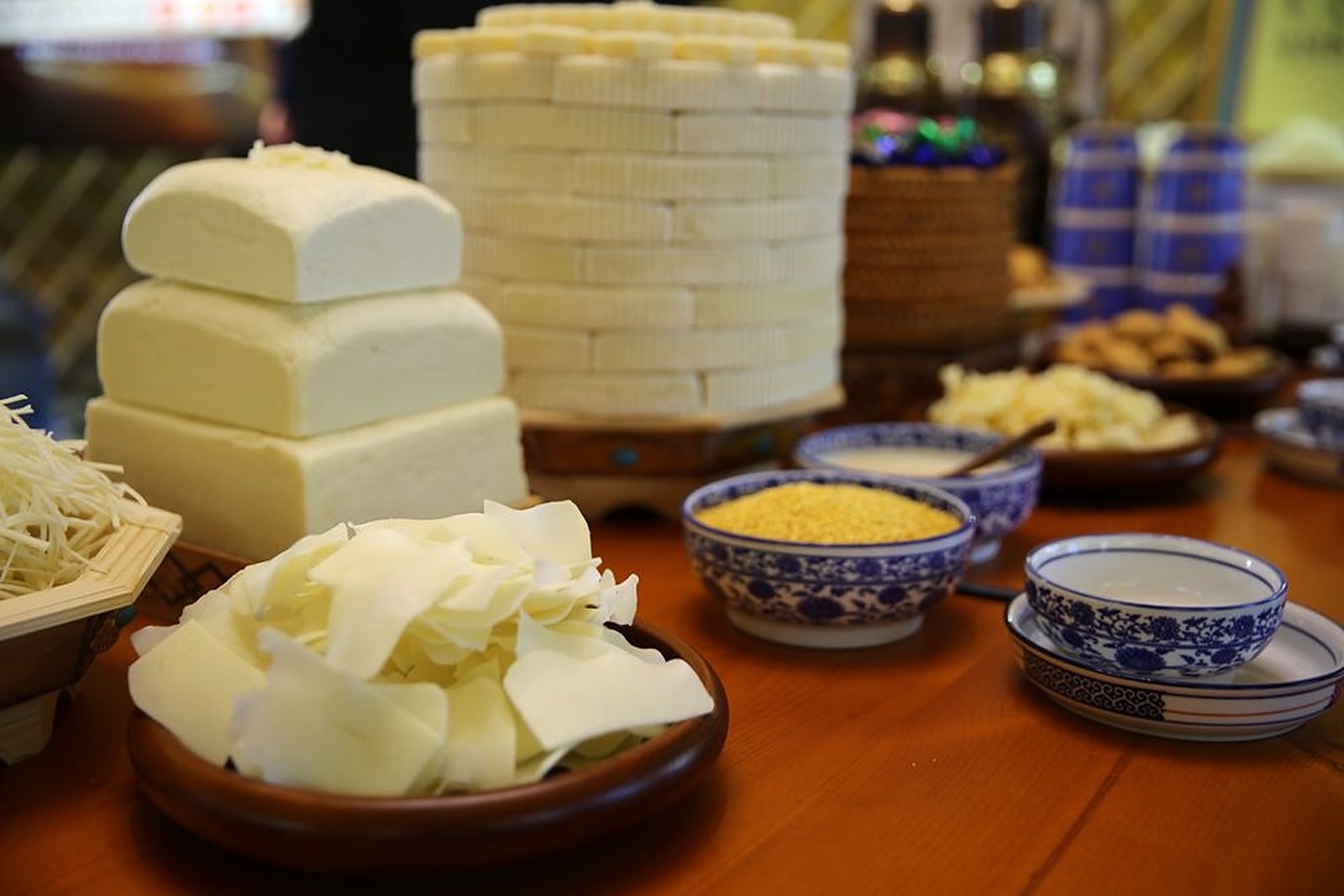
The making is patience itself. Fresh yogurt goes into the pot and boils until the curds tighten; the mass is scooped into cloth and wrung, and what comes out – a white, squeaky curd – is spread on trays in the sun for days, turned until every pellet is dry as gravel. Fresh versions stop earlier and stay soft: squares of barely dried cheese fried at festival tables, or the pale sheets that markets sell by the pile in autumn, when every household is putting up its winter supply.
Eating it is a slow-burn education. The dried curd starts hard as a pebble; ten minutes in the cheek it softens, and the flavor arrives in stages – sour first, then milky, then a faint smoke from the drying. Travelers usually meet it the gentle ways first: melted into sweet butter tea where it turns creamy, or scattered through tsampa where the whole breakfast turns faintly cheesy. The pocket-snack habit takes a village visit or two to acquire, and then takes hold for life.
What chura really represents is the household economy of the grassland. Milk is summer’s surplus and winter’s scarcity, and drying is how the family carries the season across – a sack of chura in the storeroom is months of soup, breakfast and snack food at once. The market stalls of Shigatse sell it beside the butter and sugar it partners with, in paper bags weighed by the scoop, and the sight of a grandmother breaking curds into a grandchild’s palm is the plateau’s version of handing down the pantry.
The same 西藏自治区日喀则市 Xīzàng Zìzhìqū Rìkāzé Shì Shigatse holds more flavors worth chasing: 朋必 péngbì the grasped pea-starch snack, 藏面 zàng miàn the yak-broth noodle bowl, 藏包 zàng bāo the steamed yak-meat buns, or 青稞酒 qīngkě jiǔ the fermented barley wine – four more doors into the same Shigatse table.
Words and Names
奶渣 nǎizhā the dried cheese curds, chura; 酸奶 suānnǎi the yogurt it starts from; 曲拉 qūlā chura, the herders’ word for the same curds; 牦牛奶 máoniú nǎi yak milk, the source of the rich version; 糌粑 zānba tsampa, the roast-barley staple chura partners; 酥油茶 sūyóuchá butter tea, the drink that melts it.
What the Locals Know
The color tells the age – bright white is fresh-dried, and a deeper cream tint means last season’s curds, still perfectly good but sharper on the chew. Locals judge a bag by its dryness: squeaky-dry keeps, damp-soft spoils. And the pocket habit has etiquette – the bag that comes out on a long walk is offered around the circle before it is eaten, the same as any food on the plateau. All checked November 2026.
flowcloud would say chura is summer carried into winter: milk turned stone, patience turned pantry, and the plateau’s oldest answer to the question of how a household keeps what the grass gives.
Where to find it: Market stalls around the old town’s food streets sell paper bags by the scoop; village markets across the prefecture put up household-dried trays in autumn, and teahouse kitchens drop it into noodle soup all year. All checked November 2026.